
Willamette Valley · Oregon
There's a specific moment that almost every first-time buyer describes the same way: you've been scrolling Zillow for months, you think you have a rough idea of what things cost, and then you sit down with a lender and realize the gap between knowing about buying a home and actually being ready to buy one is wider than you thought. Albany has a way of making that moment more manageable than most Oregon cities. The price point is real, the neighborhoods are accessible, and the process — while still demanding — doesn't require the desperate overpaying that defines markets an hour north in Salem or two hours north in Portland.
The median home price in Albany sits at $418,000, and that number actually means something here. At that price, you're typically looking at a 3-bedroom, 2-bath home — older construction in the Hackleman or East Albany area, or newer stock on the south side — on a real lot, with a garage. That's not the stripped-down starter that $418,000 buys in the Portland metro. The gap between renting in Albany and owning is narrowing too. Renters paying $1,400–$1,600 a month for a two-bedroom apartment are often closer to mortgage-ready than they realize once they factor in current rates and available assistance programs.
This guide walks you through everything a first-time buyer needs to navigate Albany's market in 2026 — from understanding what your budget actually buys in specific neighborhoods, to the credit and income thresholds that determine what loan you qualify for, to the five mistakes local buyers make that are entirely avoidable if someone tells you about them first.
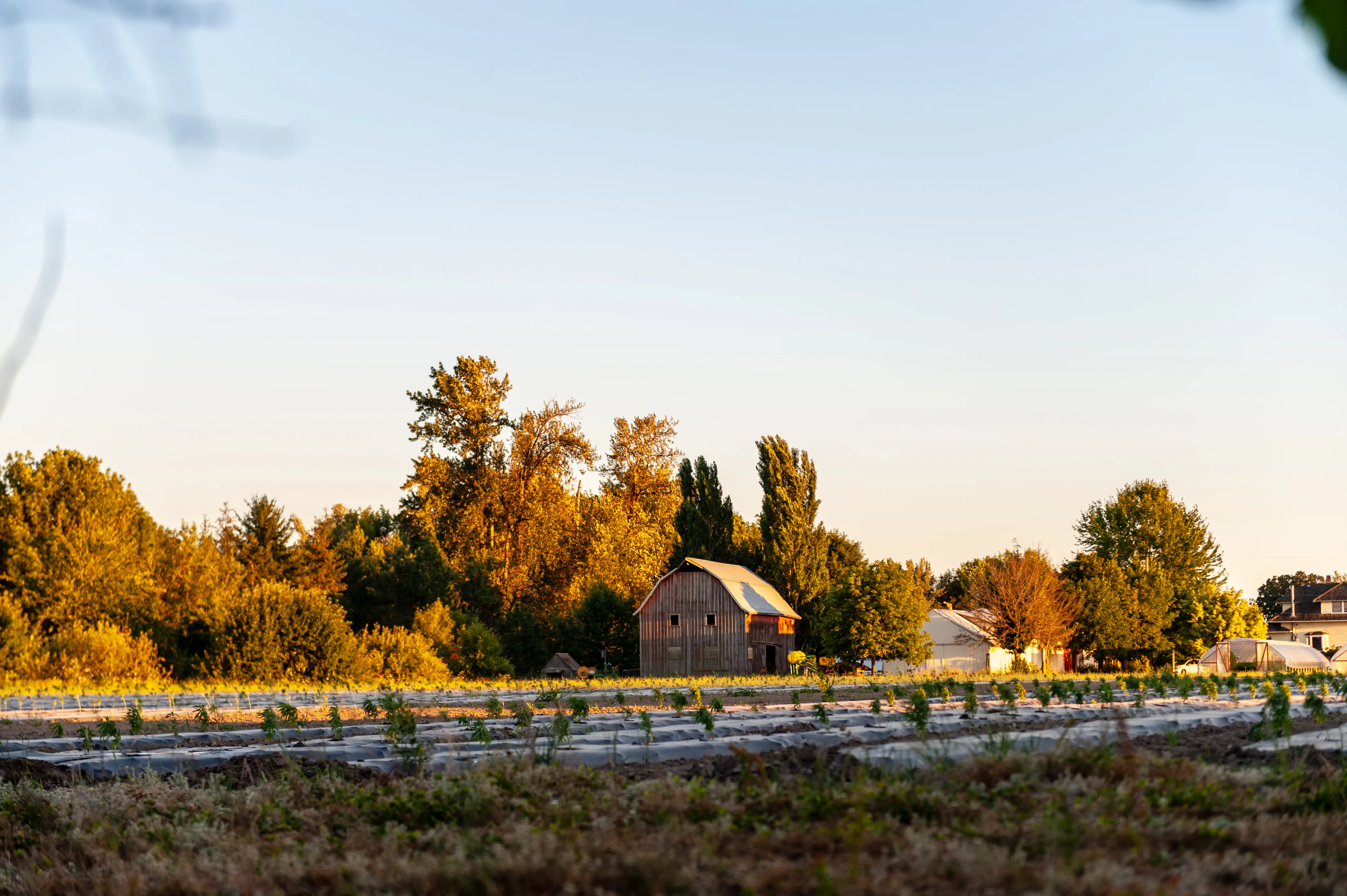
Albany's strongest argument for first-time buyers is the comparison math. Corvallis, just 20 minutes west, carries a median home price that runs $100,000–$150,000 higher for comparable square footage — largely because of Oregon State University's influence on demand. Salem, 45 minutes north, has seen prices compress at the entry level but offers less neighborhood character at the sub-$400K price point. Albany gives you the Willamette Valley location, a reasonable commute to both cities, and a school district rated B by Niche — without the premium attached to either neighbor.
Where first-time buyers need realistic expectations is at the entry tier. Homes under $350,000 in Albany exist — townhomes, condos, and older single-family homes in the Willamette and Downtown neighborhoods — but they move quickly. Well-priced listings under $400K routinely attract multiple offers and sell within 30 days. The $350K–$450K range is where most first-time buyers land, and it's also where the market is most competitive. Above $450K, there's more room to negotiate; below $350K, you need to move decisively.
| Price Range | What You Typically Find | Neighborhood Examples | Competition Level |
|---|---|---|---|
| Under $350K | Condos, townhomes, older 2BR homes needing updates | Willamette, Downtown, East Albany | High — multiple offers common |
| $350K–$450K | 3BR/2BA ranch or craftsman, some cosmetic work needed | Hackleman, East Albany, South Albany | High at entry, moderate above $420K |
| $450K–$550K | Updated 3–4BR, newer construction on south side | South Albany, West Albany, Oak | Moderate |
| $550K–$650K | Newer 4BR, larger lots, better finishes | North Albany, West Albany | Low to moderate |
| $650K+ | Premium new construction, acreage, or remodeled historic | North Albany, rural edges | Low |
The $350K–$450K tier is where the realistic first-time buyer in Albany is shopping, and it's worth understanding what "cosmetic work needed" actually means in this context. Many of Albany's established neighborhoods — Hackleman, East Albany, parts of Downtown — have solid 1950s–1970s ranch homes that are structurally sound but may need a kitchen update, new flooring, or fresh exterior paint. Those homes represent genuine value if you're willing to build equity through improvement rather than paying for someone else's renovation.
The best value entry point right now is the $380K–$430K range in East Albany and the Hackleman district, where you get neighborhood infrastructure — parks, walkable streets, proximity to the riverfront — at a price that leaves room in your budget for updates. North Albany commands a significant premium for newer construction, and while the quality is higher, the trade-off for a first-time buyer is starting with less equity cushion.
| Step | What Happens | Typical Timeline | What First-Timers Get Wrong |
|---|---|---|---|
| Get finances in order | Pull credit, pay down revolving debt, document income | 1–3 months before | Waiting until they "feel ready" — checking too late to fix issues |
| Pre-approval | Lender reviews income, assets, credit; issues letter | 1–3 days | Confusing pre-qualification (soft) with pre-approval (hard) |
| Find an agent | Interview, sign buyer's agreement, establish criteria | 1 week | Skipping agents to "save money" — sellers pay the commission |
| Active search | Tour homes, set alerts, refine criteria | 2–8 weeks | Waiting for the perfect home instead of the best available |
| Making offers | Submit offer with earnest money, terms, contingencies | Hours to 1 day | Offering at list on a multiple-offer home, then losing |
| Under contract | Seller accepts; due diligence period begins | Day 1–5 | Not understanding what they can and can't negotiate post-acceptance |
| Inspection | Hire inspector; review findings; negotiate repairs | Days 5–15 | Waiving on 1970s-era homes to compete — then inheriting surprises |
| Appraisal | Lender orders appraisal to confirm value | Days 10–20 | Panic when it comes in low — most gaps can be negotiated |
| Final walkthrough | Verify condition matches contract before closing | Day before close | Rushing through it — this is your last leverage point |
| Closing | Sign documents, wire funds, get keys | 30–45 days from contract | Not budgeting for closing costs separate from down payment |
Albany is described as a "somewhat competitive" market — not the frantic environment of Portland's peak years, but not a buyer's market either. Well-priced homes under $400K in desirable neighborhoods will often receive two to four offers within the first week. In Linn County, the standard earnest money deposit runs 1%–2% of the purchase price; on a $418,000 home, expect to put down $4,000–$8,000 upfront, which is applied toward your closing costs or down payment at closing.
Buyers rarely waive inspections entirely in Albany — the market doesn't demand it the way Portland's did in 2021. However, shortening the inspection period to 7–10 days and presenting a clean, pre-approved offer with flexible closing terms will often beat a higher offer with more contingencies. Closing timelines in Albany typically run 30–45 days from accepted offer, which is standard for Oregon.
Looking to buy in Albany? Estimate your payment.
Enter your numbers to see an estimated monthly mortgage payment.
Estimate only. Excludes HOA fees and mortgage insurance.
A conventional loan requires a minimum 620 credit score, but the difference between a 650 and a 740 score shows up directly in your interest rate — and therefore your payment. On a $420,000 loan, the difference between a rate available at 650 versus 740 can amount to $150–$200 per month. Over a 30-year mortgage, that's real money — roughly $50,000 or more in total interest. Spending a few months paying down credit card balances before applying isn't just financial hygiene; it's leverage.
FHA loans allow a 580 credit score with just 3.5% down, making them the most common loan type for first-time buyers in Albany. The downside is mortgage insurance premium (MIP) — an upfront charge plus an annual fee that doesn't automatically drop off the way PMI does on a conventional loan. If your score is between 500 and 579, FHA still accepts you but requires 10% down. For most Albany buyers, getting to 580 or above and using FHA at 3.5% down is the clearest path into ownership.
On the income side, a rough way to think about qualifying: lenders generally want your total monthly housing payment to stay at or below 28% of your gross monthly income. To buy a $400,000 home with 5% down at current rates, you'd want to target roughly $75,000–$80,000 in household income. A $450,000 purchase pushes that closer to $85,000–$90,000. Debt-to-income ratio (DTI) matters just as much as income — student loans, car payments, and credit card minimums all count against you. Many buyers who earn enough to qualify still get denied because their existing debt payments eat up too much of the lender's allowance.
Offering list price on competitive homes without checking sold comps. In Albany's $350K–$450K range, homes priced accurately are often selling at or slightly above list. Offering exactly what a home is listed for on a well-positioned Hackleman or East Albany property can mean finishing second without being dramatically underpowered. Always ask your agent for the last 90 days of comparable sold prices before you write a number.
Skipping the inspection on older ranch homes to compete. A disproportionate share of Albany's affordable inventory is 1960s–1970s ranch construction — solid bones, but with plumbing, electrical, and roof systems that may be at or past their service life. Waiving inspection on a $380,000 home to compete is understandable instinct, but a single deferred maintenance issue — failed sewer lateral, original knob-and-tube wiring in a partial upgrade — can cost $15,000–$40,000. Shorten the inspection window instead of eliminating it.
Shopping at the top of qualification, not the top of comfort. A lender who approves you for $480,000 is telling you what you can borrow — not what you should borrow. Albany's property taxes, HOA fees in newer South Albany neighborhoods, and the actual cost of homeownership (insurance, maintenance, utilities in older homes) all land on top of your mortgage payment. Many buyers who stretched to the ceiling of their approval are house-poor within 18 months.
Misunderstanding school district boundary lines near the edges. Greater Albany Public Schools covers the whole city, but specific elementary school assignments depend on where your address falls within the district. Buyers purchasing near the outer edges of South or West Albany neighborhoods sometimes find their assigned school is less convenient than what the neighborhood name implies. This matters at resale because buyers with school-age children will ask. Verify the specific school assignment for any home you're seriously considering before you go under contract.
Waiting for prices to drop before buying. Albany's median has been in a modest holding pattern — down slightly from recent peaks — but the supply of entry-level homes hasn't expanded enough to produce a genuine buyer's market. Every month spent waiting is another month of rent paid with no equity building. If you're financially ready, the cost of delay usually exceeds the cost of buying in a slightly elevated market.
East Albany is where the math works best for most first-time buyers right now. The housing stock is a mix of 1960s–1980s ranches and older craftsman-style homes, and the neighborhood sits close enough to downtown Albany to give walkable access to the riverfront parks and local dining without the premium of the Hackleman Historic District. Homes in the $370K–$430K range here are a realistic target, and the proximity to Highway 20 makes the commute to Corvallis manageable.
The Hackleman Historic District commands a small premium over East Albany, but the resale case is strong. Buyers here are often purchasing renovated Victorian and craftsman homes, and the neighborhood's historic designation creates a degree of architectural consistency that protects long-term values. Entry points start closer to $380K–$430K, and the walkability to downtown Albany is genuine — not aspirational.
South Albany offers newer construction at a higher price point — median sold prices around $482,000 — but the homes are larger, the lots are newer, and the mechanical systems are younger. For a first-time buyer who wants to avoid deferred maintenance concerns and can stretch toward the top of the $450K–$550K tier, the trade-off is worth considering. The commute to North Albany employers is longer than from East Albany.
The Willamette neighborhood is the most affordable part of Albany by median sold price, with a figure closer to $332,500. For buyers working with a tighter budget or a smaller down payment, it's the realistic starting point. The housing stock is older, and some blocks reflect it — but the neighborhood is stable, and entry-level buyers who spend two to three years here before moving up often find their equity position is stronger than they expected.
✅ Albany's $418,000 median is accessible by Oregon standards — and at 3.5% down with FHA, that's roughly $14,600 out of pocket before closing costs.
⚠️ The under-$400K market in Albany is the most competitive tier. Moving quickly and presenting clean, pre-approved offers matters more here than it does at higher price points.
📍 East Albany and the Hackleman Historic District offer the strongest value-to-resale combination for first-time buyers entering the market in 2026.
How much do I need to buy my first home in Albany?
With an FHA loan at 3.5% down on Albany's $418,000 median, your minimum down payment is roughly $14,600. On top of that, closing costs in Oregon typically run 2%–3% of the loan amount — budget another $8,000–$12,000 unless you negotiate seller concessions. Total cash to close on a typical Albany purchase lands in the $22,000–$27,000 range without assistance programs factored in.
Should I get pre-approved before looking at homes in Albany?
Yes — and not just pre-qualified, which is an informal estimate. A full pre-approval means the lender has reviewed your actual income documents, credit report, and assets and issued a conditional commitment. In Albany's competitive sub-$450K market, sellers and their agents take pre-approved buyers seriously. Submitting an offer without a pre-approval letter is one of the fastest ways to lose a home to a competing buyer who has their paperwork in order.
Can a first-time buyer win in a competitive offer situation in Albany?
Yes, and it happens regularly. The buyers who succeed aren't always the ones with the highest offers — they're the ones whose offers are clean, fully documented, and low-risk for the seller. That means a strong pre-approval letter, earnest money at the top of the 1%–2% Linn County norm, a flexible closing date, and an inspection period short enough to signal seriousness. Your agent's relationships with listing agents also matter in a mid-size market like Albany more than buyers expect.
Explore the full Albany series: The Ultimate Albany Relocation Guide · Is Albany Safe? · Cost of Living in Albany · Best Neighborhoods in Albany · Albany Schools & Family Life · Albany Youth Sports · Albany Parks & Recreation · Retiring in Albany · 1031 Tax-Deferred Exchange in Albany · Albany First-Time Homebuyers Guide · · Moving to Albany from California
Tell us what you need help with and we'll connect you with local resources.

About the Author
Todd Davidson is the founder of Living in Oregon and Living in Washington, where he publishes in-depth city guides, neighborhood resources, and local market insights covering more than 180 communities across the Pacific Northwest. While his background is in home financing and real estate, he created these digital platforms to help families research and compare regions before making a move.