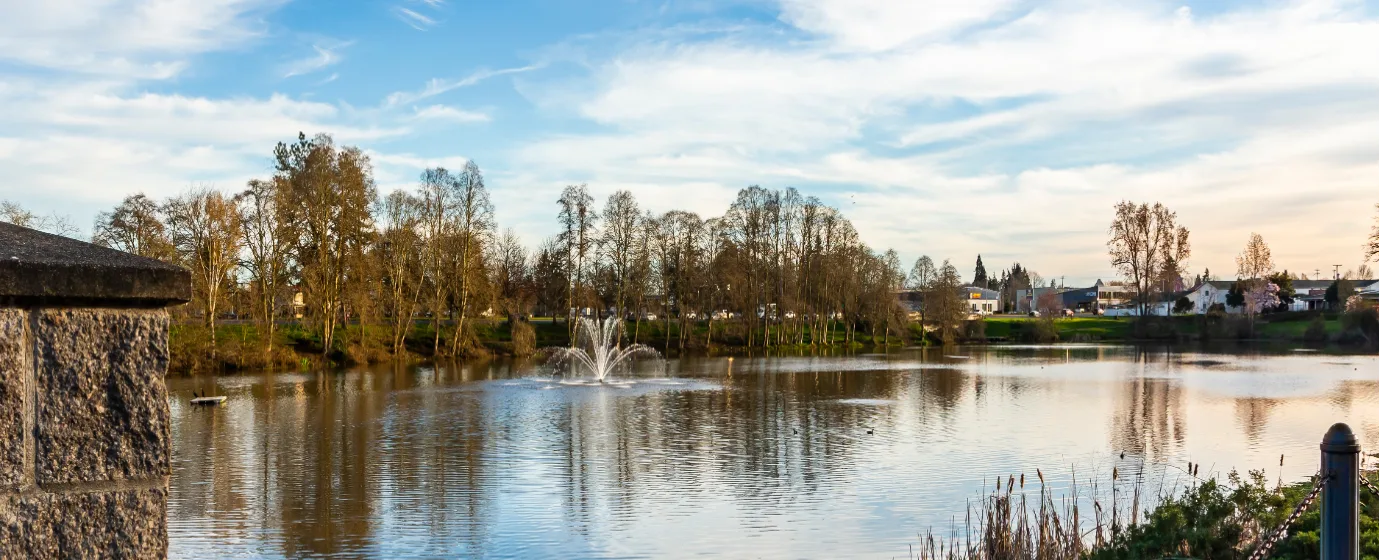
Willamette Valley · Oregon
Best Neighborhoods in Albany, Oregon: Where to Buy or Rent (2026)
Albany surprises buyers who treat it as a single real estate market. The city spans 15.9 square miles, crosses two county lines, and contains neighborhoods that differ in age, character, price point, and daily feel as sharply as any larger Oregon city. Pick the wrong neighborhood for your priorities — even one that looks fine on paper — and you'll understand within six months why locals talk about Albany in terms of its distinct quadrants rather than as a whole.
The most defining geographic divide in Albany is the Willamette River, which separates North Albany from the rest of the city both physically and in price. South of the river, Albany breaks into older, more established corridors — the historic districts of Downtown and Monteith, the mid-century character of Hackleman, and the newer suburban buildout pushing east and west along the city's edges. North Albany, across the river, feels like an entirely different place: larger lots, newer construction, higher prices, and a suburban quietness that trades urban access for breathing room.
This guide covers the eight most significant neighborhoods for buyers and renters moving to Albany in 2026, maps out the best fit by buyer type, and flags the mistakes relocating buyers most commonly make. Whether you're choosing between a historic bungalow near Downtown or a newer four-bedroom in North Albany, what follows will help you narrow the decision.
| Neighborhood | Best For | Price Range | Vibe |
|---|---|---|---|
| North Albany | Families, larger lots, newer builds | $490K–$620K | Quiet suburban, equestrian edges |
| South Albany | Families, newer builds, commuters | $380K–$460K | Modern suburban, growth corridor |
| West Albany | Mid-range buyers, safety-focused | $360K–$440K | Established residential, low-key |
| East Albany | First-time buyers, budget-conscious | $330K–$400K | Older stock, working-class roots |
| Downtown Albany | Walkability seekers, urban lifestyle | $280K–$400K | Historic core, mixed-use streets |
| Hackleman Historic District | Historic character buyers | $300K–$430K | Victorian-era architecture, tree-lined |
| Monteith | Established buyers, riverfront access | $310K–$440K | 19th-century charm, Willamette-adjacent |
| Oak | Investors, mid-range buyers | $370K–$450K | Suburban mid-city, stable |
| Willamette | Renters, entry-level buyers | $340K–$420K | Transitional, accessible |
| Periwinkle | Entry buyers, renters | $320K–$395K | Quiet residential, convenient access |
| Buyer Type | Best Neighborhood | Why |
|---|---|---|
| First-time buyer | East Albany | Most accessible price points; older homes with renovation potential |
| Luxury buyer | North Albany | City's highest medians; larger lots, newer construction |
| Walkability seeker | Downtown Albany | Oregon Historic Carousel, Monteith Riverpark, restaurants on foot |
| Families with kids | North Albany | Oak Grove Intermediate (A- Niche rating), parks, quiet streets |
| Commuter (Corvallis) | South Albany | Quickest on-ramp to US-20 West; 20-min Corvallis run |
| Large lot buyers | North Albany | Equestrian properties, acreage parcels north of Willamette |
| Renters | Periwinkle / West Albany | Best rental stock mix; proximity to LBCC and hospital corridor |
North Albany sits across the Willamette River from the rest of the city, and that separation creates a neighborhood that operates almost independently — with its own school pipeline, its own commuter rhythms via the North Albany Road corridor, and a median sold price that runs roughly $130,000 above the citywide figure. Homes here lean toward larger footprints and spacious lots, with some parcels edging into equestrian territory the further north you travel. The catch is flood exposure: roughly 28% of North Albany properties carry meaningful flood risk over a 30-year horizon, which affects both insurance costs and resale conversations down the line.
Best for: Families prioritizing schools and lot size who can absorb the premium and factor flood insurance into their budget.
South Albany is the city's most active growth corridor right now, a zone of newer subdivisions, accessible retail, and relatively straightforward commute access to both US-20 and I-5. Homes here tend to be newer construction than the city's historic core, which translates to lower maintenance costs and more conventional floor plans that work well for families with kids. The trade-off is character: South Albany is functional and affordable relative to North Albany, but it lacks the street presence of the historic districts and the lot drama of properties north of the river.
Best for: Corvallis commuters and families with kids who want newer construction under $460K without crossing the river.
West Albany occupies a quieter middle ground — established residential blocks, a slightly older housing stock than the south side, and a reputation among locals as one of the city's more stable and lower-crime zones. It's popular with buyers who want reasonable proximity to Downtown without paying historic-district prices, and it connects reasonably to the hospital corridor along Geary Street, making it a natural landing zone for healthcare workers at Samaritan Albany General. The area doesn't offer much in terms of walkable retail, though, and buyers who prioritize on-foot access to restaurants or coffee shops will find the trade-off limiting.
Best for: Healthcare workers, safety-conscious buyers, and households looking for low-maintenance suburban living at mid-range prices.
East Albany carries the most working-class character of Albany's four directional quadrants, with older housing stock, more modest lot sizes, and the city's most accessible entry-level price points. Buyers in the $330K–$400K range who've been priced out of South or North Albany end up here, and many find that with selective renovation, East Albany homes offer solid value. The honest trade-off is school quality and neighborhood aesthetics — properties along the eastern edge of the city near Pacific Boulevard can feel worn in spots, and buyers drawn primarily by the price should tour the specific streets rather than assuming neighborhood consistency.
Best for: First-time buyers with renovation tolerance and budget constraints below $400K.
Downtown Albany carries one of the most intact Victorian-era commercial streetscapes in the Willamette Valley, anchored by the Albany Historic Carousel & Museum on First Avenue, the Albany Regional Museum, and a walkable stretch of locally-owned shops and restaurants that actually functions — unlike the dead downtown cores in many comparably-sized Oregon cities. Residential buyers here are purchasing into an urban lifestyle that is genuinely walkable by Albany standards, with a Walk Score that climbs sharply compared to the citywide average of 33. The honest limits: parking can be tight, older homes in this corridor often need significant mechanical updates, and street noise on the main commercial blocks is real.
Best for: Buyers who prioritize walkability and urban character over square footage, and renters wanting Albany's most pedestrian-accessible zip code.
Hackleman is Albany's most architecturally distinct neighborhood — a dense collection of late-19th and early-20th century homes bounded roughly by the railroad corridor, with Queen Anne, Craftsman, and Foursquare styles sitting side by side on streets that predate modern subdivision logic. Prices here span a wider range than most Albany neighborhoods because condition varies enormously between a fully renovated bungalow and one that's been maintained minimally for decades. Buyers need to go in with eyes open about lead paint, aging plumbing, and the realities of owning a home on the National Register of Historic Places — which can limit what you're permitted to alter on the exterior.
Best for: Buyers with renovation experience or budgets for a pre-purchase inspection who want the city's most distinctive neighborhood at a price below North Albany.
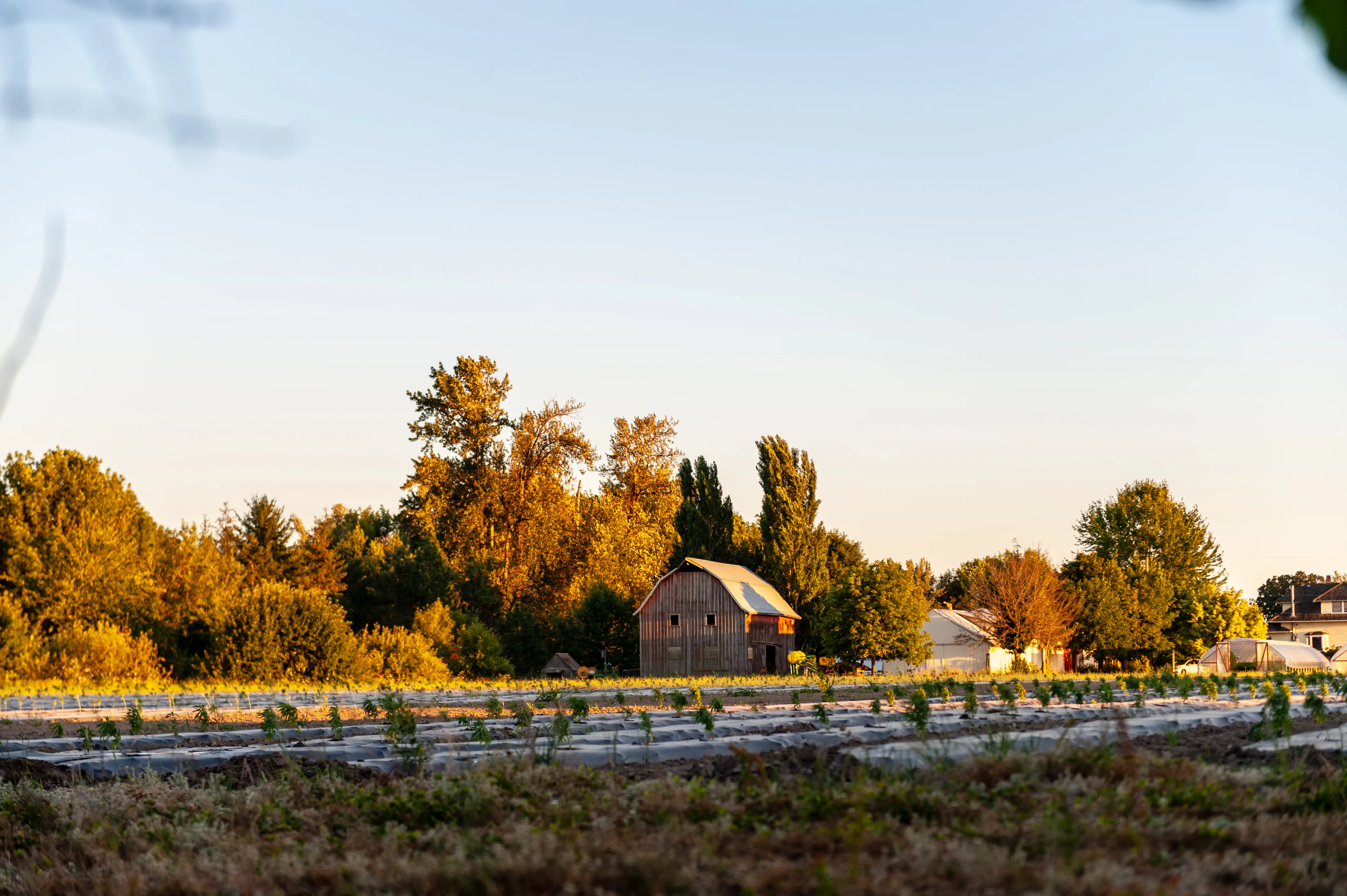
The Monteith neighborhood sits just west of Downtown and takes its name from the Monteith family, among Albany's earliest settlers, with Monteith Riverpark providing direct Willamette River access that residents lean on heavily in summer. Homes here skew older and the neighborhood has a quieter, more residential feel than Hackleman despite its proximity to the city core, making it popular with buyers who want walkable access to the riverfront without the commercial noise of Downtown proper. Like all of Albany's historic residential districts, Monteith homes carry the maintenance realities of 19th-century construction — the aesthetic charm is genuine, but so is the cost of keeping these homes current.
Best for: Established buyers who want riverfront access, historic character, and a quieter pace than Downtown at mid-range prices.
Oak is a mid-city neighborhood that tends to attract buyers and investors more than it generates strong opinions either way — which is actually part of its appeal. It sits in a convenient interior position relative to the rest of Albany, with reasonable access to both employment corridors and retail, and its price range overlaps with South Albany while offering a slightly older, more established feel. Investment buyers drawn by Albany's rental demand (roughly 41% of the city rents) often look here for duplexes and older single-family homes that can support tenant income while building equity over time.
Best for: Investors and mid-range buyers who want city-center convenience without paying historic-district or North Albany prices.
Looking to buy in Albany? Estimate your payment.
Enter your numbers to see an estimated monthly mortgage payment.
Estimate only. Excludes HOA fees and mortgage insurance.
Treating Albany as a uniform market. The single most common error relocating buyers make is quoting the $418,000 citywide median as if it describes every neighborhood equally. North Albany's median sold price runs roughly $140,000 above that figure; East Albany's entry-level stock can be $80,000 below it. Coming in without neighborhood-level data means many buyers either overpay benchmarking against the city average or miss out on North Albany by assuming they can't afford it.
Underestimating the Willamette River crossing. North Albany is physically separated from the rest of the city, and that separation shows up in daily life. Groceries, most restaurants, Samaritan Albany General Hospital, and the majority of Albany's retail are south of the river. The Santiam Highway crossing works smoothly most of the time, but buyers who work in Albany's industrial corridor or need frequent south-side access should drive the commute at 7:30 a.m. before making an offer in North Albany — not assume it's a non-issue.
Skipping the flood check on North Albany properties. With roughly 28% of North Albany properties facing meaningful 30-year flood exposure, flood insurance is not a hypothetical in this neighborhood — it's a real line item. Buyers excited by larger lots and newer construction north of the river sometimes overlook this until closing, when the insurance quote lands and resets the affordability math.
Assuming all historic district homes are move-in ready. Hackleman and Monteith offer some of Albany's most compelling properties at their price points, but the range between a meticulously maintained historic home and one that needs $60,000 in deferred work is enormous. Buyers who tour three Hackleman homes in an afternoon and generalize from the nicest one to the rest of the district end up disappointed. Budget for a thorough inspection, check the age of the electrical panel and roof, and assume mechanicals will be older than what you'd encounter in South Albany's newer subdivisions.
| Area | Ideal For | Typical Rent Range | Trade-off |
|---|---|---|---|
| Downtown / Monteith | Young professionals, walkability | $1,200–$1,650/mo | Older buildings, limited parking |
| South Albany | Families, Corvallis commuters | $1,400–$1,850/mo | Fewer walkable amenities |
| West Albany (near LBCC) | Students, healthcare workers | $1,100–$1,500/mo | Distance from downtown |
| North Albany | Families wanting space and schools | $1,600–$2,100/mo | River crossing for most services |
| East Albany | Budget-conscious renters | $1,000–$1,350/mo | Older stock, fewer amenities |
Albany's rental market reflects the city's strong renter share — 41% of households rent, which is unusually high for a mid-size Willamette Valley city. That demand keeps vacancy rates relatively tight and landlords selective, particularly in the mid-range $1,400–$1,700 corridor where LBCC students, ATI employees, and hospital staff all compete for the same stock. Renters moving from Portland will find Albany considerably more affordable, but the best-value units in West Albany near Linn-Benton Community College tend to move quickly. The Downtown and Monteith zones are worth checking first for renters who prioritize on-foot access to Albany's most walkable streets.
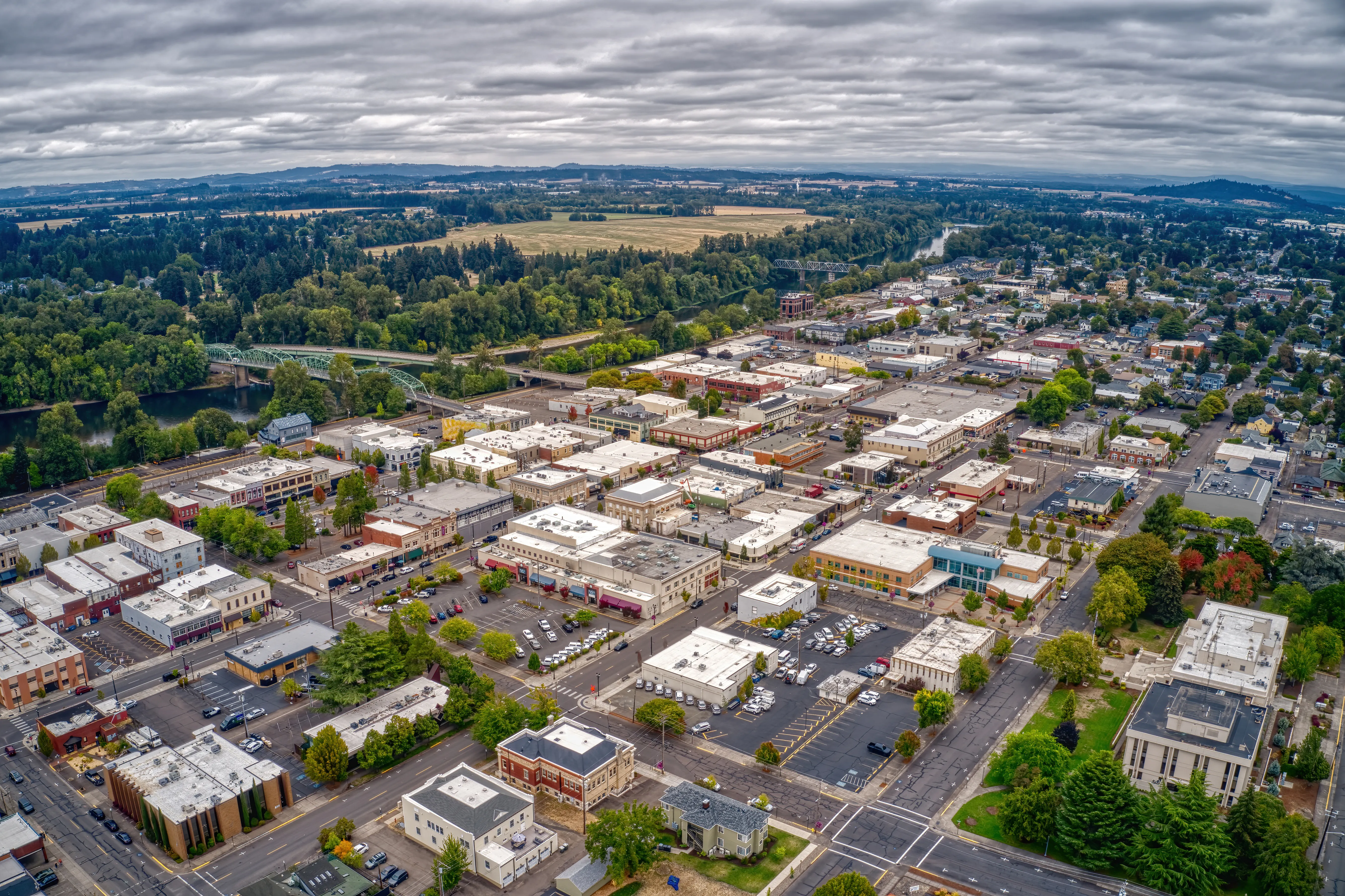
Local Expert Takeaway: The single most impactful decision Albany buyers make isn't price — it's which side of the Willamette River they choose. North Albany delivers the city's best schools, largest lots, and most suburban feel at a median in the $490K–$560K range, but daily life requires crossing that bridge for nearly everything. South and West Albany offer a more connected, service-rich experience at the citywide median or below. Buyers who try to compromise by shopping both sides simultaneously often spend months confused rather than closing — commit to one corridor, get specific on streets, and let the trade-offs drive the decision rather than delaying it.
Is Albany a good place to live for families?
Albany offers a solid environment for families with children, particularly in North Albany and South Albany, where newer construction, parks, and access to the Greater Albany Public School District's higher-rated schools overlap. North Albany's Oak Grove Intermediate School carries an A- rating, and the overall district holds a B rating. The city's cost of living index sits below the national average, which helps family budgets stretch further than in nearby Corvallis or Salem.
What are the best neighborhoods in Albany, Oregon for first-time buyers?
East Albany offers the most accessible entry points in the city, with homes commonly available in the $330K–$400K range — well below the citywide median and reachable with Oregon Bond Program down payment assistance. West Albany is worth a close look as well for buyers who want a slightly more established neighborhood feel without East Albany's older housing stock concerns. Both areas sit within the same school district, so school access doesn't differ dramatically between them.
How does North Albany compare to the rest of Albany?
North Albany functions almost as a separate community within city limits — separated by the Willamette River, priced roughly $130,000–$140,000 above the citywide median, and dominated by newer construction on larger lots. The trade-offs are real: almost all retail, medical care, and restaurants are south of the river, flood risk affects a meaningful share of properties, and the price premium requires a stronger income profile than most of Albany demands. For buyers who want what North Albany specifically offers, it's worth it. For buyers hoping to stretch a budget, the rest of Albany delivers stronger value.
Explore the full Albany series: The Ultimate Albany Relocation Guide · Is Albany Safe? · Cost of Living in Albany · Best Neighborhoods in Albany · Albany Schools & Family Life · Albany Youth Sports · Albany Parks & Recreation · Retiring in Albany · 1031 Tax-Deferred Exchange in Albany · Albany First-Time Homebuyers Guide · · Moving to Albany from California
Tell us what you need help with and we'll connect you with local resources.

About the Author
Todd Davidson is the founder of Living in Oregon and Living in Washington, where he publishes in-depth city guides, neighborhood resources, and local market insights covering more than 180 communities across the Pacific Northwest. While his background is in home financing and real estate, he created these digital platforms to help families research and compare regions before making a move.