
Willamette Valley · Oregon
Is Albany, Oregon Safe? Crime Rates, Safest Neighborhoods & Local Reality (2026)
Albany doesn't make the headlines that Portland does, and that's actually part of the point. With a population just over 57,000, this Willamette Valley city sits at the crossroads of two interstates and a freight rail network, which creates a different kind of community than the quiet college-town feel of nearby Corvallis. The honest safety picture here is genuinely mixed — violent crime rates that outperform both Oregon and national averages sit alongside property crime numbers that land above the national average. That combination tells a story that neither "Albany is dangerous" nor "Albany is perfectly safe" captures accurately.
In daily life, what those numbers mean is pretty practical. Most residents go about their routines — shopping on Pacific Boulevard, grabbing coffee downtown, taking kids to Timber Linn Memorial Park — without any awareness of crime statistics. The parts of Albany where crime concentrates are identifiable, and many of the neighborhoods that score best for safety also happen to sit in the most desirable parts of the city for homebuyers. Knowing the geography of risk here matters more than memorizing citywide averages.
This guide breaks down where Albany actually stands — violent versus property crime, which neighborhoods earn strong safety grades, how Albany compares to Lebanon and Corvallis, and what the locals who've lived here for years actually do differently than newcomers. Whether you're choosing between North Albany and a neighborhood near downtown, or deciding whether Albany is the right move from California, the picture here is more nuanced than any single crime score suggests.

Albany's overall crime rate runs at roughly 30 incidents per 1,000 residents per year — a figure that, perhaps surprisingly, sits below the U.S. national average of around 33 per 1,000. What drives that number in two very different directions is the split between violent and property crime. Local police data suggests Albany's violent crime rate runs around 2 per 1,000 residents, which places the city well below both Oregon's state average and the national rate. Property crime, on the other hand, comes in closer to 18 per 1,000 — above the national average, and the primary reason Albany earns mixed grades on the major crime-tracking platforms.
The structural explanation for elevated property crime isn't hard to find. Albany sits at the intersection of I-5 and Highway 20, making it a logical stopping point for transient activity that larger cities like Salem and Portland generate and push outward. The commercial corridor along Pacific Boulevard — with its big-box retail, fast food strips, and motel clusters — concentrates the kind of opportunistic property crime that inflates citywide numbers without necessarily reflecting what's happening in residential neighborhoods. Larceny and motor vehicle theft are the dominant categories, not violent crime.
The trend line is working in Albany's favor. The Albany Police Department's 2025 data shows both violent and property crime falling — aggravated assaults dropped roughly 20% from 2024 to 2025, and total property crimes fell by more than 300 incidents over the same period. Group A person crimes hit their lowest per-capita rate since 2019. That's not a blip — five consecutive years of property crime decline signals a structural shift, not just statistical noise.
Albany's violent crime rate — commonly estimated around 2 per 1,000 residents based on FBI reporting methodology — puts the city well ahead of both the Oregon state average and the national average, both of which run closer to 3.3 to 3.6 per 1,000. Practically speaking, that translates to roughly a 1-in-510 chance of being a victim of violent crime in any given year, compared to a 1-in-302 chance statewide. For most residents, violent crime isn't an abstract fear that shapes daily behavior — it's a statistical background condition that occasionally surfaces in local news but rarely touches everyday life in the neighborhoods where most homebuyers are looking.
Property crime is where Albany earns its more complicated reputation. The dominant categories are motor vehicle theft, larceny-theft, and to a lesser extent residential burglary — and they cluster heavily around the central commercial zone rather than spreading evenly across the city. Residents near downtown and the Pacific Boulevard corridor are statistically more exposed than those in the newer subdivisions of North Albany or the quieter residential pockets in the northwest. The best practical response, which locals tend to adopt without much fanfare, is the same one that applies in any Oregon city: don't leave valuables visible in parked cars, and make sure garage doors and side gates stay closed at night.
North Albany is the safest identifiable area of the city by most available measures, earning a crime grade of A- and landing in roughly the 84th percentile for safety nationally. The north section of this area — the newer subdivisions that have expanded as Albany's growth has pushed toward Millersburg — sees victimization risk closer to 1 in 59, which is meaningfully better than the citywide average. Higher median household incomes, newer housing stock, and lower commercial density all contribute to the calmer profile. Families buying here are largely insulated from the property crime patterns that affect the commercial corridors further south.
South Albany presents a more varied picture than its northern counterpart, though it still earns strong residential safety grades relative to the city's central zone. The area has seen steady neighborhood development over the past decade, and the established subdivisions along the southern edge of the city tend to attract long-term owner-occupants rather than the transient population that drives crime statistics in more commercially dense zones. Buyers here generally find the day-to-day experience calm, though proximity to Highway 20 east of town means some pockets see more through-traffic than purely residential areas.
West Albany and the northwest corridor consistently rank among the places Albany residents themselves describe as the safest parts of the city — and the crime data aligns with that perception. Median incomes in West Albany run above $70,000, and the neighborhood's blend of established single-family homes and newer construction creates a residential fabric that simply doesn't generate the opportunistic crime patterns seen downtown. Victimization odds across the northwest part of the city run roughly 1 in 51 for all crime categories combined, compared to 1 in 20 in central Albany — a gap wide enough to matter when choosing where to plant roots.
East Albany also posts strong safety numbers, with median incomes above $70,000 and overall crime grades well above the city average. The eastern side of Albany has historically been more working-class in character than the northwest, but the residential streets east of downtown — particularly in the established neighborhoods near Bryant Park — tend to be quiet and stable. The main differentiator in East Albany isn't violent crime but rather proximity to the rail corridor and some of the light industrial activity near Pacific Boulevard, which draws more through traffic than purely residential west-side streets see.
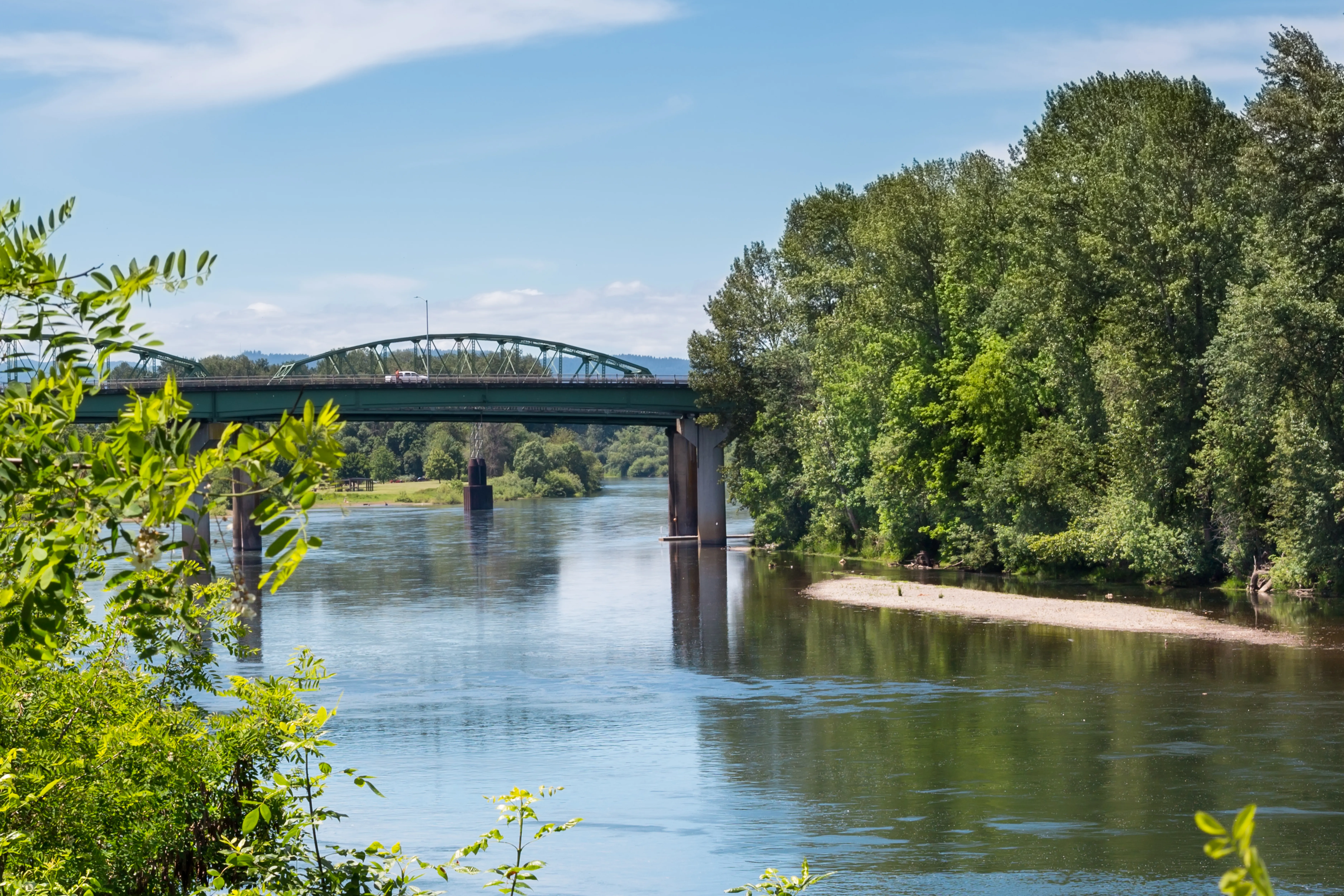
Downtown Albany operates under a different dynamic than the residential neighborhoods — and that distinction matters for crime data interpretation. Central Albany records roughly 392 crime incidents per year, the highest concentration in the city, but a meaningful share of that total reflects retail theft and incidents tied to the commercial zone rather than residential victimization. The Albany Historic Carousel, the riverfront at Monteith Riverpark, and the historic commercial district all draw visitors and activity that a strictly residential neighborhood never would. For residents living in the Hackleman or Monteith historic districts adjacent to downtown, the practical reality is mixed: walkable, charming streets alongside a noticeably elevated need for situational awareness after dark.
Periwinkle is one of Albany's quieter residential neighborhoods and appears on the short list of areas that earn Grade A safety ratings — a distinction it shares with North Albany and a handful of other well-established areas on the city's periphery. The neighborhood tends to attract owner-occupants who have been in place for years, which creates the kind of neighborhood cohesion that informally deters opportunistic property crime better than any statistic can. Buyers who prioritize residential stability and low-traffic streets without necessarily wanting the premium that comes with newer North Albany construction often find Periwinkle worth a serious look.
| City | Violent Crime / 1K | Property Crime / 1K | Overall Safety Profile |
|---|---|---|---|
| Albany | ~2.0 | ~18 | Mixed — strong violent crime grades, above-avg property crime |
| Corvallis | ~1.5 | ~22 | College-town dynamics; low violent, moderate-high property |
| Salem | ~4.5 | ~32 | Oregon's capital carries significantly elevated crime across categories |
| Lebanon | ~3.2 | ~20 | Smaller city, above-average violent crime rate for its size |
| Millersburg | ~0.5 | ~5 | Very small city, minimal crime volume overall |
| Jefferson | ~1.0 | ~8 | Rural character, low crime volume |
Looking to buy in Albany? Estimate your payment.
Enter your numbers to see an estimated monthly mortgage payment.
Estimate only. Excludes HOA fees and mortgage insurance.
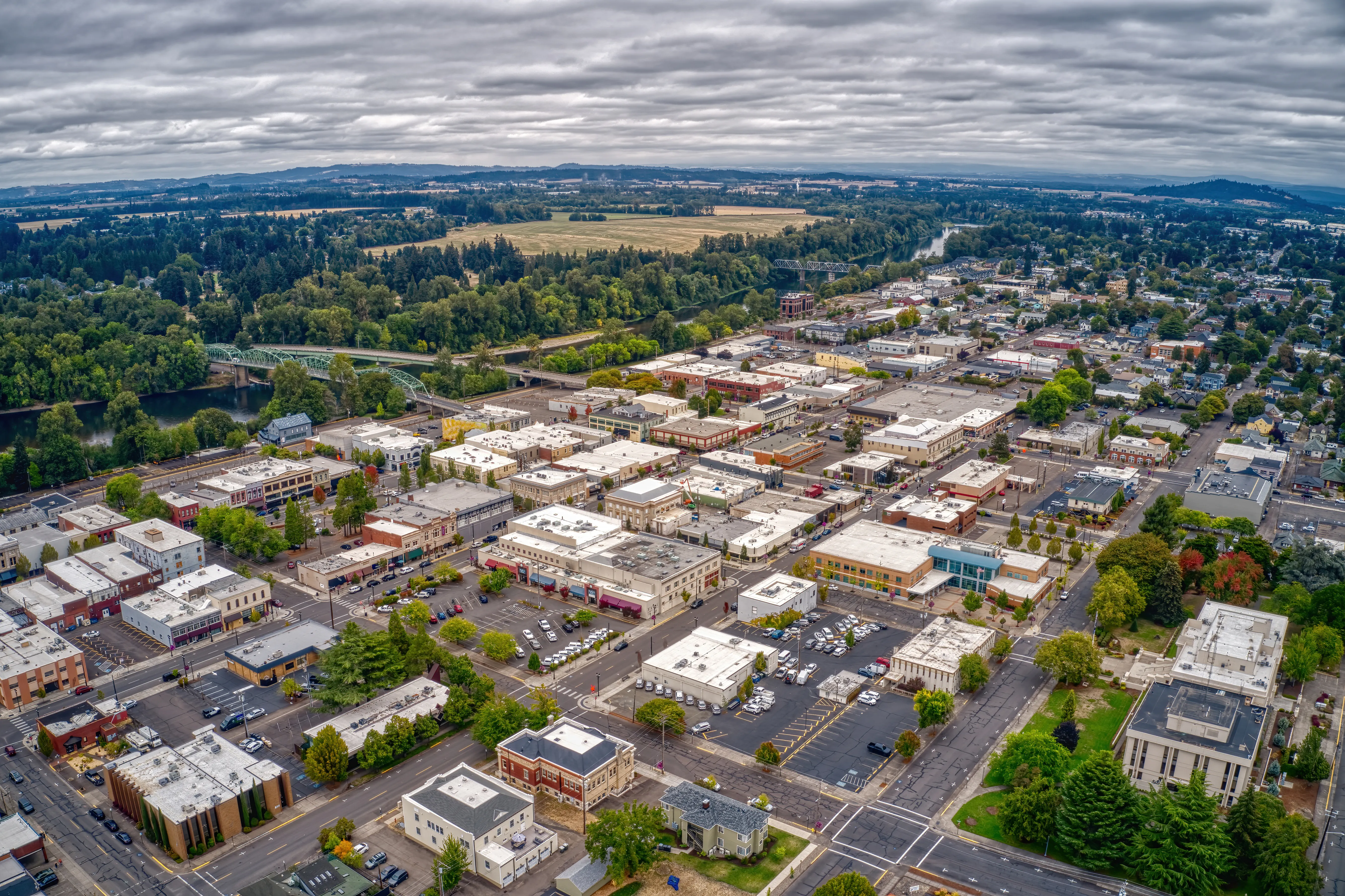
The thing that crime apps and aggregate safety scores miss entirely is the commercial-versus-residential split in Albany's crime geography. Pacific Boulevard from roughly Santiam Highway south to the box-store corridor is where the bulk of Albany's property crime happens — and it happens because that's where the retail traffic, the motels, and the highest concentration of foot traffic from transient populations intersects. Locals who live in North Albany or Periwinkle don't think of themselves as living in a city with elevated property crime because they genuinely aren't experiencing it at meaningful rates. The citywide numbers are real, but they're carrying statistical weight from zones that don't touch most residential neighborhoods.
What longtime Albany residents actually do is fairly sensible rather than fearful. Cars get locked every time, even in driveways — motor vehicle theft is Albany's most common property crime category, and an unlocked car on a quiet street is still an easy target. Ring cameras and motion-sensor lights have become standard in most established neighborhoods, not because crime is rampant but because they're cheap deterrents that work. The downtown area warrants a bit more awareness after dark, particularly around the blocks north of First Avenue toward the rail corridor, where foot traffic from the mission and transitional housing creates a different street dynamic than the historic storefronts would otherwise suggest.
The multi-year downward trend in both violent and property crime is the most genuinely encouraging piece of the Albany safety picture. APD's 2025 data shows the first sustained decrease in person crime rates since 2019, and property crime volumes are down more than 15% from their five-year average. Whether that trajectory holds depends on housing and services policy at the state level as much as local policing — Oregon's unsheltered population issues affect every mid-size city in the valley. But Albany enters 2026 with momentum, not stagnation, on crime reduction.
Local Expert Takeaway: If you're buying in Albany and safety is your primary concern, draw your search boundaries to favor the northwest quadrant — North Albany, the Periwinkle area, and the established West Albany neighborhoods consistently outperform citywide averages by a wide margin. Avoid placing too much weight on aggregate city-level grades; the gap between a North Albany cul-de-sac and the blocks around Pacific Boulevard and Santiam Highway is larger than any single score can represent. For downtown-adjacent historic neighborhoods like Hackleman, plan for a trade-off between character and elevated property crime awareness — it's a lifestyle choice many buyers make happily, but go in clear-eyed.
✅ Albany's violent crime rate outperforms both Oregon and national averages — your odds of being a victim of violent crime here run roughly 1 in 510, compared to 1 in 302 statewide.
⚠️ Property crime is the real challenge — above the national average and concentrated heavily along the Pacific Boulevard commercial corridor and central zones, not spread evenly across residential neighborhoods.
📍 North Albany and Periwinkle are the standout residential safety zones — both earn Grade A safety ratings, with North Albany's median income above $103,000 correlating with the city's lowest crime volumes.
Is Albany, Oregon a safe place to live?
Albany is safer than it's often given credit for, particularly on violent crime, where it outperforms the Oregon state average and the national rate. The more accurate framing is that Albany is a city with significant variation by neighborhood — the northwest side and North Albany consistently earn top safety grades, while the central commercial corridor pulls citywide averages down. Most buyers who research the geography before committing find that the residential neighborhoods they're actually considering are meaningfully safer than the aggregate scores suggest.
What is the biggest crime concern in Albany?
Property crime — specifically motor vehicle theft and larceny — is Albany's most persistent challenge. It clusters heavily around the Pacific Boulevard retail corridor and the central zone rather than distributing evenly through residential areas. APD data shows this category declining steadily over the past five years, with total property crimes down more than 300 incidents between 2024 and 2025, but it remains the metric that keeps Albany from earning top-tier safety grades on national platforms.
How does Albany compare to Corvallis for safety?
The comparison is less obvious than most people expect. Albany's violent crime rate is slightly higher than Corvallis's, but Corvallis actually posts higher property crime per capita — a product of university-area vehicle break-ins and bike theft that inflate its numbers. For families buying a home, the practical day-to-day safety experience in Albany's North Albany or Periwinkle neighborhoods is comparable to Corvallis's quieter residential zones, at a median home price of $418,000 versus Corvallis's considerably higher market.
Explore the full Albany series: The Ultimate Albany Relocation Guide · Is Albany Safe? · Cost of Living in Albany · Best Neighborhoods in Albany · Albany Schools & Family Life · Albany Youth Sports · Albany Parks & Recreation · Retiring in Albany · 1031 Tax-Deferred Exchange in Albany · Albany First-Time Homebuyers Guide · · Moving to Albany from California
Tell us what you need help with and we'll connect you with local resources.

About the Author
Todd Davidson is the founder of Living in Oregon and Living in Washington, where he publishes in-depth city guides, neighborhood resources, and local market insights covering more than 180 communities across the Pacific Northwest. While his background is in home financing and real estate, he created these digital platforms to help families research and compare regions before making a move.