Willamette Valley · Oregon
Living in Salem: The Ultimate Relocation Guide (2026)
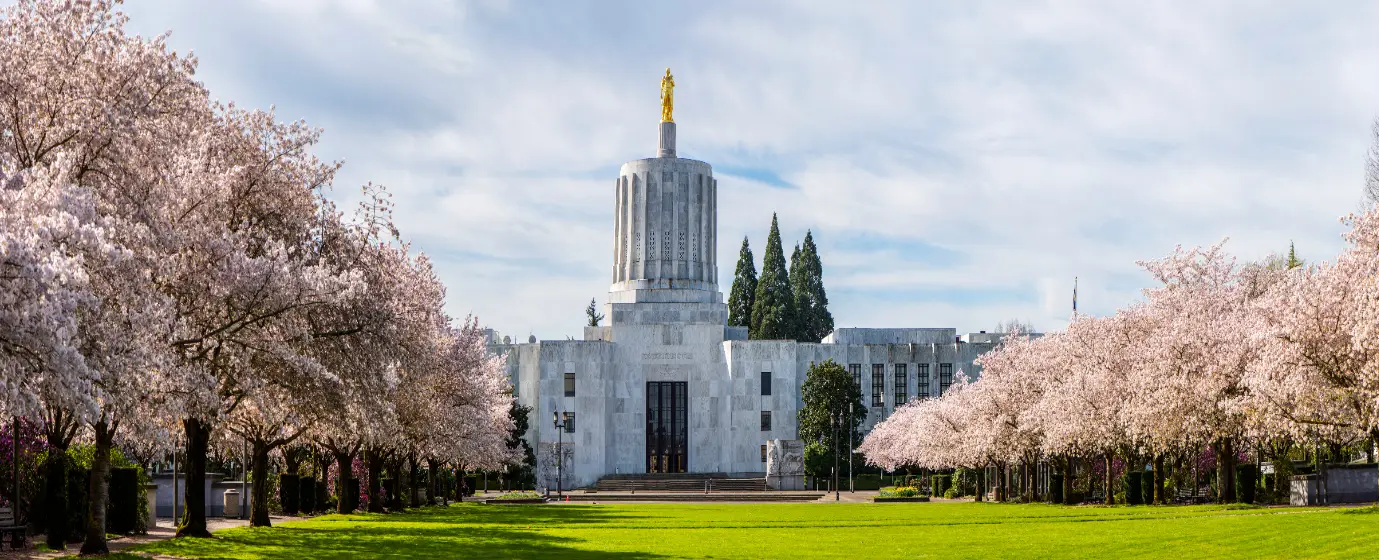
Maybe you've been watching Portland's housing market from a distance and the math just stopped making sense. Maybe your employer is somewhere along the I-5 corridor and someone mentioned Salem as the practical alternative — decent commute, real neighborhoods, a genuine city with its own identity. Or maybe you drove through the Willamette Valley on a clear day, caught the view of the Capitol dome against the hills, and thought: what would it actually be like to live here? The honest answer is more interesting than the stereotype suggests. Salem is Oregon's second-largest city and its seat of government, which means it carries a peculiar dual identity — a working-class regional hub that also hosts the machinery of statewide power, a place with real affordability that still somehow gets overlooked in favor of Portland suburbs costing $200,000 more.
What shapes daily life here is geography as much as anything else. The Willamette River runs along the western edge, creating a natural divide between Salem proper and West Salem — which sits in Polk County and has its own distinct feel. The city spreads east and south from the river, with the older historic neighborhoods clustered near downtown and the Capitol, the family-oriented South Salem corridor drawing most of the real estate attention, and more affordable entry-level inventory scattered through the northeast and southeast quadrants. At 182,902 residents and growing at roughly 0.62% annually, Salem has the infrastructure of a real city — a regional medical center, two universities, a community college, a professional sports team — without the traffic gridlock or price pressure of the Portland metro.
This guide will help you figure out whether Salem actually fits your life. Not whether it's theoretically affordable or broadly "nice," but whether the specific tradeoffs — the commute reality, the school options, the neighborhood differences, the things that surprise people six months in — align with what you're actually looking for. The goal is to give you the honest picture before you start scheduling showings.
Salem rewards certain types of buyers and renters more than others. The table below cuts through the broad appeal and gets specific about who tends to thrive here.
| Best For | Why |
|---|---|
| Commuters to Portland | 55-minute drive on I-5; far cheaper than any Portland suburb at a comparable price point |
| State government employees | The Capitol complex, Marion County offices, and state agencies are all central employers |
| Families with school-age children | South Salem corridor offers strong schools, parks, and family infrastructure |
| First-time buyers | Median home price around $425,000 with no sales tax; Southeast and Northeast Salem offer entry points below $375,000 |
| Retirees | Salem Health medical system, Willamette Valley wine country access, manageable city scale |
| Remote workers | Lower cost of living than any major Oregon metro, with genuine city amenities and fast internet infrastructure |
Salem doesn't perform for visitors the way Portland does. There's no tourist-polished neighborhood designed to impress people on a weekend trip. What you get instead is a city that's genuinely organized around the people who live and work here — state workers, hospital staff, farmers from the surrounding valley, university students, families who've been in the same South Salem neighborhood for twenty years. The Capitol building anchors the downtown core both physically and culturally, and the surrounding blocks mix government offices with a growing restaurant and arts scene that most outsiders don't know exists.
The commute to Portland is the variable most buyers from the metro area fixate on, and honestly, 55 minutes on a good day is accurate — but I-5 northbound through the Woodburn corridor on a Friday afternoon is its own category of bad. If your Portland commute is Tuesday and Thursday optional, Salem works beautifully. If you're doing five days a week on I-5, you'll want to think carefully about that before locking into a 30-year mortgage. The Amtrak Cascades train runs between Salem and Portland and takes about 90 minutes, which some commuters use for work-from-train days — it's not a daily commute solution, but it's a genuine option.
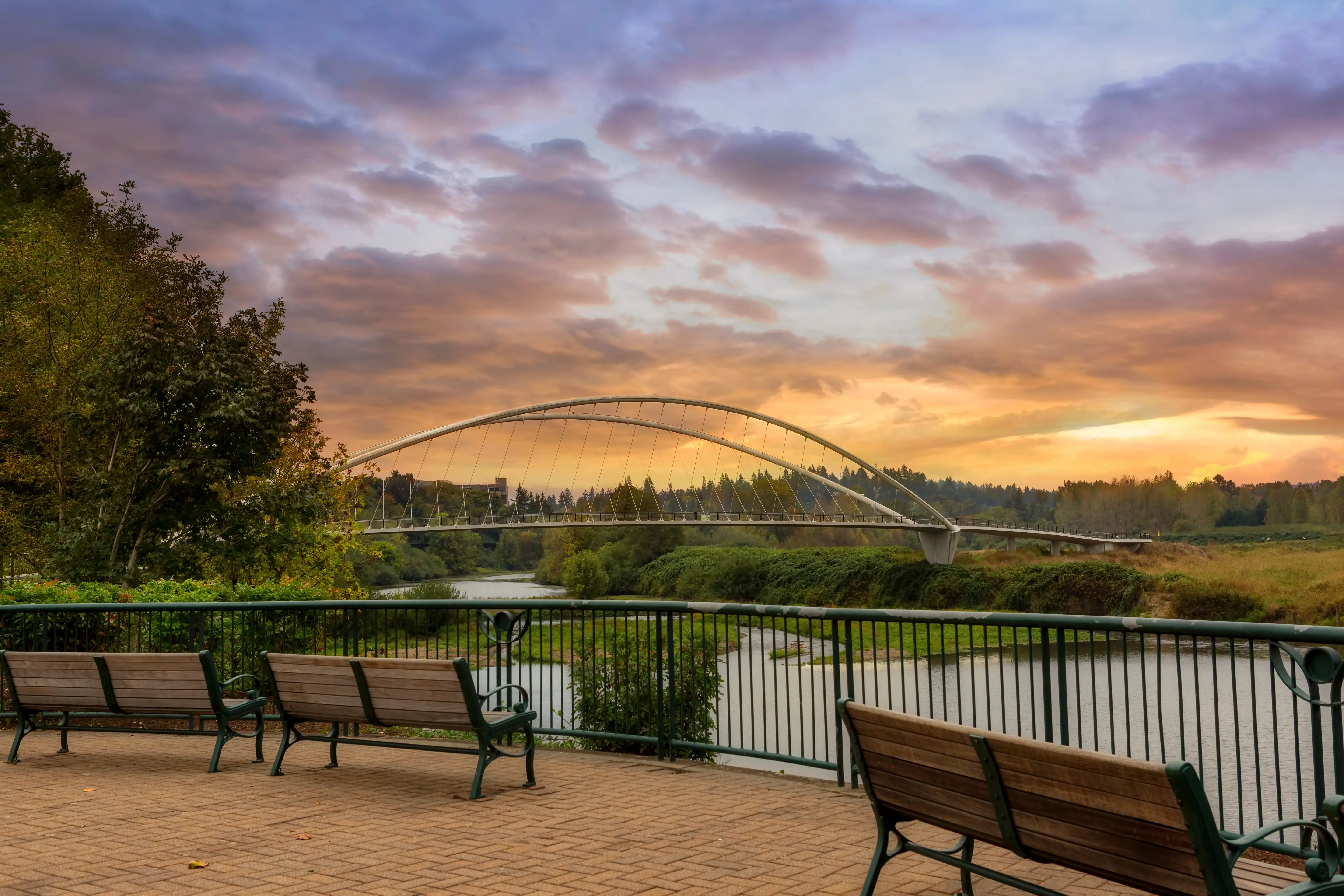
What surprises most people after six months of living here is how manageable the city feels at scale. Salem has the grocery stores, the medical facilities, the restaurants, and the cultural infrastructure of a real city — but you're rarely fighting for parking the way you do in Portland. Riverfront Park connects to a paved path system that runs for miles along the Willamette. Minto-Brown Island Park, one of the largest urban parks in Oregon at over 1,200 acres, sits minutes from downtown and offers trail access that most Oregon cities would envy. The Salem's Riverfront Carousel operates spring through fall and functions as one of those unlikely gathering spots that locals genuinely love and newcomers are charmed by.
The social scene is quieter than Portland's but more active than people expect. The Oregon State Fairgrounds hosts events throughout the year. Elsinore Theatre, a 1926 Gothic Revival landmark on High Street, brings in touring acts and local performances. The farmer's market at the Capitol Mall runs Saturday mornings through the season and pulls a real cross-section of the city. Salem doesn't have a Pearl District or a Division Street, but it has a consistent, unhurried quality of daily life that a meaningful number of people actively prefer.
The housing math is simply better here than anywhere else in Oregon at this population size. A median around $425,000 in a city of 183,000 people — one with two universities, a major regional hospital, and a commercial core — is unusual. For buyers coming from the Bay Area or Southern California, it can be genuinely disorienting. The absence of a state sales tax compounds the advantage, particularly for families making large purchases, and property tax at approximately 0.92% is competitive by Pacific Northwest standards.
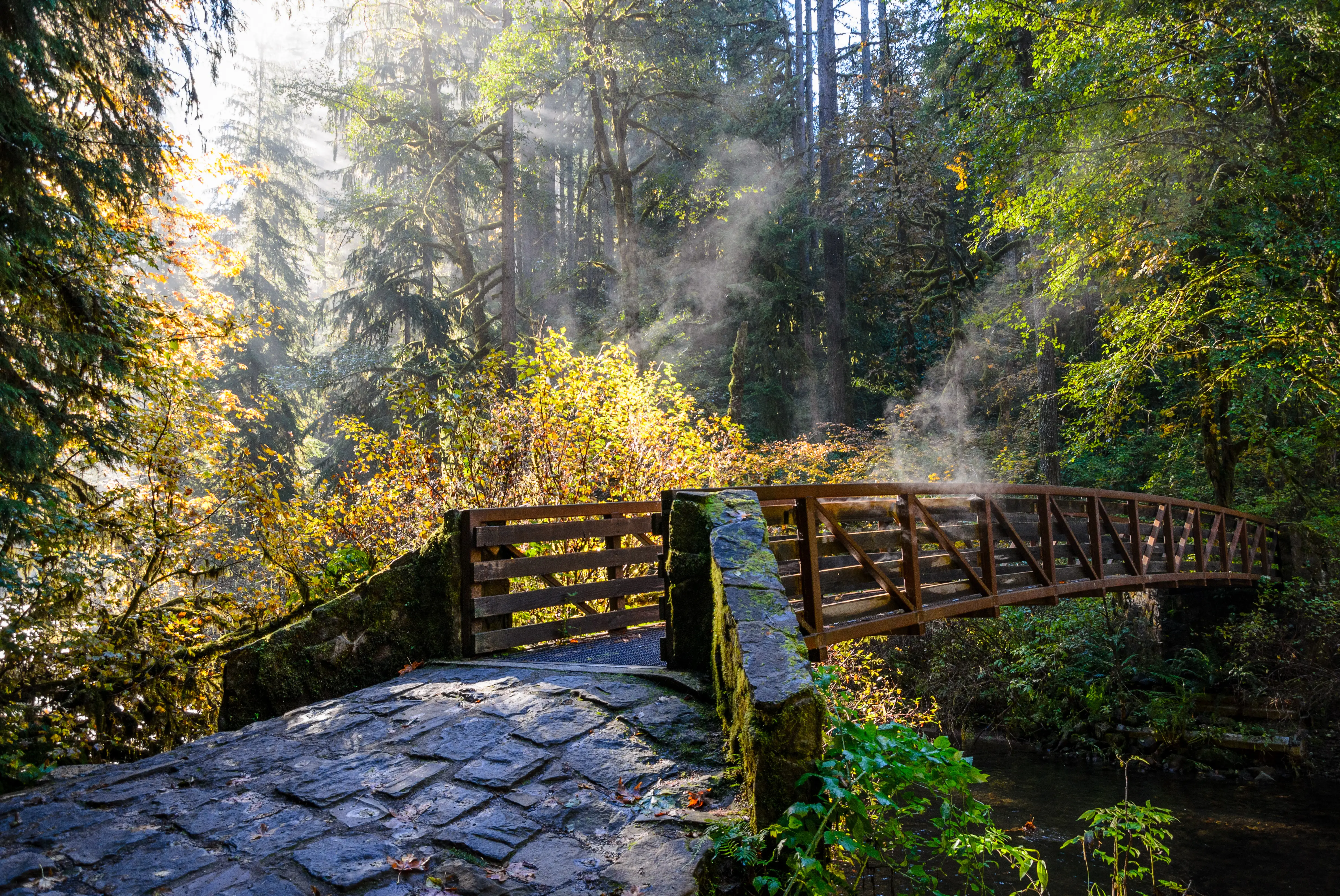
The Willamette Valley location is one of Salem's most durable assets. You're 15 minutes from some of the world's most respected Pinot Noir producers in the Eola-Amity Hills. Silver Falls State Park — Oregon's most visited state park, with its famous Trail of Ten Falls — is about 26 miles east. The Oregon coast is roughly 90 minutes west. Portland is an hour north. Very few American cities of Salem's size sit inside a comparable geographic radius, and for outdoor-oriented buyers, that access matters enormously in daily quality of life.
Salem Health anchors the regional healthcare system with a large main campus on Winter Street and multiple specialty centers throughout the metro. For families and retirees, having a major regional medical system within the city — not a 45-minute drive away — is a genuine lifestyle factor. The medical sector is also one of Salem's most stable employment anchors, which contributes to the housing market's overall steadiness.
Chemeketa Community College's downtown campus and Willamette University's well-regarded liberal arts program give Salem an intellectual and cultural depth that smaller cities at this price point often lack. Both institutions host public lectures, arts events, and community programming that residents actually use. Willamette University's proximity to the Capitol also means Salem has a steady pipeline of civic-minded young professionals who choose to stay after graduation — which shows up in the restaurant and coffee scene, the local advocacy organizations, and the general energy of the neighborhoods immediately south of downtown.
Salem has a notably higher property crime rate than most buyers expect — approximately 28 per 1,000 residents, which is above the national average. Certain parts of the city, particularly areas north of downtown near the commercial strips on Portland Road and Lancaster Drive, see disproportionate shares of that activity. This doesn't mean Salem is uniformly unsafe, but it does mean neighborhood selection matters more here than in, say, Silverton or Independence. South Salem and West Salem generally report lower crime levels, and several neighborhoods near the Capitol have active neighborhood watch programs and lower incident rates. The safety picture is uneven rather than uniformly concerning — but buyers who don't research specific areas before purchasing can end up surprised.
The commute math has a ceiling. If you're working downtown Salem or at a South Salem employer, life is easy. If you're commuting to Portland five days a week, the calculus is harder, and remote-work arrangements can evaporate faster than home purchases get reversed. Salem works best as a primary base for people with flexible work situations or who have employment rooted in the Willamette Valley.
Some buyers leave Salem for the same reason: the perception that the city lacks the urban polish or density of Portland. Downtown Salem has improved meaningfully over the past decade, but there are still blocks on Liberty Street and Commercial Street that feel underutilized. The nightlife scene is modest by any comparison. For buyers who want to walk to fifteen restaurant options on a Tuesday night, Salem is going to feel thin. The compromise most long-term residents make — consciously or not — is accepting that Salem is a place you drive from to reach certain amenities, not a place where those amenities walk up to meet you.
There's also a weather reality worth stating plainly: Salem sits in the Willamette Valley, which means approximately 144 days of rain annually, persistent grey skies from October through March, and fog that settles into the valley floor in ways that can feel claustrophobic in December. This is Oregon, and it's the Oregon that people from Southern California often don't fully price in when they're running spreadsheets on housing costs.
West Salem operates almost as its own small town, connected to the rest of Salem by the Marion Street and Center Street bridges but functionally distinct in character and county affiliation. The housing stock leans toward 1940s Craftsman-style homes and midcentury ranch-styles, with prices running from $441,000 at the median up through the $517,000 range for more premium hillside and view lots. Wallace Marine Park along the river is a genuine asset, offering boat launches, disc golf, and trail access that residents treat as a backyard amenity. The catch is bridge traffic: Marion Street backs up during morning and evening commute hours, and for buyers who need to be across the river at predictable times, that daily variable is worth seriously weighing.
Best for: Remote workers or flexible-schedule commuters who want Craftsman character and river access without paying South Salem prices.
South Salem is where most families with school-age children end up pointing their search, and the market reflects that sustained demand. The corridor feeding into Sprague High School and Leslie Middle School anchors the neighborhood's reputation, and homes here have held value through market fluctuations in ways that other Salem quadrants haven't. The $445,000 median understates what move-up-sized homes actually trade for — three-bedroom houses with updated kitchens on established tree-lined streets regularly close above that figure. Bush's Pasture Park sits at the heart of the area and functions as a genuine community gathering space, particularly during the spring and summer Saturday Market season.
Best for: Families prioritizing schools, parks, and long-term neighborhood stability in the most consistently in-demand submarket in Salem.
Northeast Salem is where the historic housing stock and genuine affordability intersect. The Court-Chemeketa Historic District sits within this quadrant, offering well-preserved Victorian and Arts and Crafts homes that would cost two or three times as much in any Portland neighborhood with comparable architecture. The $372,000 median reflects the entry-level positioning, and some sections carry higher crime exposure than South Salem — specifically blocks closer to the commercial corridors on Portland Road. For buyers willing to research specific streets and buy in the right pockets, this is Salem's best value proposition for people who care about architectural character.
Best for: First-time buyers and historic home enthusiasts who can tolerate some neighborhood variability in exchange for significantly lower price points.
Downtown Salem functions best as a neighborhood for renters, young professionals, and buyers who genuinely want walkable urban access over square footage. The Oregon State Capitol, Willamette University, Elsinore Theatre, and Riverfront Park are all within walking distance, and the density of coffee shops, bars, and restaurants along Liberty and Commercial streets is higher than Salem's overall reputation suggests. Home ownership in the immediate downtown core is limited by inventory and building type — condos and smaller units dominate. For buyers seeking a traditional family home, downtown is more of a lifestyle amenity to live near than a neighborhood to plant roots in.
Best for: Renters, young professionals, and buyers who want walkable access to arts and dining and don't need a yard or garage.
Highland sits among Salem's more affordable residential neighborhoods, with pricing well below the city median. The area attracts renters and first-time buyers drawn by lower cost-of-entry, and the housing stock is primarily mid-century single-family homes. It's not a neighborhood that generates the kind of premium-market enthusiasm that South Salem does, but for buyers who simply need to get into homeownership in a stable, established part of the city, it offers a legitimate path. Proximity to commercial services along the main corridors is an advantage; the neighborhood aesthetic is functional rather than distinctive.
Best for: Budget-conscious first-time buyers and renters who prioritize lower monthly costs over neighborhood cachet.
Morningside sits south of downtown in a corridor that blends residential quietness with reasonable access to South Salem amenities. The area draws families who want South Salem proximity without South Salem pricing, and the housing stock is a mix of postwar ranches and 1970s construction. It's a neighborhood that tends to reward buyers who research individual streets rather than treating the entire area as uniform — some blocks feel genuinely settled and neighborly, while others are more transitional.
Best for: Families and buyers who want South Salem access and a quieter residential feel at a modest discount to the Sprague corridor.
Sunnyslope occupies a hillside position in West Salem territory, offering the kind of valley views that justify a price premium relative to flat-site alternatives. Homes here tend to be larger lot sizes with a mix of midcentury and 1980s-era construction. The trade-off is the drive — navigating the hillside streets adds time to any commute, and the bridge crossing dynamic that affects all of West Salem applies here as well. For buyers who prioritize views, outdoor space, and a quieter residential setting, Sunnyslope delivers reliably.
Best for: Buyers who want West Salem's suburban character with added elevation, views, and lot size.
Faye Wright sits in the South Salem corridor and benefits directly from proximity to the schools and parks that make South Salem the city's most consistently sought-after quadrant. The neighborhood tends to attract families with children who want to be in the right school attendance zones without necessarily paying the highest prices in the submarket. Housing here is primarily 1960s through 1990s single-family construction — less architectural distinction than Northeast Salem's historic district, but strong school access and park proximity.
Best for: Families with school-age children who want South Salem school zone access at pricing that's slightly more accessible than the highest-demand streets closer to Bush's Pasture Park.

Where you land within Salem can meaningfully shape your long-term equity story. Neighborhoods like South Salem and West Salem have shown consistent buyer demand, with well-maintained homes often receiving multiple offers within days of listing — sometimes faster than relocating buyers expect when they're still in research mode. Highland and Morningside attract buyers who want established tree-lined streets with good access to daily conveniences. If your target is something under $500,000, be prepared to move decisively, because desirable inventory in Salem's stronger pockets doesn't sit long.
Before you schedule a single tour, I'd encourage you to sit down with a lender first — not to find out your maximum approval number, but to understand what the full monthly payment actually looks like once taxes, insurance, HOA dues, and loan structure are factored in. That number is often different from what buyers anticipate, and your comfortable budget and your maximum approval are rarely the same thing. Knowing where you truly stand financially means that when the right home appears in Salem, you're ready to act rather than scramble.
| City | Best For | Home Price | Commute to Portland | Vibe |
|---|---|---|---|---|
| Salem | Families, state workers, value seekers | $425,000 median | 55 min | Midsize regional city with genuine amenities |
| Keizer | Newer construction, suburban families | ~$390,000 | 60 min | Quiet suburban, strong community feel |
| Silverton | Small-town charm, Oregon Gardens access | ~$420,000 | 70 min | Walkable small town, tighter inventory |
| Independence | Ultra-affordable, rural edge | ~$340,000 | 75 min | Slow-paced, limited commercial services |
| Monmouth | University town, first-time buyers | ~$350,000 | 80 min | Western Oregon University anchors the economy |
| West Salem | Winery access, river views, suburban quiet | $441,000–$517,000 | 60 min | Polk County enclave with distinct neighborhood feel |
| Metric | Data |
|---|---|
| Population | 182,902 (2026) |
| Median Home Price | $425,000 |
| Median Household Income | $75,487 |
| Property Tax Rate | Approximately 0.92% |
| Sales Tax | None (Oregon has no sales tax) |
| Average Rent (1BR) | ~$1,194/month |
| Commute to Portland | 55 minutes via I-5 |
| Violent Crime Rate | 5 per 1,000 residents |
| Property Crime Rate | 28 per 1,000 residents |
| School District | Salem-Keizer School District 24J |
| Major Employers | State of Oregon, Salem Health, Salem-Keizer Schools, Chemeketa CC |
| Annual Rainfall | ~44 inches; approximately 144 rainy days |
The Riverfront Carousel is not ironic — people genuinely love it. Built in 1995 through a community fundraising effort and featuring 42 hand-carved wooden horses, it operates spring through fall at Riverfront Park and draws consistent local crowds. Newcomers tend to assume it's a tourist attraction, but Salem residents treat it as a neighborhood amenity and bring their families back to it year after year. It's the kind of thing that signals something true about the city's character — Salem invests in communal, family-oriented public spaces and tends to use them.
The Oregon State Fair in late August is a legitimate city-wide event. Running for 12 days at the State Fairgrounds on 17th Street NE, it draws around 200,000 visitors annually and functions as something between a regional agricultural celebration and a full county fair with headliner concerts, carnival rides, and competitive exhibits. Salem residents don't just attend — they participate, whether in the flower show competition, the Willamette Valley wine and beer tent, or as 4-H exhibitors from the surrounding farming communities. It's one of those local traditions that's more embedded in daily civic life than outsiders expect.
The Salem Saturday Market at the Capitol Mall runs April through October and has operated for decades as a genuine local institution rather than a curated tourist experience. Local farmers, Willamette Valley wine producers, and artisan food vendors sell alongside each other in the shadow of the Capitol building. It's where you learn what Salem actually grows and makes — which, in one of the most productive agricultural valleys in the country, turns out to be quite a lot.
What I would not do: I would not buy in the blocks immediately north of downtown along Portland Road without walking those streets on a Tuesday evening first. The commercial strip north of the Mill Creek area sees disproportionate property crime activity, and several blocks that look fine on a map feel more exposed at street level. The mistake buyers make is treating "downtown-adjacent" as uniformly desirable in Salem the way it might be in a denser, more uniformly polished city. Salem's downtown edges are uneven, and the street-level reality on certain commercial arterials is meaningfully different from the residential interior blocks two or three streets east or west.
Local Expert Takeaway: The best Salem move right now is buying in South Salem or West Salem while prices remain below the $450,000 threshold — both areas have held value through the current flat-market period and have the school zones and park access that sustain long-term demand. If budget is the primary constraint, target Northeast Salem's Court-Chemeketa area for architectural character at entry-level pricing, and research individual streets rather than treating the quadrant as uniform. Salem's property crime rate is real but geographically concentrated — the right neighborhood choice matters more here than the citywide number suggests.
✅ Salem offers genuine city infrastructure — hospitals, universities, major employers, arts — at a $425,000 median home price with no sales tax burden, making it one of Oregon's strongest value propositions for buyers priced out of the Portland metro.
⚠️ Property crime runs above national averages at 28 per 1,000, and neighborhood selection matters significantly — South Salem and West Salem report meaningfully lower exposure than the commercial corridors north of downtown.
📍 The I-5 commute to Portland is manageable at 55 minutes under normal conditions, but the Woodburn corridor can add 20–30 minutes on heavy traffic days — buyers who need five-day Portland commutes should model realistic drive times before committing.
Is Salem a good place to raise a family?
Salem has solid family infrastructure, particularly in the South Salem corridor where Sprague High School, Leslie Middle School, and extensive park access create a genuinely livable environment for households with children. The Salem-Keizer School District serves one of Oregon's most diverse student populations and offers dual-credit options through Chemeketa Community College. Families who do their homework on school attendance zones and neighborhood selection consistently report high satisfaction with the decision to settle here.
What is the crime rate in Salem, Oregon?
Salem's violent crime rate runs approximately 5 per 1,000 residents, which is relatively moderate for a city of its size. The property crime rate — around 28 per 1,000 — is the more meaningful concern for most buyers, and it's geographically uneven. South Salem, West Salem, and the neighborhoods surrounding Bush's Pasture Park and Deepwood Museum consistently see lower activity levels than the commercial corridors north of downtown or certain blocks in the northeast quadrant.
How does Salem compare to Portland for cost of living?
Salem's cost of living index runs considerably lower than Portland's — roughly 101.8 versus Portland's 130.8. Average one-bedroom rents run around $1,194 per month, compared to well over $1,600 in the Portland metro. The $425,000 median home price represents a savings of $150,000 to $200,000 over comparable Portland suburban markets, without sacrificing access to genuine city amenities. The 55-minute drive to Portland makes Salem the most practical Portland-adjacent affordable alternative for buyers who don't need to commute daily.
Explore the full Salem series: The Ultimate Salem Relocation Guide · Is Salem Safe? · Cost of Living in Salem · Best Neighborhoods in Salem · Salem Schools & Family Life · Salem Youth Sports · Salem Parks & Recreation · Retiring in Salem · 1031 Tax-Deferred Exchange in Salem · Salem First-Time Homebuyers Guide · Salem Down Payment Assistance Guide · Moving to Salem from California