Southern Oregon · Oregon
Living in Roseburg: The Ultimate Relocation Guide (2026)
Maybe you've been watching Oregon real estate for months and Roseburg keeps surfacing as the affordable outlier — the city where your budget actually works. Maybe you relocated from the Bay Area or Southern California and someone in your network said "just look at Southern Oregon before you rule it out." Maybe you drove through on I-5 and were struck by the valley, the river, and the surprising greenery, then spent the next week wondering whether this was actually a place people chose to live — or just passed through. Whatever brought you here, there's a central tension worth naming before you read another word: Roseburg is a genuinely livable small city that most of the Pacific Northwest has simply never taken seriously, and that gap between perception and reality is exactly where real estate opportunities tend to hide.
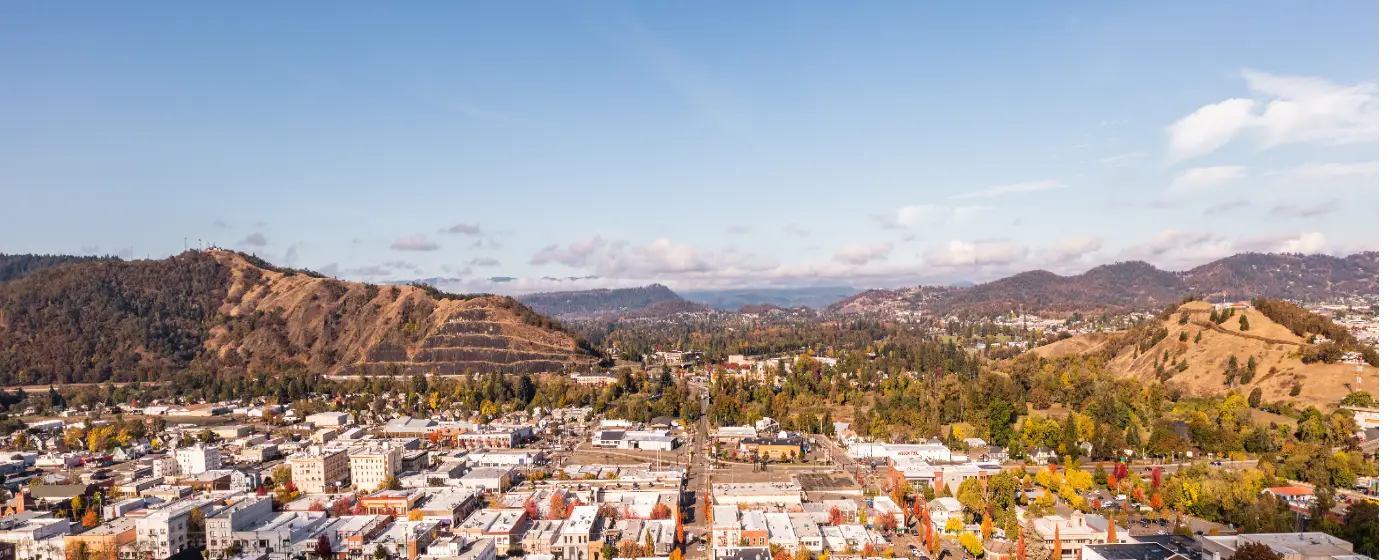
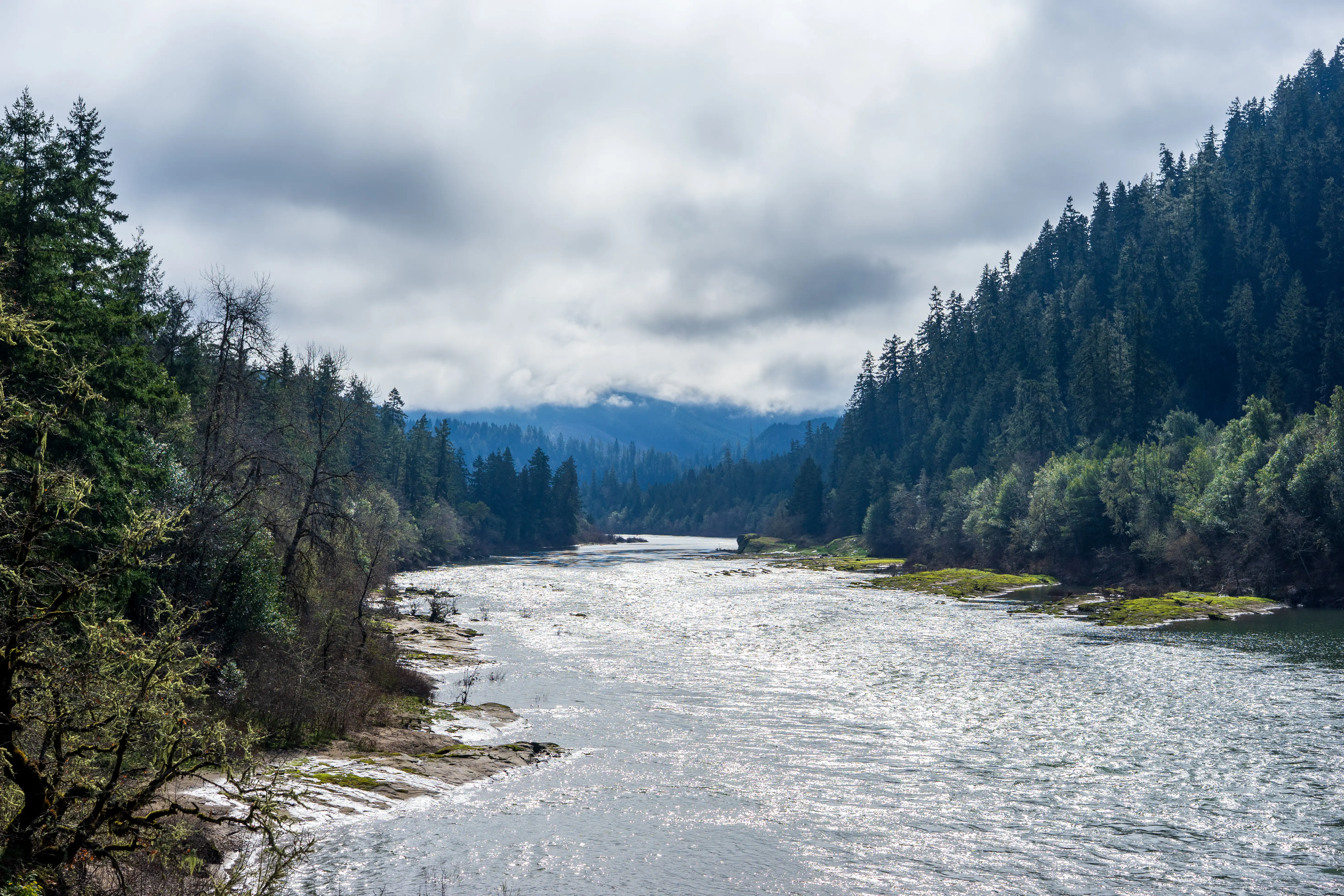
Geographically, Roseburg sits at the confluence of the North and South Umpqua Rivers in the heart of Douglas County — about 70 miles south of Eugene and roughly 180 miles north of the California border. The Umpqua Valley cradles the city on most sides, which means you're surrounded by vineyard country to the west, timber forests to the east, and the Umpqua National Forest within reasonable driving distance for weekend escapes. I-5 runs directly through the city, which is both its primary asset (freight, access, through-traffic commerce) and, for some residents, its primary liability. This isn't an isolated mountain town. It's a small regional hub — the Douglas County seat — with the full range of services that implies: hospitals, a community college, a VA medical center, a real downtown, and employers that have kept the local economy quietly stable for decades.
This guide is designed to give you the honest, complete picture: what daily life in Roseburg actually looks and feels like, which neighborhoods suit which types of buyers, how the housing market compares to nearby cities, what the genuine tradeoffs are, and why some people thrive here for decades while others pack up within two years. By the end, you'll know whether Roseburg belongs on your shortlist — or whether one of the surrounding communities is actually a better fit for your situation.
Not every city works for every buyer. Here's how Roseburg lines up depending on what you're actually looking for.
| Best For | Why |
|---|---|
| First-time buyers | A median sold price around $365,000–$380,000 makes homeownership achievable in ways Portland or Eugene simply don't allow. Entry-level inventory exists in the $200,000s. |
| Retirees | Affordable housing, a VA hospital, CHI Mercy Health, mild four-season climate, and a slower pace without full rural isolation. |
| Remote workers | Low cost of living, proximity to outdoor recreation, and improving broadband access make this a serious alternative to mid-size Oregon cities at a fraction of the cost. |
| Outdoor-oriented buyers | Umpqua National Forest, the North and South Umpqua River corridors, Wildlife Safari, and wine country access create a genuine lifestyle, not a tagline. |
| Families seeking acreage | Neighborhoods like Melrose and Garden Valley offer space that's simply unavailable at this price in any metro market. |
| Douglas County employees | Healthcare, education, government, and timber sectors provide stable local employment. Living locally reduces what is a genuinely long commute to Eugene. |
Roseburg is a city with genuine geographic drama that most online photos fail to capture. The North and South Umpqua Rivers meet just west of downtown, the valley walls rise on either side of the I-5 corridor, and on clear mornings — which are common in late spring and summer — the light across the hills has the quality of a place that knew it was beautiful before anyone arrived to name it. Living here feels different from coastal Oregon cities and very different from Portland-adjacent suburbs. The pace is unhurried in a way that either feels like relief or restlessness, depending entirely on what you're coming from.
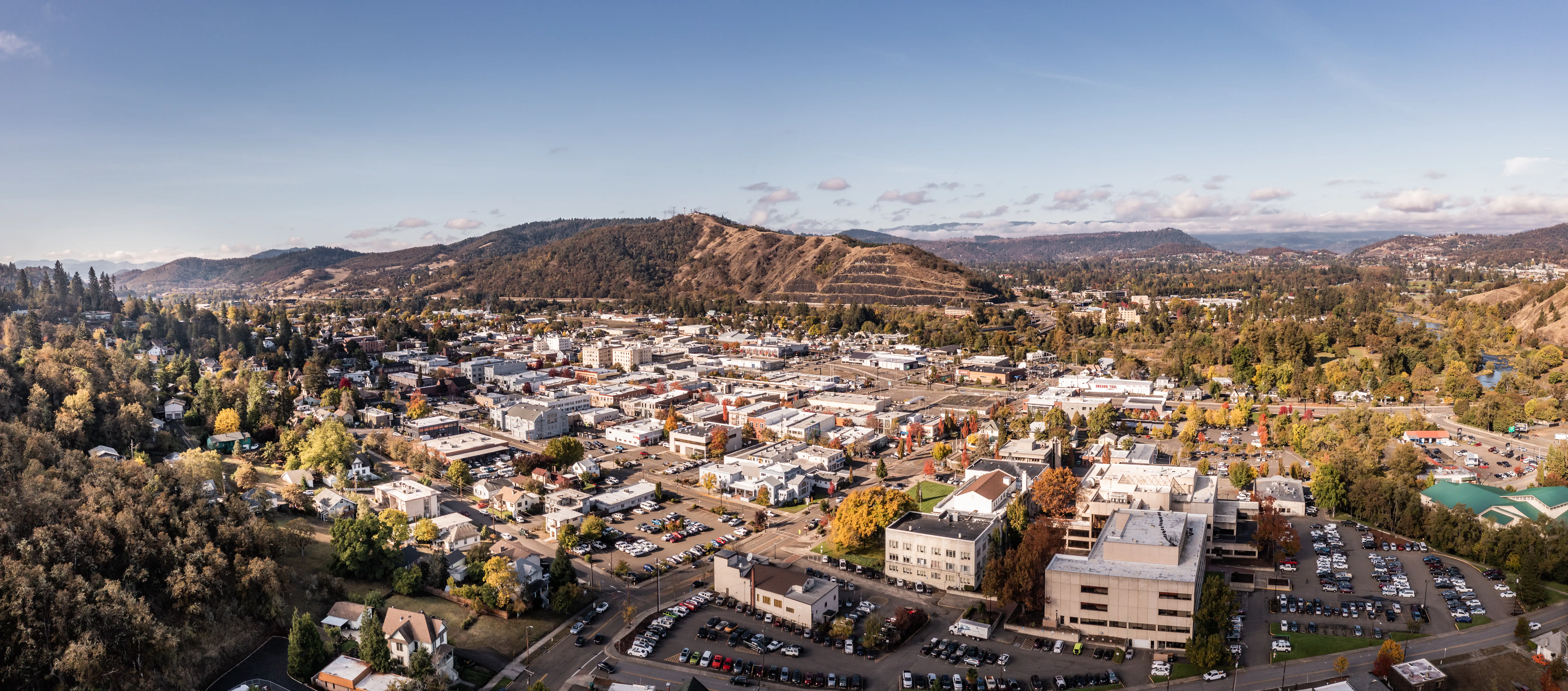
The practical geography of daily life divides roughly along the Garden Valley Boulevard and Harvard Avenue corridors. Retail, medical services, and newer residential development concentrate in the Garden Valley area to the northwest; downtown Roseburg anchors civic life, dining, and the arts district to the south; and the outlying neighborhoods of Melrose, Green, and Dixonville spread into the rural hills in every direction. Traffic in Roseburg is not a Portland problem — but the convergence near the Garden Valley Shopping Center during evening hours and the I-5 on-ramps at rush periods create friction that surprises new residents expecting small-town ease. The intersection of Garden Valley Boulevard and NW Edenbower Boulevard is the specific chokepoint most locals learn to avoid between 4:30 and 6:00 p.m.
Socially, Roseburg has the character of a working city that's in an active but unhurried transition. The timber industry shaped its identity for generations — Roseburg Forest Products remains one of the largest employers in the county — and that legacy is visible in the culture: practical, self-reliant, with a slight wariness toward outside ideas arriving with too much urgency. The craft beverage and arts communities that have taken root downtown over the past decade have added a newer layer, and the two coexist more comfortably than you might expect. Umpqua Community College brings a stream of younger residents and continuing-education energy into the city's fabric.
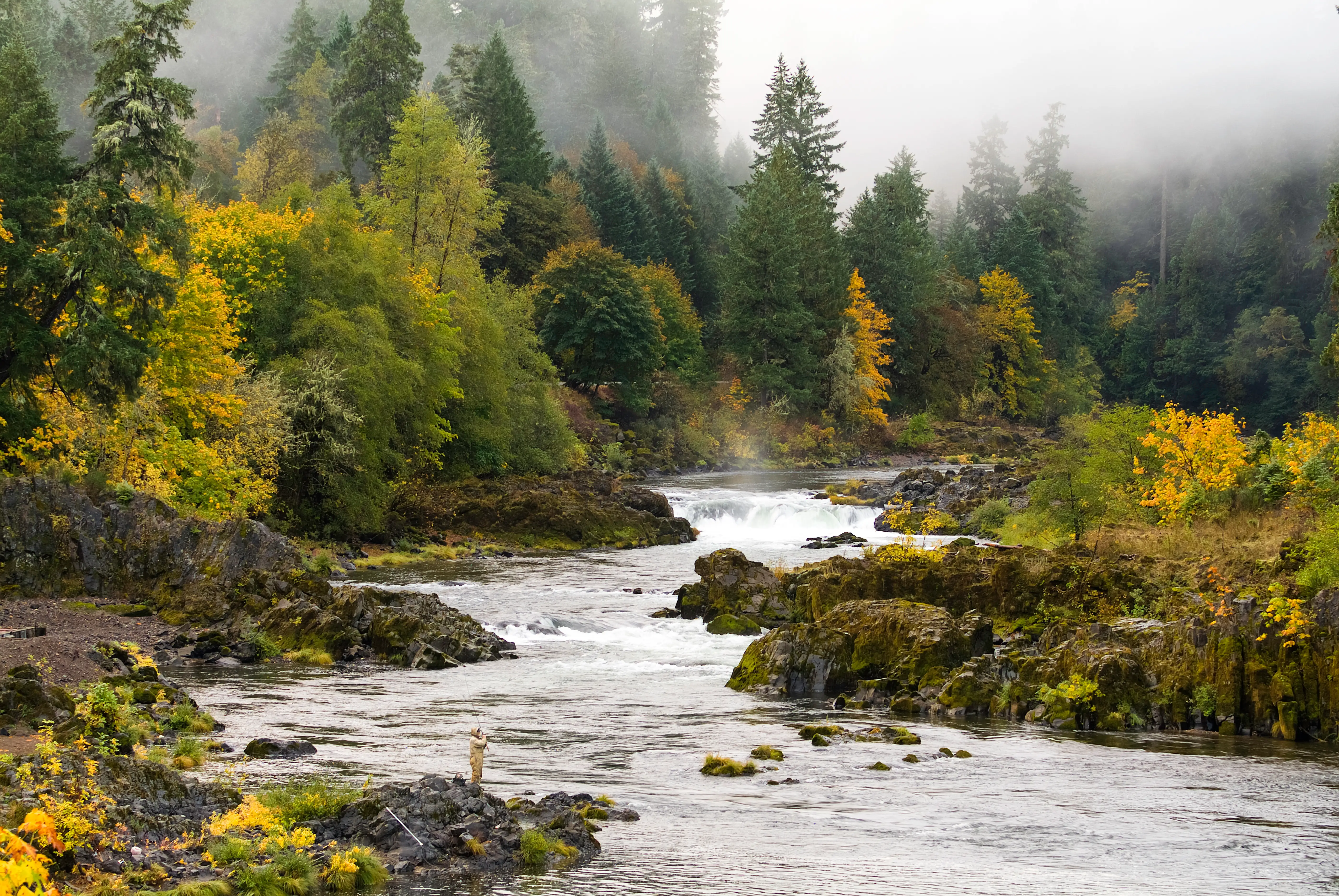
What surprises most people after six months of living here is how completely the outdoor access reframes their week. Residents who moved from mid-size cities expecting to occasionally hike on weekends find themselves on the river, in the forest, or at a winery in the Umpqua Valley almost every week — not because they planned to become outdoor enthusiasts, but because the access is simply that immediate. Stewart Park on the South Umpqua River is a five-minute drive from most of the city's core neighborhoods. The North Umpqua Trail system is under an hour east. That rhythm of easy outdoor access is one of the things that turns "we'll try it for a couple of years" into "we're not leaving."
Affordability that's real, not relative. When the median sold price sits in the $365,000–$380,000 range and a meaningful share of inventory comes to market in the $200,000s, the conversation about homeownership changes entirely. Buyers who spent years in Eugene or Portland accumulating a down payment discover that in Roseburg, that same amount covers a down payment on a home with a yard, a garage, and a neighborhood with good schools. The property tax rate of approximately 0.69% keeps carrying costs modest in a way that compounds over time — a $375,000 home carries roughly $2,590 in annual property taxes, a number that shocks buyers used to Willamette Valley assessments.
A complete medical infrastructure. For a city of roughly 24,000 people, Roseburg carries an outsized healthcare infrastructure. CHI Mercy Health provides full-service hospital care. The VA Roseburg Health Care System — less than a mile from the Hucrest neighborhood — serves veterans across a wide geographic region. This level of medical access, within the city limits, is genuinely unusual at Roseburg's population size and is a primary driver for retirees and veterans choosing to settle here rather than in more isolated rural areas.
Outdoor recreation that doesn't require a road trip. Wildlife Safari in Winston, just south of Roseburg, is a legitimate regional attraction — a drive-through wildlife park that draws visitors from across the state and provides a genuinely unusual living-near amenity for families. The Umpqua National Forest offers hiking, fly fishing, and camping within striking distance of the city. The North Umpqua River corridor is one of Oregon's finest steelhead fisheries. Crater Lake National Park is approximately two hours southeast, close enough for day trips and accessible in ways it never is from Portland.
The wine country adjacency. The Umpqua Valley AVA is one of Oregon's oldest American Viticultural Areas and produces wines — Syrah, Tempranillo, Pinot Gris — that get almost no national attention relative to their quality. Living in Roseburg means weekend afternoon drives to Estate Cellars or HillCrest Vineyard (one of Oregon's oldest bonded wineries) are simply part of the rhythm, not a destination event. It's the kind of regional asset that quietly shapes quality of life in ways you don't fully appreciate until you've been here a while.
A downtown in genuine transition. The Roseburg downtown corridor along Jackson Street and Oak Avenue has seen consistent investment over the past several years — independent restaurants, galleries, and businesses that have enough critical mass to feel like a real scene rather than a hopeful collection of storefronts. The Douglas County Museum of Natural and Cultural History provides genuine institutional grounding. The Saturday Downtown Roseburg Farmers Market runs seasonally and draws a cross-section of the city that reflects how much the community has broadened beyond its timber-industry core.
Looking to buy in Roseburg? Estimate your payment.
Enter your numbers to see an estimated monthly mortgage payment.
Estimate only. Excludes HOA fees and mortgage insurance.
Eugene is not commutable. The driving data is not ambiguous: Roseburg to Eugene runs approximately 70 miles, and while the I-5 trip under ideal conditions takes about 70–75 minutes, the figure cited in regional commute data is substantially higher once you account for real-world traffic, weather, and freight congestion on a major interstate corridor. Buyers who are considering Roseburg while maintaining Eugene-based employment need to think carefully about whether that drive is one they can sustain daily, or whether a hybrid schedule fundamentally changes the math. This is one of the more common reasons buyers leave Roseburg within the first two years.
Income and poverty realities. A median household income of approximately $53,918 and a poverty rate around 22% paint a picture of a city with real economic stratification. The affordability that attracts buyers from more expensive markets exists alongside genuine economic hardship in the urban core. Property crime sits at 18.7 incidents per 1,000 residents — not alarming by comparison to cities of similar demographics, but meaningfully higher than the quieter suburban feel of the Hucrest or Melrose neighborhoods would suggest. Where you live within Roseburg matters more than city-wide averages imply.
The retailer gap. Roseburg's retail infrastructure is solid for a city its size — the Garden Valley corridor covers the basics well — but specialty retail, higher-end grocery options, and the kind of urban commercial density that drives walkable errands simply don't exist here at the level residents from Portland-area suburbs expect. Costco is in Roseburg, which helps with bulk purchasing. For everything else that falls between Walmart and specialty order, residents typically make periodic trips to Eugene or shop online. This is a calibration issue, not a dealbreaker, but it's one that new residents consistently underestimate.
Why some people leave. The most common departure profile is the remote worker or young professional who moved for affordability, found the outdoor access genuinely satisfying, but eventually found that the city's social scene, dining diversity, and arts programming didn't scale with their expectations after year two. Roseburg is not Ashland, which has a concentrated cultural intensity that punches well above its size. It's a working city with a developing arts layer — and for buyers who need that layer to be thick and immediately accessible, the honest answer is that Roseburg may feel thin over time. The buyers who thrive long-term are those who came for lifestyle — outdoor access, affordability, community roots — rather than those who came assuming the city would evolve quickly to match big-city amenities.
Hucrest is the neighborhood that makes Roseburg residents identify with their specific corner of the city rather than the city as a whole — a distinction locals will actually make when asked where they live. Developed primarily from the late 1950s through the 1990s in southwest Roseburg, it sits adjacent to the South Umpqua River and borders both downtown and the VA hospital corridor, which is less than a mile away. Ranch-style homes in the $350,000–$450,000 range dominate, with walkable streets to Hucrest Elementary School and Stewart Park making it one of the more complete daily-life neighborhoods in the city. The downside is that the housing stock is aging, and buyers should budget for updates on homes built in the 1970s.
Best for: Families with school-age children who want walkability, park access, and proximity to healthcare facilities without leaving Roseburg's core.
Garden Valley is where the practical commerce of Roseburg concentrates — the shopping center, medical offices, financial services, and the newer residential development that's attracted families and retirees seeking move-in-ready options. The Warewood Terrace gated development along Garden Valley Boulevard offers a low-maintenance ownership experience near the city's strongest retail corridor. Ridgewood, a sub-area within the broader Garden Valley zone, offers mountain and vineyard views that give a semi-rural feel without the rural commute. The tradeoff is that Garden Valley's success as a commercial corridor means traffic patterns near the shopping center require planning at peak hours.
Best for: Buyers who want newer construction, retail convenience, and easy access to medical facilities — particularly retirees and buyers relocating from suburban environments.
Seven miles west of downtown Roseburg across the South Umpqua River, Melrose is Roseburg's premium acreage market — and buyers who come looking for a farmhouse on five acres have discovered one of Southern Oregon's more underrated rural addresses. The median real estate price in the Melrose area runs approximately $568,000, reflecting the combination of land, privacy, and proximity to the Umpqua Valley wine corridor that buyers from California and the Portland metro have increasingly sought out. Contemporary farmhouses surrounded by red maples and agricultural land are the dominant aesthetic; wildfire risk is present given forest proximity, and metal roofing is a practical consideration. This is not a neighborhood for buyers who want walkability — it's a neighborhood for buyers who have decided that acreage and views are worth the trade.
Best for: Buyers seeking rural privacy, wine-country lifestyle, and acreage within a reasonable drive of Roseburg's services.
The downtown core along Jackson and Oak Avenue corridors is Roseburg's most interesting neighborhood for buyers who want urban texture — independent restaurants, galleries, the Douglas County Museum, and the Saturday Farmers Market are all accessible on foot. Home prices in the urban core vary dramatically, with entry-level attached and older single-family properties in the $175,000–$250,000 range reflecting the economic diversity of the area. The revitalization is genuine but incomplete — pockets of vacancy and the social challenges common to any small-city downtown remain visible. For buyers who want to be part of a neighborhood's upswing rather than paying for its completion, downtown Roseburg offers that opportunity at entry-level prices.
Best for: Buyers comfortable with urban grit in exchange for walkability, community investment opportunity, and Roseburg's lowest price points.
The community of Green sits just outside Roseburg's city limits to the north, close enough to share the city's services but with a distinctly rural residential character that attracts buyers seeking space without committing to Melrose's price point. Larger lots, newer single-family construction in some pockets, and a quieter road network than the Garden Valley corridor make it a practical choice for buyers whose work keeps them in the north part of the county. The honest limitation is that Green's distance from Roseburg's commercial core requires a car for essentially every errand, and the community lacks the neighborhood infrastructure — schools, parks, walkable streets — that Hucrest or Garden Valley provide.
Best for: Buyers who prioritize lot size and quiet over walkability, particularly those working in the northern part of Douglas County.
The Harvard area sits between Garden Valley and the downtown core, offering residential streets that draw buyers who want a middle ground between the commercial energy of Garden Valley and the urban density of downtown. Older ranch-style homes and some craftsman-era construction give the neighborhood architectural character that Garden Valley's newer builds lack. Pricing in this corridor typically runs in the $275,000–$375,000 range, making it one of the more accessible established neighborhoods in the city for buyers who want proximity to both the retail corridor and downtown without paying Hucrest's top-of-market prices.
Best for: First-time buyers and younger households who want character, established streets, and a central location at a realistic price.
Laurelwood takes its name from Laurelwood Park, a neighborhood green space that anchors a residential area in the eastern portion of Roseburg. The neighborhood has a quieter, less-trafficked character than the Garden Valley corridor and draws buyers who prioritize residential calm over commercial convenience. Housing stock is primarily mid-century and 1970s-era single-family homes, and prices generally run below the citywide median, offering value for buyers willing to do some updating. The park access and the neighborhood's lower traffic volume are the primary draws; the tradeoff is fewer walkable amenities compared to Hucrest or downtown.
Best for: Buyers seeking quiet residential streets, park access, and value pricing — particularly those less reliant on walkable retail.
Dixonville sits in the hills north of central Roseburg, a semi-rural residential area with larger lots and a rural-transitional character that appeals to buyers who want some acreage without fully committing to Melrose's price range or distance. The area offers elevated views over the valley and a sense of separation from the city's commercial core that some buyers find genuinely restorative. Road access and infrastructure are more limited than established city neighborhoods, and buyers should factor in driving time to groceries, schools, and services. It's a neighborhood that rewards buyers who've specifically decided they want the hills, not those who defaulted to it for price reasons.
Best for: Buyers who want semi-rural character, hill views, and larger lots on the northern fringe of the Roseburg market.
| City | Best For | Median Home Price | Eugene Commute | Vibe |
|---|---|---|---|---|
| Roseburg | Affordability, services, outdoor access | ~$365,000–$380,000 | Long (~70 mi / 70+ min) | Working city in transition |
| Sutherlin | Budget buyers, rural feel near I-5 | ~$300,000–$340,000 | ~75 miles | Small town, limited services |
| Winston | Entry-level, Wildlife Safari proximity | ~$250,000–$310,000 | ~75+ miles | Rural residential, very limited retail |
| Glide | Acreage, river access, deep rural | Varies widely | ~90+ miles | Remote, outdoor-oriented |
| Dillard | Maximum privacy, rural land | Land-heavy listings | ~80+ miles | Unincorporated, very rural |
| Grants Pass | Urban amenities, warmer climate | ~$380,000–$420,000 | ~115 miles | Small-city, growing retail base |
The honest summary: Roseburg wins the comparison whenever services, medical access, and school infrastructure matter. Sutherlin and Winston offer lower prices but ask buyers to sacrifice most of the city's amenities. Grants Pass competes with Roseburg on lifestyle but runs higher on price and adds distance from Eugene.
| Metric | Figure |
|---|---|
| Population (2026) | ~23,858 |
| Median sold home price | ~$365,000–$380,000 (city-wide) |
| Entry-level pricing | $175,000–$250,000 (urban core) |
| Premium market pricing | $450,000–$575,000+ (Melrose, Roseburg North) |
| Property tax rate | ~0.69% |
| Median household income | ~$53,918 |
| Violent crime (per 1,000 residents) | 3.3 |
| Property crime (per 1,000 residents) | 18.7 |
| School district | Roseburg Public Schools (B-) |
| Commute to Eugene | ~70 miles / 70+ minutes |
| Median age | ~39.6 years |
| County | Douglas County |
Roseburg has been hosting the Douglas County Fair every August for well over a century — it's not a manufactured community event but the kind of agricultural fair where timber industry families and winery owners share the same fairgrounds, and the 4-H competition is taken with the same seriousness as the wine judging. The Fair remains one of the most genuinely local ways to read the social fabric of Douglas County, and new residents who attend in their first summer typically describe it as the moment the city clicked for them.
The Umpqua Valley Runners Club has built a running culture in Roseburg that's quietly become a significant social infrastructure layer for newcomers. The group organizes trail runs, road races, and casual group outings that draw residents from across the city's demographic spectrum. For buyers relocating without an existing social network, it's one of the more effective points of community entry in the city.
Wildlife Safari in Winston — four miles south of Roseburg — is technically outside the city limits, but Roseburg residents treat it as theirs in the way that Portland residents treat Powell's. It's an accredited drive-through wildlife park where residents can purchase annual passes and visit with the casual frequency most people reserve for a neighborhood park. Watching your kids encounter a giraffe at eye level through a car window on a Tuesday afternoon in February is the kind of experience that makes Southern Oregon relocation feel entirely justified.
What I would not do if moving to Roseburg: I would not buy in the urban core without physically walking the immediate blocks around any property at different times of day. The downtown revitalization has created real value in specific pockets, but the distance between a block that feels invested and a block that doesn't is sometimes measured in a single cross-street. Buyers who rely solely on map views and listing photos and skip the in-person neighborhood walk have been consistently surprised — in both directions.
Local Expert Takeaway: If you're choosing between Garden Valley and Hucrest, don't let commute time drive the decision — both are close to Roseburg's core services. Let the school-year calendar drive it instead: Hucrest's walkability to Hucrest Elementary is a genuine daily-life advantage for families with younger children, while Garden Valley's newer construction and Warewood Terrace's low-maintenance options make more sense for buyers prioritizing move-in condition over neighborhood walkability. For buyers willing to go slightly above the median, the Melrose acreage market in the $550,000–$580,000 range is attracting serious buyers from California and the Portland metro — and it has the wine-country lifestyle credentials to hold that value over time.
✅ Roseburg delivers genuine affordability — with a median sold price around $365,000–$380,000 and entry-level inventory still available in the $200,000s, it's one of the few Oregon cities where first-time homeownership is achievable without significant compromise on quality of life.
⚠️ Eugene is not a daily commute — the distance and I-5 freight congestion make this a genuine lifestyle constraint. Remote-work flexibility or local employment in Douglas County is almost a prerequisite for long-term satisfaction here.
📍 Neighborhood selection matters more here than in most cities — the gap in experience between Hucrest, Melrose, the downtown core, and the rural fringe is substantial. Buying without understanding these distinctions is the most common mistake relocating buyers make in Roseburg.
Is Roseburg a good place to raise a family?
Roseburg can be a strong choice for families, particularly those settling in Hucrest, Garden Valley, or the Melrose corridor where school access, park proximity, and community infrastructure are meaningfully better than city-wide averages suggest. Roseburg Public Schools carries a B- district rating, which is solid for a working-class city of this size, and neighborhoods like Hucrest have walkable access to elementary schools that makes the school-year routine genuinely manageable. Families who come expecting a suburban Portland experience will need to calibrate expectations; families who come for outdoor access, affordability, and a slower pace tend to stay.
What is the crime rate in Roseburg?
Roseburg's violent crime rate sits at approximately 3.3 incidents per 1,000 residents — a figure that's moderate for Oregon cities at this income level and not alarming in context. Property crime at 18.7 per 1,000 residents is the more meaningful number for daily life, and it varies significantly by neighborhood: the Hucrest and Melrose areas run substantially lower than the urban core and some transitional downtown blocks. Buyers should read neighborhood-level crime data rather than relying on city-wide averages when evaluating specific streets.
How does Roseburg compare to Grants Pass?
Grants Pass and Roseburg are the two most natural comparison points in Southern Oregon and they serve different buyer profiles. Grants Pass runs slightly higher on home prices — typically in the $380,000–$420,000 range — and has a warmer climate and a more developed downtown restaurant scene. Roseburg counters with better medical infrastructure (the VA hospital is a significant advantage for veterans), Umpqua Community College, and slightly lower price points across the board. The decision usually comes down to employment proximity and whether you're prioritizing the Rogue Valley lifestyle (Grants Pass, Medford) versus the Umpqua Valley lifestyle (Roseburg, wine country, river access).
Explore the full Roseburg series: The Ultimate Roseburg Relocation Guide · Is Roseburg Safe? · Cost of Living in Roseburg · Best Neighborhoods in Roseburg · Roseburg Schools & Family Life · Roseburg Youth Sports · Roseburg Parks & Recreation · Retiring in Roseburg · 1031 Tax-Deferred Exchange in Roseburg · Roseburg First-Time Homebuyers Guide · · Moving to Roseburg from California
Tell us what you need help with and we'll connect you with local resources.

About the Author
Todd Davidson is the founder of Living in Oregon and Living in Washington, where he publishes in-depth city guides, neighborhood resources, and local market insights covering more than 180 communities across the Pacific Northwest. While his background is in home financing and real estate, he created these digital platforms to help families research and compare regions before making a move.