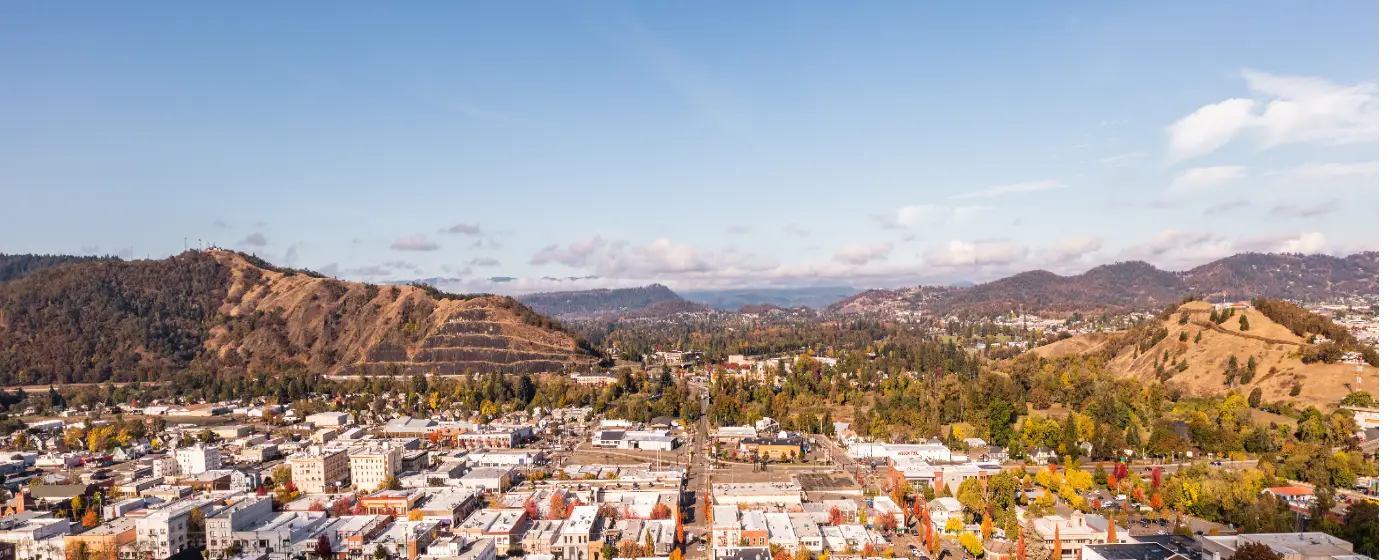
Southern Oregon · Oregon
Best Neighborhoods in Roseburg: Where to Buy or Rent (2026)
Roseburg is small enough that it's easy to assume one neighborhood is as good as the next. That assumption costs buyers. A difference of a mile — sometimes just a few blocks and a highway overpass — can mean the difference between a flood-prone lot in the $300,000s and an elevated ranch home with valley views pushing $450,000. In a market this size, neighborhood selection matters more than in a larger city precisely because the spread between best and worst is compressed into a short drive.
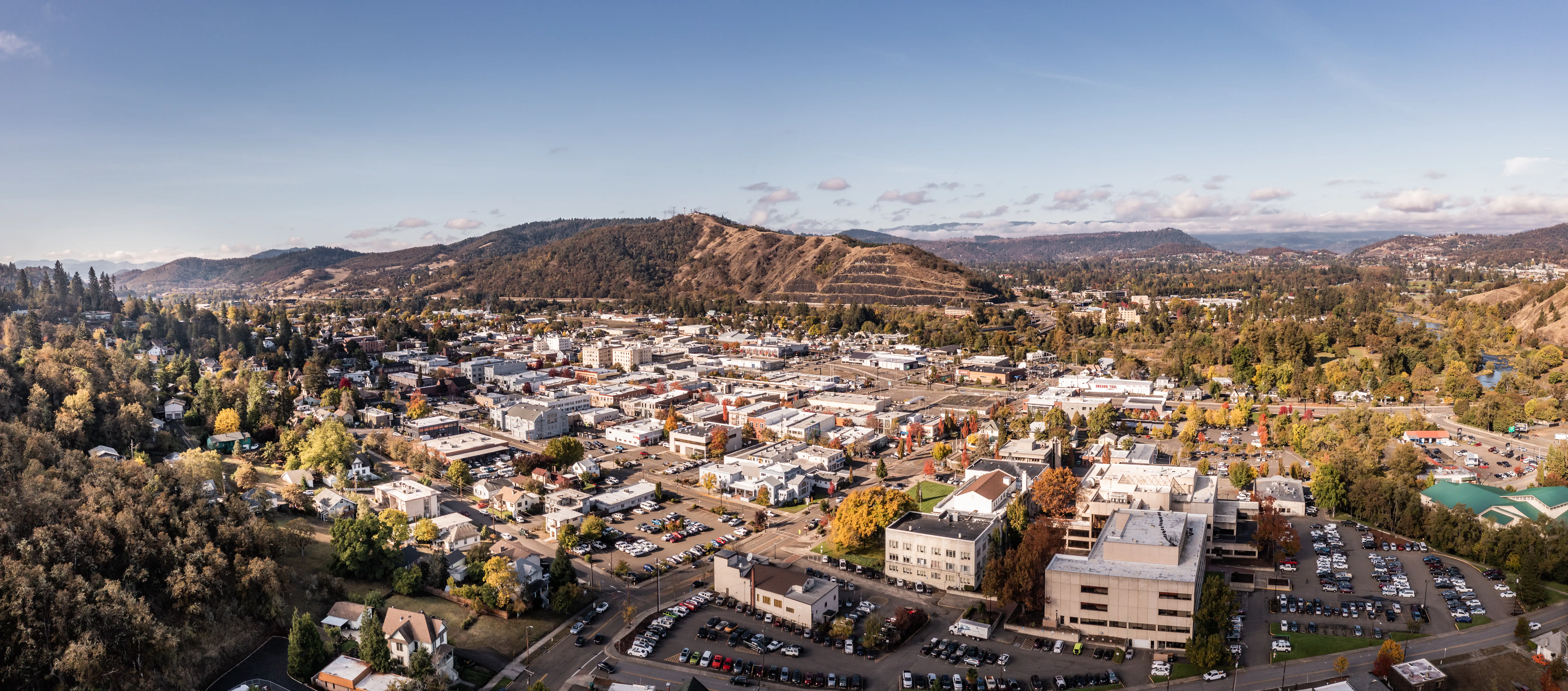
The geographic divide here runs roughly along I-5, separating the hillside western neighborhoods from the river-adjacent and downtown-flanking east side. The west side — Hucrest, Garden Valley, the Edenbower corridor — tends to attract medical professionals, families with school-age children, and buyers looking for newer construction and proximity to Stewart Park. The east and downtown-adjacent areas trade some of that polish for lower entry prices, walkability to the core, and the kind of older craftsman stock that appeals to buyers who'd rather have character than a three-car garage.
This guide will help you figure out which Roseburg neighborhood actually fits your life — your budget, your commute to CHI Mercy Health or the VA Hospital, your tolerance for noise near Highway 99, and whether you're buying or renting. Every section below is based on what's actually selling and trading hands in 2026, not how a neighborhood markets itself.
| Neighborhood | Best For | Price Range | Vibe |
|---|---|---|---|
| Hucrest | Families, VA/medical workers | $370K–$450K | Established, walkable, river-adjacent |
| Garden Valley | Luxury buyers, new construction | $420K–$600K+ | Upscale, spacious, wine-country adjacent |
| Melrose | Rural buyers, wine enthusiasts | $280K–$420K | Rural, scenic, spread-out |
| Downtown Roseburg | Renters, walkability seekers | $200K–$320K | Urban, mixed, gritty-but-central |
| Green | Large lots, rural proximity | $300K–$400K | Semi-rural, quiet, incorporated |
| Harvard | First-time buyers | $280K–$360K | Modest, residential, entry-level |
| South East Roseburg | Affordable homeownership | $240K–$330K | Workaday, practical, no-frills |
| East Downtown | Investors, budget buyers | $175K–$280K | Urban edge, transitional |
| Eastwood | Mid-range families | $310K–$390K | Suburban, stable, underrated |
| Garden Valley Rd Corridor | Commuters, renters | $340K–$480K | Mixed new/old, convenient |
| Buyer Type | Best Neighborhood | Why |
|---|---|---|
| First-time buyer | Harvard | Entry prices start in the low $300s; no HOA drama, starter inventory available |
| Luxury buyer | Garden Valley | New construction with valley views, gourmet finishes, large lots |
| Walkability seeker | Downtown Roseburg | Closest to restaurants, city hall, the farmers market, and the Umpqua River walk |
| Families with kids | Hucrest | Hucrest Elementary, Stewart Park, VA/hospital employment nearby |
| Commuters (Eugene direction) | Garden Valley or Hucrest | Best I-5 on-ramp access without fighting through downtown |
| Large lot buyers | Melrose or Green | Half-acre to multi-acre parcels are realistic at market prices |
| Renters | South Downtown / NE Roseburg | Apartment clusters near Umpqua Community College and Diamond Lake Blvd |
Hucrest is the neighborhood most Roseburg buyers mean when they say they want to live "somewhere good." Built out largely in the late 1950s and sitting between downtown and the South Umpqua River, it's the only Roseburg neighborhood where residents consistently identify by neighborhood name rather than just city. Homes here run from well-maintained ranch-styles in the $370,000s to updated properties with valley views approaching $450,000, and the proximity to the VA Roseburg Health Care System — less than a mile away — keeps demand from medical and government workers steady. The honest trade-off: flood risk is real. Nearly one in five properties in Hucrest carries elevated flood exposure over the next 30 years, and that's a line item your insurance agent will not let you forget.
Best for: Families with school-age children, VA and CHI Mercy Health employees, buyers who want walkability to Stewart Park without sacrificing a residential feel.
Garden Valley has quietly become Roseburg's most aspirational address, with new subdivisions opening up lots that didn't exist five years ago alongside older custom homes on generous parcels. Prices here range from the mid-$400,000s for established construction up to $600,000-plus for newer builds with outdoor living spaces, mountain sightlines, and proximity to the Umpqua Valley wine country. The neighborhood also sits close to Umpqua Community College and the Garden Valley Shopping Center, which gives it more day-to-day convenience than the rural feel suggests. The downside buyers sometimes discover after closing: Garden Valley Road itself carries significant through-traffic, and properties directly on the corridor trade quiet evenings for convenient morning commutes.
Best for: Luxury buyers, wine country enthusiasts, buyers prioritizing new construction and larger lots over urban access.
Downtown Roseburg is the market's most honest signal of where the city is in its development cycle — prices in the low-to-mid $200,000s for older homes and mixed-use adjacent properties, and a walkability score that outperforms every other Roseburg neighborhood by a meaningful margin. The Douglas County Museum, the Umpqua River waterfront path, and the weekly farmers market are all within walking distance. What you give up is polish: some blocks feel genuinely transitional, with vacant storefronts and deferred maintenance mixing with renovated craftsman homes that sell quickly when priced right. Buyers who want the character of an older Oregon downtown without Portland prices should look here first — the upside potential is real, but you're buying into a city still figuring out its next chapter.
Best for: Walkability seekers, investors, remote workers who value access to coffee, culture, and the river over school district rankings.
Melrose sits southwest of Roseburg proper — technically a neighboring community, but close enough that many buyers consider it when the city's lots feel too small. The draw is straightforward: vineyards, river access, and parcels large enough to have a garden, a shop, and breathing room between you and the neighbors. Home prices in Melrose range from the high $200,000s for modest rural properties up to the low-to-mid $400,000s for established homes on acreage. The trade-off is equally straightforward: you're giving up urban services, and the commute to downtown Roseburg or the VA Hospital adds 15–20 minutes to every workday errand. Buyers who move here from city neighborhoods within Roseburg sometimes underestimate how much that daily drive accumulates.
Best for: Wine enthusiasts, rural lifestyle buyers, buyers prioritizing land and privacy over convenience.
Green is the incorporated city just south of Roseburg along I-5, and it operates as a de facto Roseburg neighborhood for buyers who want more land without venturing fully into rural Douglas County. Homes here typically sit on larger parcels than anything you'd find in Hucrest or Harvard, and prices in the $300,000 to $400,000 range buy genuine space rather than just square footage. The community has its own identity — quieter, more self-contained — but lacks the commercial amenity base of central Roseburg, meaning groceries and medical appointments still pull you north. I-5 access is Green's practical strength, but buyers in the sections closest to the freeway should walk the property on a weekday afternoon before closing.
Best for: Large-lot buyers, buyers commuting south toward Grants Pass, families who want a semi-rural pace with a short highway jump to Roseburg's employment centers.
Harvard is the kind of Roseburg neighborhood that doesn't make lifestyle magazine shortlists but consistently delivers for first-time buyers who do the math. Entry prices in the high $200,000s to low $300,000s make ownership achievable on a single income close to the city's median, and the housing stock — mostly post-war and mid-century ranches — is functional and low-drama to maintain. The neighborhood is residential without much commercial activity, which keeps it quiet but means you're driving for almost everything. Buyers focused on building equity in a market where the median hovers around $350,000 to $380,000 will find Harvard among the more realistic paths to ownership without overextending.
Best for: First-time buyers, buyers on a single income, investors looking for rental stock at accessible entry prices.
Southeast Roseburg is the workhorse quadrant of the city — practical, affordable, and honest about what it is. Prices here generally fall between $240,000 and $330,000, making it one of the few parts of the Roseburg market where buyers can still find livable homes without stretching their budget to its edge. The housing mix leans toward older single-family homes and duplexes, and the neighborhood is close to Highway 99 and the city's commercial corridors without the walkability advantages of the downtown core. Traffic noise along the main arterials is a real-world factor here that buyers sometimes discount during weekend showings — the sound profile is noticeably different on a Tuesday afternoon.
Best for: Buyers prioritizing affordability, landlords adding to a rental portfolio, households that commute south toward Winston.
Eastwood is Roseburg's most underappreciated mid-range neighborhood, which is both its appeal and its frustration for buyers who discover it after looking at less-appropriate options. Prices typically fall between $310,000 and $390,000 — close to the citywide median — for homes that trend newer and better-maintained than what you'll find in downtown-adjacent areas. The neighborhood is stable, suburban, and short on drama, with solid access to Roseburg's commercial spine along Northeast Garden Valley Road. The knock against it is that Eastwood doesn't have a strong neighborhood identity the way Hucrest does; you're buying a house in a solid location, not a community with a distinct culture.
Best for: Mid-range buyers who want move-in-ready condition without paying the Hucrest or Garden Valley premium.
Looking to buy in Roseburg? Estimate your payment.
Enter your numbers to see an estimated monthly mortgage payment.
Estimate only. Excludes HOA fees and mortgage insurance.
Treating I-5 as a convenience rather than a divider. The freeway doesn't just run through Roseburg — it shapes daily experience in ways that only become obvious after you've lived on the wrong side of an interchange for three months. Buyers who prioritize a short commute to the VA Hospital but end up in a property east of I-5 near the Oak Avenue corridor discover that the on-ramp access they assumed was simple adds 10–15 minutes in peak morning hours. Map the actual route, not the straight-line distance.
Underestimating flood exposure in Hucrest. The neighborhood is genuinely desirable — the schools, the park access, the walkability are all real. But roughly 18% of Hucrest properties carry elevated flood risk over a 30-year period, and that risk is trending in the wrong direction. Buyers who fall in love with a Hucrest home and skip the FEMA flood map review are setting themselves up for insurance sticker shock at closing, or worse, after the first wet winter.
Anchoring on the aggregate median instead of neighborhood-specific data. The citywide Zillow index shows approximately $350,000, which is a reasonable general reference — but it blends the Heart of Roseburg submarket (where the median has been reported at $175,000) with Roseburg North (where the median touched $505,000 in late 2025). Buyers who show up expecting every neighborhood to trade near the aggregate number are consistently surprised. A $380,000 offer that would be competitive in Harvard is not competitive in Garden Valley.
Buying near Diamond Lake Boulevard without a traffic audit. Diamond Lake Boulevard is Roseburg's primary commercial spine on the north side, and it carries the density of traffic you'd expect from a corridor with big-box retail, fast food, and regional service businesses. Properties within a few blocks that look quiet on weekend showings can feel significantly different during weekday morning and evening hours. If a home is within two blocks of Diamond Lake, drive past it at 7:30 a.m. on a Wednesday before you write an offer.
| Area | Ideal For | Typical Rent Range | Trade-off |
|---|---|---|---|
| Northeast / Diamond Lake Blvd corridor | Singles, students, UCC employees | $900–$1,300/month | Traffic noise, few quiet streets |
| Garden Valley / Edenbower | Families, medical workers | $1,300–$1,800/month | Less inventory, competitive for nicer units |
| Downtown Roseburg | Walkability seekers, remote workers | $750–$1,100/month | Older stock, some deferred maintenance |
| Southeast Roseburg | Budget renters, blue-collar households | $800–$1,100/month | Limited amenities nearby |
| Hucrest (single-family rentals) | Families, VA employees | $1,400–$1,900/month | Tight supply, low turnover |
Roseburg's rental market reflects the same tension as its ownership market: the headline numbers look affordable by Oregon standards, but the best-positioned units — particularly single-family homes in Hucrest and the Garden Valley corridor — have low vacancy and high demand from healthcare and government workers. Renters coming from Eugene or Portland will find the price relief real, but shouldn't expect a wide selection at the lower end of these ranges. Studio and one-bedroom apartments near Umpqua Community College tend to move fastest, and the single-family rental supply in the city's desirable western neighborhoods is genuinely limited.
Local Expert Takeaway: If you're buying in Roseburg in 2026, the clearest decision you'll make is whether you're a west-side or east-side buyer. The west side — Hucrest and Garden Valley — gives you better school assignments, better park access, and stronger long-term demand, but prices in those neighborhoods are already outrunning the citywide median. If your budget is below $350,000, look seriously at Harvard and Eastwood before defaulting to the compromised parts of downtown. And if you want land, Melrose and Green are the only places in this market where you can still buy acreage at prices that make practical sense without driving to Sutherlin.
What are the best neighborhoods in Roseburg for families?
Hucrest consistently ranks as the top family neighborhood in Roseburg, offering Hucrest Elementary School, direct access to Stewart Park, and a walkable layout that lets kids move around independently. Garden Valley is a close second, particularly for families who prioritize newer construction and larger yards. Both neighborhoods carry price premiums over the citywide median, with homes typically selling in the $370,000 to $500,000+ range depending on condition and lot size.
Is Roseburg a good place to buy a home in 2026?
For buyers coming from Eugene, Portland, or California, Roseburg offers meaningful price relief — the citywide typical home value sits at approximately $350,000, and the most recent 90-day median sold price in the primary ZIP code has tracked near $380,000. The market is moderately competitive rather than frenzied, with homes averaging around 33–34 days on market. Buyers looking for affordability in southern Oregon without retreating to a truly rural setting will find Roseburg one of the more realistic options in the region.
What is the most affordable neighborhood in Roseburg to rent or buy?
East Downtown and the Heart of Roseburg submarket offer the lowest entry points for both buyers and renters, with some ownership opportunities in the $175,000 to $280,000 range — well below anything you'd find in Hucrest or Garden Valley. Renters will find the most affordable options in Southeast Roseburg and along the downtown core, where older stock and lower demand keep rents in the $800 to $1,100 monthly range. The trade-off at these price points is older housing condition and less proximity to the neighborhoods with the strongest school assignments.
Explore the full Roseburg series: The Ultimate Roseburg Relocation Guide · Is Roseburg Safe? · Cost of Living in Roseburg · Best Neighborhoods in Roseburg · Roseburg Schools & Family Life · Roseburg Youth Sports · Roseburg Parks & Recreation · Retiring in Roseburg · 1031 Tax-Deferred Exchange in Roseburg · Roseburg First-Time Homebuyers Guide · · Moving to Roseburg from California
Tell us what you need help with and we'll connect you with local resources.

About the Author
Todd Davidson is the founder of Living in Oregon and Living in Washington, where he publishes in-depth city guides, neighborhood resources, and local market insights covering more than 180 communities across the Pacific Northwest. While his background is in home financing and real estate, he created these digital platforms to help families research and compare regions before making a move.