
Southern Oregon · Oregon
Retiring in Roseburg: Is It the Right Fit for Your Next Chapter? (2026)
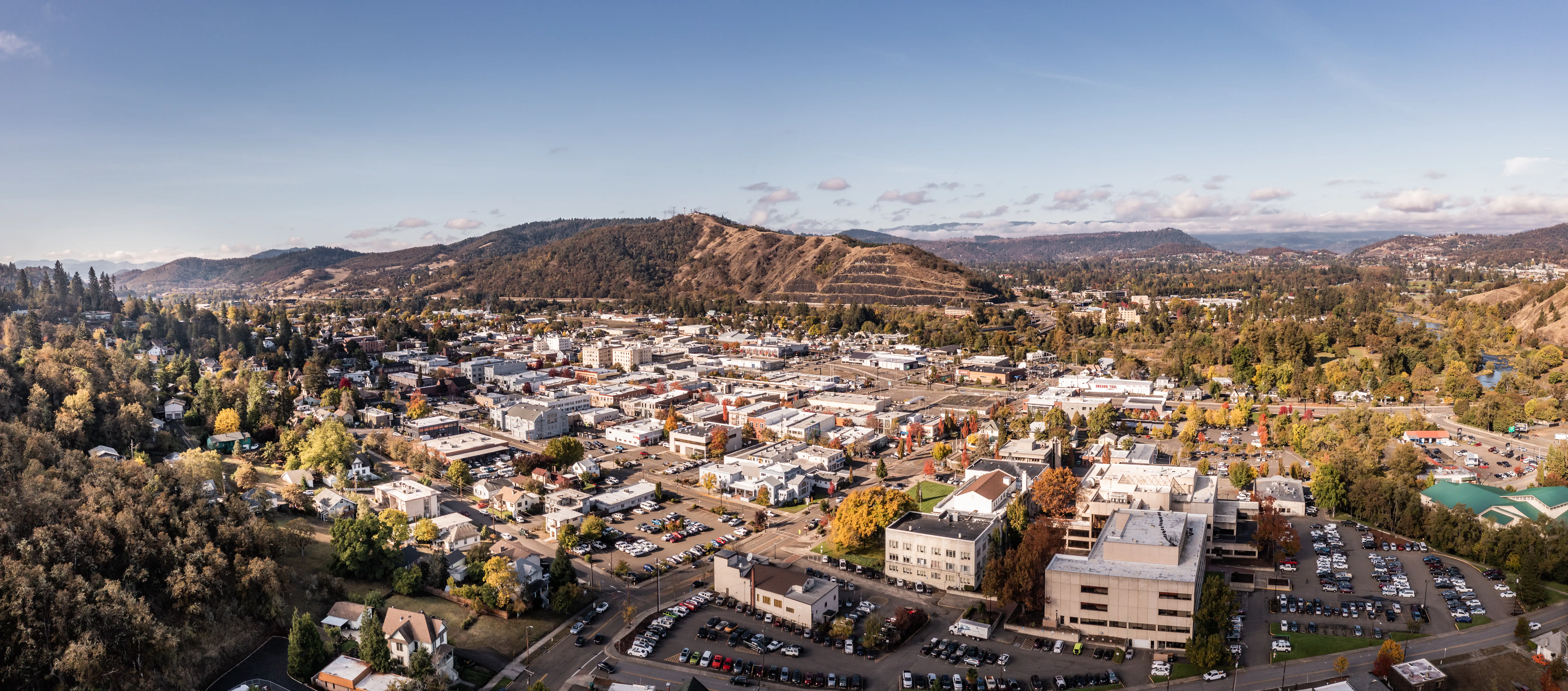
Roseburg won't dazzle you with a boardwalk or a mountain gondola. What it offers is something more practical: a small Southern Oregon city where your retirement dollar goes meaningfully further, where the VA hospital is genuinely accessible, and where roughly one in five residents is already over 65. That shared demographic reality shapes everything — from the depth of senior living options to the pace of daily life on the sidewalks downtown.
The retiree who thrives in Roseburg is someone who values affordability over prestige, prefers a quieter rhythm without complete rural isolation, and draws genuine satisfaction from outdoor access — whether that means a morning walk along the South Umpqua River or a weekend drive into the Umpqua National Forest. If you're arriving from a coastal California city or the Portland metro, the adjustment is real and the trade-offs are honest. But if what you're leaving behind is an inflated mortgage and a calendar full of noise, Roseburg has a compelling answer.
This guide covers what retirement actually looks like in Roseburg in 2026: the tax picture, the healthcare infrastructure, the senior living inventory, the day-to-day reality of getting around, and how this city stacks up against other Southern Oregon and Pacific Northwest retirement destinations worth considering.

Oregon is one of the more tax-favorable states for retirees when you look at the full picture. There is no sales tax — a genuine monthly savings that adds up across groceries, prescriptions, and home improvement projects. Social Security benefits are fully exempt from Oregon state income tax, which is a significant distinction from states like Minnesota or Colorado that partially tax benefits. Other retirement income — including pensions, IRA withdrawals, and 401(k) distributions — is subject to Oregon's income tax rates, though the state offers a retirement income credit that can reduce liability for lower- and moderate-income retirees.
| Income Type | Oregon Tax Treatment |
|---|---|
| Social Security Benefits | Fully exempt |
| Federal/Military Pension | Partially exempt (up to $6,250 with credit) |
| Public Employee Pension (PERS) | Taxable; credit may apply |
| IRA / 401(k) Withdrawals | Taxable as ordinary income |
| Private Pension | Taxable; retirement credit may apply |
| Investment Income (dividends/capital gains) | Taxed as ordinary income |
| Wages / Part-Time Work | Taxable at marginal rate |
| Property Tax | 0.69% rate in Douglas County |
| Sales Tax | None statewide |
For a retiree drawing primarily from Social Security plus modest investment income, Oregon's effective tax burden lands considerably lower than the headline income tax rates suggest. The retirement income credit phases out at higher income levels, so retirees with larger pension or IRA draws will want to model their specific situation — but for the median Roseburg retiree household, which earns around $38,500 annually, the overall tax environment is manageable.
Oregon also offers a Property Tax Deferral Program for seniors age 62 and older who meet income requirements. Qualified homeowners can defer their property taxes until the home is sold, which can be a meaningful cash-flow tool for retirees on fixed incomes. Douglas County's rate of 0.69% is already below Oregon's statewide average of approximately 0.81%, so Roseburg homeowners are starting from an advantaged position before deferral even enters the picture.
Mercy Medical Center is the centerpiece of Roseburg's healthcare infrastructure, located at 2700 NW Stewart Pkwy — less than two miles from downtown. The hospital is operated by CHI Mercy Health, a regional Catholic health system, and serves as the primary acute care facility for Douglas County and much of the surrounding rural region. Mercy carries a Level III Trauma designation, which covers the vast majority of emergency and surgical needs but means that the most complex trauma cases — major burns, pediatric trauma, advanced neurological emergencies — are typically stabilized and transferred north to PeaceHealth Sacred Heart in Eugene, roughly 70 miles away.
For everyday retirement healthcare, Mercy's depth is sufficient and then some. The hospital offers cardiac care, cancer services through the Mercy Cancer Center, orthopedic surgery, pulmonology, and a robust primary care network across multiple clinic locations in the Roseburg area. The CHI system's affiliation also provides referral pathways to larger regional centers when specialty needs arise. For retirees without complex pre-existing conditions requiring subspecialty management, Mercy covers the full spectrum of routine and acute care.
The Veterans Administration Roseburg Healthcare System adds another layer of infrastructure that makes this city genuinely distinctive as a retirement destination. The VA campus on Garden Valley Boulevard provides primary care, mental health services, dental, and specialty clinics to eligible veterans — and for veteran retirees specifically, this dual system of care (VA plus Mercy) creates a level of coverage that few cities of Roseburg's size can offer. Veterans who served are often surprised to find that Roseburg, at this population and price point, carries this combination.
The honest limitation is subspecialty depth. Retirees managing complex oncology, advanced heart failure, or rare autoimmune conditions will find themselves making regular trips to Eugene or potentially Portland. The drive to Eugene on I-5 is typically around 70–75 minutes depending on traffic and departure point — manageable for periodic specialist visits but a real planning consideration for anyone requiring frequent subspecialty care.
With approximately 28 assisted living facilities in the area and a senior population that hovers around 21% of residents, Roseburg has developed one of the more substantial senior living ecosystems in Southern Oregon. The median monthly cost for assisted living runs around $3,878, with the lower end of the market starting around $2,272 and full-service memory care communities reaching into the $6,600 range. The following table captures the primary named communities operating in 2026.
| Community | Type | Location | Est. Monthly Cost |
|---|---|---|---|
| The Landing | Assisted Living & Memory Care | Roseburg | $3,500–$5,500 |
| Linus Oakes Village | Independent Living | Roseburg (hilltop) | $2,200–$3,500 |
| Callahan Village & Cottages | Active Retirement + Assisted Living | Roseburg | $3,000–$4,800 |
| Riverview Terrace | Independent & Assisted Living | South Umpqua Riverfront | $2,500–$4,200 |
| Avamere at Oak Park | Assisted Living, Independent, Memory Care | Roseburg | $3,200–$6,200 |
| Bridgewood Rivers Assisted Living | Assisted Living | Roseburg | $2,800–$4,500 |
| Brookdale Roseburg | Memory Care | Roseburg | $4,500–$6,600 |
| Solista Roseburg (by Cogir) | Independent Living | Roseburg | $2,000–$3,200 |
| Rose Haven Nursing Center | Skilled Nursing | 740 NW Hill Place | $5,000–$7,500 |
| Oak Grove Retirement Center | Affordable / Low-Income Senior Housing | Umpqua Riverfront | Income-based |
Riverview Terrace carries a particular appeal for retirees who want a meaningful address. Operating since 1998 on the banks of the South Umpqua River directly across from Stewart Park — which hosts a live music series in warmer months — it offers the kind of daily ambient beauty that makes the transition to assisted living feel less stark. Linus Oakes Village, operated by CHI Living Communities, sits on an oak-covered hillside with city views and proximity to shopping and medical care, an arrangement that suits independent seniors who want connection without daily dependence on a car.
For veterans or retirees managing tighter fixed incomes, Oak Grove Retirement Center provides income-based affordable housing along the river with a dignified set of amenities — community gardens, Wi-Fi, laundry, and elevator access — without the market-rate price tag. The fact that Roseburg ranks 19th out of 179 Oregon cities reviewed for assisted living affordability tells you something meaningful about the realistic cost of aging here compared to Bend, Portland, or the coast.

Looking to buy in Roseburg? Estimate your payment.
Enter your numbers to see an estimated monthly mortgage payment.
Estimate only. Excludes HOA fees and mortgage insurance.
The honest answer on walkability is this: Roseburg is car-dependent for most errands, but less dramatically so if you land in the right part of town. The core area around downtown and the South Umpqua riverfront has the densest concentration of services within reasonable walking distance — pharmacy, grocery, medical offices, coffee shops, and parks are reachable on foot for residents in the East Downtown and Downtown Roseburg areas. Retirees in Garden Valley or the newer suburbs further from the core will genuinely need a car or ride-share for most daily needs.
Stewart Park, which runs along the river adjacent to the Roseburg Visitor Center, is the social anchor of outdoor life for many older residents. The park hosts the Roseburg Summer Concert Series, a multi-week outdoor music program that draws consistent crowds through the warmer months. Nearby Riverside Park and Laurelwood Park offer paved walking paths accessible to those with mobility considerations. For retirees who are more adventurous, the Umpqua National Forest trailheads are within 30–45 minutes, offering everything from flat river walks to more demanding terrain.
The Douglas County Museum provides cultural programming, rotating exhibits, and community events that give retirees with intellectual interests a consistent destination. The museum sits within the Douglas County Fairgrounds complex, which also hosts the annual Douglas County Fair each August — a deeply rooted community tradition that brings the region together in a way that feels genuinely local rather than manufactured. Umpqua Community College offers continuing education and enrichment courses that attract a meaningful number of retirees each term.
Getting around without a car requires realistic expectations. Roseburg Transit System (RTS) operates fixed bus routes covering major corridors, including connections to medical facilities and shopping areas. The service is functional for predictable appointments but limited in frequency and evening coverage. Ride-sharing through Uber and Lyft is available and generally reliable within the city. For retirees who reach a point where driving is no longer realistic, the combination of senior living community transportation, RTS, and ride-share creates a workable — if not seamless — network.
The one thing that consistently surprises retirees after their first full year in Roseburg is how quickly the pace recalibrates. Traffic that would register as mild elsewhere occasionally stacks up on NW Stewart Pkwy near Mercy Medical and along Garden Valley Boulevard during school and commute hours — but by most measures, this is a genuinely unhurried city. Restaurants are uncrowded at dinner, parking is free almost everywhere, and the dominant ambient sound in most neighborhoods is birds rather than traffic.
| City | Med. Home Price | Hospital Access | Walkability | Senior Living Depth | Overall Fit |
|---|---|---|---|---|---|
| Roseburg, OR | ~$380,000 | Mercy Medical (Level III) + VA | Low–Moderate | Strong (28+ facilities) | High value, outdoor lifestyle |
| Medford, OR | ~$450,000 | Providence (Level II Trauma) | Moderate | Very strong | Urban amenities, higher cost |
| Grants Pass, OR | ~$370,000 | Three Rivers (Level III) | Low | Moderate | Affordable, less infrastructure |
| Eugene, OR | ~$510,000 | PeaceHealth Sacred Heart (Level II) | High | Very strong | Best medical access, pricier |
| Sutherlin, OR | ~$310,000 | No local hospital | Very Low | Limited | Rural quiet, Roseburg proximity |
| Ashland, OR | ~$580,000 | No local hospital (Providence nearby) | High | Moderate | Cultural richness, premium cost |
Eugene is the right answer for retirees who prioritize medical access above all else. PeaceHealth Sacred Heart is a full academic medical center with subspecialty depth that Roseburg simply cannot match. The catch is that median home prices in Eugene approach $510,000 — a substantial premium for retirees stretching a fixed budget. Sutherlin, just 12 miles north of Roseburg on I-5, appeals to retirees seeking maximum quiet at a lower price point, but its lack of local hospital infrastructure means relying entirely on Roseburg or Eugene for any medical need.
Local Expert Takeaway: Roseburg makes the most sense for retirees who are relatively healthy, own or plan to own outright, and place a premium on affordability and outdoor access over urban amenity and subspecialty medical depth. Garden Valley is the strongest neighborhood for aging-in-place buyers — newer single-level homes, proximity to Mercy Medical, and good access to the commercial corridor along Garden Valley Boulevard. Retirees who need walkable in-town living at the lowest possible price point should look closely at the East Downtown area, where the Heart of Roseburg's median prices open doors that are simply closed in most Oregon cities. Veterans, in particular, should put Roseburg near the top of their list — the combination of a functioning VA campus and affordable homeownership within a modest drive of Eugene's full medical system is rare at this price level.
Is Roseburg a good place to retire?
Roseburg is a strong retirement fit for buyers who prioritize affordability, outdoor access, and a genuine sense of community over urban density or premium medical infrastructure. The combination of relatively low home prices, no Oregon sales tax, Social Security exemption from state income tax, and a well-developed senior living market makes the financial case compelling. The honest caveat is that retirees with complex or high-frequency medical needs will find themselves making regular trips to Eugene.
What healthcare options are available for retirees in Roseburg?
Mercy Medical Center at 2700 NW Stewart Pkwy serves as the primary hospital — a Level III trauma center with cardiac, cancer, and orthopedic services on site. The VA Roseburg Healthcare System on Garden Valley Boulevard adds primary care, mental health, dental, and specialty clinics for eligible veterans. For subspecialty needs beyond what either facility can handle, PeaceHealth Sacred Heart in Eugene is typically the referral destination, roughly 70–75 miles north on I-5.
How does Roseburg compare to Medford for retirement?
Medford offers a larger commercial footprint, a Level II trauma center, and more urban amenities — but median home prices run meaningfully higher and the city moves at a noticeably faster pace. Roseburg tends to suit retirees who want their money to go further and don't need a larger city's daily energy around them. Medford suits retirees who want more dining, retail, and medical depth and are willing to pay the premium for it.
Explore the full Roseburg series: The Ultimate Roseburg Relocation Guide · Is Roseburg Safe? · Cost of Living in Roseburg · Best Neighborhoods in Roseburg · Roseburg Schools & Family Life · Roseburg Youth Sports · Roseburg Parks & Recreation · Retiring in Roseburg · 1031 Tax-Deferred Exchange in Roseburg · Roseburg First-Time Homebuyers Guide · · Moving to Roseburg from California
Tell us what you need help with and we'll connect you with local resources.

About the Author
Todd Davidson is the founder of Living in Oregon and Living in Washington, where he publishes in-depth city guides, neighborhood resources, and local market insights covering more than 180 communities across the Pacific Northwest. While his background is in home financing and real estate, he created these digital platforms to help families research and compare regions before making a move.