
Willamette Valley · Oregon
Living in Newberg: The Ultimate Relocation Guide (2026)
Maybe your company moved you to the Portland metro and you've been quoted prices in Beaverton and Hillsboro that made your eyes water. Maybe a colleague mentioned Newberg offhand — something about wine country and good schools — and you filed it away. Or maybe you drove through on 99W once, saw the vineyards rolling toward the Chehalem Mountains, and thought: is this real, and can I actually afford to live here? The central tension in every Newberg buying decision is this: it's genuinely beautiful, genuinely affordable relative to the metro, and genuinely 42 minutes from downtown Portland on a good day. That qualifier — on a good day — is the part that changes everything.
Newberg sits at the eastern edge of Yamhill County, about 25 miles southwest of Portland along Highway 99W, a two-lane commercial corridor that does not forgive rush hour. The Chehalem Mountains frame the city to the south and west, and the broader Willamette Valley wine country surrounds it. George Fox University anchors the downtown core and gives the city a modest college-town energy. At roughly 26,000 residents, Newberg is small enough to feel like a community and large enough to have real employers — A-dec, Providence Newberg Medical Center, and the university itself among the largest — which means it functions as a destination in its own right, not merely a bedroom for Portland.
This guide will help you figure out whether Newberg is actually the right fit for your household — not just whether you can afford it, but whether the commute psychology, the amenities, the neighborhood tradeoffs, and the local rhythms match what you're actually looking for. By the end, you'll have a clear-eyed picture of what life here looks like on a Tuesday morning and a Saturday afternoon.
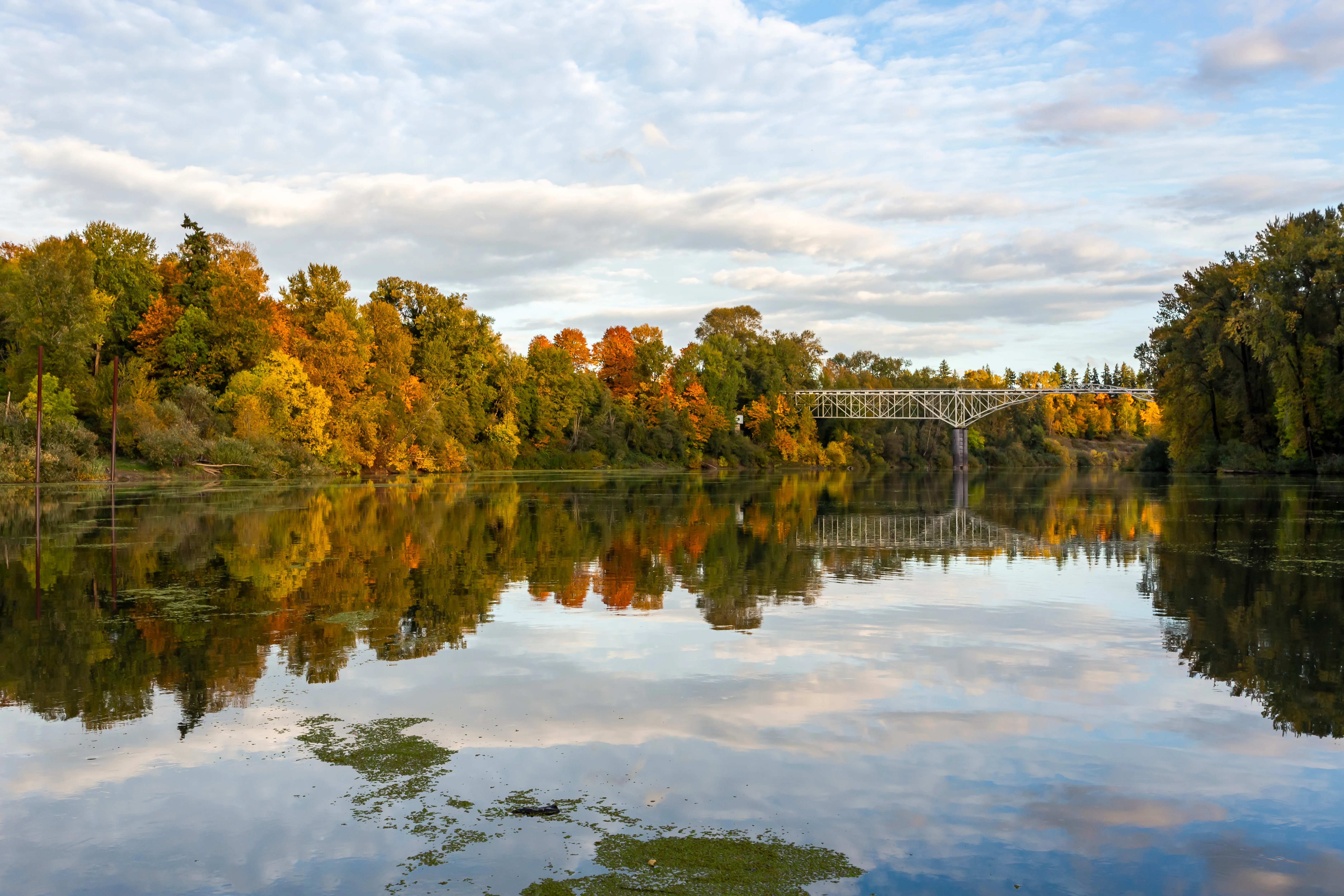
Newberg earns real enthusiasm from certain types of buyers and polite disappointment from others. The table below cuts through the marketing.
| Best For | Why |
|---|---|
| Commuters with schedule flexibility | The 99W commute is manageable for hybrid workers who avoid the 7–9 AM window — brutal for those who can't |
| Families with school-age children | Strong district graduation rates, two middle schools, a university atmosphere that benefits the whole city |
| First-time buyers | Median home prices around $505,000 are meaningfully below comparable Portland suburbs |
| Wine country lifestyle seekers | Surrounded by Yamhill County's world-class Pinot Noir producers — this is the real thing, not a theme |
| Remote workers | 88% broadband penetration, notably high work-from-home rates, quieter pace that suits focused workdays |
| Retirees downsizing from expensive metros | Providence Newberg Medical Center, walkable downtown, significantly lower cost basis than Lake Oswego or SW Portland |

Newberg is one of those cities that rewards buyers who look past the surface statistics. The Chehalem Valley location — 30 minutes from Portland, at the edge of wine country — creates a lifestyle that's genuinely hard to replicate at this price point. The historic downtown is walkable in a way that surprises people who expect a generic suburb, and the Chehalem Mountains backdrop means you're not just buying a house, you're buying into a particular version of Oregon that most people can't access this affordably.
What I tell buyers considering Newberg is to think carefully about commute tolerance before anything else. The OR-99W corridor to Tigard and Portland can test patience during peak hours, and that friction shapes daily life in ways that don't show up in the listing photos. If remote or hybrid work is on the table, Newberg becomes significantly more compelling — you get wine country access, George Fox University's cultural programming, and a genuinely tight-knit community, all at a median price point well below what you'd pay for comparable square footage in Lake Oswego or West Portland. If you're thinking about making Newberg your next move, I'm happy to share what I've seen work for buyers at different price points and timelines.
Downtown Newberg is compact and walkable in the way that small Oregon cities often are — independently owned coffee shops, a handful of restaurants, and the Chehalem Cultural Center serving as the city's arts anchor along First Street. The George Fox campus sits just off downtown and adds a low-key collegiate energy without overwhelming the neighborhood character. On weekend mornings you'll see locals at spots like Chapters Books and Coffee, and the farmers market pulls together a community that feels genuinely connected rather than performatively so.
The geographic reality that shapes daily life here is 99W. It is the only practical arterial connecting Newberg to the broader metro, and everything about this road — its signal timing, its lack of passing lanes through Dundee, and its single-bridge crossing over the Willamette near Newberg — funnels traffic into predictable bottlenecks. The Dundee bypass has been discussed for decades, and while progress continues on Highway 18 improvements, the 99W corridor through Dundee remains the dominant friction point in Newberg commuters' lives. For remote workers or retirees, this is largely irrelevant. For daily Portland commuters, it is the defining variable of the move.
The community vibe carries a notable Quaker heritage — Newberg was literally a dry town until 1966, founded by Quaker settlers in the 1870s, and that history of intentionality and community investment still shows up in how residents engage with local institutions. Herbert Hoover, who grew up here and would become the 31st president, is honored at the Hoover-Minthorn House Museum on Quaker Avenue. It's not a city that markets itself aggressively; it earns loyalty from people who find it, settle in, and quietly decide not to leave.
What surprises most people after six months of living here is how quickly the wine country lifestyle stops feeling like an amenity and starts feeling like a Tuesday. The tasting rooms along the Chehalem Mountains wine trail and the broader Yamhill County circuit aren't weekend destinations — they become the backdrop for casual socializing in a way that catches newcomers off guard. Most people who move here expecting to make regular use of Portland's restaurants and nightlife find that they go less and less often, not because the 99W commute discourages it, but because Newberg's own rhythms start to fill those hours.
The housing value is real. At a $505,000 median and a property tax rate of approximately 0.78%, Newberg offers meaningful affordability compared to most of the Portland metro. That price buys a detached single-family home — often with a yard, a garage, and in some neighborhoods, mountain or vineyard views. In Sherwood or Tualatin, that same budget narrows your options considerably.
The school district performs well above Oregon averages. Newberg High School's Class of 2025 graduated at a 92.6% rate — the highest in the school's recorded history and nearly 10 points above the Oregon state average. That figure also topped every other large high school in Yamhill County. The district runs two middle schools and maintains a roughly 15:1 student-to-teacher ratio, which is lower than the state average. For families where school quality is a core variable, Newberg's trajectory is genuinely encouraging.
The wine country access is not a marketing cliché. Yamhill County produces some of the most respected Pinot Noir in the world, and Newberg sits at its geographic center. Wineries like Bergström, Adelsheim, and Rex Hill are within a 15-minute drive, and the Chehalem Mountains AVA covers land that begins essentially at the city's edge. If wine tourism, vineyard dinners, and harvest season events sound like your version of a good weekend, you will be living inside that world — not visiting it.
George Fox University quietly elevates the city in ways that go beyond sports attendance. The university brings in speakers, arts programming, and a population of young adults that keeps the median age of the city down to roughly 34.8 years. The university's library, athletics facilities, and theater are accessible to the broader community in various capacities. And from a real estate lens, the university's continued enrollment growth — now topping 4,300 students as the largest private university in Oregon — provides stability to the local economy that pure manufacturing or retail towns can't count on.
Employers are more diversified than the city's size might suggest. A-dec, one of the world's leading dental equipment manufacturers, has been headquartered in Newberg since 1964 and remains the city's defining private employer. Providence Newberg Medical Center serves as both a healthcare provider and an employment anchor. For residents who can work locally, the commute question becomes irrelevant — and local employment has been growing, with the workforce expanding from roughly 13,500 to 14,000 employees between 2023 and 2024.

Looking to buy in Newberg? Estimate your payment.
Enter your numbers to see an estimated monthly mortgage payment.
Estimate only. Excludes HOA fees and mortgage insurance.
The commute is the central variable. On paper, 42 minutes to downtown Portland sounds reasonable for a small-city lifestyle and significantly lower home prices. In practice, the 99W corridor through Dundee compresses into a single-lane bottleneck that can add 20–30 minutes to that estimate during peak hours. The Willamette River crossing near Rogers Landing eliminates any practical detour. Buyers who make this move assuming the commute math always works tend to be the ones who sell within three years.
Retail and dining options remain limited relative to what most Portland-area buyers are used to. There are good local restaurants in Newberg, but the concentrated dining and shopping that suburban buyers expect — the kind you find along Tualatin's Nyberg corridor or Sherwood's Town Center — doesn't exist here at scale. McMinnville, about 14 miles southwest, has more critical mass, but that's a second drive in the other direction from Portland. Buyers who rate proximity to significant retail as a top priority should stress-test this reality before committing.
The city's growth is genuine and accelerating — population has climbed more than 42% since 2000 — and with that growth comes infrastructure strain. Roads that worked for a city of 18,000 are under pressure from 26,000 residents. That friction shows up most clearly in traffic around the 99W corridor, school enrollment pressures, and housing development that sometimes moves faster than supporting services. This isn't a dealbreaker for most buyers, but it is worth understanding that Newberg is in a growth phase, not a settled one.
Why some people leave: The most common reason buyers exit Newberg after two or three years is the commute — not because they didn't know about it going in, but because the cumulative weight of it at 5 days a week wears differently than it did on the test drive. The second most common reason is the social infrastructure: buyers accustomed to a dense urban social scene find that Newberg's rhythms require more intentional effort to build community. Those who come with kids in school or with a connection to the university tend to root quickly; those who don't may find the social entry points harder to find.
Newberg's neighborhoods sort themselves into three rough zones: the older established areas near downtown and the university, the expanding north and east residential corridors, and the rural-adjacent edges near Chehalem Mountain and Ladd Hill. Here are the eight neighborhoods that matter most for buyers making this decision.
Springbrook sits on the south side of Newberg with a mix of established single-family homes and newer construction, often with views toward the Chehalem Mountains. Prices here run from the mid-$400s into the low-$600s depending on lot size and vintage. The neighborhood draws buyers who want a quieter residential feel without being far from the 99W corridor for commuting purposes. The honest catch: some Springbrook streets feed into 99W at points that get congested by 8 AM.
Best for: Buyers who want a suburban-quiet feel with mountain views and proximity to wine country access roads.
North Newberg is one of the city's more affordable residential corridors, with a higher concentration of smaller older homes and more renter-occupied housing than the south side. Prices here more commonly fall in the $380,000–$480,000 range, making it one of the more accessible entry points into Newberg homeownership. The tradeoff is that the neighborhood infrastructure feels less finished — fewer sidewalks, less retail within walking distance — than the downtown-adjacent areas.
Best for: First-time buyers prioritizing price point over polish.
East Newberg includes a mix of mid-century homes and more recent infill development, positioned along the Highway 99W corridor heading toward Dundee. The commute convenience cuts both ways: the on-ramp to 99W is close, but so is the commercial noise of the corridor itself. Homes here tend to run in the $420,000–$540,000 range. It's a practical neighborhood rather than a scenic one, and buyers who prioritize logistics over lifestyle tend to gravitate here.
Best for: Commuters who want the shortest possible on-ramp to the Portland corridor.
The Chehalem Mountain area refers to the elevated residential properties south and west of the city proper, where acreage lots, vineyard views, and more rural character begin to dominate. This is where buyers who want the wine country lifestyle in its most literal form end up — properties here can range from $550,000 into the $800,000s and beyond for acreage parcels. The tradeoff is that everything requires a drive: groceries, school pickup, the coffee shop.
Best for: Buyers seeking land, views, and a genuinely rural lifestyle within Yamhill County wine country.
Spring Meadows is a planned residential neighborhood with consistent lot sizes, well-maintained streetscapes, and a strong owner-occupancy feel. It appeals to families with school-age children and buyers who want predictable HOA-managed common areas without the premium of newer luxury development. Prices typically fall in the $480,000–$580,000 range. The neighborhood has good school bus routes and feels well-suited to the rhythm of family life in Newberg.
Best for: Families with school-age children who want a turn-key neighborhood without a steep price premium.
The area around Jaquith Park offers one of the better combinations of walkability and green space within city limits. Jaquith Park itself includes sports fields, a community pool (seasonal), and open lawn areas that serve as a genuine neighborhood gathering point. Homes near the park tend to run in the $450,000–$580,000 range and are popular with families who want outdoor access without driving. On summer evenings, this area feels as connected as Newberg gets.
Best for: Families who want walkable park access and a central, established residential feel.
College Park sits adjacent to the George Fox University campus and the downtown core, making it one of the most walkable residential areas in the city. Homes here are older — many built between the 1940s and 1980s — and range from the low-$400s to the mid-$500s. The proximity to campus means some rental activity in the area, but the neighborhood retains a stable owner-occupied character along its quieter residential blocks. This is where you walk to the Chehalem Cultural Center and the Saturday farmers market.
Best for: Buyers who want genuine walkability and cultural proximity in a historic neighborhood.
Ladd Hill is the semi-rural southwestern edge of the Newberg area, where properties sit on larger lots with pastoral views and the unmistakable feeling of Yamhill County wine country rather than suburban Oregon. The drive into the city proper for groceries or school pickup takes 10–15 minutes, but many residents here consider that a fair exchange for the setting. Prices reflect the premium: expect the upper-$500s into the $700s for quality properties with acreage.
Best for: Buyers who want a rural-agricultural setting with quick access to Newberg's amenities and the wine tourism circuit.
| City | Best For | Median Home Price | Commute to Portland | Vibe |
|---|---|---|---|---|
| Newberg | Value + wine country lifestyle | $505,000 | ~42 min (99W) | Small city, college town edge |
| Sherwood | Suburban polish, excellent schools | ~$625,000 | ~35 min (I-5 area) | Established, family-oriented suburb |
| McMinnville | Lower prices, deeper wine country | ~$420,000 | ~60–70 min | Agricultural town feel, arts scene |
| Dundee | Rural feel, true small town | ~$450,000 | ~35–40 min | Tiny, wine tourism, limited services |
| Wilsonville | Commute convenience, retail access | ~$580,000 | ~28 min (I-5) | Master-planned, infrastructure-complete |
| Tualatin | Retail access, I-5 proximity | ~$595,000 | ~30 min | Commercial suburb, family-practical |
| Metric | Detail |
|---|---|
| Population | ~26,095 (2024 Census estimate) |
| Median Home Price | $505,000 |
| Property Tax Rate | ~0.78% |
| Median Household Income | ~$91,389 |
| Commute to Portland | ~42 minutes via 99W |
| School District | Newberg School District 29J |
| High School Graduation Rate | 92.6% (Class of 2025) |
| Violent Crime per 1,000 | 3 |
| Property Crime per 1,000 | 15 |
| Major Employers | A-dec, George Fox University, Providence Newberg Medical Center |
| Broadband Access | 88.2% of households |
| County | Yamhill |
The Quaker roots are still alive in the texture of the city. Newberg wasn't just founded by Quakers — it was a dry town until 1966, which is a long time for a community to shape itself around temperance values. That history left behind a culture of quiet civic seriousness that still shows up in how local institutions behave. George Fox University, founded in 1891 by Quakers, remains Christian in character and attracts students from across the country who are looking for something different from a state school. If you're used to a more secular Pacific Northwest environment, the university's presence isn't intrusive, but it does color the downtown atmosphere in ways that feel distinctly Newberg.
Harvest season is not a quiet affair. Every fall, the Chehalem Mountains wine trail and the broader Yamhill County wine circuit explode into harvest-season events, winemaker dinners, and crush-day open houses that transform the area from a pleasant regional destination into something closer to a happening. The Newberg Old Fashioned Festival in August — one of the city's oldest community traditions — draws crowds from across the region with carnival rides, a parade, and a street fair that runs along the downtown corridor. These events aren't boutique affairs; they reliably close streets and fill parking areas, which is something to factor into weekend planning if you live near downtown.
The Herbert Hoover connection is more interesting than it sounds. The Hoover-Minthorn House Museum at 115 South River Street is the childhood home of the 31st president, who was orphaned and came to live with his uncle in Newberg at age 10. It's the oldest house in Newberg still standing in its original location and one of the few Hoover sites in the country. Most residents walk past it without much thought, but visitors and history-minded newcomers find it genuinely compelling as a window into what this town looked like in the 1880s.
What I would not do if moving to Newberg: I would not buy east of downtown along the 99W corridor without spending at least one weekday morning driving that stretch between 7:30 and 9:00 AM. The properties east of downtown near the Dundee border look appealing on paper — reasonable prices, easy arterial access — but that easy access is exactly the problem. Those streets feed directly into the worst segment of the Dundee bottleneck, and what feels like convenience on a Sunday feels like a trap on a Wednesday in November.

Local Expert Takeaway: If you're choosing between Newberg and Sherwood, the decision almost always comes down to commute predictability versus lifestyle character. Sherwood buyers get better highway access and deeper retail; Newberg buyers get the wine country setting, more land for the dollar, and a community with genuine depth. For hybrid workers doing two or three days in Portland, Newberg's value proposition is hard to beat right now — especially in Spring Meadows or the Jaquith Park corridor, where the housing stock is solid and the neighborhood feel is already established. Lock in before the next 10% appreciation cycle makes this conversation feel different.
✅ Newberg delivers genuine value — a $505,000 median home price, a 92.6% high school graduation rate, and wine country at your doorstep are a combination that's difficult to find anywhere else in the Portland metro.
⚠️ The 99W commute is non-negotiable to understand — hybrid and remote workers thrive here; daily Portland commuters need to test the drive at peak hours before committing.
📍 George Fox University and A-dec anchor the local economy in a way that gives Newberg more employment stability than its size alone would suggest.
Is Newberg a good place to raise a family?
Yes — and the data backs it up. Newberg High School's 92.6% graduation rate is the highest the school has recorded and sits nearly 10 points above Oregon's statewide average. The district runs two middle schools, maintains a student-to-teacher ratio that's lower than the state average, and the university's presence adds cultural programming that benefits the whole community. Families tend to root quickly once kids are in school and in activities.
What is the crime rate in Newberg?
Newberg reports roughly 3 violent crimes per 1,000 residents and approximately 15 property crimes per 1,000 — figures that place it comfortably in line with similarly sized Oregon cities and well below Portland proper. Property crime is the more relevant concern for most residents, and it tends to concentrate near commercial corridors rather than residential neighborhoods. Overall, Newberg reads as a safe community by Oregon standards.
How does Newberg compare to McMinnville?
McMinnville sits about 14 miles southwest and offers lower home prices — typically in the $420,000 range — along with a more established downtown arts scene and a deeper agricultural character. Newberg wins on school performance, George Fox University's amenities, and commute distance to Portland. McMinnville wins on price, the downtown Third Street dining strip, and for buyers who genuinely want to be further from the metro. If Portland proximity matters at all, Newberg is the clearer choice.
Browse current listings updated daily — filtered for Newberg buyers by Elizabeth Davidson, your local expert.
Powered by Elizabeth Davidson · Cascade Hasson Sotheby's International Realty · 503-939-2035
Explore the full Newberg series: The Ultimate Newberg Relocation Guide · Is Newberg Safe? · Cost of Living in Newberg · Best Neighborhoods in Newberg · Newberg Schools & Family Life · Newberg Youth Sports · Newberg Parks & Recreation · Retiring in Newberg · 1031 Tax-Deferred Exchange in Newberg · Newberg First-Time Homebuyers Guide · · Moving to Newberg from California · The Newberg Realtor's Perspective · Top 10 Questions a Realtor Gets About Newberg
Tell us what you need help with and we'll connect you with local resources.

About the Author
Todd Davidson is the founder of Living in Oregon and Living in Washington, where he publishes in-depth city guides, neighborhood resources, and local market insights covering more than 180 communities across the Pacific Northwest. While his background is in home financing and real estate, he created these digital platforms to help families research and compare regions before making a move.