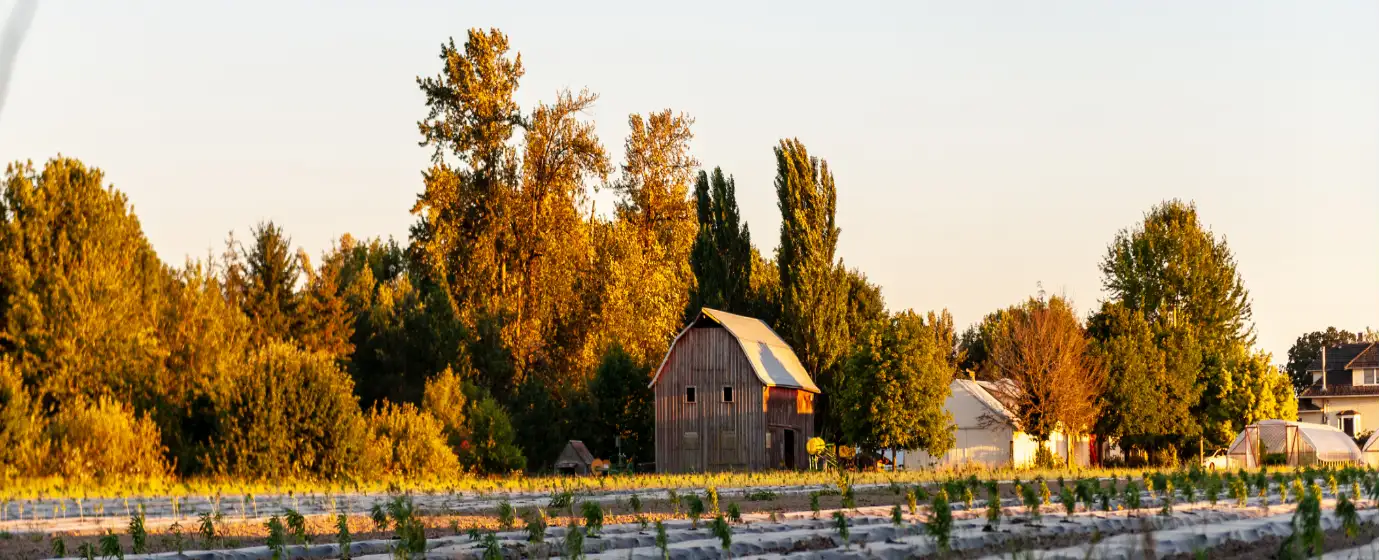
Willamette Valley · Oregon
Living in Millersburg: The Ultimate Relocation Guide (2026)
Maybe you've been priced out of Corvallis and someone in your office mentioned that the neighborhood just north of Albany is genuinely different — quieter streets, larger lots, homes actually worth what they're asking. Maybe your employer is tied to the Willamette Valley manufacturing corridor and you pulled up a map and noticed this small city sitting right along I-5, tucked between Albany and the river. Or maybe you drove through on a weekday afternoon, saw the wide streets and Craftsman-style homes and thought: this doesn't look like what I expected from a Linn County zip code. None of that is an accident. Millersburg was incorporated in 1974 for one specific reason — to keep Albany from annexing the land where a major zirconium processing plant operated. It has spent the fifty years since becoming something genuinely its own: a planned, owner-occupied, family-weighted community with an income profile that puts it well above the regional average.
What shapes daily life here is the interplay between industrial presence and residential calm. The ATI Metals facility (formerly Wah Chang) is the city's anchor employer, and the Ball Corporation aluminum can plant coming online in mid-2026 will add more than 100 jobs to the local economy — with a construction investment north of $200 million. Yet you don't feel the industrial footprint when you're walking the greenbelt paths or watching kids play at Millersburg City Park. The Willamette River forms the western edge of town, the city covers just 4.46 square miles, and with fewer than 4,000 residents spread across that land, population density stays low enough that most streets feel genuinely uncrowded.
This guide will help you figure out whether Millersburg is the right fit — not just on paper, but in practice. You'll find an honest read on the housing market, the school situation, the commute realities, what neighbors actually say after six months here, and the specific trade-offs that make some buyers choose Albany, Corvallis, or Salem instead.
| Best For | Why |
|---|---|
| Manufacturing & industrial sector workers | ATI Metals and Ball Corporation are local employers; I-5 corridor plants are minutes away |
| Families with school-age children | Married-couple households make up nearly 69% of the community; West Albany High School offers strong CTE programs |
| Buyers who want space and quiet | Low density, large lots up to a third of an acre, Craftsman homes with attached garages and shaded patios |
| Remote workers earning Portland-level income | Median household income of $124,101 with cost of living below the national average |
| First-time buyers stepping into homeownership | Entry-level options starting around $460,000; $640,000 median sold price in a market that's been appreciating steadily |
| Buyers priced out of Corvallis | Comparable community feel and school district quality at a lower price point with more land per home |
The first thing people notice is the streets. Unlike Albany's grid of older neighborhoods, Millersburg's residential areas feel more intentionally laid out — curved roads, consistent setbacks, homes with extra parking beyond the attached garage. You rarely see cars parked on the street, which sounds like a small thing until you've lived in a dense metro neighborhood where sidewalk parking is constant. The physical design of the city signals that it was planned for owner-occupants, not for density or infill.
Getting around requires a car. There is no downtown commercial strip within Millersburg itself, which surprises some buyers who assume that "city" means walkable services. For groceries, dining, and errands, you head south into Albany — a drive that typically takes less than ten minutes from most Millersburg neighborhoods. The practical effect is that you live in a residential-only enclave with Albany functioning as your actual town center. Some buyers find that arrangement liberating; others find it slightly isolating after the first few months.
The commute to Portland runs approximately 70 minutes under normal conditions, which is real. I-5 north from the Millersburg corridor is generally smoother than Portland's inner-metro freeways, but the stretch through Salem — particularly between Exit 253 and the bridge — backs up during morning peak hours. Buyers who commute to Portland two or three days per week tend to find this manageable; daily commuters often reconsider. Salem and Corvallis, both closer, are more realistic daily commute destinations.
What surprises most people after six months here is how connected the neighborhood feels despite the small size. The city park at 3030 NE Alexander Lane serves as the informal gathering point — baseball fields, tennis and volleyball courts, basketball hoops, and horseshoe pits all packed into an 11-acre footprint. On weekend afternoons, it's genuinely busy. The Talking Water Gardens just south, a water treatment wetlands feature operated by Albany, draws walkers from across the region. Most Millersburg residents don't realize it's technically an Albany facility — they just treat it as their backyard trail.
The income and cost profile is the most underappreciated reason people stay. The median household income in Millersburg runs approximately $124,000, which is roughly 1.5 times the Oregon statewide figure. The city's cost of living index sits at 94.4 — below the U.S. average of 100. That combination means residents here are generally living better than their salaries would suggest in a higher-cost market. The poverty rate of around 5% is significantly below the regional average of 13%, which tells you something about who has historically chosen to put down roots here.
The lot sizes are a genuine differentiator. Most Millersburg homes sit on parcels approaching a third of an acre, with room for gardens, storage, patios, and fruit trees. In a Willamette Valley market where infill development has steadily shrunk lot sizes in Salem and Corvallis, this kind of residential elbow room is getting harder to find at this price point. Buyers who prioritize outdoor living — a fire pit, a raised bed garden, space for kids to run without leaving the property — find this hard to replicate anywhere nearby.
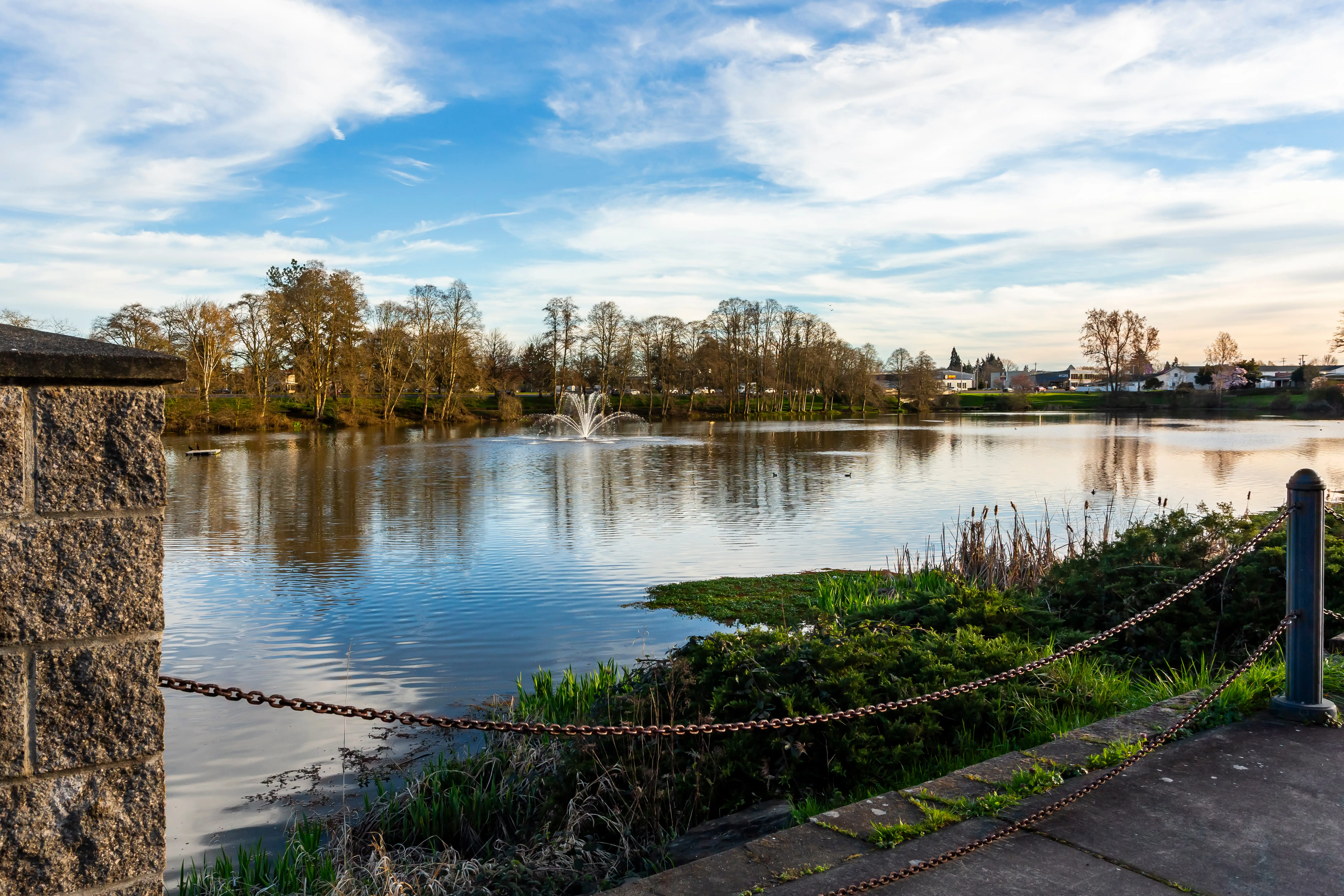
The Willamette River access adds something that doesn't fully register until you live here. Millersburg sits along the western edge of the valley floor, with river access available without driving to a state park or paying a day-use fee. Kayakers, anglers, and people who just want to watch the water on a quiet evening use it regularly. Combined with the Talking Water Gardens trail loop, there's more passive recreation within walking or short biking distance than the city's size would suggest.
The Ball Corporation plant opening in 2026 isn't just an economic story — it's an infrastructure story. The $1 million ODOT road investment that accompanied the facility approval improves the northern corridor's access, and the 10-year property tax exemption for the facility keeps that tax burden from landing on residents. Millersburg is effectively getting a major industrial anchor without the associated property tax hit, which is a legitimately good outcome for existing homeowners.
Looking to buy in Millersburg? Estimate your payment.
Enter your numbers to see an estimated monthly mortgage payment.
Estimate only. Excludes HOA fees and mortgage insurance.
The lack of walkable retail is the most consistent complaint from buyers who relocated from mid-sized cities or urban neighborhoods. There is no coffee shop you can walk to, no grocery run on foot, no Friday evening restaurant within Millersburg's own limits. Everything requires a car trip south into Albany. For buyers who ranked walkability as a priority — and many do — Millersburg will feel like a trade-off that requires conscious acceptance, not just tolerance.
The school situation is more nuanced than the B+ district rating suggests. West Albany High School, which serves Millersburg students, has meaningful strengths — strong career technical education programs and dual-credit opportunities through its College Now program. But standardized test proficiency has declined over the past several years, with math proficiency sitting around 37% and reading/ELA proficiency around 65% in recent reporting. Families who prioritize test scores will want to look at this data carefully; families more interested in CTE pathways and practical credentials will find more to like.
Why some people leave comes down to one of two things: the commute or the quiet. Buyers who accepted the 70-minute Portland commute expecting to make it work often find that daily driving wears differently in practice than it does during a house-hunting weekend. And buyers who came from urban neighborhoods sometimes hit a wall around month eight when the residential-only character of Millersburg starts feeling less like peaceful and more like isolated. The absence of a town center means social life depends entirely on what you build yourself — neighborhood connections, Albany's amenities, or organized activities through the city park.
The flip side of low density is limited services. Millersburg has no hospital, no urgent care within city limits, and no significant commercial infrastructure. For medical appointments, shopping, or anything beyond a neighborhood walk, Albany is your city. That relationship works well for most residents, but buyers who've lived in self-contained small cities should understand that Millersburg functions more like a premium residential district than an independent municipality in terms of daily life.
Millersburg is small — 4.46 square miles — and its neighborhoods are not dramatically distinct in the way that Portland or Salem's are. But within that compact footprint, there are meaningful differences in age of housing stock, lot configuration, and proximity to the park corridor that shape the living experience.
The newest residential development in the city sits toward the northern end, where recent construction has brought some of the most updated floor plans and finishes to the Millersburg market. Homes here tend toward the higher end of the city's range, with prices commonly running from the mid-$600,000s to the upper $700,000s for newer builds with contemporary Craftsman detailing. The downside is that the northern edge has the least established tree canopy, which matters during Willamette Valley summers.
Best for: Buyers who want newer construction without the premium prices of comparable product in Corvallis or South Salem.
The stretch along and near NE Alexander Lane is arguably the most established residential fabric in Millersburg, and proximity to the city park at 3030 NE Alexander Lane makes it the most socially connected part of town. Homes here tend to sit on mature lots with better shade cover, and the park access means families with kids have an easy walk to baseball fields and courts rather than a drive. Pricing generally falls in the $580,000–$700,000 range depending on condition and lot configuration.
Best for: Families with school-age children who want to use the park as an extension of their backyard.
The western edge of Millersburg backs up toward the river corridor and Talking Water Gardens access. Homes here command a modest premium for the trail access and the psychological benefit of living with greenspace nearby, but they are not waterfront properties in the traditional sense. Expect pricing from the low $600,000s to the mid-$700,000s, with the trade-off being that some parcels in this zone have less street presence and connectivity to the rest of the neighborhood grid.
Best for: Buyers who prioritize passive recreation access and don't need a true waterfront deed to justify the price.
The southern neighborhoods closest to the Albany boundary feel the most connected to Albany's services — shorter drives to grocery, medical, and commercial. These tend to be among the more moderately priced pockets in Millersburg, with some homes in the $460,000–$580,000 range, particularly for older stock. For first-time buyers trying to enter the market below the city median, this is where to focus the search.
Best for: First-time buyers and buyers who want the shortest possible drive into Albany's commercial core.
| City | Best For | Home Price (2026) | Commute to Portland | Vibe |
|---|---|---|---|---|
| Millersburg | Large lots, owner-occupied quiet, manufacturing employment | ~$640,000 | ~70 min | Planned residential, low density |
| Albany | Walkable services, historic neighborhoods, lower entry point | ~$380,000–$420,000 | ~75 min | Mid-size city with commercial core |
| Corvallis | University town energy, walkability, OSU employment | ~$500,000–$550,000 | ~90 min | College-driven, more liberal, more walkable |
| Salem | State government employment, more urban amenities | ~$400,000–$450,000 | ~45 min | Oregon's capital, larger city feel |
| Jefferson | Rural character, very low price point | ~$280,000–$340,000 | ~80 min | Small-town agricultural, limited services |
| Lebanon | Affordable, growing, Santiam River access | ~$310,000–$370,000 | ~90 min | Working-class community, rural feel |
| Metric | Detail |
|---|---|
| Population | Approximately 3,319–3,759 (growing at roughly 3% annually) |
| Median Household Income | $124,101 |
| Median Sold Home Price | $640,000 (mid-2026) |
| Property Tax Rate | Approximately 0.87% |
| Cost of Living Index | 94.4 (below U.S. average of 100) |
| School District | Greater Albany Public School District 8J (B+) |
| Commute to Portland | ~70 minutes via I-5 |
| Poverty Rate | ~5.1% (well below Oregon's ~11.9%) |
| Land Area | 4.46 square miles |
| Dominant Housing Type | Craftsman-style single-family homes, mostly owner-occupied |
The Talking Water Gardens confusion is real. Most Millersburg residents treat this as their neighborhood trail — and functionally it is — but it's technically an Albany-operated water treatment wetlands and recreational facility. When neighbors say "I walked the water gardens this morning," they're talking about a genuine regional attraction that draws visitors from across Linn County. The trail system is free to use, the wetlands birds are legitimately impressive, and the fact that it sits right at the Millersburg-Albany boundary means most Millersburg homeowners have access within a short drive or bike ride.
The Wah Chang origin story is still part of local identity. Millersburg exists because a zirconium processing plant wanted protection from Albany annexation in 1974. That plant became ATI Wah Chang, then ATI Metals under Allegheny Technologies, and it remains the city's largest single employer. Long-time residents know this history and reference it when explaining why Millersburg operates the way it does — a city designed around a specific industrial anchor rather than a commercial or civic center. It's an unusual origin story for a residential community, and it explains a lot about the city's physical layout and governance.
The Ball Corporation arrival in 2026 is a genuine local conversation. A $200 million aluminum can manufacturing plant is not a subtle addition to a community of under 4,000 residents. The facility opening is expected in the second half of 2026, and residents are watching closely to see how it affects traffic patterns on the northern corridor and what the ripple effects on local hiring look like. For buyers considering Millersburg, this is worth tracking — industrial expansion of this scale creates both opportunity and uncertainty for neighboring residential areas.
What I would not do if relocating to Millersburg: I would not buy on the northern edge of development without driving that corridor during a weekday morning rush. The new Ball Corporation facility access road and the existing ATI Metals traffic both feed into the northern I-5 interchange, and that interchange will handle more volume once the plant is operational. The streets inside Millersburg itself are quiet — but the on-ramp experience could change. Buy near Alexander Lane or the established southern grid if commute stress is already a concern.

Local Expert Takeaway: If you're choosing between Millersburg and Albany and the $640,000 median price doesn't scare you, the case for Millersburg is essentially this: you're buying a larger lot in a quieter, higher-income neighborhood where nearly everyone owns their home, and you're accepting Albany as your commercial infrastructure. That trade is worth it for the right buyer. Focus your search in the Alexander Lane corridor for the best balance of established greenery, park access, and resale predictability — and watch the northern development zone carefully until Ball Corporation's traffic impact becomes clearer.
✅ Millersburg offers a genuinely rare combination — below-average cost of living, above-average household income, large lots, and low crime in a Willamette Valley location with direct I-5 access.
⚠️ There is no walkable commercial core. Daily errands, dining, and services all require a drive into Albany. Buyers who prioritize on-foot access to retail will find this arrangement frustrating over time.
📍 The Ball Corporation facility opening in mid-to-late 2026 represents the largest economic development event in Millersburg's recent history. Its effects on traffic, employment, and residential values are still playing out.
Is Millersburg a good place to raise a family?
Yes, with some nuance. Nearly 37% of Millersburg households include children under 18, and the community's high owner-occupancy rate and low crime profile create a genuinely stable environment. West Albany High School offers strong career technical education programs, and the city park provides active recreation without leaving town. Families focused primarily on standardized test scores will want to review recent proficiency data before committing.
What is the crime rate in Millersburg?
Millersburg scores a 2 out of 10 on the CAP Index Crime Score, compared to a national average of 4 — placing it among the lower-crime communities in its region. Residents commonly describe the neighborhood as quiet and safe, and the low-density, owner-occupied character of the city generally correlates with lower property crime rates than denser urban or mixed-tenure communities.
How does Millersburg compare to Albany as a place to live?
Millersburg offers larger lots, newer construction, significantly higher median household incomes, and a quieter residential feel. Albany offers a functioning commercial core, walkable neighborhoods, historic housing stock, and a median home price roughly $200,000 lower than Millersburg's. The two cities share a ZIP code and use many of the same services, so the choice is really about housing product and neighborhood character rather than access to schools or employment.
Explore the full Millersburg series: The Ultimate Millersburg Relocation Guide · Is Millersburg Safe? · Cost of Living in Millersburg · Best Neighborhoods in Millersburg · Millersburg Schools & Family Life · Millersburg Youth Sports · Millersburg Parks & Recreation · Retiring in Millersburg · 1031 Tax-Deferred Exchange in Millersburg · Millersburg First-Time Homebuyers Guide · · Moving to Millersburg from California
Tell us what you need help with and we'll connect you with local resources.

About the Author
Todd Davidson is the founder of Living in Oregon and Living in Washington, where he publishes in-depth city guides, neighborhood resources, and local market insights covering more than 180 communities across the Pacific Northwest. While his background is in home financing and real estate, he created these digital platforms to help families research and compare regions before making a move.