Willamette Valley · Oregon
Best Neighborhoods in Millersburg: Where to Buy or Rent (2026)
Millersburg is one of those places where the neighborhood you pick matters more than the city name on your mortgage paperwork. The entire city spans less than five square miles, yet the difference between a well-positioned newer subdivision near the Willamette River corridor and a lot backing up to heavy industrial noise along the I-5 manufacturing strip can mean thousands of dollars in resale value — and a very different daily experience. With a homeownership rate hovering around 94%, nearly everyone here has made a buying decision, and in a market this small, the wrong one is hard to undo.
Geography and infrastructure shape living in Millersburg in ways that aren't obvious from a Zillow search. The city sits on the northern edge of Albany, and what feels like "Millersburg" in daily life often bleeds into Albany ZIP codes, school attendance boundaries, and commercial corridors. ATI Metals and Ball Corporation anchor the manufacturing economy along the I-5 spine, which means the western and southern edges of the city carry both the economic vitality and the industrial adjacency that come with that. The quieter, newer residential pockets cluster toward the north and east, where Craftsman-style homes on larger lots represent the true Millersburg residential character most buyers imagine when they first start researching.
This guide breaks down where the best places to live in Millersburg actually are — by price, lifestyle, commute pattern, and buyer type. Whether you're relocating for a manufacturing role at one of the major employers, moving to Millersburg OR from out of state, or simply trying to decide whether to buy or rent here first, the sections below will tell you what the listing photos won't.
| Neighborhood | Best For | Price Range | Vibe |
|---|---|---|---|
| Clover Ridge | Families, move-up buyers | $620,000–$720,000 | Polished suburban, newer Craftsman homes |
| Meadow Ridge | Families with school-age children | $580,000–$670,000 | Quiet residential, park-adjacent |
| Timber Ridge | Renters, young professionals | $1,375–$1,675/mo (rent) | Mixed use, apartment-friendly corridor |
| North Millersburg | Large lot buyers, privacy seekers | $640,000–$750,000 | Spacious, semi-rural feel |
| River Corridor | Outdoor enthusiasts, waterfront buyers | $660,000–$780,000 | Scenic, Willamette access |
| South Millersburg | Commuters, value buyers | $560,000–$620,000 | Practical, I-5 convenient, industrial-adjacent |
| Acorn Park Area | Retirees, downsizers | $590,000–$660,000 | Walkable to park, lower density |
| West Industrial Edge | Employer-proximate buyers only | $520,000–$580,000 | Functional, minimal amenity walkability |
| East Albany Border | First-time buyers, budget-conscious | $490,000–$560,000 | Transitional, Albany services nearby |
| Talking Water Gardens Area | Nature-oriented buyers | $610,000–$690,000 | Wetlands-adjacent, low traffic, quiet |
| Buyer Type | Best Neighborhood | Why |
|---|---|---|
| First-time buyer | East Albany Border | Entry-level pricing, Albany amenities within reach |
| Luxury buyer | River Corridor | Largest lots, Willamette views, premium finishes |
| Walkability seeker | Acorn Park Area | Park access, lower car dependence within city |
| Families with kids | Clover Ridge | Newer homes, proximity to Clover Ridge Elementary |
| Commuters (Albany/Corvallis) | South Millersburg | Direct I-5 access, short on-ramp to US-20 |
| Large lot buyers | North Millersburg | Larger parcels, more buffer between homes |
| Renters | Timber Ridge | Only significant apartment inventory near city |
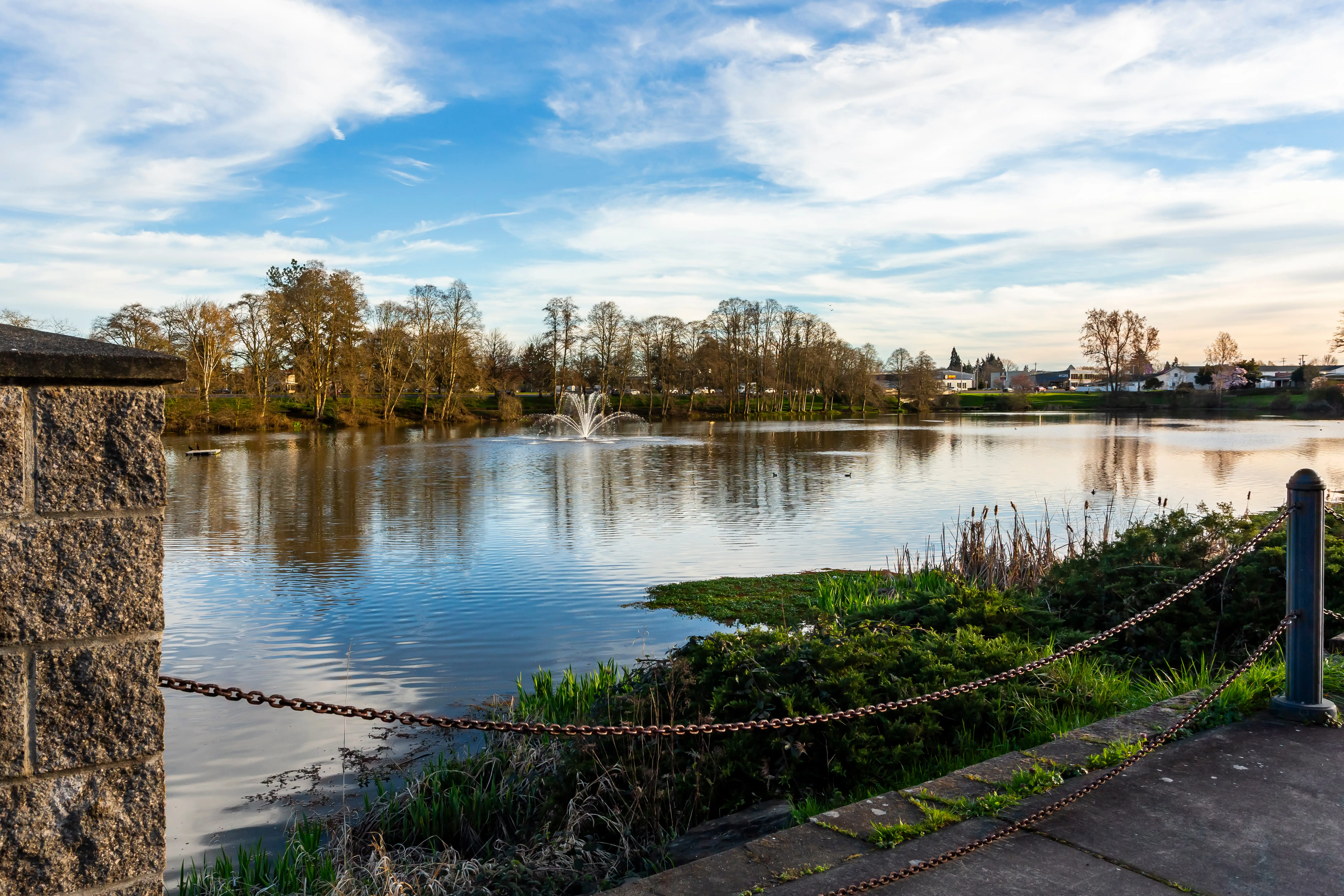
Clover Ridge is the neighborhood that most buyers picture when they search "best places to live in Millersburg" — newer construction, four-bedroom floor plans typically around 2,100 to 2,200 square feet, and the kind of landscaped streetscapes that photograph well for a reason. Homes here typically fall in the $620,000 to $720,000 range, and proximity to Clover Ridge Elementary makes this a consistent draw for households with school-age children. The catch is that the neighborhood's popularity has compressed lot privacy — homes are well-built but not especially far apart, and HOA-style community standards mean the aesthetic is polished but uniform.
Best for: Families with children who prioritize newer construction and school proximity.
Meadow Ridge earns quiet loyalty from buyers who want a residential neighborhood that doesn't feel like a showroom. The area sits near Meadow Ridge Park, giving households genuine green space within walking distance, and the price range — roughly $580,000 to $670,000 — represents solid mid-market value within Millersburg. Construction here skews slightly older than Clover Ridge, which means buyers get more individual character home to home, though it also means the occasional home needing cosmetic or systems updates.
Best for: Families and long-term buyers who want park access without paying the River Corridor premium.
If lot size is the deciding factor, North Millersburg is where buyers end up. Properties here tend to run larger, with more buffer between homes and a semi-rural feel that's increasingly rare this close to an I-5 interchange. Pricing ranges from $640,000 to $750,000 depending on parcel size and finish level. The catch is practical: amenity access requires a car for nearly everything, and the northern edges of the city are farthest from both Albany's commercial corridor and the manufacturing employer cluster, meaning commute patterns matter more depending on where you work.
Best for: Large lot buyers, remote workers, and households that genuinely want elbow room.
The River Corridor represents the top of the Millersburg market, with homes in the $660,000 to $780,000 range reflecting Willamette River access, larger parcels, and the kind of outdoor lifestyle infrastructure — including proximity to Talking Water Gardens — that doesn't exist anywhere else in the city. This is where Millersburg OR real estate commands its highest prices, and for buyers coming from Portland or Corvallis, the value relative to those markets can feel almost disorienting. The honest downside: true riverfront exposure brings seasonal flooding risk that deserves careful review of flood zone maps and insurance before making an offer.
Best for: Outdoor-oriented buyers, affluent relocators, and anyone prioritizing landscape over urban convenience.
Acorn Park anchors a lower-density residential pocket that draws retirees and downsizers who want to be within the city without feeling embedded in a dense subdivision. Homes in this area typically fall in the $590,000 to $660,000 range, and the park itself provides a genuine daily walkable amenity — something that's uncommon in a city where most green space requires a short drive. The area's quieter traffic patterns are a genuine plus, though buyers should note that on-foot access to retail and services is still limited; Millersburg as a whole has minimal commercial development within its city limits.
Best for: Retirees, downsizers, and buyers who prioritize quiet over walkable retail.
South Millersburg is the most commuter-practical part of the city, positioned closest to the I-5 access that feeds Albany's US-20 corridor and points south toward Corvallis or north toward Salem. The price range here — $560,000 to $620,000 — reflects the value you gain from industrial adjacency on the western edge. Buyers who work at ATI Metals or Ball Corporation sometimes deliberately choose this area to minimize drive time, and that logic holds. The persistent trade-off is noise and aesthetic: the closer you get to the manufacturing corridor, the more the surroundings shift from residential neighborhood to industrial-adjacent, and that matters for long-term resale.
Best for: Employees at nearby manufacturing facilities who prioritize commute time over neighborhood character.
This is the part of Millersburg that the relocation brochure doesn't highlight. The West Industrial Edge runs along the I-5/manufacturing corridor where ATI Metals and related facilities operate, and homes here — priced in the $520,000 to $580,000 range — represent Millersburg's most accessible entry point precisely because of what surrounds them. For the right buyer, typically someone working on-site at a nearby facility who values a short commute above all else, this area makes practical sense. For anyone prioritizing quiet evenings, long-term appreciation, or future resale to a broad buyer pool, it's the area most commonly overlooked for good reason.
Best for: Industrial facility employees who prioritize commute minimization over neighborhood ambiance.
The East Albany Border zone is where Millersburg's city limits blur into Albany's infrastructure — schools, retail, and services are often technically Albany-addressed but functionally serve this fringe. Pricing here, in the $490,000 to $560,000 range, represents the lowest consistent entry point for buyers who want to be in the Millersburg market without paying the Clover Ridge or River Corridor premium. First-time buyers and budget-conscious relocators often land here, and the Albany commercial corridor along Geary Street makes daily errands genuinely manageable. The honest friction: this area lacks the neighborhood cohesion and newer construction quality that define Millersburg's more desirable pockets, and some buyers find themselves effectively living in Albany without the benefit of Millersburg's quieter character.
Best for: First-time buyers, budget-conscious relocators, and anyone who needs Albany's retail access daily.
Looking to buy in Millersburg? Estimate your payment.
Enter your numbers to see an estimated monthly mortgage payment.
Estimate only. Excludes HOA fees and mortgage insurance.
Treating the entire city as one uniform market. The price difference between a home in the West Industrial Edge and a comparable-sized home in the River Corridor can exceed $150,000 — not because of square footage, but because of what surrounds it. Buyers who search by zip code alone (97321 covers most of the city) frequently tour homes in incompatible areas before realizing the neighborhood character varies dramatically from one section to the next. Before you schedule tours, map your target area relative to I-5, the manufacturing cluster, and the river corridor.
Underestimating the thinness of the market. Millersburg's small transaction volume — sometimes fewer than a dozen sold homes in a quarter — means that the "median price" figures you see on aggregator sites like Zillow ($562,790 estimated value) can lag the actual sold market by 18 to 36 months. The genuine median sold price is closer to $640,000 to $650,000, and active listings average nearly $700,000. Buyers who anchor on Zillow's estimated value figure and then write low offers consistently lose out to buyers who've done the work to understand what homes are actually clearing at.
Ignoring the noise corridor along Old Salem Road and the I-5 approaches. The stretch of residential lots that sit between the Millersburg interchange and the ATI Metals facility campus can look attractively priced on paper. But the combination of truck traffic on Old Salem Road NE and the ambient industrial hum from the manufacturing operations means evenings and weekend mornings sound meaningfully different than what buyers experience during a weekday midmorning showing. Drive the area at 6 a.m. on a weekday before making an offer on anything within a half-mile of that corridor.
Assuming renting first is easy. The 94% homeownership rate in Millersburg isn't an accident — dedicated rental inventory within actual city limits is nearly nonexistent. Buyers who plan to rent in Millersburg while they get oriented almost always end up in Albany's Timber Ridge corridor instead, which is fine functionally but means they never experience the specific residential character of Millersburg neighborhoods before committing. If you're serious about living in Millersburg long-term, the standard rent-first strategy may delay your decision without meaningfully improving it.
| Area | Ideal For | Typical Rent Range | Trade-off |
|---|---|---|---|
| Timber Ridge Corridor (Albany 97322) | Young professionals, singles | $1,375–$1,675/mo | Technically Albany, not Millersburg proper |
| Somerset Ridge / Somerset Place | Couples, small families | $1,410–$1,800/mo | Limited availability, fills quickly |
| East Albany Border (Geary St corridor) | Budget renters, first-timers | $1,200–$1,450/mo | Older stock, less amenity-dense |
| Albany Downtown Adjacent | Walkability seekers | $1,100–$1,400/mo | Farther from Millersburg's quiet neighborhoods |
| North Albany / Millersburg Fringe | Families wanting more space | $1,600–$2,000/mo | Single-family rentals, sparse availability |

Local Expert Takeaway: The single most important geographic decision in Millersburg is how far east or north of the I-5 manufacturing corridor you land. Clover Ridge and the River Corridor to the north and east represent the highest quality of daily life and the strongest long-term resale fundamentals — and they price accordingly at $620,000 to $780,000. If the budget requires going below $580,000, the East Albany Border zone gives you Albany's services without industrial adjacency, which is a better long-term bet than the South Millersburg or West Industrial Edge areas even if the Millersburg address feels less precise. Never buy within a half-mile of Old Salem Road NE without visiting on a weekday morning first.
What are the best neighborhoods in Millersburg for families?
Clover Ridge is consistently the top choice for households with school-age children, combining newer Craftsman construction, proximity to Clover Ridge Elementary within Greater Albany School District 8J, and a neighborhood character designed around residential quality. Meadow Ridge is a close second, offering slightly more price flexibility and direct park access without sacrificing the quiet suburban feel that defines living in Millersburg Oregon.
Is it better to buy or rent in Millersburg, OR?
For most people, buying is the only practical option if you want to actually live within Millersburg city limits — the homeownership rate above 94% means dedicated rental inventory inside the city is extremely limited. Renters who aren't ready to buy typically land in the Timber Ridge apartment corridor in adjacent Albany, which provides similar access to Millersburg's employment base and school district while offering managed community amenities in the $1,375 to $1,800 per month range.
How does Millersburg real estate compare to nearby Albany?
Millersburg carries a meaningful premium over Albany — roughly 35% higher by most market measures — reflecting the newer construction stock, larger average lot sizes, higher household incomes, and quieter residential character that define the city. Albany's median home value sits around $417,000 by comparison, while Millersburg's median sold price runs closer to $640,000 to $650,000. For buyers who need Albany's commercial amenities but want Millersburg's neighborhood quality, the East Albany Border zone offers a middle path at the lower end of Millersburg's pricing range.
Explore the full Millersburg series: The Ultimate Millersburg Relocation Guide · Is Millersburg Safe? · Cost of Living in Millersburg · Best Neighborhoods in Millersburg · Millersburg Schools & Family Life · Millersburg Youth Sports · Millersburg Parks & Recreation · Retiring in Millersburg · 1031 Tax-Deferred Exchange in Millersburg · Millersburg First-Time Homebuyers Guide · · Moving to Millersburg from California
Tell us what you need help with and we'll connect you with local resources.

About the Author
Todd Davidson is the founder of Living in Oregon and Living in Washington, where he publishes in-depth city guides, neighborhood resources, and local market insights covering more than 180 communities across the Pacific Northwest. While his background is in home financing and real estate, he created these digital platforms to help families research and compare regions before making a move.