Southern Oregon · Oregon
Retiring in Klamath Falls: Is It the Right Fit for Your Next Chapter? (2026)
Klamath Falls won't be for every retiree — and the city makes no effort to pretend otherwise. It sits in a high desert basin in southern Oregon, 60 miles from the California border, with 300 days of sunshine per year and home prices that still land well below the Oregon state average. But it also carries a higher crime rate than most Pacific Northwest retirement destinations, a downtown that is rebuilding rather than thriving, and a geographic remoteness that means specialist medical care often involves a drive to Portland or Medford. The honest answer to whether it fits your retirement is: it depends entirely on what you're walking away from and what you're walking toward.
The retiree who thrives here is typically someone who values affordability above prestige, outdoor access over urban amenity, and low-key community over a curated lifestyle scene. With roughly a third of the local population made up of seniors, you won't feel out of place — and the median home price sitting at $318,000 means the equity you're bringing from a California or Seattle sale can set you up with a mortgage-free retirement home and cash reserves. That math is genuinely rare in the Pacific Northwest in 2026.
This guide covers the full picture: the Oregon tax environment, Sky Lakes Medical Center's capabilities and limitations, senior living costs and options, what daily life actually looks like, and how Klamath Falls stacks up against the other southern Oregon destinations retirees typically consider.
Oregon's tax treatment of retirement income is a genuine mixed bag — more generous than many retirees expect in some areas, more aggressive in others. Understanding where you stand before you move matters.
| Income Type | Oregon Tax Treatment |
|---|---|
| Social Security Benefits | Not taxed at the state level |
| Oregon Pension / PERS | Taxable as ordinary income |
| Federal Government Pension | Taxable; partial credit available for pre-October 1991 contributions |
| Private Pension / 401(k) / IRA Withdrawals | Taxable as ordinary income |
| Military Retirement Pay | Fully exempt from Oregon state income tax |
| Investment Income (dividends/capital gains) | Taxed as ordinary income (no preferential rate) |
| State Income Tax Rate (most retirees) | 8.75%–9.9% depending on income bracket |
| State Sales Tax | None — zero state or local sales tax |
| Property Tax Rate (Klamath Falls) | Approximately 0.66% |
The absence of a sales tax is a genuine daily-life advantage — every grocery run, hardware store trip, and restaurant meal costs less in Oregon than in most states. But Oregon's income tax is real and applies to most retirement account withdrawals. A retiree drawing $50,000 per year from an IRA will owe Oregon income tax on that money, which is why military retirees — fully exempt from state income tax on their retirement pay — consistently find Klamath Falls to be one of the better financial fits in the region. Kingsley Field's presence nearby means that community already exists here.
Oregon also offers a property tax deferral program for homeowners 62 and older who meet income eligibility requirements — the state effectively loans you the property tax each year, with repayment due when the property is sold or transferred. At a 0.66% rate, the annual tax burden on a $318,000 home runs roughly $2,100 per year, which is already among the lower figures in Oregon. The deferral program can eliminate that bill entirely for income-qualified seniors, making homeownership costs in Klamath Falls unusually accessible. Washington State has no income tax but does tax Social Security indirectly through federal pass-through, and its property taxes run higher in most desirable retirement markets — for retirees with significant pension or military income, Oregon's overall picture often comes out ahead.
Sky Lakes Medical Center at 2865 Daggett Ave is the anchor of healthcare in Klamath Falls and a more capable facility than many retirees expect for a city this size. It operates as a 176-bed, not-for-profit community hospital serving a 10,000-square-mile region across southern Oregon and into northern California — meaning it has built infrastructure for a geographically isolated patient population.
Nationally recognized in pulmonary care, cardiac care, and orthopedics, Sky Lakes handles the conditions that matter most to an aging population. The hospital runs a cardiac catheterization lab (two remodeled cath labs), a cancer treatment center with radiation therapy, an outpatient dialysis center, ICU, MRI and CT imaging, nuclear medicine, and a vascular lab. For mental health specifically, the facility offers advanced TMS (Transcranial Magnetic Stimulation) and Esketamine treatments — a level of psychiatric care rarely available in communities this size. Over 120 physicians are on staff, and the hospital employs more than 1,700 people across its campus and affiliated clinics.
The academic affiliation with Oregon Health & Science University through the Cascades East Rural Family Medicine Residency Program brings 20+ resident physicians to the community and keeps the medical staff connected to OHSU's research and education infrastructure. That connection matters practically: Sky Lakes physicians have referral relationships with OHSU specialists in Portland, which is typically the next stop for complex cardiac surgery, neurology, or oncology cases that exceed what a community hospital can handle. Portland is roughly a five-hour drive — a real consideration for a retiree whose health trajectory may require specialist access. Medford's Asante Rogue Regional Medical Center, a level-II trauma center, sits about 75 miles southwest and serves as the more practical transfer point for time-sensitive cases.
The Sky Lakes Mobile Clinic extends care to rural residents across the basin, and two Basin Transit Service routes serve the hospital campus directly — meaning car-free access to medical appointments is genuinely possible for seniors living near those routes.
With 20 senior living communities operating in Klamath Falls, the inventory of options is solid for a city of 22,000. The average monthly cost across assisted living facilities runs approximately $3,007 — meaningfully below the Oregon state average — with independent living options available from around $2,382 per month and lower-cost assisted living as low as $1,344 per month at some facilities.
| Community | Type | Location | Est. Monthly Cost |
|---|---|---|---|
| Crystal Terrace of Klamath Falls | Independent, Assisted, Memory Care | Klamath Falls | $2,400–$4,200 |
| Pacifica Senior Living Klamath Falls | Assisted Living | Klamath Falls | $3,250–$4,600 |
| Klamath View Retirement Center | Independent, Memory Care, Continuing Care | Klamath Falls | $2,100–$3,500 |
| Brookdale Klamath Falls | Assisted Living | 97601 zip | $3,000–$4,500 |
| Pelican Pointe Assisted Living | Assisted Living | South Klamath (97603) | $2,800–$4,000 |
| Pelican Pointe Memory Care | Memory Care | 615 Washburn Way, 97603 | $4,000–$5,500 |
| Trustwell Living at Rogue River Place | Assisted, Memory Care, Respite | 2437 Kane St, 97603 | $3,200–$4,800 |
| Marquis Plum Ridge | Skilled Nursing / Post-Acute | 1401 Bryant Williams Dr. | $6,500–$9,000 |
| Ashley Manor – Homedale | Assisted Living (small-home model) | 44 N. Homedale Rd. | $2,800–$3,800 |
Crystal Terrace stands out as a strong first call for retirees who want to age-in-place within one community — the combination of independent, assisted, and memory care under one roof means a couple with different care needs doesn't have to separate. Marquis Plum Ridge occupies the skilled nursing and post-acute rehabilitation end of the spectrum, which matters for retirees recovering from joint replacement or cardiac events at Sky Lakes who need a step-down facility before returning home. The small-home assisted living model at Ashley Manor suits retirees who want a more intimate setting than a larger campus.
Looking to buy in Klamath Falls? Estimate your payment.
Enter your numbers to see an estimated monthly mortgage payment.
Estimate only. Excludes HOA fees and mortgage insurance.
The first thing to understand about daily life in Klamath Falls is that a car is not optional — it's essential. Basin Transit Service runs routes through the city and does serve Sky Lakes and some senior-oriented destinations, but the route network is limited enough that most retirees without a vehicle will find their independence constrained. The downtown core has improved walkability for residents in the immediate vicinity, but the broader city is built around driving.
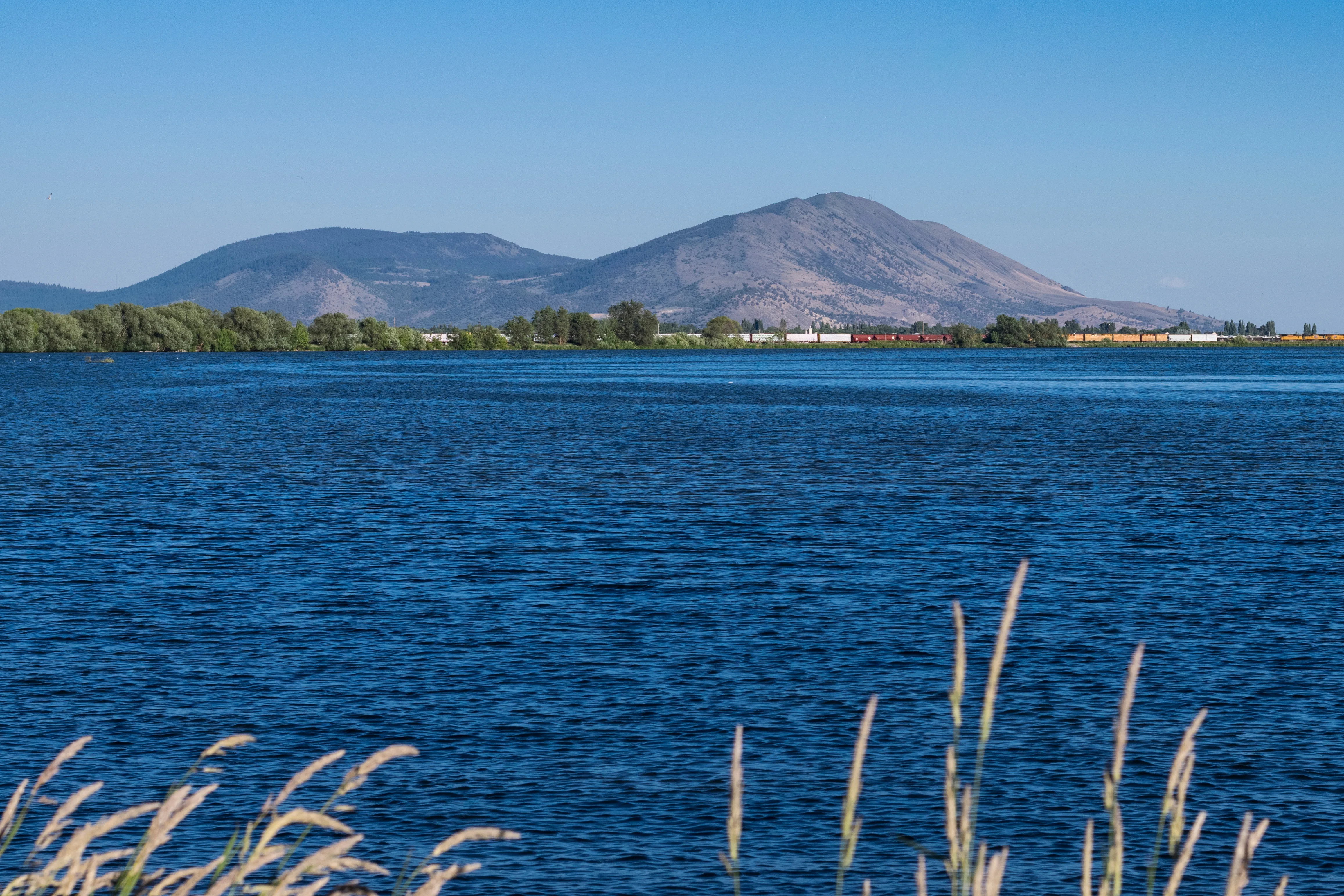
What compensates for that dependency is the outdoor access. The OC&E Woods Line State Trail — a 100-mile rail-trail running east from Klamath Falls — is one of the longest converted rail-trails in the western United States and draws cyclists and walkers year-round. Moore Park along the Link River offers paved walking paths, bird-watching habitat on Upper Klamath Lake, and a boat launch. For retirees whose idea of daily activity involves a morning walk with water views, the geography delivers in ways that genuinely surprise people arriving from urban settings.
Crater Lake National Park sits 57 miles north and remains one of the great retirement perks of this location — a national park accessible for a day trip in a way that residents of Portland or Eugene simply cannot claim. The Running Y Ranch Resort provides a golf course, spa, and resort amenities within the city that many retirees treat as a year-round social anchor. The Klamath County Museum and the cultural calendar around downtown — including the Klamath Basin Birding Trail and events tied to the winter pelican migration — give the city a specific outdoor-cultural identity that active retirees tend to value highly.
The grocery situation is better than you might expect for a city this size. National chains including Walmart and Grocery Outlet are well-represented, and the south side of the city near Washburn Way has the densest commercial corridor. Dining options are modest compared to Ashland or Medford, but the cost structure means a retired couple eating out regularly spends noticeably less per month than they would in the Rogue Valley. The annual estimated cost of living for a single retiree runs around $2,646 per month — about 31% below the Oregon state average.
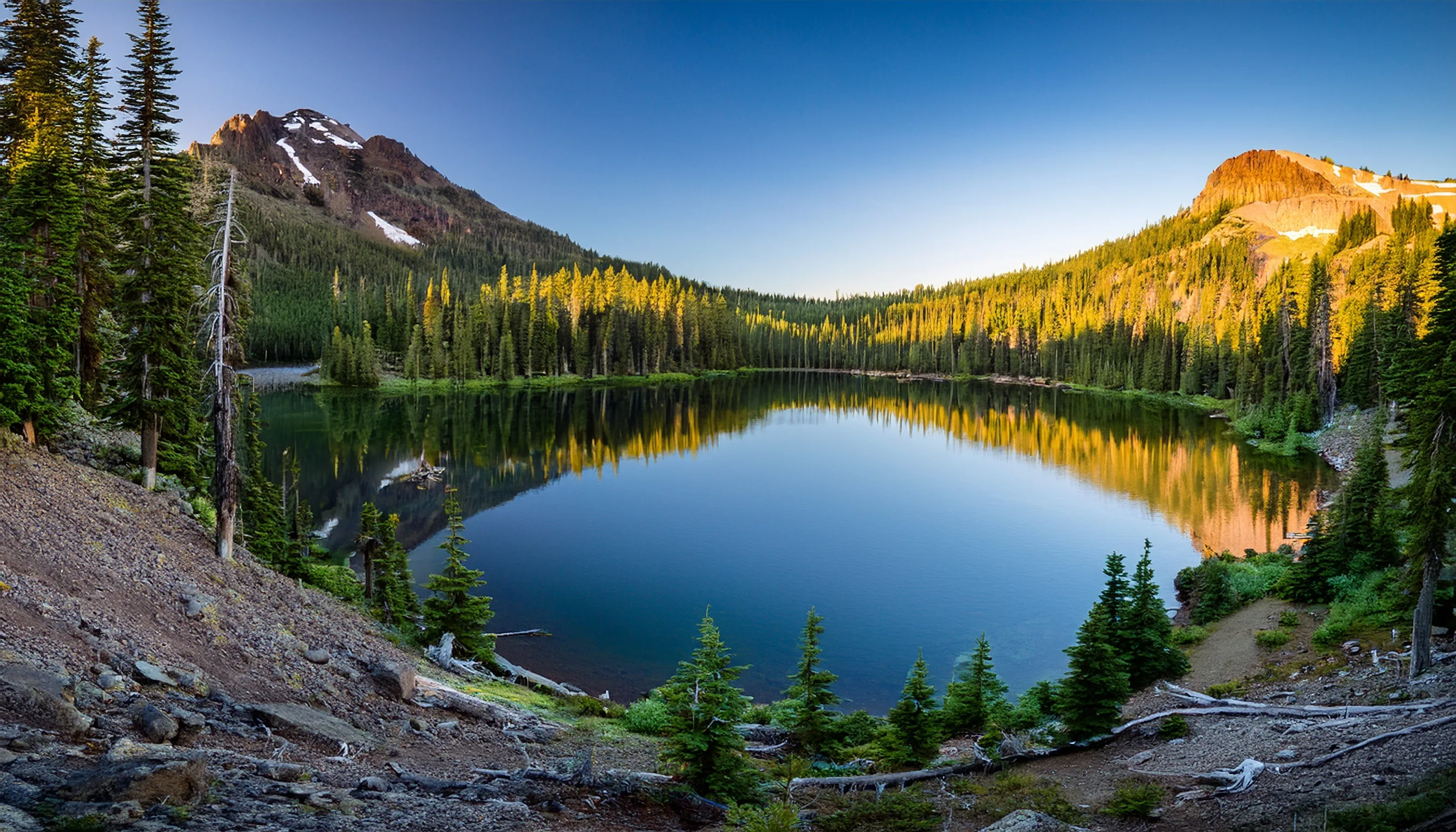
What surprises most people after six months here is the sunshine. Oregon's reputation for rain does not apply in the Klamath Basin — 300 days of sunshine and low humidity mean the winters feel short and the outdoor season feels long. Retirees arriving from the Willamette Valley often describe it as the single factor that makes everything else tolerable.
Why do people leave? The city's crime rate — 5.3 violent incidents per 1,000 residents and 20 property crimes per 1,000 — is above what most retirees want at their doorstep, and neighborhood selection matters significantly. Downtown-adjacent blocks require more awareness than the north hills or the Running Y area. Retirees who leave most commonly cite the limited specialist medical access, the modest cultural scene, and the 75+ mile drive to the nearest large regional shopping and entertainment corridor.
| City | Median Home Price | Primary Hospital | Walkability | Senior Living Depth | Overall Fit |
|---|---|---|---|---|---|
| Klamath Falls, OR | $318,000 | Sky Lakes Medical (176-bed) | Car-dependent | Strong (20+ communities) | Best for budget-first outdoor retirees |
| Ashland, OR | ~$550,000 | RVMC via Medford (20 min) | Moderate–Good | Moderate | Best for arts/culture, walkable lifestyle |
| Medford, OR | ~$420,000 | Asante Rogue Regional (Level II) | Moderate | Strong | Best for healthcare access + amenities |
| Grants Pass, OR | ~$380,000 | Three Rivers Community (small) | Limited | Moderate | Budget option, limited medical depth |
| Bend, OR | ~$680,000 | St. Charles Bend (Level II) | Good | Strong | Best overall, if budget allows |
| Yreka, CA | ~$260,000 | Fairchild Medical (small critical access) | Limited | Limited | Budget extreme; very limited services |
Ashland attracts a different buyer entirely — someone who wants the Oregon Shakespeare Festival, wine culture, and a walkable downtown, and is willing to pay $550,000+ for that lifestyle. The two cities appeal to different retirement personalities more than they compete directly.
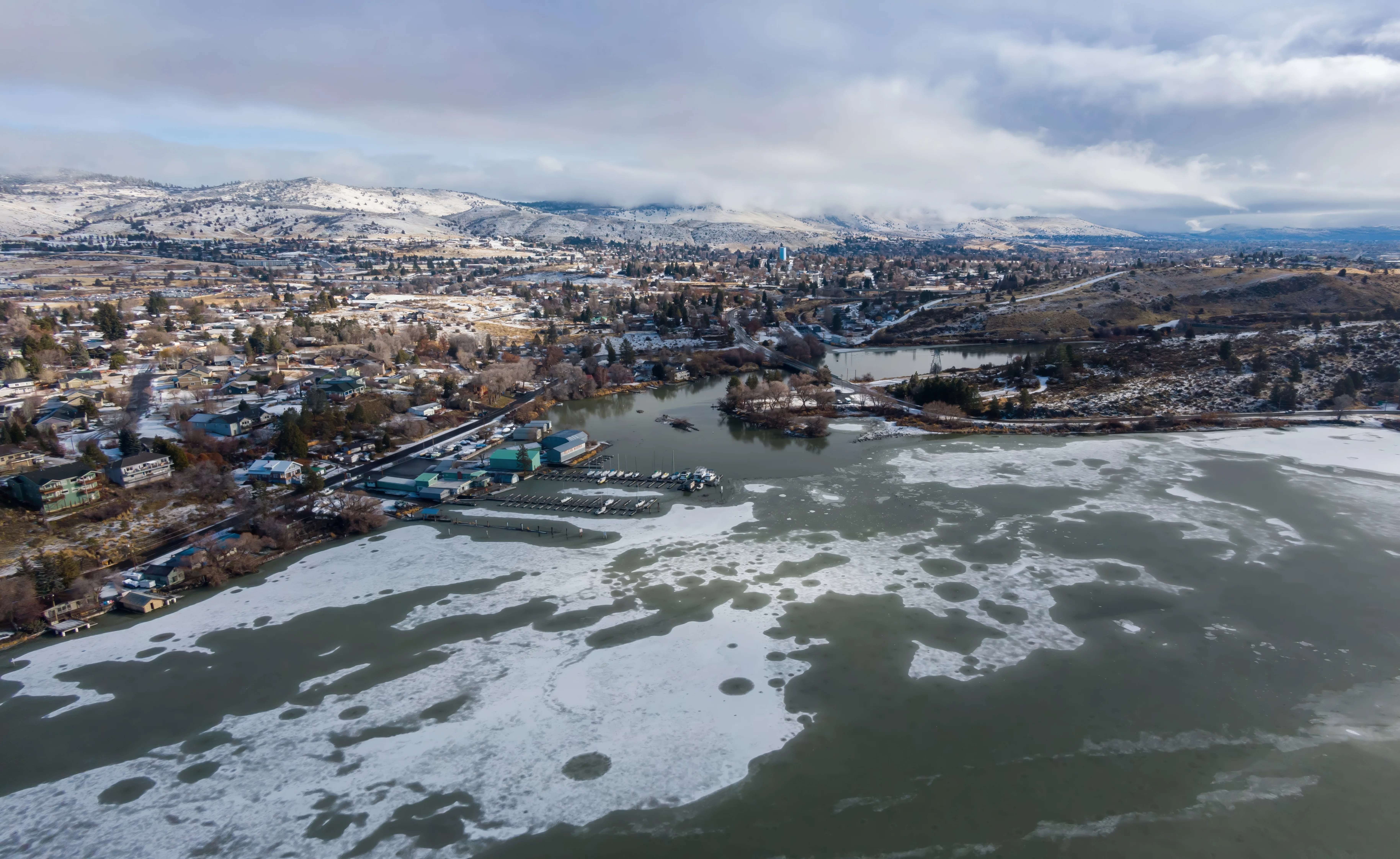
Local Expert Takeaway: Retirees who thrive in Klamath Falls tend to land in three specific areas: the Running Y Ranch community for resort-adjacent living with golf and trail access, the North Hills for elevated views and quieter residential streets above the city's commercial core, and the blocks within walking distance of Moore Park for the daily water-and-wildlife experience. If you're managing a complex health condition that requires specialist visits more than twice a year, build in the Medford or Portland travel cost — or reconsider Medford as your base. If you're arriving with home equity from a higher-cost market and want to eliminate your mortgage, buy a modest property outright, and live well on Social Security plus savings, this city will stretch that money further than almost anywhere else in Oregon.
Is Klamath Falls a good place to retire?
For the right retiree — someone prioritizing affordability, outdoor access, and a small-city lifestyle over urban amenity and specialist medical convenience — Klamath Falls offers a genuinely compelling case. The combination of 300+ days of sunshine, low property taxes, no state sales tax, and home prices well below the Oregon average creates retirement math that is hard to replicate in the Pacific Northwest.
What healthcare is available for retirees in Klamath Falls?
Sky Lakes Medical Center at 2865 Daggett Ave provides the primary care and specialty services most retirees need day-to-day, including cardiology, orthopedics, oncology, and pulmonary care. For advanced neurology, complex cardiac surgery, or Level I trauma, the practical transfer destinations are Asante Rogue Regional in Medford (about 75 miles southwest) and OHSU in Portland.
How does Klamath Falls compare to Medford for retirement?
Medford offers a Level II trauma center, stronger specialist access, more dining and retail, and better walkability — at a median home price roughly $100,000 higher. Klamath Falls wins on cost of living, outdoor access, and the Crater Lake corridor. Retirees in good health who prioritize affordability typically favor Klamath Falls; those managing ongoing health conditions who want medical infrastructure nearby often choose Medford.
Explore the full Klamath Falls series: The Ultimate Klamath Falls Relocation Guide · Is Klamath Falls Safe? · Cost of Living in Klamath Falls · Best Neighborhoods in Klamath Falls · Klamath Falls Schools & Family Life · Klamath Falls Youth Sports · Klamath Falls Parks & Recreation · Retiring in Klamath Falls · 1031 Tax-Deferred Exchange in Klamath Falls · Klamath Falls First-Time Homebuyers Guide · · Moving to Klamath Falls from California
Tell us what you need help with and we'll connect you with local resources.

About the Author
Todd Davidson is the founder of Living in Oregon and Living in Washington, where he publishes in-depth city guides, neighborhood resources, and local market insights covering more than 180 communities across the Pacific Northwest. While his background is in home financing and real estate, he created these digital platforms to help families research and compare regions before making a move.