Portland Metro · Oregon
Living in King City: The Ultimate Relocation Guide (2026)
Maybe you've been pricing out the Portland metro for months and someone — a coworker, a Zillow rabbit hole, a Reddit thread — mentioned King City as the answer. Maybe you pictured a small Pacific Northwest suburb with a golf course and quiet streets, checked the median home price, and thought: finally, something I can actually afford near Portland. Or maybe you drove through on 99W, noticed how compact and green it felt, and wondered why more people weren't talking about it.
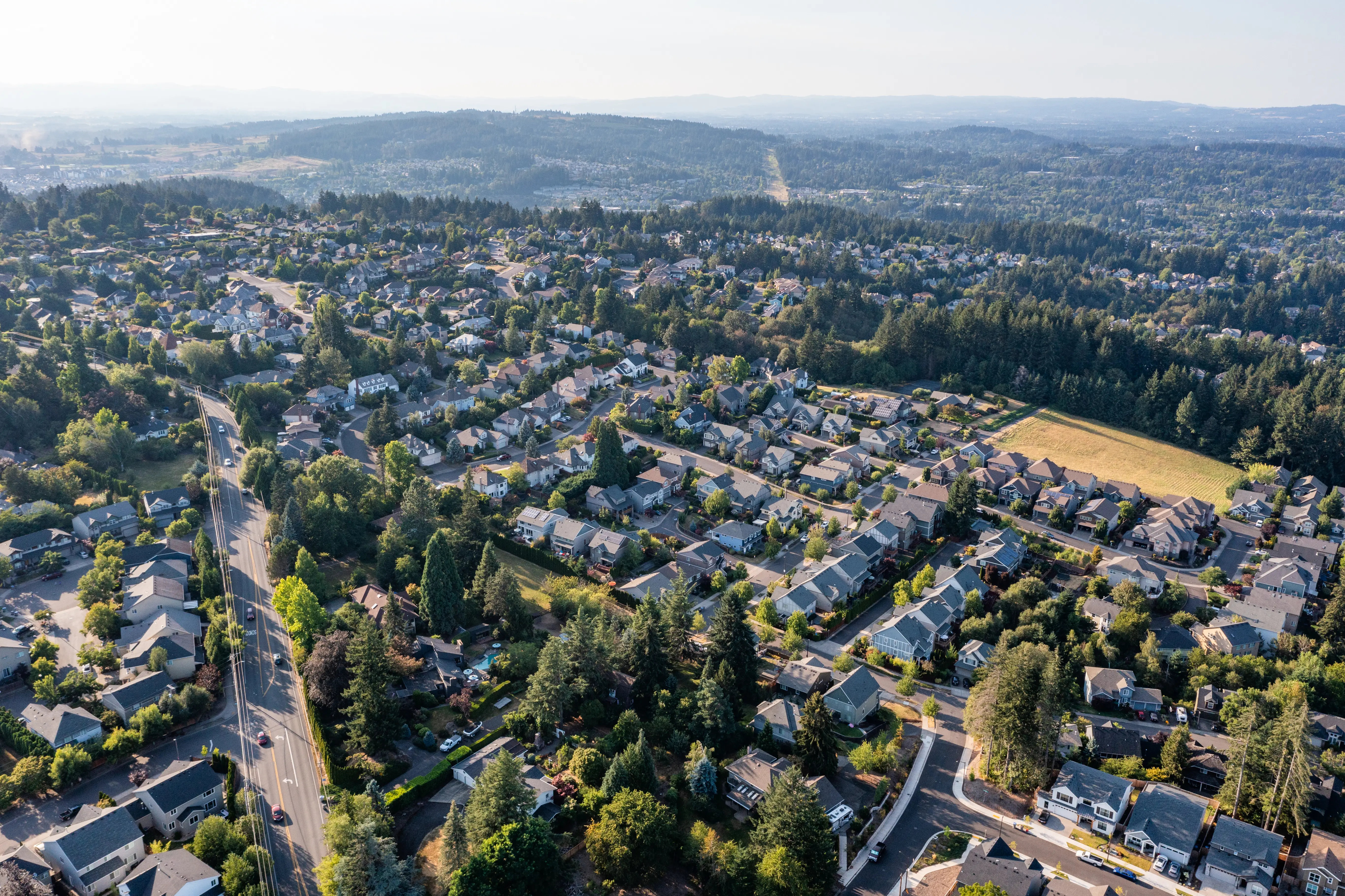
King City sits about 10 miles south of downtown Portland in Washington County, tucked between the south slope of Bull Mountain and the northern banks of the Tualatin River. It covers just 0.42 square miles — smaller than many Portland neighborhoods — with nearly 12,000 residents per square mile. Access to I-5 and Highway 99W puts Portland about 21 minutes away on a good morning, Beaverton under 15, and Tualatin just down the road. The layout is functional, the streets are calm, and the golf course is genuinely beautiful. But there is a defining fact about this city that shapes everything from housing stock to social life: King City was founded in 1966 as a retirement community, and that origin still runs through everything here.
This guide will help you figure out whether King City's combination of affordability, location, and community feel actually matches your life. That means honest answers on housing prices, neighborhood character, school access, daily commute reality, and the demographic mix you'll be joining — because moving here without understanding who lives here is the most common mistake relocating buyers make.
King City doesn't work for everyone, but for the right buyer it represents one of the genuinely underrated value propositions in the Portland metro. The table below cuts through the noise.
| Best For | Why |
|---|---|
| Retirees & pre-retirees | Quiet streets, golf course access, senior-friendly housing stock, significant 55+ community infrastructure |
| Value-focused commuters | Median home prices well below most Portland-area suburbs with a 21-minute drive to downtown |
| Remote workers | Low noise, low density feel, home offices in a calm environment — without sacrificing metro access |
| First-time buyers | Entry-level pricing relative to Tigard and Tualatin; attached homes and condos offer lower buy-in points |
| Couples without school-age children | Excellent livability without needing to optimize for school access |
| Downsizers from larger Portland homes | Right-sized housing, low maintenance, proximity to Tualatin and Tigard amenities |

King City is the market I bring up when buyers tell me they've "given up on the Portland metro." The $468,000 median sold price is real — this is not a rounding error or a cherry-picked dataset. When you compare that to Tigard, where buyers are competing at $550,000 and up for similar square footage, or Tualatin where entry-level single-family homes rarely touch below $500,000, King City represents a genuine price gap. The golf course homes along the western edge of town and the single-family detached properties near Jordan Way have consistently attracted buyers from Lake Oswego and Southwest Portland who ran the numbers and realized they could get a renovated rancher here for what a condo costs in their current neighborhood.
What buyers consistently underestimate is how fast this inventory moves when it's priced right. The homes sitting at 80-plus days are almost always either overpriced for the condition or attached product that buyers haven't toured in person. Single-family detached homes in the $450,000–$520,000 range — especially anything with golf course views or updated kitchens — have routinely attracted multiple offers in the first week. My advice to anyone serious about King City: get your pre-approval in order before you tour, because the moment you fall in love with a 3-bedroom rancher on a quiet cul-de-sac here, you will not want to lose it over paperwork timing. If you're considering King City and want insight into which neighborhoods align with your priorities and budget, I'd welcome the opportunity to share what I've learned from helping hundreds of families make this move successfully.
The first thing most new residents notice is the silence. Not rural silence — you're a short drive from Target, Home Depot, and a half-dozen restaurant corridors along 99W — but the kind of quiet that comes from a community where most residents are in or near retirement age, where kids on bikes aren't the dominant visual, and where 10pm on a Friday genuinely sounds like midnight. The median age in King City is approximately 59 years old, with roughly 42% of residents aged 65 or older. That demographic reality shapes the energy of every street, every community gathering, and every HOA meeting.
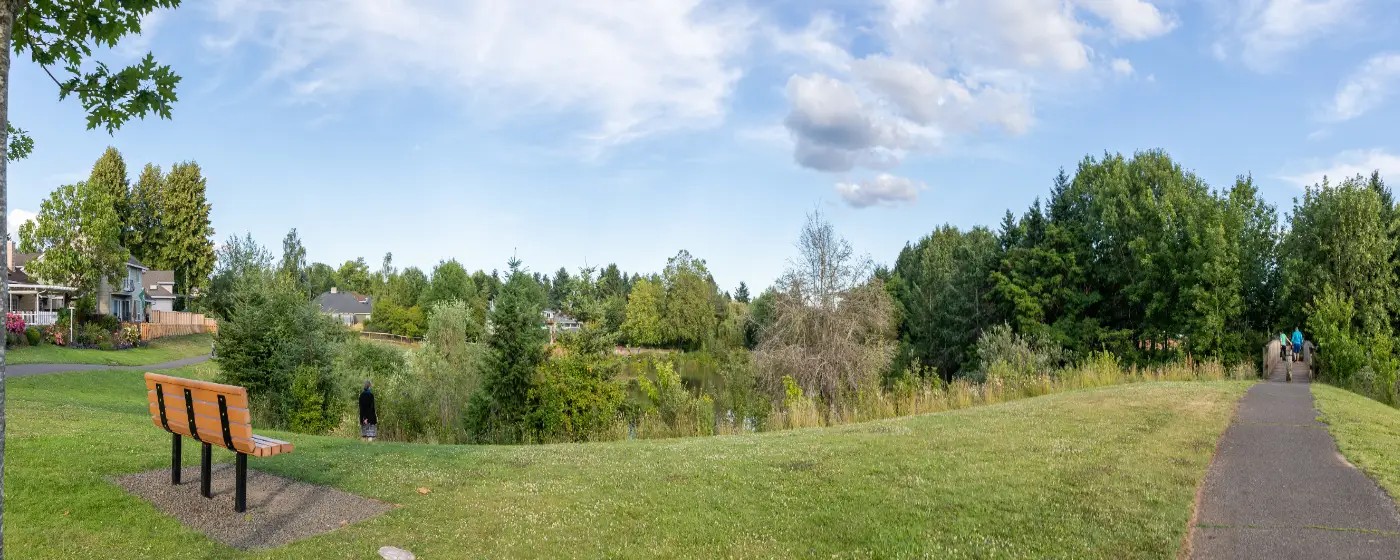
Geographically, the city functions almost like a complete small town contained within a larger suburban web. King City Plaza provides the essential daily services — grocery access, pharmacy, coffee — within the city's borders. The Tualatin Promenade shopping center is minutes away for larger retail needs. The King City Golf Course anchors the western part of town with a genuine visual centerpiece, and the Tualatin River forms a natural southern boundary that gives the area a greenway sensibility that more congested suburbs can't match. Walking to the river or along adjacent paths is an actual daily habit for many residents here, not just a weekend activity.
The commute reality deserves honest treatment. The 21-minute drive to Portland assumes off-peak conditions and a reasonable route via I-5. During morning rush on 99W — the more direct surface street route — that figure stretches closer to 35–40 minutes in both directions. Buyers who rely on public transit should know that TriMet Route 94 provides service to downtown Portland, though it's a longer ride than driving and involves some timing patience. If your job requires you in a downtown Portland office at 8:30am five days a week, factor that in. If you're working hybrid or remote, the 21-minute figure becomes accurate and the daily lifestyle becomes genuinely comfortable.
The friction point most people discover at month three: King City's commercial footprint is small. The restaurants, gyms, breweries, and weekend-activity infrastructure you might be accustomed to in a larger suburb simply don't exist inside city limits. Residents extend their social radius into Tigard, Tualatin, and occasionally Beaverton for most of that. If you've been living in a place where everything is walkable or a 5-minute drive, the adjustment to King City's quiet self-containment takes a few weeks to feel like a feature rather than a limitation.
The price-to-location ratio is hard to argue with. At a $468,000 median sold price, King City sits meaningfully below comparable suburbs with similar Portland commute times. Tigard runs $50,000–$100,000 higher for similar homes. Tualatin is at a comparable gap. Lake Oswego and West Linn aren't even in the same conversation. For buyers who prioritize square footage, a quiet street, and metro access over having a walkable restaurant district outside their front door, the math here works.
The golf course is a genuine lifestyle asset, not just a marketing talking point. King City Golf Course is a lighted 18-hole executive course — compact, well-maintained, and extremely walkable from a large portion of the residential streets. For residents who play even occasionally, having a course this accessible without a private club price tag changes daily retirement arithmetic in a meaningful way.
The community safety profile is among the strongest in the region. Violent crime runs at approximately 0.41 incidents per 1,000 residents — a figure that sits well below the national average and comfortably below most Portland-area suburbs. Property crime at 7.55 per 1,000 is moderate but unremarkable for a metro-adjacent community. Total reported crimes in a recent year numbered around 39 for the entire city. Residents consistently describe police presence as visible and response times as fast — a direct benefit of the city's small size.
King City also earns its livability score honestly. AreaVibes places it in the 97th percentile of U.S. cities, with top marks for crime safety and solid grades for amenities and housing. The climate softens the Portland stereotype slightly: average highs of around 62°F and about 106 days of precipitation annually — wet, but not dramatically wetter than the broader metro, and notably less so than some western Oregon communities closer to the Coast Range.
Finally, the Tigard-Tualatin School District is a genuine draw for the families who do live here. Rated B+ with a strong graduation track record, the district gives King City residents access to solid public schools without the premium pricing that school-driven suburbs like Lake Oswego command.

Looking to buy in King City? Estimate your payment.
Enter your numbers to see an estimated monthly mortgage payment.
Estimate only. Excludes HOA fees and mortgage insurance.
King City's greatest strength — its quiet, age-skewed community character — is also its most significant lifestyle limitation for certain buyers. If you're in your 30s or 40s with young children looking for neighborhood kids to play with, block parties, youth soccer leagues operating at your front door, and a social scene built around your demographic, King City will likely feel isolating faster than you expect. The city is not hostile to families — it simply wasn't built around them, and the day-to-day social texture reflects that.
The city's commercial footprint is genuinely small. There are no breweries, wine bars, or independent restaurants inside King City's borders that would anchor a local social scene. The Irish pub fare and Vietnamese cuisine that residents reference are along 99W — technically adjacent or in neighboring Tigard, not in King City proper. Buyers accustomed to a walkable urban-suburban hybrid will find that King City's walkable amenities are limited to the golf course, the park, and essential retail. Everything else requires a drive.
Why some people leave King City: The most common pattern is families with school-age children who underestimated the social gap between their household and the dominant demographic. Young parents often report loving the affordability and safety but finding the daily neighborhood energy too quiet for how they actually wanted to live. Some buyers also leave when they realize that the entertainment and restaurant options they were accustomed to in their previous city require a 10–15 minute drive that, over time, feels like a bigger friction than they anticipated.
The housing inventory is also notably limited. With only 2,713 total housing units in the entire city, well-positioned listings attract attention quickly when priced correctly, but the overall selection at any given time is small. Buyers with very specific criteria — particular square footage, single-story accessibility, a garage plus golf course view — may find themselves waiting weeks or months for the right home to appear.
King City's physical footprint is small enough that "neighborhood" often describes a development, a cluster of streets, or a specific style of housing rather than a distinct district with its own commercial identity. The distinctions that matter most to buyers are age of construction, proximity to the golf course, and whether a community has HOA covenants that align with your lifestyle.
Kings Point Brittany is one of the more established residential clusters in King City, representing the community's origins as a planned development with consistent architectural character. Homes here tend toward single-story ranch-style layouts — accessible, low-maintenance, and appealing to buyers prioritizing one-level living. The streetscape is mature, with established landscaping that gives the area a settled, cared-for feel. Pricing in this area generally falls within the city-wide median range, making it accessible for buyers who want a complete, move-in-ready home without the uncertainty of newer construction. The honest tradeoff is that square footage can feel limited relative to what the same price buys in newer developments nearby.
Best for: Buyers entering retirement or approaching it who want single-level living and a quiet, established neighborhood environment.
The Highlands area sits at one of the more elevated positions in King City's geography, with some homes offering views that remind buyers this city sits on the slope of Bull Mountain. Homes here are generally in the mid-to-upper range of King City's pricing, with properties that have attracted buyers who want something a step above the baseline rancher stock. The neighborhood has a stronger single-family character and draws buyers who want the King City affordability advantage while living in a home that doesn't feel like a compromise. The catch is that elevation can mean slightly longer walks to the golf course or the park, and the neighborhood streets require a car for most daily activity.
Best for: Buyers looking for single-family homes with more presence and some view potential, without leaving the King City price range.
Jordan Way and its surrounding streets represent some of the more centrally located residential properties in King City, with proximity to King City Community Park and relatively easy access to the city's commercial cluster. Homes along this corridor vary in age and style more than in some of the planned-development sections, offering buyers more variety in what they can find. For families or younger buyers who want to be closer to the park, the civic buildings, and the daily-use amenities inside city limits, Jordan Way is typically one of the first areas local agents mention. Pricing here generally tracks the city-wide median, with occasional value finds in homes that need cosmetic updating.
Best for: Buyers who want centrality within King City — close to the park, civic amenities, and the commercial plaza — without paying a premium for golf course proximity.
| City | Best For | Median Home Price | Commute to Portland | Vibe |
|---|---|---|---|---|
| King City | Value buyers, retirees, remote workers | $468,000 | ~21 min | Quiet, senior-skewed, golf course suburb |
| Tigard | Families, professionals, mixed lifestyle | ~$550,000+ | ~18 min | Active suburb, strong amenities |
| Tualatin | Families with kids, outdoor access | ~$520,000+ | ~22 min | Lakefront community, growing restaurant scene |
| Durham | Buyers wanting rural feel near metro | Lower inventory, variable | ~20 min | Tiny city, very quiet, limited services |
| Beaverton | Tech workers, diverse demographics | ~$480,000+ | ~20 min | Walkable corridors, strong retail |
| Lake Oswego | Premium buyers, top-ranked schools | ~$700,000+ | ~20 min | Upscale lakefront, high amenity density |
| Category | Detail |
|---|---|
| Population | Approximately 4,968 |
| Median Sold Home Price | $468,000 (mid-2026 baseline) |
| Median Household Income | $66,728 |
| Property Tax Rate | Approximately 0.99% |
| Commute to Portland | ~21 minutes (off-peak) |
| Violent Crime per 1,000 | 0.41 |
| Property Crime per 1,000 | 7.55 |
| School District | Tigard-Tualatin School District (rated B+) |
| Median Age | ~59 years |
| Cost of Living Index | 106.1 (U.S. average = 100) |
The King City Civic Association is genuinely the heartbeat of this community — not in a performative way, but in the way that small cities occasionally manage to make civic participation feel worthwhile. The Civic Association Building is the gathering point for community events, and long-term residents tend to know each other through it in a way that larger suburbs simply can't replicate. If you move here and want to actually know your neighbors within six months, showing up at a Civic Association event is the fastest way to make that happen.
The golf course culture is more social than it looks from the street. King City Golf Course isn't just a place to play 18 holes — it functions as an informal community gathering space, with regular morning groups, walking regulars, and the kind of daily rhythms that give retirees a consistent social anchor. Buyers who move here and never set foot on the course are missing a significant piece of how this community actually works.
What I would not do if moving to King City: I would not buy on 99W. The highway runs along the eastern and northern edges of the city, and homes with direct highway exposure carry consistent noise that no amount of interior renovation resolves. The further you get from 99W and deeper into the residential streets toward the golf course or toward the river corridor, the more the community character you came here for actually reveals itself. Do not let a lower-priced listing on the highway edge of King City feel like a deal — the noise delta between those homes and the quiet interior streets is substantial.
The Senior Village is a landmark that shapes how this city is perceived by newcomers. King City Senior Village is a well-established age-restricted community that represents the city's deepest roots as a retirement destination. Its presence isn't a negative — it's an accurate signal about the community's identity. Buyers who understand and embrace that identity tend to thrive here. Those who resist it or expect King City to feel like a younger suburb tend to move within a few years.
Local Expert Takeaway: If you're choosing between King City and Tigard, the decision comes down to how much you value social energy versus financial breathing room. King City's $468,000 median gives you a real price advantage, but you're buying into a community where the social infrastructure is built around residents in or near retirement — and that shapes everything from Saturday morning energy to what your neighbors care about. If your household is pre-retirement, remote-friendly, and values calm over scene, King City will reward you. If you have school-age children or need an active social orbit within walking distance, add the extra budget and look at Tigard or Tualatin first.
✅ King City offers the Portland metro's most accessible price point for buyers who want a single-family home with a real yard, a genuine commute advantage, and low crime — without crossing into rural Oregon.
⚠️ The demographic skew is real and it shapes daily life. With a median age near 59 and roughly 42% of residents 65 or older, King City feels fundamentally different from a family-forward suburb. Don't move here expecting a neighborhood energy that isn't there.
📍 Location is the hidden multiplier. Tigard, Tualatin, Washington Square Mall, the Tualatin Promenade, and multiple restaurant corridors are all within a 10–15 minute drive — which means King City's small commercial footprint is offset by everything immediately surrounding it.
Is King City a good place to live?
Yes, with a clear-eyed understanding of who it's built for. King City scores in the 97th percentile of U.S. cities for livability, with excellent safety numbers, a competitive home price, and solid metro access. It works best for retirees, pre-retirees, remote workers, and buyers who prioritize quiet over social scene density.
What is the crime rate in King City?
King City's violent crime rate is approximately 0.41 incidents per 1,000 residents — significantly below both the national average and most comparable Portland-area suburbs. Property crime runs at roughly 7.55 per 1,000, which is moderate and consistent with a small metro-adjacent community. Total reported crimes for the city in a recent year numbered around 39, reflecting the benefits of a small, close-knit community with an engaged civic culture.
How does King City compare to Tigard?
King City is quieter, smaller, more affordable, and significantly more skewed toward retirement-age residents. Tigard offers a broader commercial landscape, more active family-oriented neighborhoods, stronger walkability in its downtown core, and a more diverse demographic mix — at a median home price that typically runs $50,000–$100,000 higher for comparable homes. The right choice depends almost entirely on life stage and lifestyle priorities.
Browse current listings updated daily — filtered for King City buyers by Elizabeth Davidson, your local expert.
Powered by Elizabeth Davidson · Cascade Hasson Sotheby's International Realty · 503-939-2035
Explore the full King City series: The Ultimate King City Relocation Guide · Is King City Safe? · Cost of Living in King City · Best Neighborhoods in King City · King City Schools & Family Life · King City Youth Sports · King City Parks & Recreation · Retiring in King City · 1031 Tax-Deferred Exchange in King City · King City First-Time Homebuyers Guide · · Moving to King City from California · The King City Realtor's Perspective · Top 10 Questions a Realtor Gets About King City
Tell us what you need help with and we'll connect you with local resources.

About the Author
Todd Davidson is the founder of Living in Oregon and Living in Washington, where he publishes in-depth city guides, neighborhood resources, and local market insights covering more than 180 communities across the Pacific Northwest. While his background is in home financing and real estate, he created these digital platforms to help families research and compare regions before making a move.