Portland Metro · Oregon
Living in Hillsboro: The Ultimate Relocation Guide (2026)
Maybe your company transferred you to Intel's Washington County campus and you've started Googling the neighborhoods within a 20-minute drive. Maybe you've been priced out of Portland proper and someone mentioned Hillsboro as the place where you can still buy a house, raise kids in decent schools, and keep a reasonable commute. Maybe you drove through on Highway 26 and thought it looked like any other suburban ring city — big-box corridors, planned subdivisions, nothing that grabbed you. The truth is more complicated, and more interesting, than any of those first impressions suggest.
Hillsboro is Oregon's fifth largest city, home to more than 111,000 people and one of the densest concentrations of semiconductor and bioscience employment anywhere in the country. It's the city where Intel's global R&D hub anchors an economy that — right now, in 2026 — is navigating a significant transition. Intel has shed thousands of Oregon-based positions over the past two years, and that reality has rippled through local housing prices, rental rates, and the general mood of the tech corridor. That doesn't make Hillsboro a bad bet. It makes it a more nuanced one than the tech-boom brochure version suggests.
This guide is written for people who are serious about deciding whether Hillsboro works for their life — not just their commute calculation. You'll find neighborhood-by-neighborhood pricing, honest tradeoffs, what locals know that Zillow won't tell you, and a clear-eyed look at who this city actually suits in 2026. By the end, you'll know whether Hillsboro belongs at the top of your list or whether one of its neighbors is a better match.

Hillsboro isn't a one-size-fits-all suburb. It suits some buyers and lifestyles exceptionally well — and genuinely disappoints others. This table gives you the honest, intent-based breakdown before you dive into the details.
| Best For | Why |
|---|---|
| Tech & bioscience commuters | Intel, Genentech, Qorvo, and Acumed all have significant Hillsboro campuses — many employees live within 10 minutes of their badge-in |
| Families with school-age children | The Hillsboro School District posted its highest-ever graduation rate in 2025; planned neighborhoods offer safe streets and parks within walking distance |
| First-time buyers priced out of Portland | The median sold price sits at $520,000, with townhomes available from the mid-$400s — meaningfully below Portland's inner-ring neighborhoods |
| Remote workers who want suburban quiet with city access | MAX Blue Line access to downtown Portland exists, but most remote workers are drawn by the space, lower cost, and newer housing stock |
| Retirees seeking low-maintenance living | South Hillsboro and Orenco Station offer walkable amenities, newer construction, and proximity to Tuality Healthcare |
| Renters testing the market | With nearly half of all households renting and vacancy rates in the 2–3% range, the apartment supply is diverse — though competition is real |

Hillsboro is one of those markets where the headline news — Intel layoffs, softening prices — actually creates a window that well-prepared buyers are quietly walking through right now. I've been watching this corridor for years, and the fundamentals haven't changed: excellent school district, one of the lowest property tax rates in the Portland metro, and a housing stock that skews newer and larger than what you'll find in Beaverton or inner Southeast Portland at the same price point. The median sold price has softened to around $520,000, and days on market have extended to about 40 days city-wide — which means buyers have time to think, negotiate, and get inspections done properly. That's a meaningful shift from the frantic 2021-era market.
What buyers consistently underestimate is how different the sub-markets are within Hillsboro. Northwest Hillsboro homes are moving in roughly 11 days on average — still very competitive, with pricing that reflects the premium. South Hillsboro, by contrast, offers newer construction with more square footage per dollar than almost anywhere else in the metro, and that neighborhood has held its value better than city-wide averages suggest. If you're relocating for tech employment or planning to be here long-term, I'd steer you toward neighborhoods where the school assignment and walkability score genuinely match your lifestyle — not just the price that looks good on the spreadsheet. If you're considering Hillsboro and want insight into which neighborhoods align with your priorities and budget, I'd welcome the opportunity to share what I've learned from helping hundreds of families make this move successfully.
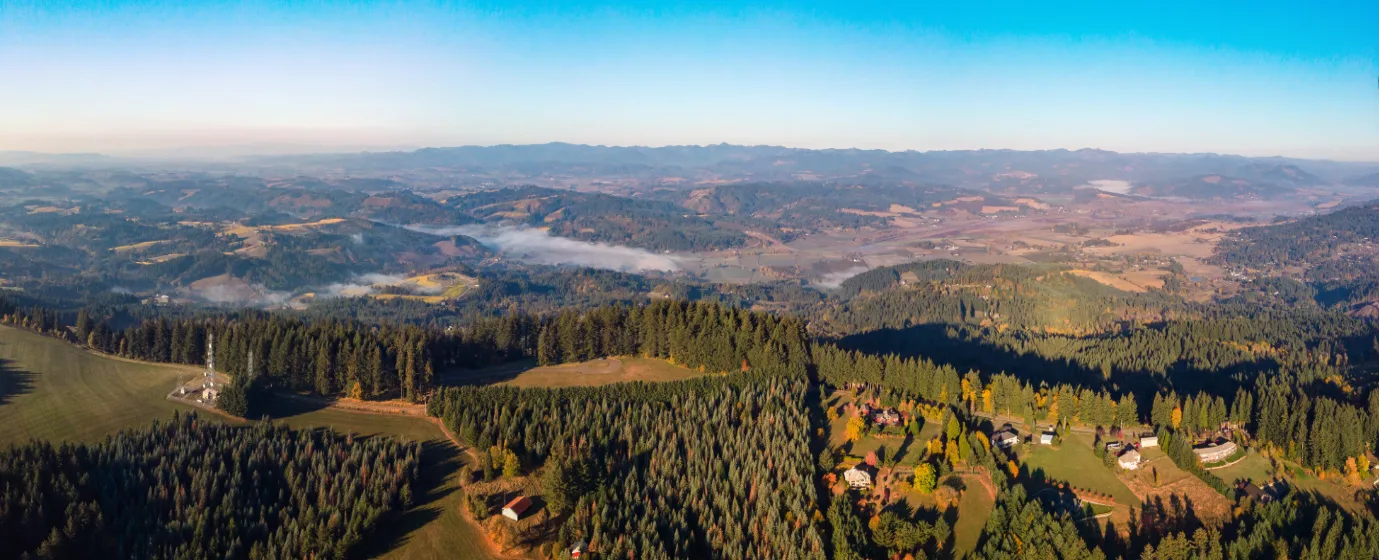
Hillsboro spreads across the Tualatin Valley floor west of Portland's West Hills, and the geography shapes daily life in ways that first-time visitors don't immediately register. The city has no dramatic terrain — no hilltop views, no river gorge cutting through the center. What it has instead is a broad, flat landscape that makes cycling practical, keeps neighborhoods remarkably walkable by suburban standards, and gives the whole city a sense of horizontal scale. On a clear day you can see Mount Hood to the east and the Coast Range foothills to the west, and that view alone explains why some people fall in love with the place the first time they stand in a backyard here.
The commute reality is more nuanced than "30 minutes to Portland" implies. On Highway 26 at 7:45 a.m. heading east toward the Sunset corridor, that 30-minute window compresses into 45 or 55 minutes on the days when a fender-bender near the 217 interchange backs traffic to Cornelius Pass Road. The MAX Blue Line is the genuine commuter alternative — riders board at stations like Quatama or Hawthorn Farm and reach downtown Portland's Pioneer Courthouse Square in about 40 minutes without touching the freeway. Hillsboro's light rail access is arguably its most underappreciated infrastructure asset for buyers who work in Portland but want more house for their money.
Day-to-day life in Hillsboro has a quietly international quality that surprises people who expect a generic Pacific Northwest suburb. With roughly 24% of residents identifying as Hispanic or Latino and more than 20% of residents born outside the United States, the grocery stores, restaurants, and weekend farmers markets reflect a genuine demographic diversity. The Hillsboro Tuesday Marketplace, which runs through the summer on Second Avenue, draws a crowd that feels nothing like the homogeneous farmer's-market aesthetic of some nearby cities. That diversity is one of the things long-term residents cite most often when explaining why they stayed.
What surprises most people after six months here is how self-contained Hillsboro actually is. They moved assuming they'd drive into Portland regularly for dining, entertainment, and culture — and then find themselves almost never making that trip. Between Orenco Station's walkable village center, the live events at Hillsboro Stadium, minor league baseball at Ron Tonkin Field, and a concentration of restaurants along Cornell Road and in Tanasbourne, most daily needs and weekend plans are handled without leaving Washington County.
The property tax situation is one of the first things buyers notice when they're comparing spreadsheets. Washington County's effective rate sits at approximately 0.86%, which is meaningfully lower than Multnomah County's rate on the Portland side of the metro. On a $520,000 home, the annual tax bill runs roughly $4,500 — a number that Portland-side buyers frequently find surprising on the low end. Oregon's complete absence of a state sales tax amplifies the effect: every grocery run, every furniture purchase, every appliance replacement costs less than it would in neighboring states.
The Hillsboro School District's trajectory is genuinely worth the attention it gets from relocating families. The Class of 2025 posted a 90.43% graduation rate — the first time in the district's recorded history that the cohort rate crossed 90%. That milestone matters more than a single-year snapshot because it reflects a sustained improvement trend rather than a statistical blip. The district earns a "B" rating on most independent platforms, serves a student population that's significantly more diverse than the Oregon state average, and has invested in bilingual programming and career technical education at the high school level.
Intel's campus proximity is a double-edged fact — discussed more honestly in the tradeoffs section — but for buyers who are employed in the semiconductor and bioscience corridor, the lifestyle math is difficult to argue with. Hillsboro employees at Intel, Genentech, Qorvo, and Acumed routinely live within 10 to 15 minutes of their workplaces. That commute compression translates into time: time for youth sports leagues, for morning runs through Jackson Bottom Wetlands Preserve, for evening dinners at home instead of in traffic. The concentration of high-income tech employment also funds a local amenity base — restaurants, breweries, fitness facilities, specialty retail — that a city of 111,000 would not otherwise support.
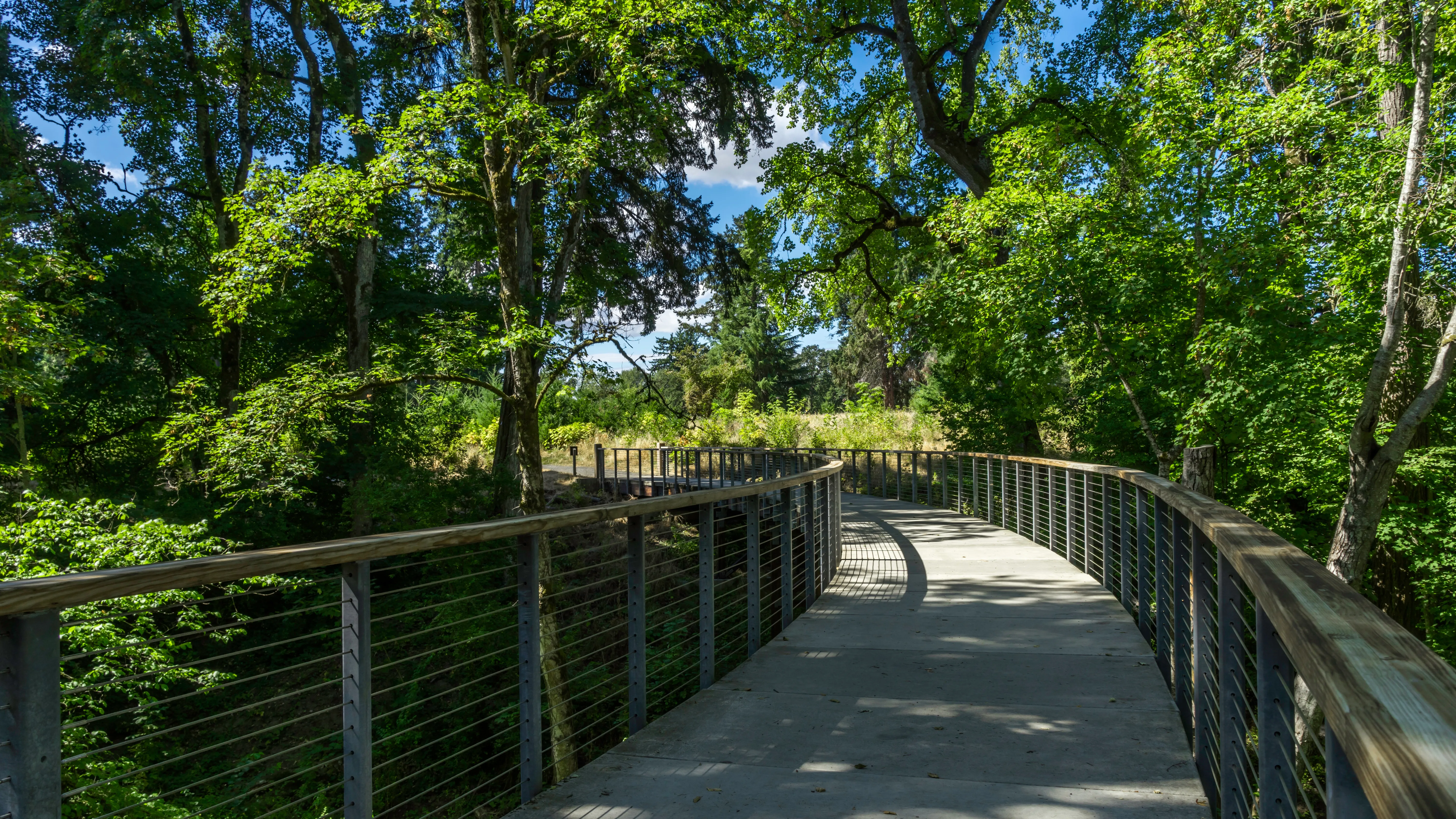
The outdoor access is understated by most relocation guides, which tend to focus on Hillsboro's tech economy and overlook its genuinely excellent park system. Jackson Bottom Wetlands Preserve covers more than 700 acres at the edge of the city, offering birding, wildlife observation, and trail access that feels completely remote despite being five minutes from downtown. Rood Bridge Park along the Tualatin River provides picnic areas, river access, and one of the metro area's better off-leash dog areas. Shute Park anchors the central city with aquatic facilities and sports fields. For families who measure quality of life in part by outdoor access, Hillsboro punches above its suburban weight class.
Looking to buy in Hillsboro? Estimate your payment.
Enter your numbers to see an estimated monthly mortgage payment.
Estimate only. Excludes HOA fees and mortgage insurance.
The Intel situation deserves a direct conversation rather than a footnote. Since August 2024, roughly 5,400 Oregon-based Intel positions have been eliminated, with more than 2,300 of those cuts occurring in a single July 2025 round. The average Intel salary in this corridor ran approximately $186,000 — meaning those eliminations removed more than a billion dollars in annual household income from Washington County's economy. That income had been funding local restaurants, home purchases, and apartment rents. The ripple effects are visible in softening home prices, extended days on market, and a rental market that has eased slightly from its recent peaks. Experts across the industry still view Intel's Hillsboro campus as a long-term anchor — the CHIPS Act investment and federal equity stake signal that — but buyers arriving today should understand the market context they're entering.
The car dependency outside of a few corridors is real. Orenco Station and the areas immediately adjacent to MAX stations offer genuine walkability. Most of the rest of Hillsboro does not. Errands in neighborhoods like Rock Creek or West Hillsboro require a car for virtually every trip, and the arterial roads connecting residential areas to retail — Cornelius Pass, TV Highway, 185th Avenue — carry heavy traffic during peak hours. The city has invested in bike infrastructure, and the Westside Trail provides off-street cycling access across several neighborhoods, but the experience of getting around without a car in most of Hillsboro ranges from inconvenient to genuinely difficult.
Why some people leave Hillsboro comes down to a specific kind of restlessness. Buyers who moved here for the house and the school district sometimes find, around year four or five, that the city's cultural amenity base doesn't fully satisfy. The arts and nightlife gap between Hillsboro and Portland's inner neighborhoods is real — the Walters Cultural Arts Center provides programming, and downtown Hillsboro has a modest restaurant and bar scene, but buyers who grew up with Portland's density of live music venues, independent bookstores, and walkable neighborhoods sometimes find Hillsboro's offering thin after the novelty wears off. This isn't a criticism of what Hillsboro is — it's an accurate description of what it isn't.
The lack of distinct neighborhood character across large sections of the city is another honest tradeoff. Much of Hillsboro developed rapidly during the 1990s and 2000s as Intel and the tech sector drew workers westward. That growth produced competent, livable planned neighborhoods that can feel interchangeable — the same street layouts, similar architectural styles, comparable price points — across dozens of subdivisions. Buyers who value the layered, idiosyncratic character of older urban neighborhoods will find Hillsboro's newer tracts functional but visually monotonous. The exceptions — Orenco Station's mixed-use village, older Central Hillsboro near Fourth Avenue, the historic agricultural areas near West Union Road — are genuinely distinct and worth seeking out.
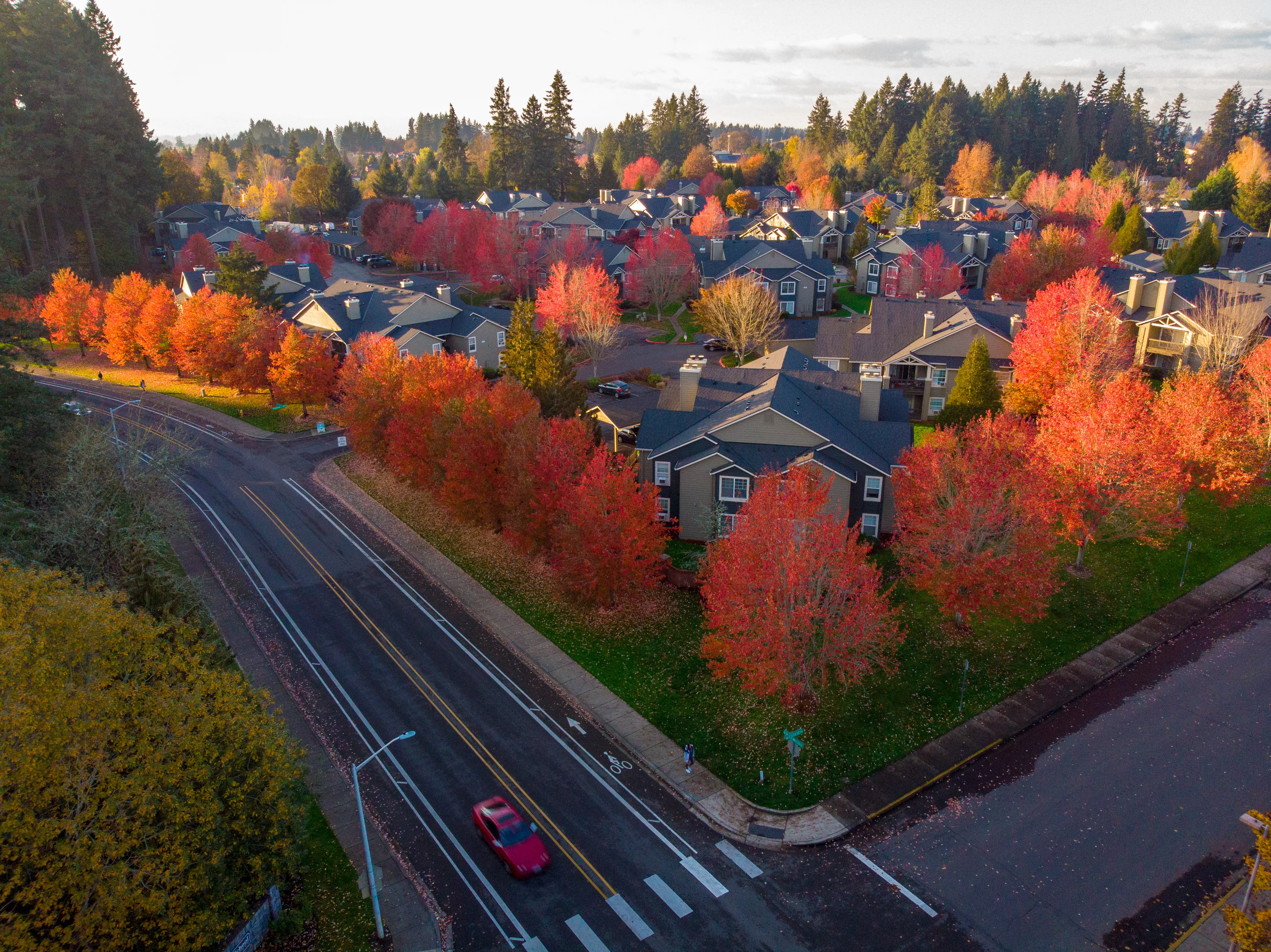
Orenco Station is the neighborhood that Hillsboro points to when it wants to prove it can do urbanism. Built around a MAX Blue Line station, it was planned from the ground up as a transit-oriented community with a walkable commercial core, tree-lined streets, and a mix of single-family homes, townhomes, and apartments within steps of coffee shops, restaurants, and a small-format grocery. Single-family homes here carry a median around $575,000, reflecting both the lifestyle premium and the tight inventory. The honest tradeoff: parking becomes genuinely difficult on weekends when Orenco Station's restaurants draw visitors from across the metro, and the neighborhood's success has made it one of Hillsboro's pricier options for buyers who initially expected a discount.
Best for: Buyers who want walkability, MAX access to Portland, and a neighborhood with actual street life — and are willing to pay for it.
Tanasbourne sits at the intersection of Cornell Road and 185th Avenue, and it's fundamentally a retail and apartment district that has evolved into a legitimate residential destination. The area's proximity to Costco, Target, and a dense concentration of restaurants along Cornell makes it arguably the most convenient location in Hillsboro for everyday errands. Single-family homes carry a median around $414,500, making it one of the city's more accessible ownership entry points. The catch is traffic: the 185th Avenue and Cornell Road intersection is one of the more congested chokepoints in Washington County during evening commute hours, and the neighborhood's retail adjacency means ambient noise and light that some buyers find intrusive.
Best for: First-time buyers and renters who prioritize retail convenience and don't mind a busier, more commercial atmosphere.
Northwest Hillsboro is the neighborhood that local agents mention most often when buyers ask where homes move fastest — and the data bears that out. The median sold price runs approximately $560,000, and homes have been averaging just 11 days on market, which puts buyers who aren't pre-approved at a genuine disadvantage. The area attracts tech households who want larger lots, newer construction, and proximity to Intel's campus without paying Orenco Station premiums. What buyers give up is walkability and neighborhood character — this is solidly car-dependent suburban territory.
Best for: Tech-sector buyers with quick commute priorities and the financial readiness to move decisively in a competitive micro-market.
Southeast Hillsboro offers some of the city's more established residential streets, with older housing stock that tends to offer more lot size per dollar than the newer planned communities. The median sold price has been running around $504,000, with homes sitting on the market roughly 62 days on average — giving buyers considerably more negotiating room than Northwest Hillsboro. The area is family-oriented, with school assignments in the Hillsboro School District and park access through the southeast quadrant's trail connections. The longer days-on-market figure reflects both the older housing stock and the neighborhood's less photogenic presentation compared to newer builds.
Best for: Buyers who want more square footage and lot size for the money and aren't in a hurry to close.
Central Hillsboro is the city's oldest residential area, built around the historic downtown grid near Fourth Avenue and Main Street. The architecture is more varied here — Craftsman bungalows, Victorian-era homes, postwar ranches — and the walkability to downtown amenities, the Walters Cultural Arts Center, and the Tuesday Marketplace is genuine. Prices vary considerably based on condition and lot size, but buyers in this area are typically trading newer finishes and modern layouts for neighborhood character and a more connected urban feel. The honest tradeoff is that central Hillsboro's older housing stock requires more maintenance attention and inspection diligence than the suburb's newer planned neighborhoods.
Best for: Buyers who prioritize historic character, downtown walkability, and a neighborhood that feels like it has a story.
South Hillsboro is Hillsboro's newest large-scale planned community, built on former agricultural land south of TV Highway. Homes here are among the newest in the city — many built within the last decade — with modern floor plans, energy-efficient construction, and a connected trail and park network baked into the neighborhood design. The median sold price runs approximately $477,000, and homes have been moving in as few as nine days on average, making this one of the city's most competitive sub-markets despite its lower price point. Tuality Healthcare's proximity and Rood Bridge Park access add practical lifestyle value.
Best for: Families with children who want new construction, competitive schools, and strong long-term value without stretching to Orenco Station prices.
Rock Creek occupies the northeastern corner of Hillsboro near the Beaverton border and offers a range of housing built primarily in the 1980s and 1990s. The neighborhood is more established than Hillsboro's newer southern and western developments, with mature trees and a settled residential feel. Proximity to Bethany and the 26 freeway makes Rock Creek a reasonable choice for buyers who need flexibility between Hillsboro and Portland commutes. Prices here generally track the city-wide median, and the area tends to attract households who want suburban stability over architectural novelty.
Best for: Buyers who want established neighborhoods, mature landscaping, and flexible access to both Hillsboro and Portland employment corridors.
West Hillsboro is the city's quietest quadrant — agricultural edges give way to residential streets that feel farther from the metro buzz than the zip code suggests. Housing here skews toward larger lots and older construction, with pricing that reflects the distance from major transit and retail nodes. It suits buyers who genuinely want the feeling of space and don't need walkable amenities nearby. The practical reality is that nearly every errand requires a car, and the drive to either Hillsboro's downtown or Tanasbourne's retail core adds time to daily routines.
Best for: Buyers who want larger lots, rural adjacency, and lower price points — and are genuinely comfortable with full car dependency.
| City | Best For | Home Price (2026 median) | Commute to Portland | Vibe |
|---|---|---|---|---|
| Hillsboro | Tech-sector employees; families wanting newer housing | ~$520,000 | ~30 min by car; ~40 min MAX | Suburban tech hub with transit bones |
| Beaverton | Nike-corridor workers; buyers wanting more urban density | ~$530,000 | ~20 min by car; ~30 min MAX | More established, slightly more urban feel |
| Forest Grove | Buyers wanting small-town character and lower prices | ~$420,000 | ~40 min by car; no MAX access | Rural-adjacent, walkable historic downtown |
| Cornelius | Budget-conscious buyers; agricultural setting | ~$390,000 | ~35 min by car | Smallest-town feel in the corridor |
| Aloha | Unincorporated value play; diverse community | ~$460,000 | ~25 min by car | Unincorporated, improving infrastructure |
| Bethany | Buyers willing to pay premium for schools and aesthetics | ~$650,000+ | ~25 min by car | Higher-end planned community feel |
| Category | Detail |
|---|---|
| Population | ~111,963 (2026 estimate) |
| Median sold home price | ~$520,000 (city-wide, all home types, mid-2026) |
| Single-family median | ~$565,000 |
| Median household income | ~$106,409 |
| Property tax rate | ~0.86% (Washington County) |
| Violent crime rate | 3.1 per 1,000 residents |
| Property crime rate | 24 per 1,000 residents |
| School district rating | B (Hillsboro School District) |
| Graduation rate | 90.43% (Class of 2025, all-time district high) |
| Commute to downtown Portland | ~30 min by car; ~40 min by MAX Blue Line |
| Average days on market | ~40 days city-wide (up from 30 days prior year) |
| Renter vs. owner split | ~49% renter / 51% owner |
Hillsboro's minor league baseball culture is more embedded in community life than most newcomers expect. The Hillsboro Hops — the short-season affiliate playing at Ron Tonkin Field — draw crowds that include a genuine cross-section of the city, not just families with young kids. Summer evenings at Ron Tonkin Field have a neighborhood-gathering quality that's rare in planned suburban cities, and tickets are priced accessibly enough that it becomes a regular routine rather than an occasional outing.
The Tuesday Marketplace on Second Avenue in downtown Hillsboro runs through the summer months and has operated continuously long enough to have become a genuine community institution rather than a promotional event. The market reflects the city's demographic diversity in its vendor mix — produce from Tualatin Valley farms, prepared foods that span multiple cuisines, and a mix of local artisans. It's one of the more authentic public gathering spaces in Washington County.
Jackson Bottom Wetlands Preserve is the local secret that residents guard with disproportionate pride. The 700-plus-acre preserve sits at the western edge of the city and provides wildlife viewing, birding, and hiking that genuinely feels remote despite being walkable from several Hillsboro neighborhoods. Great blue herons, osprey, and beaver activity are reliably visible, and the preserve's education center draws school groups throughout the year.
What I would not do if moving to Hillsboro: I would not buy in the blocks immediately adjacent to TV Highway (Oregon Route 8) between 185th Avenue and downtown. The arterial carries freight traffic at hours that make sleep difficult, and the noise exposure is frequently underestimated during daytime open-house visits. Walk the block at 6 a.m. on a weekday before you make an offer on anything within two streets of that corridor.
Local Expert Takeaway: If you're moving to Hillsboro in 2026, the softening market is your advantage — but it's not uniform. Northwest Hillsboro and South Hillsboro are still moving quickly and warrant pre-approval before you tour. Southeast Hillsboro and the older Central Hillsboro streets offer negotiating room that didn't exist two years ago. The Intel layoff story is real but doesn't mean the city is in decline — it means the frothy premium has come out of the market, and buyers with stable employment outside the semiconductor sector are picking up well-priced homes in genuinely good neighborhoods. Prioritize your school assignment zone and your commute reality before your square footage wishlist.
✅ Hillsboro offers genuine value in the Portland metro — newer housing stock, lower property taxes than Multnomah County, and a school district that just posted its best-ever graduation rate, all at a median price that beats Portland's inner neighborhoods.
⚠️ The Intel layoff cycle has softened the market and changed the neighborhood dynamics — buyers should understand what's driving the price dip before assuming it represents distress. The long-term fundamentals for the semiconductor corridor remain in place.
📍 Location within Hillsboro matters enormously — the difference between Orenco Station's walkable transit access and a Rock Creek subdivision 20 minutes from any MAX station is a lifestyle difference that doesn't show up in city-wide averages.
Is Hillsboro a good place for families?
Yes — Hillsboro's combination of the Hillsboro School District's improving outcomes, the city's extensive park and trail network, and relatively affordable housing compared to closer-in Portland neighborhoods makes it a genuinely strong option for households with children. South Hillsboro and Northwest Hillsboro in particular offer newer construction with trail and park access built directly into the neighborhood design, and both areas have historically drawn families with school-age children who want more space per dollar than Beaverton's closer-in neighborhoods provide.
What is the crime rate in Hillsboro?
Hillsboro's violent crime rate runs approximately 3.1 incidents per 1,000 residents — below the national average and consistent with comparable Pacific Northwest suburban cities. Property crime is more notable at roughly 24 per 1,000, which reflects the commercial density along corridors like Tanasbourne and TV Highway rather than residential neighborhood conditions. Buyers focused on neighborhood-level safety will generally find Hillsboro's planned residential areas quiet and well-maintained.
How does Hillsboro compare to Beaverton for relocation?
The two cities compete directly for the same buyer pool, and the decision typically comes down to commute destination and lifestyle preference. Beaverton sits closer to Portland and Nike's campus, carries a slightly higher median price, and has a more established urban feel with denser retail corridors. Hillsboro offers newer housing stock overall, lower property taxes, and more direct proximity to the Intel and Genentech campuses. Buyers who work in the semiconductor corridor almost always favor Hillsboro; buyers who want the fastest Portland commute or Nike access often choose Beaverton.
Browse current listings updated daily — filtered for Hillsboro buyers by Elizabeth Davidson, your local expert.
Powered by Elizabeth Davidson · Cascade Hasson Sotheby's International Realty · 503-939-2035
Explore the full Hillsboro series: The Ultimate Hillsboro Relocation Guide · Is Hillsboro Safe? · Cost of Living in Hillsboro · Best Neighborhoods in Hillsboro · Hillsboro Schools & Family Life · Hillsboro Youth Sports · Hillsboro Parks & Recreation · Retiring in Hillsboro · 1031 Tax-Deferred Exchange in Hillsboro · Hillsboro First-Time Homebuyers Guide · · Moving to Hillsboro from California · The Hillsboro Realtor's Perspective · Top 10 Questions a Realtor Gets About Hillsboro
Tell us what you need help with and we'll connect you with local resources.

About the Author
Todd Davidson is the founder of Living in Oregon and Living in Washington, where he publishes in-depth city guides, neighborhood resources, and local market insights covering more than 180 communities across the Pacific Northwest. While his background is in home financing and real estate, he created these digital platforms to help families research and compare regions before making a move.