
Portland Metro · Oregon
Best Neighborhoods in Hillsboro: Where to Buy or Rent (2026)
Hillsboro is large enough — over 111,000 residents spread across dozens of distinct neighborhoods — that buying in the wrong part of town can leave you frustrated in ways that have nothing to do with the house itself. A buyer who lands in the right school zone, close to the right MAX station, with the right walkability profile for their lifestyle will feel like they made the discovery of a decade. A buyer who picks a neighborhood based on square footage alone and doesn't think hard about commute corridors or neighborhood character tends to realize the mistake around month four.
The city breaks into recognizable zones that feel genuinely different from one another. The tech-corridor neighborhoods along the MAX Blue Line — Orenco Station, Quatama, AmberGlen — attract engineers and professionals who want walkable density and transit access. Move south or west and the character shifts to newer master-planned suburbs, larger lots, quieter streets, and longer drives to everything. Understanding which version of Hillsboro you actually want is the most important decision you'll make before touring a single home.
This guide maps out the city's best neighborhoods for buyers and renters in 2026 — what they cost, who they're built for, what you'll love, and what you'll give up. Whether you're relocating for Intel, chasing a school boundary, or just trying to stretch a Portland-era budget, this is where to start.

| Neighborhood | Best For | Price Range | Vibe |
|---|---|---|---|
| Orenco Station | Walkability seekers, tech workers | $390K–$575K | Urban-ish, transit-connected, café culture |
| Tanasbourne | Shoppers, renters, commuters | $480K–$560K | Suburban retail hub, high convenience |
| Northwest Hillsboro | Appreciation seekers, move-up buyers | $520K–$600K | Newer construction, fast-moving market |
| South Hillsboro | Families with kids, new construction fans | $500K–$550K | Master-planned, polished, growing |
| Southeast Hillsboro | First-time buyers, affordability seekers | $460K–$530K | Established suburban, slower paced |
| Central Hillsboro | Renters, urban-leaning buyers | $420K–$475K | Mixed-use, transit proximity, diverse |
| West Hillsboro | Value buyers, older home fans | $410K–$460K | Bungalows, walkable to farmers market |
| Rock Creek | Families, outdoor lovers | $490K–$560K | Quiet, green, trail-connected |
| AmberGlen | Professionals, renters, tech commuters | $470K–$540K | Corporate campus adjacent, newer builds |
| Quatama | First-time buyers, MAX riders | $430K–$510K | Transit-forward, affordable townhomes |

Hillsboro's market has softened modestly from its 2022–2023 peak, but that actually creates a window buyers shouldn't overlook. The $520,000 median home price looks reasonable against what comparable homes cost in Beaverton or inner Portland — but what I tell every relocating client is that the real opportunity is in Northwest Hillsboro right now. Prices sit around $560,000, appreciation per square foot is running stronger than anywhere else in the city, and homes are going under contract in about eleven days on average. That's the combination of quality and momentum that buyers wish they'd moved on six months earlier.
The mistake I see most often from out-of-state buyers is treating Hillsboro as a monolith. A home near Orenco Station and a home in West Hillsboro can be priced similarly but deliver completely different daily lives. Orenco gives you a walkable streetscape, coffee shops, and a MAX stop — West Hillsboro gives you character bungalows, proximity to the Saturday Farmers Market, and a neighborhood that feels genuinely rooted rather than planned. Neither is wrong, but they're not interchangeable. My best advice: spend a weekday morning in the neighborhood you're targeting before you make an offer, not just a Sunday afternoon open house. If you're weighing one Hillsboro neighborhood against another and want a clearer read on what each one actually delivers for your budget, I'd welcome the chance to walk you through it.
| Buyer Type | Best Neighborhood | Why |
|---|---|---|
| First-time buyer | Quatama | Lower entry prices, townhomes in the $430Ks, MAX access |
| Luxury buyer | Northwest Hillsboro | Fastest appreciation in the city, newer construction premiums |
| Walkability seeker | Orenco Station | Groceries, restaurants, coffee all on foot — rare in Hillsboro |
| Families with kids | South Hillsboro | New construction, clean streets, close to highly rated schools |
| Commuters (Intel/Genentech) | AmberGlen | Minutes from the Hawthorn Farm campus cluster |
| Large lot buyers | West Hillsboro | Older lots, more square footage per dollar |
| Renters | Central Hillsboro | Most affordable 1-bedroom rents in the city, transit access |
Orenco Station is the neighborhood that gets the most attention from relocating buyers, and with reason — it's one of the few places in Hillsboro where you can genuinely get around on foot. The MAX Blue Line stop anchors a compact commercial district with coffee shops, restaurants, and a New Seasons Market, making it feel more like a Portland close-in neighborhood than a Washington County suburb. Single-family homes in Orenco Station carry a median around $575,000 at the top end, while condos are listed closer to the mid-$390Ks and townhomes span $314,000 to $490,000. The trade-off is real: homes here average 74 days on market — longer than anywhere else in the city — suggesting buyers are negotiating harder and the premium isn't automatic. Density and shared walls are the norm for anything under $450,000, which surprises buyers expecting suburban breathing room at this price point.
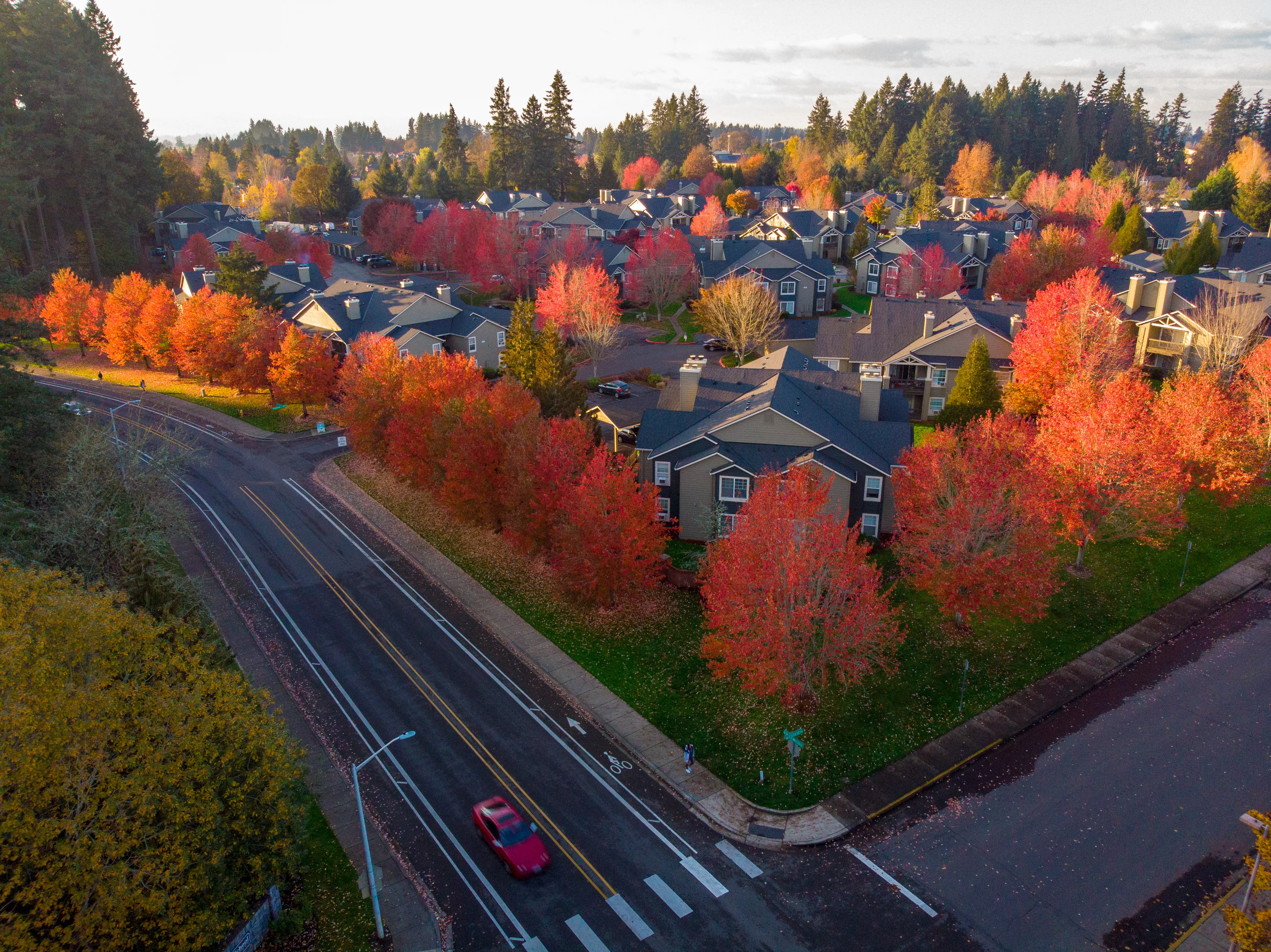
Best for: Tech workers and walkability seekers who want urban convenience without a Portland address.
Tanasbourne sits at the intersection of Cornell Road and Highway 26, making it one of the most convenient addresses in the western Portland metro for running errands, eating out, or accessing the freeway. The catch is that this is unambiguously a retail-corridor neighborhood — Tanasbourne is dense with shopping centers, and the energy is commercial rather than residential. Home prices run from roughly $480,000 to $560,000, reflecting the conveniences without quite reaching Northwest Hillsboro's premium. Buyers who need everything accessible by car but don't prioritize neighborhood quiet or green space tend to thrive here; buyers expecting a serene suburban feel tend to find the constant activity wearing.
Best for: Dual-income households who commute in different directions and prioritize convenience above neighborhood character.
Northwest Hillsboro is where the data points are most interesting right now: price per square foot is up nearly 6% year-over-year, homes are going under contract in roughly eleven days, and the area continues attracting professionals who want newer construction without South Hillsboro's master-planned newness. Median sold prices are running around $560,000 — not the city's most affordable, but the appreciation story and velocity make it one of the higher-conviction buys in the market. The downside is limited: inventory moves fast enough that buyers who aren't pre-approved and ready to move on short notice routinely lose out.
Best for: Move-up buyers and professionals who want strong neighborhood fundamentals and are prepared to act decisively.
South Hillsboro is Hillsboro's newest large-scale master-planned area, with new construction starting around $500,000 for 1,500 square feet and running up to $550,000 for larger floorplans. The streetscapes are clean and the infrastructure is modern, but the neighborhood is still establishing its character — parks and commercial nodes are growing in, not fully formed. HOA fees run approximately $100 per month covering front-yard maintenance. Families with young children are drawn here for the school proximity and the sense of safety that comes with new construction, but buyers expecting a neighborhood with established roots and mature trees will feel the gap acutely for the first several years.
Best for: Families with children who want new construction, modern floor plans, and school-boundary security.
Southeast Hillsboro offers some of the most accessible price points among established neighborhoods in the city, with a median sold price around $504,000 and price-per-square-foot among the lowest in Hillsboro. Homes here are predominantly single-family, post-2000 construction, with conventional suburban lot sizes. The catch is market velocity — days on market have climbed to around 62, up from 35 a year ago, which tells you buyers are taking their time and not feeling urgency. That's actually useful context for negotiation, but it also signals the area isn't generating the competitive energy you'd see in Northwest Hillsboro or Orenco.
Best for: First-time buyers and affordability-focused households who want detached single-family housing without Quatama's density.
Central Hillsboro is the city's most affordable ownership market, with a median sold price around $472,000, and it's also home to Hillsboro's lowest average rents — around $1,450 for a one-bedroom. The area sits close to Intel's Ronler Acres campus and the MAX line, making it genuinely functional for car-optional living. The neighborhood has attracted newer micro-unit development and draws a diverse, younger resident base. The limitation is that Central Hillsboro hasn't fully resolved its identity — it's part transit-connected urban node, part aging suburban grid, and the streetscape reflects that tension in ways that bother some buyers more than others.
Best for: Renters, first-time buyers, and Intel employees who want the shortest possible commute at the lowest possible price.
West Hillsboro rewards buyers willing to look past cosmetic age. The housing stock is older — bungalows, traditional ranch styles, established trees — and prices reflect that, with a median around $443,000. The neighborhood sits roughly six blocks from a MAX station and within walking distance of the Hillsboro Saturday Farmers Market and Tuesday night market, making it one of the more walkable older areas in the city. The percentage drop in median prices year-over-year looks dramatic, but the sample size of roughly six sales per month means those swings are data noise, not structural decline — this is an area of genuine value, not distress.
Best for: Value-oriented buyers who appreciate older character homes and want walkable access to the farmers market without Orenco prices.
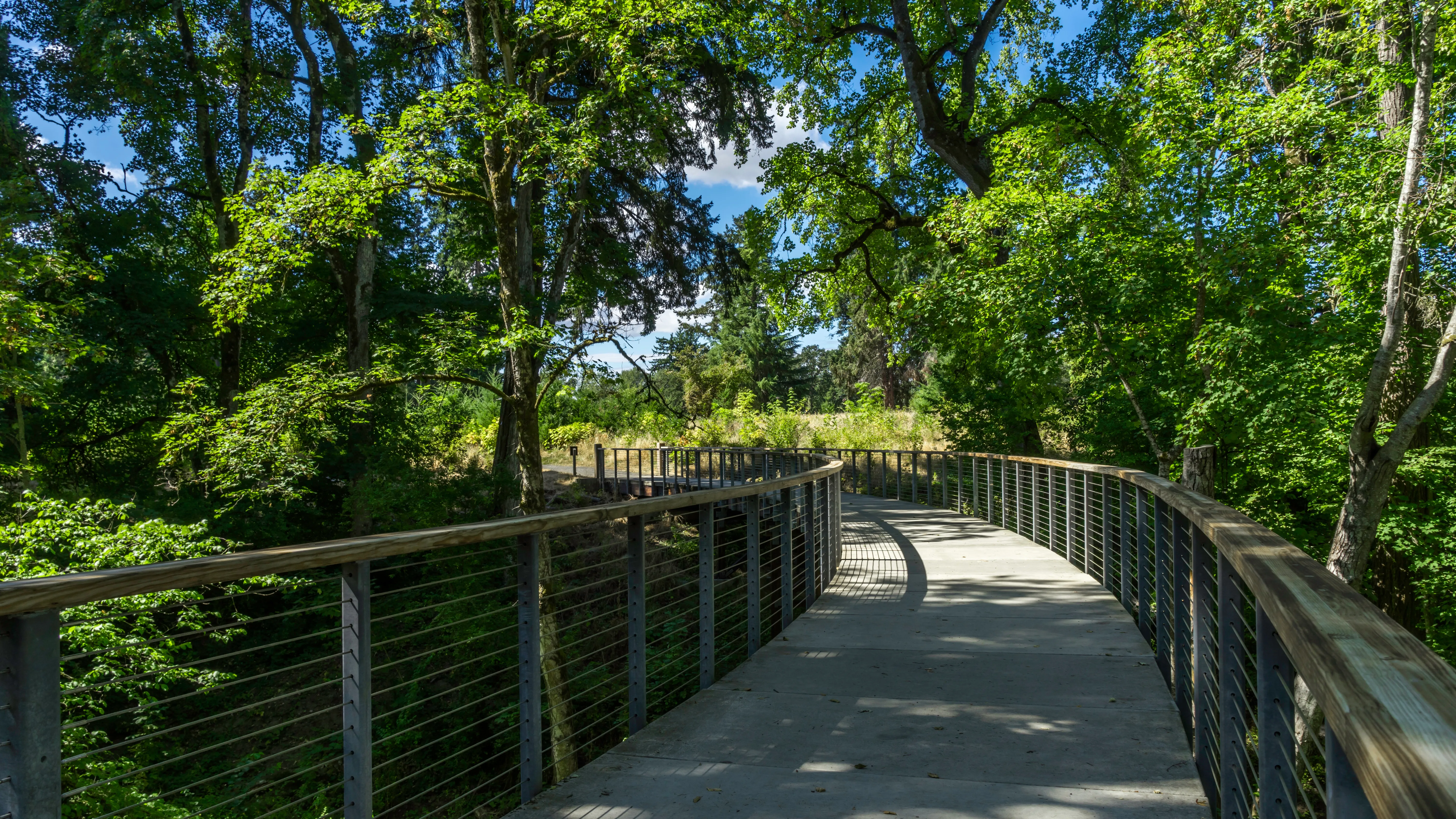
Rock Creek sits in the northern arc of Hillsboro, a quieter residential area popular with families who prioritize outdoor access over retail proximity. Home prices run from roughly $490,000 to $560,000 across a mix of established single-family neighborhoods. Trail connections and greenspace are the neighborhood's defining feature — this is where you end up when you've decided the Portland metro's outdoor lifestyle matters more than transit access. The downside is commute distance: Rock Creek is farther from both the MAX Blue Line and the major tech campuses than most of Hillsboro's other established neighborhoods, which translates to more windshield time.
Best for: Families with outdoor-oriented lifestyles who prioritize trail access and neighborhood quiet over transit proximity.
Looking to buy in Hillsboro? Estimate your payment.
Enter your numbers to see an estimated monthly mortgage payment.
Estimate only. Excludes HOA fees and mortgage insurance.
Assuming the MAX solves the commute problem everywhere. The MAX Blue Line is genuinely useful — but only if you're near a stop. Buyers who purchase in South Hillsboro or Rock Creek expecting transit-optional living quickly discover they're fully car-dependent. The walkable transit experience that defines Orenco Station and Quatama doesn't extend to the southern or northern edges of the city. Before choosing a neighborhood, map out whether the station is actually a reasonable walk from the specific house you're considering, not just the neighborhood in the abstract.
Underestimating Cornell Road and Highway 26 at peak hours. The stretch of Cornell Road between Orenco and Tanasbourne, and the Highway 26 on-ramps near the 185th interchange, are legitimate bottlenecks during morning and evening commutes. Buyers relocating from outside the metro often see a "30-minute commute to Portland" and assume that's consistent throughout the day. In reality, that number reflects off-peak conditions. A 7:30 a.m. drive eastbound on Highway 26 into Portland can run 45–55 minutes on heavy traffic days. Buyers whose jobs require hard start times should test the drive on a Tuesday morning before committing to a neighborhood.
Chasing square footage in Southeast Hillsboro without checking days on market. Southeast Hillsboro offers larger homes at lower price-per-square-foot than many other parts of the city — but the 62-day average days on market signals that the area isn't generating strong buyer demand right now. A home sitting for two months in a market where Northwest Hillsboro moves in eleven days is a data point worth understanding before you interpret the longer timeline as "motivated seller opportunity." Sometimes it is, sometimes it reflects broader softness in that submarket.
Overlooking HOA structure in South Hillsboro and Orenco. Both areas have active HOA frameworks. South Hillsboro's newer developments run approximately $100 per month. Orenco's mixed condo and townhome structures vary. Buyers focused on sticker price sometimes don't factor HOA fees into their monthly payment calculations until closing day, which changes affordability math in ways that are avoidable if you ask early.
| Area | Ideal For | Typical Rent Range | Trade-off |
|---|---|---|---|
| Orenco Station | Young professionals, MAX commuters | $1,900–$2,400/mo (1BR) | Highest rents in the city |
| Central Hillsboro | Budget renters, Intel employees | $1,350–$1,550/mo (1BR) | Older stock, transitional neighborhood feel |
| Northwest Hillsboro | Professionals seeking newer units | $1,500–$1,800/mo (1BR) | Less walkable than Orenco |
| Southeast Hillsboro | Families, suburban renters | $1,450–$1,650/mo (1BR) | Slower to amenities, car-dependent |
| West Hillsboro | Value renters, MAX proximity | $1,400–$1,600/mo (1BR) | Older buildings, limited new inventory |
Hillsboro's rental market sits at a genuine inflection point in 2026. The city is roughly split 49/51 renter-to-owner, meaning rental supply is substantial — but that supply is unevenly distributed. Orenco Station commands a significant premium for its walkability and transit access, while Central Hillsboro remains the most affordable area for renters who don't need streetscape amenities. Renters relocating for tech positions should weight proximity to the MAX and the Ronler Acres corridor heavily, since those two factors do more to define daily quality of life in this city than any other single variable.
Local Expert Takeaway: If you're buying in Hillsboro in 2026, Northwest Hillsboro is the neighborhood showing the strongest combination of fundamentals — fast market velocity, rising price-per-square-foot appreciation, and newer construction quality. Buyers who need more time to decide or a lower entry point should look at Quatama for townhome-style ownership with MAX access, or West Hillsboro for character homes at the city's most accessible price points. Avoid anchoring your search entirely around the median $520,000 figure — what that buys you varies enormously depending on which corridor you're in.
Does proximity to Intel's Ronler Acres campus actually affect home prices in nearby Hillsboro neighborhoods?
Yes, in measurable ways. Central Hillsboro's sub-$480,000 median is partly a function of its walkable proximity to Ronler Acres — Intel employees who want the shortest commute accept older housing stock and a less polished streetscape in exchange for being minutes from the campus. Orenco Station captures a different Intel demographic: workers who want MAX Blue Line access and a walkable lifestyle and are willing to pay a premium for it. Buyers targeting Hillsboro specifically because of an Intel offer should map commute time from specific neighborhoods to specific campus gates before choosing — the difference between a 7-minute and a 25-minute drive compounds significantly over a five-year hold.
What are the best neighborhoods in Hillsboro for families?
South Hillsboro and Rock Creek consistently attract families with school-age children. South Hillsboro offers new construction, modern infrastructure, and proximity to newer school facilities, while Rock Creek appeals to families who prioritize outdoor access and established neighborhood quiet. Both areas carry home prices in the $490,000–$560,000 range depending on home size and age.
Is Hillsboro a good place to buy a home in 2026?
Yes — the market has softened modestly from recent peaks, with citywide median home values around $520,000 and most areas seeing mild year-over-year price adjustments. That softening, combined with Hillsboro's position as the heart of Oregon's Silicon Forest job market, creates a reasonable buying environment for people with stable employment anchored to the area's major tech and healthcare employers.
How does living in Hillsboro Oregon compare to living in Beaverton?
Hillsboro typically offers slightly lower price points than Beaverton's most sought-after areas, with a wider range of neighborhood characters — from the walkable transit density of Orenco Station to the quiet suburban edges of West Union and Rock Creek. Beaverton sits closer to Portland with somewhat better MAX frequency, but Hillsboro's proximity to Intel, Genentech, and the Ronler Acres tech corridor makes it the stronger choice for workers in the semiconductor and bioscience industries.
Browse current listings updated daily — filtered for Hillsboro buyers by Elizabeth Davidson, your local expert.
Powered by Elizabeth Davidson · Cascade Hasson Sotheby's International Realty · 503-939-2035
Explore the full Hillsboro series: The Ultimate Hillsboro Relocation Guide · Is Hillsboro Safe? · Cost of Living in Hillsboro · Best Neighborhoods in Hillsboro · Hillsboro Schools & Family Life · Hillsboro Youth Sports · Hillsboro Parks & Recreation · Retiring in Hillsboro · 1031 Tax-Deferred Exchange in Hillsboro · Hillsboro First-Time Homebuyers Guide · · Moving to Hillsboro from California · The Hillsboro Realtor's Perspective · Top 10 Questions a Realtor Gets About Hillsboro
Tell us what you need help with and we'll connect you with local resources.

About the Author
Todd Davidson is the founder of Living in Oregon and Living in Washington, where he publishes in-depth city guides, neighborhood resources, and local market insights covering more than 180 communities across the Pacific Northwest. While his background is in home financing and real estate, he created these digital platforms to help families research and compare regions before making a move.