
Oregon Coast · Oregon
Cost of Living in Gearhart: Housing, Taxes, Utilities & Lifestyle (2026)
Gearhart has a way of surprising buyers who do their homework online. The median household income sits at $85,966, which sounds like a comfortable middle-class story — until you discover that homes here routinely list above $900,000 and that the town is sometimes compared, only half-jokingly, to the Hamptons. The gap between what residents earn and what real estate costs is one of the defining financial realities of living on this stretch of the North Oregon Coast.
What shapes Gearhart's cost picture is a combination of severe supply constraints, a deep second-home culture, and a location that delivers both a world-class golf links and direct Pacific beach access in a town of fewer than 2,000 people. Many properties have been held in the same families for generations, which means homes rarely turn over and inventory stays thin — typically two to three months of supply at any given time. That scarcity drives prices far above what the income demographics alone would suggest.
This guide breaks down what it actually costs to buy, rent, and live in Gearhart in 2026 — including how property taxes work, what utilities run each month, how your dollar compares to neighboring Seaside or Cannon Beach, and whether the math makes sense for your situation.
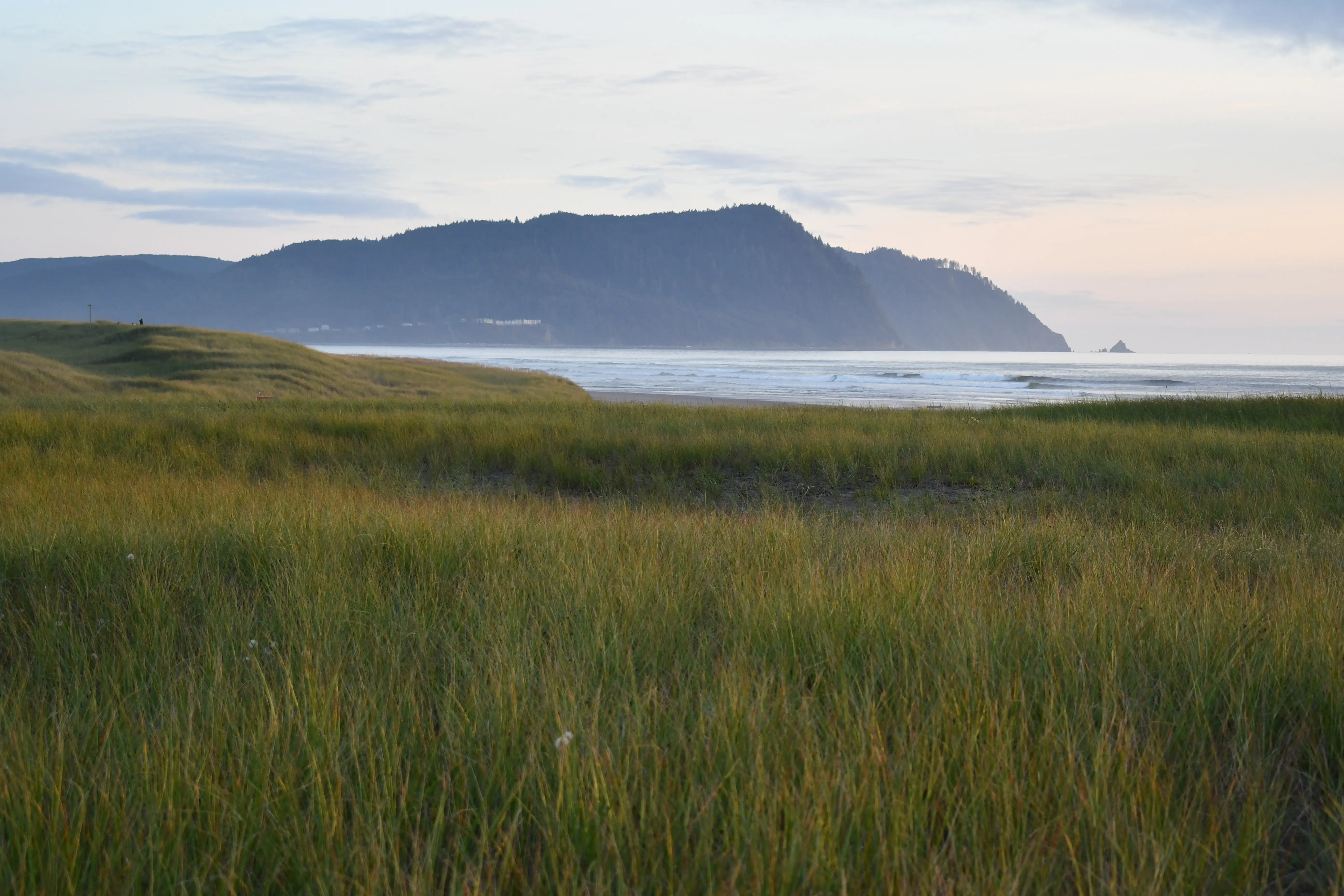
The median sold price in Gearhart reached $805,000 in mid-2025, and active listings as of spring 2026 are clustering around $995,000 at roughly $439 per square foot. Entry-level properties — older cottages, fixer-uppers, and modest ranch homes east of Highway 101 — start in the $550,000 to $650,000 range for buyers willing to do work. At the top end, oceanfront estates and turnkey Highlands properties reach $3 million and beyond.
What that price buys varies considerably depending on location. In the golf course and Pacific Way corridor, $900,000 typically gets you a well-maintained historic cottage with two to three bedrooms, character architecture, and walking distance to both the beach and downtown. East of Highway 101, the same budget opens up ranch-style homes on larger lots — sometimes an acre or more — with a more rural feel. The market moves at a measured pace, with homes typically sitting around 56 days before going under contract, though well-priced listings in strong locations can go pending in under two weeks.
The days-on-market figure is actually trending down — roughly 27% faster than a year ago — which tells you demand hasn't softened even as prices have. Sellers are getting approximately 2% below list on average, meaning strong negotiation is possible, but buyers who lowball on desirable properties typically lose.
| Budget | What You're Likely to Find |
|---|---|
| Under $650,000 | Older cottage needing updates, modest home east of Hwy 101, smaller lot |
| $650,000–$850,000 | Updated beach cottage, ranch home, newer construction with standard finishes |
| $850,000–$1.2 million | Golf-adjacent or view properties, turnkey historic homes, newer builds |
| $1.2 million+ | Oceanfront, Highlands/Pinehurst gated communities, luxury custom construction |
Clatsop County assesses property at approximately 0.69% of assessed value — one of the lower effective rates in Oregon and a meaningful advantage for high-value coastal properties. On a home at the $805,000 median sold price, that works out to roughly $5,555 per year, or about $463 per month. Oregon's Measure 50 framework limits how quickly assessed values can rise, which means longtime owners often pay taxes on an assessed value well below what their home would fetch on the open market — a real financial benefit for those who bought here years ago.
Rental inventory in Gearhart is genuinely limited. The town's vacation rental economy absorbs a significant share of the available housing stock, which means long-term rental options are scarce and tend to cycle through word-of-mouth rather than listing platforms. When units do appear, they command rates that reflect both coastal desirability and the broader Clatsop County rental market.
| Unit Type | Estimated Monthly Rent |
|---|---|
| Studio / 1BR cottage | $1,400–$1,900 |
| 2BR home or apartment | $1,800–$2,400 |
| 3BR single-family home | $2,400–$3,200 |
| 4BR or vacation-style rental | $3,000–$4,500+ |
Long-term renters should expect to search patiently — properties available for 12-month leases rarely sit on the market. Many longer-term rentals in Gearhart and adjacent Seaside are found through community connections or local property managers rather than Zillow or Craigslist. Renters who need immediate housing often start in Seaside, which has a deeper inventory pool, and wait for a Gearhart-specific unit to open up.
Utilities in Gearhart run higher than many Oregon cities, partly due to coastal weather patterns and older housing stock. Most residents heat with natural gas or electric forced air, and monthly utility costs — electric, gas, water, and trash — typically land in the $200 to $280 range during the wetter months, with some older homes running closer to $325 in cold weather. The fog and marine layer mean air conditioning is rarely needed, which keeps summer bills modest.
Internet service is available through a limited number of providers, including Spectrum and CenturyLink (now Lumen), with speeds adequate for remote work but not the gigabit service common in Portland metro. The 21% remote work rate in Gearhart suggests residents make it work, but buyers who depend on rock-solid connectivity should verify service quality at a specific address before closing.
Transportation is almost entirely car-dependent. There is no meaningful public transit serving Gearhart, and Highway 101 is the primary artery connecting the town to Seaside to the south and the coast highway north. The commute to Portland runs roughly 102 minutes under normal conditions — manageable for occasional trips, but not for a daily office requirement. Gas prices on the coast typically run 10 to 20 cents above the Portland metro average, adding up for residents making regular inland trips.
Groceries and daily errands rely heavily on Seaside, which sits just three miles south and has a Fred Meyer and other retail anchors. Gearhart itself has Pacific Way Bakery & Café and a handful of small local businesses, but no full-service grocery store within town limits. Cannon Beach, 10 miles south, offers additional dining and boutique retail but not meaningfully more grocery infrastructure. Astoria, about 18 miles north, has a fuller retail corridor including a Safeway and box stores for household goods.
Dining out in Gearhart centers on a small but well-regarded local scene. McMenamins Sand Trap Pub at the golf course and Pacific Way Bakery & Café are the daily anchors. Residents also make regular use of Seaside's broader restaurant options a short drive away.

💰 Oregon Coast Cost of Living Rankings
Wondering how Gearhart stacks up against other Oregon Coast cities on cost? Our complete rankings guide covers every coast city — home prices, monthly costs, rent, and overall affordability side by side.
See the Full Oregon Coast Cost of Living Rankings →Looking to buy in Gearhart? Estimate your payment.
Enter your numbers to see an estimated monthly mortgage payment.
Estimate only. Excludes HOA fees and mortgage insurance.
| City | Median Home Price | Property Tax Rate | Walkability | Grocery Access | Commute to Portland |
|---|---|---|---|---|---|
| Gearhart | ~$805,000–$995,000 | 0.69% | Low-moderate | Seaside-dependent | ~102 min |
| Seaside | ~$450,000–$550,000 | ~0.89% | Moderate | Fred Meyer in-city | ~95 min |
| Cannon Beach | ~$900,000–$1.2M+ | ~0.85% | Moderate | Limited in-city | ~110 min |
| Warrenton | ~$320,000–$400,000 | ~0.75% | Low | Fred Meyer nearby | ~100 min |
| Astoria | ~$380,000–$450,000 | ~0.82% | Moderate | Safeway, full retail | ~90 min |
| Tolovana Park | ~$700,000–$950,000 | ~0.85% | Low | Very limited | ~115 min |
| Hammond | ~$280,000–$350,000 | ~0.75% | Low | Limited | ~100 min |
The comparison makes a few things clear. Buyers who want the North Coast lifestyle at a lower price point will find Seaside a more accessible entry, with a significantly deeper housing inventory and lower median prices. Warrenton and Hammond offer the most affordable options in Clatsop County but trade away the beachfront character entirely. Cannon Beach is the only market that genuinely competes with Gearhart on prestige and price — and in many cases runs higher.
What Gearhart specifically offers that none of these towns replicate is the combination of golf links walking distance from the beach, a quieter residential character than Seaside's tourist-facing downtown, and the generational stability of a community that hasn't been fully consumed by vacation rental culture.
The table below reflects a buyer purchasing at $805,000 with 10% down, financing approximately $724,500.
| Expense Category | Monthly Estimate |
|---|---|
| Mortgage (principal + interest) | ~$4,600 |
| Property taxes (0.69% of assessed) | ~$463 |
| Homeowner's insurance | ~$185 |
| Utilities (electric, gas, water, trash) | ~$240 |
| Internet + phone | ~$150 |
| Groceries (household of 2) | ~$700 |
| Transportation (fuel, maintenance) | ~$400 |
| Dining out / entertainment | ~$350 |
| HOA (if applicable — Highlands/Pinehurst) | $150–$400 |
| Estimated Monthly Total | ~$7,238–$7,488 |
That figure sits well above what the $85,966 median household income comfortably supports on a traditional debt-to-income basis. The practical reality is that most buyers financing a primary residence in Gearhart are either bringing significant equity from a prior sale, earning dual incomes in the $150,000-plus range, or have substantial assets independent of their income. The town's per capita income of $55,170 and the high rate of remote workers suggest a resident base with above-average financial flexibility.
Oregon has no sales tax, which meaningfully reduces the daily cost of groceries, home goods, and vehicle purchases compared to Washington. On a $40,000 car purchase, that's a $3,000-plus difference. For households spending $3,000 a month on taxable goods and services, the annual savings compared to a Washington resident can reach $2,500 or more.
Oregon's income tax, however, is among the highest in the nation — top marginal rates reach 9.9% on income above certain thresholds. For remote workers earning Portland or tech sector wages while living in Gearhart, the income tax burden is a real cost that the property tax savings only partially offset. Retirees benefit from Oregon's Social Security exemption — the state does not tax Social Security income — and the senior property tax deferral program allows qualifying homeowners to defer property taxes until the home is sold, which can meaningfully improve monthly cash flow for those on fixed incomes.
Clatsop County's effective property tax rate of approximately 0.69% is one of the genuine financial advantages of choosing Gearhart over comparably priced coastal markets in California, Washington, or even parts of the Willamette Valley. On a property assessed at $900,000, the annual tax bill comes to roughly $6,210 — a figure that many California coastal buyers find remarkably low by comparison.

Local Expert Takeaway: The number that catches most buyers off guard isn't the purchase price — it's the carrying cost gap between a Gearhart primary residence and what their income actually supports. If you're relocating from a lower-cost market and planning to finance the majority of the purchase, run the full monthly budget before falling in love with a specific address. The buyers who thrive here long-term either carry meaningful equity from a prior home sale, have household incomes north of $150,000, or purchased years ago when the entry point was substantially lower. That said, Gearhart's property tax rate is a genuine advantage — for a $900,000 property, you're paying less in annual taxes than you would on a $500,000 home in many California coastal counties.
💰 Oregon Coast Cost of Living Rankings
Wondering how Gearhart stacks up against other Oregon Coast cities on cost? Our complete rankings guide covers every coast city — home prices, monthly costs, rent, and overall affordability side by side.
See the Full Oregon Coast Cost of Living Rankings →Is Gearhart an expensive place to live?
By Oregon standards, yes — Gearhart is one of the pricier small communities in the state. Home prices in the $800,000 to $1 million range place it well above the Oregon median, and the limited rental inventory means renters don't find the soft landing that some other coastal towns offer. The lifestyle, however — golf links, uncrowded beach, quiet residential streets — attracts buyers who view that premium as justified.
What are property taxes like in Gearhart?
Clatsop County's effective rate of 0.69% is notably low for a Pacific Northwest coastal market. On a home purchased at $805,000, annual property taxes run approximately $5,555. Oregon's Measure 50 framework also limits annual assessed value increases, which benefits long-term owners whose assessed value may trail the open-market price significantly.
How does Gearhart compare to Seaside for cost of living?
Seaside offers a substantially lower home price median — roughly $450,000 to $550,000 — along with in-city grocery access and a deeper rental inventory. Gearhart costs more at every level of the housing market, but delivers a quieter, more residential character with less tourist foot traffic and direct proximity to the golf links and uncrowded beach. Many buyers make the choice between the two based on lifestyle fit as much as budget.
Explore the full Gearhart series: The Ultimate Gearhart Relocation Guide · Is Gearhart Safe? · Cost of Living in Gearhart · Best Neighborhoods in Gearhart · Gearhart Schools & Family Life · Gearhart Youth Sports · Gearhart Parks & Recreation · Retiring in Gearhart · 1031 Tax-Deferred Exchange in Gearhart · Gearhart First-Time Homebuyers Guide · · Moving to Gearhart from California
Tell us what you need help with and we'll connect you with local resources.

About the Author
Todd Davidson is the founder of Living in Oregon and Living in Washington, where he publishes in-depth city guides, neighborhood resources, and local market insights covering more than 180 communities across the Pacific Northwest. While his background is in home financing and real estate, he created these digital platforms to help families research and compare regions before making a move.