Portland Metro · Oregon
Moving to Forest Grove? Top 10 Questions Realtors Get About Living in Forest Grove, Oregon (2026)

I'm Elizabeth Davidson, a broker with Cascade Hasson Sotheby's International Realty, and I've spent the better part of two decades helping people find their place in the Portland metro area. I'm consistently ranked in the top 2% of brokers by volume, which really just means I've had a lot of conversations at a lot of kitchen tables — and I've learned what actually matters to buyers versus what sounds good in marketing copy.
Forest Grove holds a special spot in my practice. It's one of those towns where I can walk a client through the Saturday farmers market, point out the giant sequoia on the Pacific University campus that's been standing since before Oregon was a state, and genuinely mean it when I say this place has character. It's not a suburb that sprouted overnight around a freeway interchange. It's a real town with real history, and that distinction matters more than people realize until they've lived it.
This post tackles the ten questions I hear most often about Forest Grove — from commute realities to school performance to whether those wetlands on the west side actually flood. I'm going to give you straight answers, including the stuff that might make you reconsider. That's the point. Better to know now than to find out after you've signed closing docs.
Forest Grove works exceptionally well for a specific type of buyer — and falls flat for others. Let me be direct about both.
If you want a genuine small-town feel without completely disconnecting from the metro area, Forest Grove delivers. The downtown actually functions as a downtown: local coffee shops, a restored theater, Pacific University students walking to class. You can know your neighbors here. You can walk to dinner on a Friday night. The surrounding wine country isn't a marketing gimmick — David Hill and Montinore vineyards are literally five minutes away.
The trade-offs are real, though. You're 25 miles from Portland, and that distance shows up in your daily life. The job market is limited unless you work at Pacific University, TTM Technologies, or in education. Commuters face 35-45 minutes each way under good conditions, longer during winter weather or rush hour. TriMet bus service exists but adds significant time — nearly two hours to downtown Portland with transfers.
The town also skews quieter than some buyers expect. Nightlife is essentially nonexistent. Dining options, while charming, are limited. If you thrive on urban energy, Forest Grove will feel sleepy. But if you've been craving space to breathe, a yard your kids can actually play in, and a community where the guy at the hardware store remembers your name — this is your town. For a deeper dive into daily expenses and lifestyle costs, our cost of living guide breaks down what to actually budget.
Families tend to cluster in a few distinct areas, each with its own personality.
Historic Downtown offers walkability that's rare in the outer metro. You're steps from the library, coffee shops, and Pacific University's campus. Homes here are older — many Victorian and Craftsman styles — which means character but also maintenance. Families who prioritize a tight-knit, walkable lifestyle over square footage gravitate here.
The Pacific University Neighborhood attracts faculty families and young professionals who appreciate the collegiate atmosphere. Expect well-maintained yards, tree-lined streets, and a quieter pace. Homes range from modest bungalows to larger historic properties.
Northwest Forest Grove and Painter's Woods offer newer construction and larger lots for families wanting more elbow room. You'll find homes built in the last 20-30 years, many with three-car garages and bonus rooms. The trade-off is less walkability — you're driving to most errands.
West Forest Grove's rural residential areas appeal to families wanting acreage, farm views, and proximity to wine country. Lots get bigger, neighbors get farther apart, and you're truly at the edge of the metro's footprint.
A word of caution: some of the subdivisions on the eastern edge near Cornelius blur the line between the two cities. Make sure you know exactly which school attendance boundaries apply to any property you're considering. Our best neighborhoods guide maps this out in detail.
I'll be honest — Forest Grove School District 15's test scores won't wow you on paper. Niche gives the district a B-minus overall, and state proficiency numbers show 20% of students meeting standards in math, 32% in reading. Those numbers lag behind nearby districts like Hillsboro and Beaverton.
But here's context that matters: this is a diverse, working-class district serving a community with significant economic variation. The student-teacher ratio sits at 17:1, which is reasonable. And some programs genuinely stand out.
Forest Grove High School runs a career and technical education program that's become locally famous. Their construction tech track lets advanced students actually build a single-family home — the Viking House project — alongside professional contractors. That's hands-on learning you won't find in most suburban schools. Students who go through that program graduate with real, marketable skills.
Pacific University's presence also creates opportunities. The university partners with local schools on various programs, and having a research institution in town means cultural events, speakers, and resources that other small towns simply don't have.
If academics are your primary driver and you have flexibility, you might explore Hillsboro's district boundary areas or private options. But if you value community engagement, practical skill-building, and a school system where your kid won't be anonymous — Forest Grove holds its own. Our schools and family life post goes deeper on specific schools and programs.
Let's talk numbers without sugarcoating them.
To Downtown Portland: 35-45 minutes under normal conditions via Highway 26. During peak rush hour or winter weather, budget 50-60 minutes. I've had clients stuck for 90 minutes during ice storms, so factor that into your reality check.
To Hillsboro (Intel, tech corridor): 10-15 minutes on Tualatin Valley Highway. This is the commute that makes Forest Grove work for most buyers. If your job is in Hillsboro, Beaverton, or the Sunset Corridor, you're looking at a reasonable daily drive.
To Beaverton: About 25 minutes on a typical day.
Public transit: Technically available, but let's be realistic. TriMet bus service connects to the MAX at the end of the Blue Line, but you're looking at nearly two hours door-to-door to reach downtown Portland. GroveLink provides local circulation. The Yamhill County Transit Area connects to points south. None of these replace a car for most commuters.
The hybrid work factor: I've seen Forest Grove gain appeal specifically because of remote work flexibility. Buyers who commute two or three days a week instead of five find the distance manageable, and the lower housing costs compared to closer-in suburbs make the math work. If you're fully remote, Forest Grove's price-to-space ratio becomes genuinely compelling. Check our cost of living breakdown for how commute costs factor into overall expenses.
As of mid-2026, Forest Grove sits in a balanced-to-buyer-leaning position.
The average home value is around $516,800, down about 1% from last year. Median list prices have softened more noticeably — down 5% year-over-year to around $550,000 for listed inventory. Price per square foot dropped 4% to approximately $265/sqft.
The telling number is days on market: 94 days median. That's notably longer than the frenetic 2021-2022 market when homes sold in a week. Buyers have room to negotiate, request repairs, and take their time. Multiple offer situations still happen on well-priced, move-in-ready homes, but they're not the default anymore.
For buyers, this means opportunity — especially if you're flexible on cosmetic updates or willing to look at homes that need work. For sellers, it means pricing correctly from the start matters more than ever.
One dynamic worth noting: Forest Grove's inventory skews older than nearby Hillsboro subdivisions. You'll find more homes from the 1920s-1970s here, which appeals to some buyers and concerns others depending on their appetite for maintenance and updates.
First-time buyers should know that Forest Grove's price point, while higher than it was five years ago, remains accessible compared to closer-in suburbs. Our first-time buyer guide walks through how to navigate this market, and our relocation guide covers broader context on what to expect.
This question comes up frequently, and I need to set expectations accurately.
Forest Grove has approximately 20 senior housing options — but most are assisted living, memory care, or independent living facilities rather than the standalone 55+ HOA neighborhoods you might picture from Arizona or Florida. You won't find large active adult communities with their own golf courses and clubhouses here.
What does exist:
For retirees who want to age in place in a single-family home, Forest Grove offers genuine advantages: lower maintenance lots in some neighborhoods, walkable downtown amenities, and access to Tuality Healthcare and medical services without needing to drive to Portland. Pacific University's campus adds cultural programming — lectures, concerts, events — that active retirees appreciate.
Our retiring in Forest Grove guide explores this in detail, including healthcare access and social opportunities for older adults who aren't looking for facility-based living.
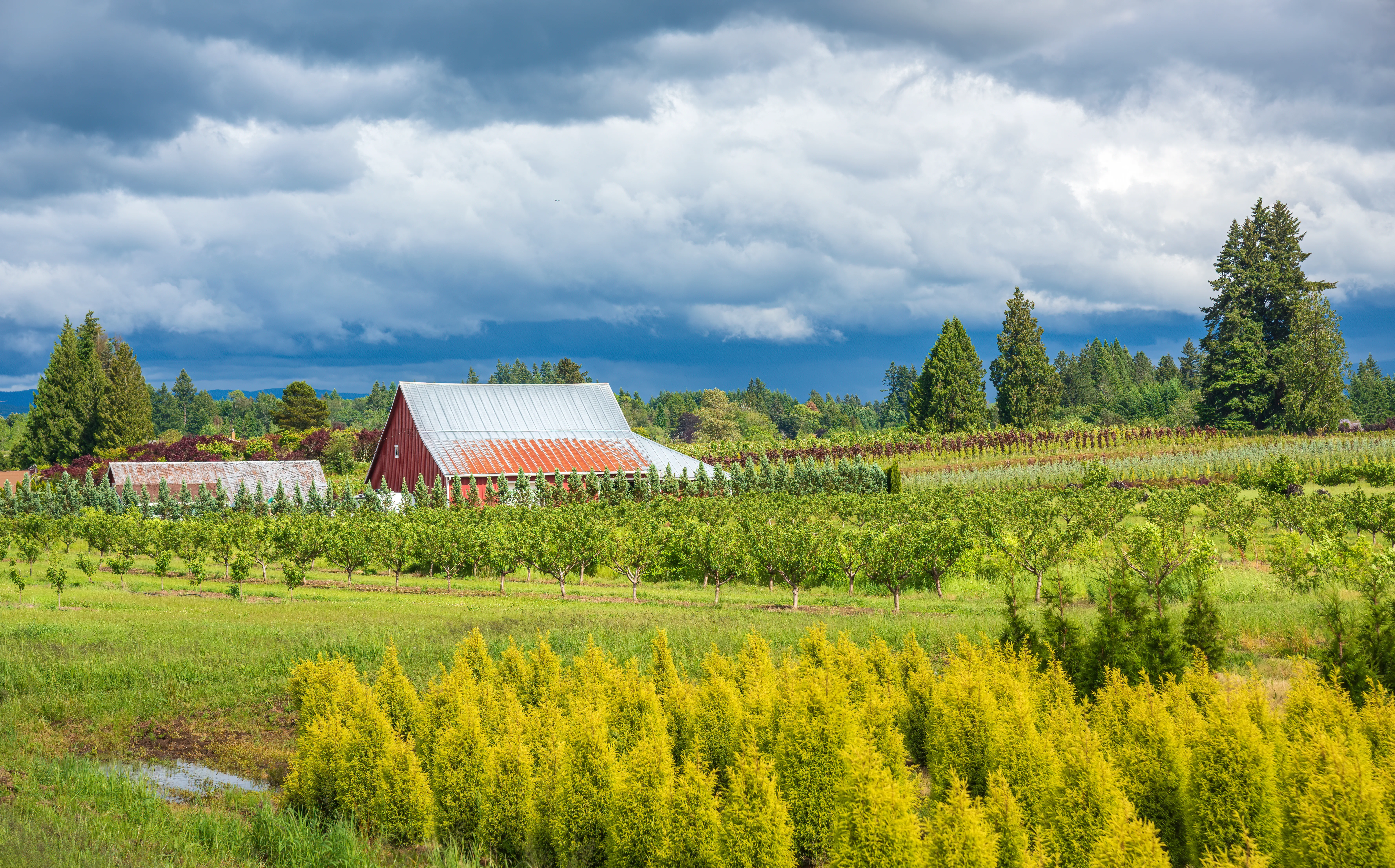
Forest Grove punches above its weight for a town this size, with 170.5 acres of parkland and some genuinely distinctive outdoor spaces.
Rogers Park is the standout for families. In 2020, the city added Anna and Abby's Yard — a play area that includes a climbable dragon sculpture, fairy statues, and play structures crafted from a 200-year-old repurposed sequoia tree. My clients with young children consistently rank it among the best playgrounds in Washington County. It's whimsical in a way that corporate-designed playgrounds never manage.
Fernhill Wetlands sits minutes from downtown and feels like a different world. This restored wetland system attracts herons, hawks, bald eagles, and beavers. Short trails and viewing platforms make wildlife observation accessible even for casual walkers. It's one of the best birding spots in the metro, and it's free.
Thatcher Park offers 13.6 acres of wooded trails for those wanting a quieter, more contemplative experience. It's where locals go to decompress without driving 45 minutes to the coast or mountains.
For more ambitious outings, the Banks-Vernonia State Trail starts nearby — a 21-mile rails-to-trails conversion that's become a destination for cyclists and runners. The wine country to the west offers hiking with vineyard views.
The outdoor access is a genuine selling point for Forest Grove. You're not stuck in suburban sameness — actual nature sits at the edge of town. Our parks and recreation post catalogs the full range of options.
After years of showing homes here, I can predict the misconceptions.
Misconception #1: "It's basically Hillsboro." No. Forest Grove has its own identity, school district, downtown, and culture. The 10-15 minute drive between them represents a meaningful difference in pace and character. Buyers who treat Forest Grove as interchangeable with Hillsboro are usually disappointed or pleasantly surprised, depending on what they actually wanted.
Misconception #2: "The commute won't be that bad." Buyers from out of state consistently underestimate Oregon winter driving. Rain is constant November through April. Ice storms shut down Highway 26 periodically. That 37-minute Google Maps estimate becomes meaningless when everyone's doing 35 mph in a downpour. Build in buffer time and understand that some winter days, you won't want to make the drive at all.
Misconception #3: "Older homes are just charming." Forest Grove's historic housing stock is beautiful, but many homes from the 1920s-1950s haven't been updated. Electrical systems, plumbing, insulation, and foundations need inspection by someone who knows old construction. Budget for updates, not just the purchase price.
Misconception #4: "It's too far out to appreciate." Forest Grove's proximity to wine country, access to outdoor recreation, and relative affordability have driven steady interest. The urban growth boundary limits supply. I wouldn't bank on explosive appreciation, but I also wouldn't assume it'll lag indefinitely.
Misconception #5: "I'll use transit while my car is in the shop." Plan on being car-dependent. Full stop.
Oregon's property tax system confuses almost every buyer I work with, so let me break it down clearly.
Measure 50 (passed in 1997) capped how much a property's assessed value can increase: 3% per year maximum, regardless of actual market appreciation. This means long-time owners often have assessed values far below what their homes would sell for.
Here's the catch for buyers: When a property sells, the assessed value typically resets closer to the purchase price. That seller paying $3,200/year in property taxes? You might pay $5,500 or more on the same house because your assessed value will be based on what you paid, not their historical baseline.
Washington County's effective rate runs around 0.84%, which is relatively low compared to national averages. On a $485,000 purchase, expect roughly $4,000-$4,500 annually as a starting point, depending on specific levy rates in your tax code area. Forest Grove has school levies and local bonds that affect the final number.
Additional factors: Some neighborhoods have local improvement districts (LIDs) for infrastructure or parks that add to the tax bill. Always ask for the actual tax statement during your due diligence, not just the listing's advertised figure.
Oregon has no sales tax, so property taxes (and income taxes) carry more weight in funding local services. The upside is predictability — your assessment won't jump 20% in a hot market year.
Never assume the seller's tax bill will be your tax bill. Request the current assessed value and calculate your estimated taxes based on your purchase price. For older properties with long-term owners, the difference can be $2,000+ annually — budget accordingly.
This question doesn't get asked enough until someone's standing in a soggy basement.
Forest Grove sits in a watershed that includes Gales Creek and several smaller drainages. The western and southern edges of town — particularly areas near Fernhill Wetlands and along Gales Creek — have documented flood history. FEMA flood zone maps show portions of these areas in Zone A (high-risk) and Zone AE (high-risk with determined base flood elevations).
What this means practically:
If you're buying in or near these zones, you'll need flood insurance through the National Flood Insurance Program. Standard homeowners insurance doesn't cover flood damage. Premiums vary significantly based on elevation and flood zone designation, but expect $500-$2,000+ annually for properties in designated risk areas.
More importantly: flood zone boundaries don't capture every flooding scenario. Atmospheric rivers — the intense weather systems that dump enormous rainfall over several days — have caused localized flooding in areas that aren't technically in FEMA zones. Drainage infrastructure in older parts of town wasn't designed for the rainfall intensity we're now seeing.
Before making an offer, check the FEMA flood maps (available online or through your agent), ask neighbors about their experience during major rain events, and look for evidence of past water intrusion during inspections. The 1996 and 2007 floods affected parts of Forest Grove significantly.
Properties along Gales Creek often feature beautiful views and larger lots — but those amenities come with real risk. Price accordingly and insure properly.
Always request a flood zone determination letter as part of your due diligence, even if the listing claims the property isn't in a flood zone. For properties near any creek or drainage, I recommend an elevation certificate — it documents exactly where the structure sits relative to flood levels and affects insurance pricing significantly.
Forest Grove is right for buyers who want authenticity over convenience. You're choosing a real town with real history, surrounded by working farms and wine country, anchored by a genuine downtown and a respected university. That's not something you can manufacture in a master-planned community, and it's not something you can buy closer to Portland at this price point.
But you need to go in clear-eyed. The commute is real. The limited nightlife is real. The school test scores, while improving, won't compete with Lake Oswego. The housing stock skews older, which means charming quirks and deferred maintenance in equal measure. If any of those factors are dealbreakers, better to know now.
For buyers who've decided they want space, community, and a slower pace — who work in Hillsboro or remotely, who value Saturday mornings at the farmers market over Thursday nights at a downtown bar — Forest Grove remains one of the best values in the metro. I'd be happy to walk you through current inventory or just answer more questions. This is the kind of town where spending an afternoon exploring before you even look at listings tells you more than any website can.
Todd Davidson is an Executive Loan Officer at Rocket Mortgage specializing in Oregon home buyers. Whether you're a first-timer or moving up, he'll walk you through your numbers in 15 minutes.
Explore the full Forest Grove series: Living in Forest Grove · Is Forest Grove Safe? · Cost of Living in Forest Grove · Best Neighborhoods in Forest Grove · Forest Grove Schools & Family Life · Forest Grove Youth Sports · Forest Grove Parks & Recreation · Retiring in Forest Grove · 1031 Exchange in Forest Grove · Forest Grove First-Time Buyer Guide · Forest Grove Down Payment Assistance · Moving to Forest Grove from California · The Forest Grove Realtor's Perspective · Top 10 Questions a Realtor Gets About Forest Grove