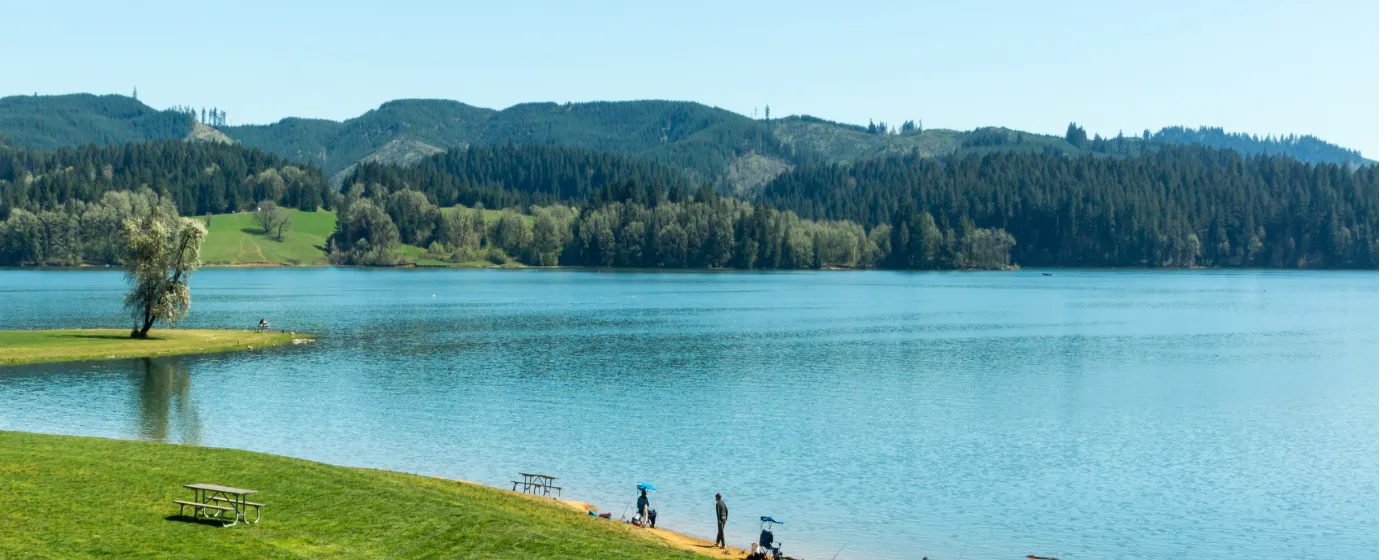
Portland Metro · Oregon
Living in Forest Grove: The Ultimate Relocation Guide (2026)
Maybe you've been priced out of Beaverton or Hillsboro and someone at work mentioned Forest Grove as the next logical step west. Maybe you drove through on Route 8 and noticed the Victorian storefronts, the old university campus, the sequoia tree standing improbably tall at the edge of a parking lot — and something made you slow down. Or maybe your company is moving you to the Portland metro and you're trying to figure out which suburb actually fits your life before you sign a lease or make an offer. Whatever brought you here, Forest Grove presents a real tension worth understanding before you commit: it's a genuine small town with a 150-year history, a working college campus, and a walkable downtown — and it's also a commuter suburb that requires 40 minutes of driving to reach the kind of city amenities Portland residents take for granted.
Forest Grove sits about 27 miles west of Portland in Washington County, tucked between Cornelius to the east and the beginning of rural Washington County to the west. Oregon Routes 8 and 47 are the arteries that shape daily life here, and TriMet bus service, while present, means most residents own two cars. The town was the first incorporated city in Washington County — platted in 1850, incorporated in 1872 — and that history shows in the bones of the place. Pacific University has anchored the north side of town since 1849, giving Forest Grove an institutional stability that most towns of this size don't have. The result is a city of roughly 27,000 people that feels surprisingly rooted, with a median age of 34.6 and a population that's about 30 percent Hispanic or Latino — one of the more genuinely diverse communities in the Washington County suburbs.
This guide will help you figure out whether Forest Grove's particular combination of affordability, small-town character, and western-edge location actually fits the way you want to live. You'll find honest breakdowns of the neighborhoods, the commute reality, the school district's actual performance, what the housing market looks like right now, and the two or three things locals wish they'd known before they moved here.
Not every Portland suburb is built for the same buyer. Forest Grove has a specific personality, and it tends to suit some households very well and others not at all.
| Best For | Why |
|---|---|
| First-time buyers | Median sold prices in the $485,000–$540,000 range are among the most accessible in Washington County without sacrificing walkable downtown access |
| Remote workers | 9.4% of the workforce already works from home — above county average — and the quieter pace suits focused workdays; fiber internet is generally available |
| Families with school-age children | Forest Grove School District's CTE programs and manageable class sizes (18:1 ratio) offer strong vocational pathways alongside traditional academics |
| Retirees on fixed income | No Oregon sales tax, Social Security exemption from state income tax, and lower home prices than the eastern suburbs make the math work |
| College community seekers | Pacific University brings lectures, events, athletics, and a younger energy that smaller towns often lack |
| Nature-access buyers | 357 acres of city parkland, Fernhill Wetlands, and quick access to wine country and the Coast Range satisfy outdoor-oriented households |

Forest Grove is one of those markets that consistently surprises buyers who've been told to look here as a "budget option." What they find is that the downtown walkability, the Pacific University energy, and the historic neighborhood character deliver a quality of daily life that doesn't feel like a compromise — it feels like a deliberate choice. Over the past 18 months, I've watched buyers who came in skeptical leave with genuine enthusiasm for streets like Hawthorne Avenue and the blocks surrounding Pacific University, where craftsman homes in the $480,000–$550,000 range offer the kind of architectural detail you'd pay $150,000 more for in Beaverton's newer subdivisions.
The thing buyers most commonly underestimate is the Northwest Forest Grove submarket. That corridor — newer construction, larger lots, median sold prices closer to $605,000 — has appreciated more steadily than the city-wide average and tends to attract buyers who want the small-town feel with a more contemporary home. I tell clients to spend a Saturday morning in Forest Grove before they decide: walk the downtown, grab coffee near the university, drive out to the northwest neighborhoods, and see if the 40-minute Portland commute feels like a fair exchange for what you're getting. For a lot of households, it does. If you're considering Forest Grove and want insight into which neighborhoods align with your priorities and budget, I'd welcome the opportunity to share what I've learned from helping hundreds of families make this move successfully.
The first thing that registers when you spend real time in Forest Grove is that it has a functioning downtown in a way that many Pacific Northwest suburbs simply don't. Main Street and Pacific Avenue form the center of gravity — brick storefronts, a historic post office, restaurants that locals actually use during the week, not just weekend visitors. McMenamins Grand Lodge sits about a mile from downtown on a converted Masonic lodge property, and it functions as a community anchor the way a well-placed brewery or music venue does in Portland neighborhoods. The Giant Sequoia Heritage Tree on Pacific University's campus is the kind of local landmark that sounds minor until you stand next to it — 150 years old, 165 feet tall, and completely out of scale with everything around it in the best possible way.
The commute reality deserves honest treatment. Forty minutes to Portland works on paper, but Route 8 through Cornelius and Hillsboro carries real traffic during peak hours, and there's no light rail this far west. TriMet's Line 57 bus runs from Forest Grove to Hillsboro's MAX station, which can add another 20–30 minutes to a Portland commute depending on your destination. The riders who make this work best are either remote workers, people whose offices are in Hillsboro's tech corridor, or households where one partner works locally — Pacific University, TTM Technologies, Tuality Healthcare, or the school district. If both adults need to be in downtown Portland daily, the commute math gets harder.
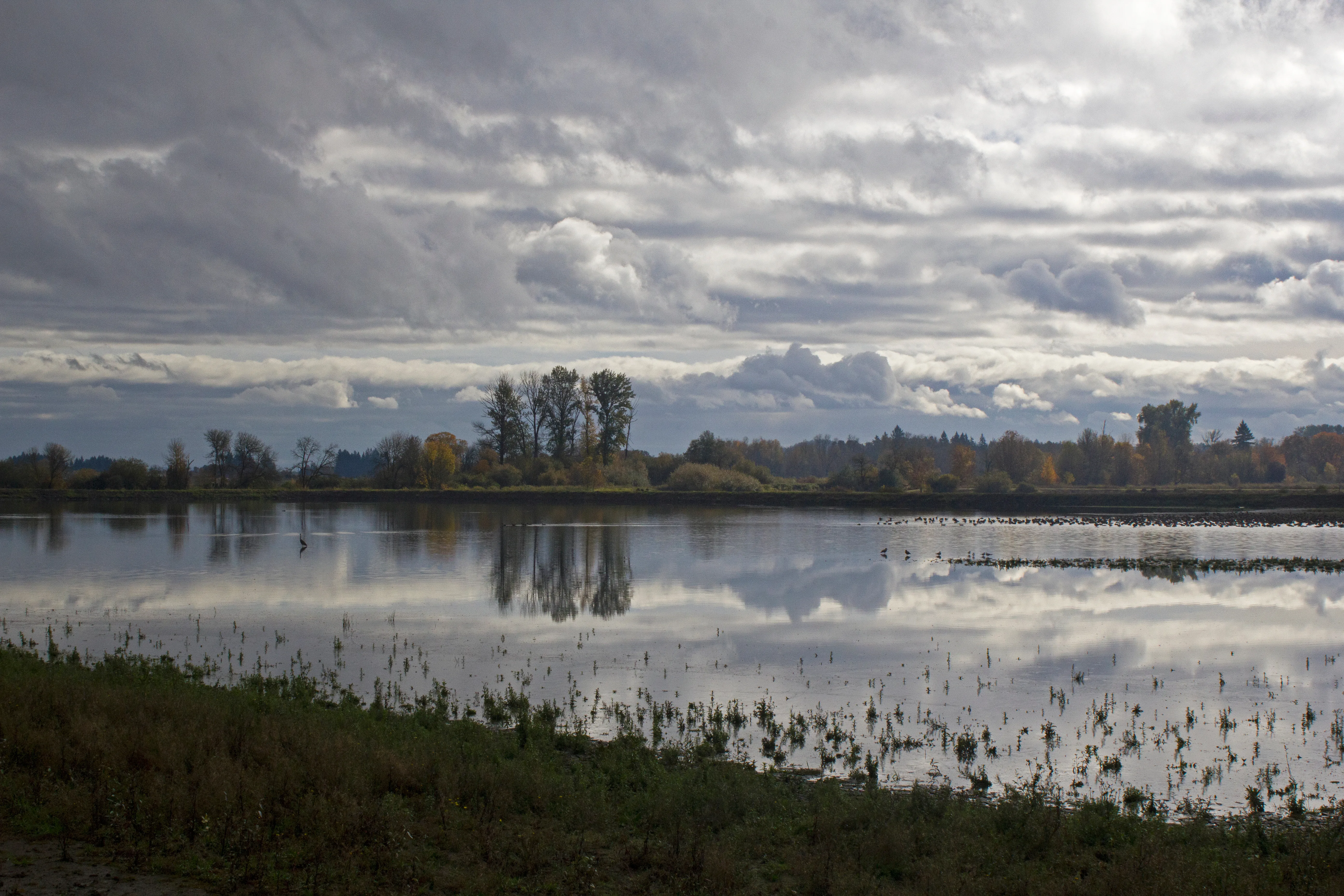
What surprises most people after six months is how self-contained life becomes. Forest Grove has enough grocery options, enough restaurants, enough parks and trails that the weekly errand radius shrinks considerably. Fernhill Wetlands, just southeast of downtown, is a legitimate wildlife destination — osprey, great blue herons, and waterfowl year-round — and it's four minutes from Main Street. The Tualatin Valley Highway corridor connecting Forest Grove to Cornelius and Hillsboro handles most of the big-box retail needs without requiring a Portland trip.
The town's demographic mix is worth understanding before you move. With roughly 30 percent Hispanic or Latino residents and a foreign-born population of about 13 percent, Forest Grove has more genuine cultural diversity than most of its Washington County neighbors. That diversity shows up in the restaurant options, in the school district's student body, and in the community events calendar in ways that make the city feel less monocultural than Sherwood or Tualatin.
Home prices that don't require a second mortgage on your sanity. The median sold price in Forest Grove runs approximately $485,000 — a figure that has held relatively stable while comparable homes in Beaverton and Hillsboro have crept past $550,000–$600,000. For buyers who've been touring homes in the eastern Washington County suburbs and doing the math on what they get per dollar, Forest Grove consistently delivers more square footage, more architectural character, and larger lots at that price point. The Northwest Forest Grove submarket runs higher — around $605,000 for newer construction — but that still compares favorably to equivalent product elsewhere in the metro.
Pacific University is an asset that buyers sometimes overlook because it's harder to quantify. The campus hosts public lectures, athletic events, a pharmacy school, and a health sciences complex that includes optometry and physical therapy clinics. For residents without employer-sponsored benefits, those university health programs can be genuinely useful. The campus also creates a year-round intellectual and social energy that keeps Forest Grove from feeling like a purely residential suburb — there are students and faculty living in the surrounding neighborhoods, eating at local restaurants, and attending community events.
Oregon's tax structure benefits Forest Grove residents more than it's often acknowledged. There's no sales tax, which adds up meaningfully over a year of groceries, home improvement projects, and vehicle purchases. For retirees specifically, Oregon exempts Social Security income from state income tax entirely — a detail that changes the retirement math considerably compared to states where Social Security is partially taxed. The state income tax on other income is real (up to 9.9% at higher brackets), but for households whose income is primarily Social Security, the overall tax burden here compares well.
The outdoor access is legitimately excellent and underappreciated. Fernhill Wetlands offers 200+ acres of wetland habitat within the city itself. The Tualatin River National Wildlife Refuge is nearby. The northern Willamette Valley wine country starts effectively at Forest Grove's doorstep — Montinore Estate and Elk Cove Vineyards are both within 15 minutes. The Coast Range and Tillamook State Forest are roughly 45–60 minutes west. For households that orient their weekends around hiking, birding, wine tasting, or coastal day trips, Forest Grove's location is as good as it gets in the Portland metro.
Looking to buy in Forest Grove? Estimate your payment.
Enter your numbers to see an estimated monthly mortgage payment.
Estimate only. Excludes HOA fees and mortgage insurance.
The commute is the most significant structural limitation for many households, and it compounds in ways that aren't immediately obvious. The 40-minute drive to Portland assumes reasonable traffic, but Route 8 has no good alternatives when something goes wrong. There's no parallel highway, no back-road option that doesn't add significant time. Hillsboro's MAX station is accessible via TriMet Line 57, but the bus-to-train transfer adds time and eliminates the door-to-door convenience that makes suburban living tolerable. Buyers who work in Hillsboro's Intel-adjacent tech corridor have a much easier time of it — that commute runs 15–20 minutes — but downtown Portland as a daily destination is genuinely challenging from Forest Grove.
The school district's performance deserves a candid look. A Niche B-minus rating and a district-reported graduation rate of 81.2 percent (2024–25 school year) place Forest Grove School District in the middle tier of Washington County options. Forest Grove High School is the only high school in the district, which means no magnet school options within the city. The bright spots are real: the Viking House CTE program — where construction students build an actual single-family home with a professional crew — is one of the more distinctive career-technical programs in the region, and AP participation at the high school runs around 26 percent. But families who are primarily optimizing for college-prep metrics may find the Beaverton or Hillsboro districts more competitive.
Forest Grove's retail and dining scene is improving but limited. Downtown has enough to make daily life comfortable, but the selection of grocery stores, specialty retail, and restaurant variety doesn't yet match what you'd find in comparable cities further east. For specialty shopping, many residents make regular runs to Hillsboro or Beaverton. The downtown grocery situation in particular is something worth evaluating during your research — distance to a well-stocked supermarket is one of those daily-life details that compounds over years.
Why some people leave: The buyers who tend to find Forest Grove doesn't work long-term are those who underestimated the commute or overestimated how much they'd adapt to the limited urban amenities. People who moved from close-in Portland neighborhoods — especially those who walked to coffee shops, restaurants, and transit — often find the car-dependency frustrating in year two or three, even if the cost savings were compelling at the time of purchase.
Forest Grove's neighborhoods range from Victorian-era blocks surrounding the university to new-construction subdivisions on the northwest edge of town. The price variation is significant — from older starter homes in the mid-$400,000s to newer construction pushing $600,000 and above.
The closest thing Forest Grove has to a walkable urban neighborhood, the Downtown Historic District centers on Main Street and Pacific Avenue and includes the Painter's Woods and Walker-Naylor historic areas just east and northeast of downtown. Homes here tend to be late 19th and early 20th century construction — Victorian, Craftsman, and American Foursquare styles — on smaller lots with established trees. Prices in this corridor run roughly $420,000–$520,000 depending on condition and lot size, and the honest tradeoff is that older homes often come with deferred maintenance that buyers from newer-construction backgrounds underestimate.
Best for: Buyers who prioritize walkability, architectural character, and proximity to Main Street over newer finishes and larger lots.
The blocks immediately surrounding Pacific University's campus have a college-town energy that's distinct from the rest of Forest Grove — foot traffic, younger residents, a café or two, and the general hum of an institution that's been operating since 1849. Homes here are a mix of faculty residences, owner-occupied Craftsmans, and converted rentals, with prices in the $440,000–$530,000 range. The proximity to university events, the optometry and health clinics, and the campus green space is the primary draw; street parking and rental density are the primary friction points.
Best for: First-time buyers and households who want college-town walkability and don't mind a denser, more mixed-use street environment.
This is the city's growth corridor — newer construction, larger lots, quieter residential streets, and median sold prices around $605,000. Developments here tend toward the 2000s–2020s construction timeline, which means better insulation, attached garages, and open floor plans that older Forest Grove housing doesn't offer. The downside is distance from downtown and a more generic suburban feel; you're in a quiet residential neighborhood rather than a historic district. For buyers coming from Hillsboro or Beaverton's newer subdivisions, this is the most familiar-feeling part of Forest Grove.
Best for: Families with children who want newer construction, larger square footage, and proximity to the newer school facilities on the city's northwest edge.
Southeast Forest Grove is the city's most affordable quadrant, with a mix of post-war ranch homes, 1970s–1980s split-levels, and modest newer construction. Prices here can dip below the city-wide median — buyers in the $400,000–$460,000 range will find the most options in this part of town. The neighborhood borders Fernhill Wetlands, which is a genuine quality-of-life asset, and the proximity to the wetlands trail system means outdoor access is unusually strong for an entry-level price point. The housing stock requires more due diligence around deferred maintenance and older systems.
Best for: First-time buyers and budget-conscious households who want access to Fernhill Wetlands and are comfortable with older housing stock.
The Walker-Naylor Historic District sits northeast of downtown and contains some of Forest Grove's most intact late-Victorian residential architecture. It's a quieter, more residential version of the Downtown Historic District — less foot traffic, more established trees, and a neighborhood feel that long-term residents describe as genuinely stable. Prices run broadly in line with the downtown corridor, around $430,000–$510,000. The historic designation means certain renovation limitations that buyers should understand before purchasing.
Best for: Buyers who want historic character without the commercial activity of the main downtown corridor.
Painter's Woods is a small historic neighborhood adjacent to the downtown core, characterized by late 19th-century residential architecture and mature street trees. It's one of the tighter-knit of Forest Grove's historic districts — residents here tend to be long-term owners with a genuine stake in preservation. Entry-level prices start in the low-to-mid $400,000s for homes that need updating, with well-maintained properties reaching $500,000 and above. The neighborhood's proximity to downtown is its primary advantage; lot sizes are modest by Pacific Northwest standards.
Best for: Buyers drawn to historic preservation, neighborhood permanence, and easy walking access to Main Street.
Forest Gales Heights sits on the higher ground on Forest Grove's western edge and offers some of the city's better views — on clear days, the Coast Range is visible to the west. Homes here are a mix of 1980s–2000s construction with larger lots than the historic neighborhoods closer to downtown. The price range runs approximately $480,000–$580,000, and the neighborhood's relative elevation and lot sizes make it popular with households who want a bit more separation from the denser parts of the city. The commute to downtown Forest Grove is a short drive; walking access to Main Street is limited.
Best for: Households who prioritize views, lot size, and quieter residential streets over walkability to downtown.
One of Forest Grove's more intentionally designed residential communities, The Parks at Forest Grove features planned green space woven through the neighborhood — pocket parks, trails, and a layout that encourages on-foot movement within the development itself. Homes here are generally 2000s–2010s construction in the $490,000–$580,000 range, and the neighborhood is popular with households who want a suburban feel with built-in outdoor access. It's not walkable to downtown, but the internal green space gives it a quality-of-life dimension that purely car-dependent subdivisions lack.
Best for: Families with young children who want a planned community feel with internal park access and newer construction.
| City | Best For | Median Home Price | Portland Commute | Vibe |
|---|---|---|---|---|
| Forest Grove | First-time buyers, remote workers, college-town feel | ~$485,000–$540,000 | ~40 min | Historic, walkable downtown, slower pace |
| Hillsboro | Tech workers, larger employer base, faster transit | ~$530,000–$560,000 | ~30 min via MAX | Suburban, Intel-adjacent, faster growth |
| Cornelius | Budget buyers, entry-level market | ~$420,000–$460,000 | ~35 min | Small, limited amenities, very affordable |
| Beaverton | Families optimizing for school ratings | ~$560,000–$600,000 | ~20–25 min | Established suburb, strong school districts |
| Banks | Rural lifestyle, acreage buyers | ~$450,000–$550,000 | ~50 min | Agricultural, very small town, outdoor access |
| North Plains | Small-town quiet, rural adjacency | ~$480,000–$520,000 | ~35 min | Minimal services, peaceful, limited walkability |
| Metric | Detail |
|---|---|
| Population | ~27,076 (2026) |
| Median sold home price | ~$485,000 (city-wide baseline); $605,000 in Northwest Forest Grove |
| Median household income | ~$82,000 |
| Property tax rate | ~0.95% |
| Commute to Portland | ~40 minutes by car; 60+ min via TriMet/MAX connection |
| School district | Forest Grove School District — Niche B-minus |
| Graduation rate | 81.2% (2024–25, district-reported) |
| Walkability | Moderate — downtown walkable; most neighborhoods car-dependent |
| Median days on market | ~94 days (mid-2026) |
| Sales tax | None (Oregon statewide) |
Forest Grove has a handful of traditions and characteristics that don't show up in any relocation spreadsheet but shape what daily life actually feels like.
Concours d'Elegance at Pacific University is one of the region's most respected classic car shows, held annually on the Pacific University campus. It draws serious collectors and enthusiasts from across the Pacific Northwest and consistently sells out — it's not a small local fair, it's a legitimate regional event that puts Forest Grove on the map in a way that residents take genuine pride in.
The Tualatin Valley Wine Trail effectively starts at Forest Grove's western edge. Montinore Estate is one of the largest biodynamic vineyards in the country, and the wine trail that runs through Washington County's western hills puts Forest Grove residents closer to the starting point than anyone else in the metro. Weekend wine country access isn't a day trip from here — it's a 15-minute drive.
GroveLink, the city's free community bus service, is one of those genuinely useful local programs that gets almost no attention in relocation guides. The West and East Loop buses provide hourly service throughout the city, and the WestLink route connects Forest Grove to Banks, North Plains, and Hillsboro for free. For households with teenagers, elderly residents, or a preference for reducing car trips, it's more useful than most people realize before they move here.
What I would not do if moving to Forest Grove: I would not purchase a home east of downtown along the Route 8 corridor without spending a weekday morning driving it at 7:30 a.m. first. That stretch of Tualatin Valley Highway through Cornelius and into Hillsboro is genuinely congested during peak hours, and buyers who are planning a daily Portland commute via that route without testing it first tend to be unpleasantly surprised. The traffic doesn't make Forest Grove a bad choice — but it makes the commute calculation very different from what Google Maps shows on a Sunday afternoon.
Local Expert Takeaway: If you're choosing between Forest Grove and a comparable home in Cornelius or North Plains, Forest Grove's downtown walkability and Pacific University anchor make a meaningful quality-of-life difference that's hard to quantify on a spreadsheet but obvious after three months. The sweet spot for most buyers is the Pacific University neighborhood or the Walker-Naylor District — Craftsman homes in the $460,000–$520,000 range that are walking distance to Main Street and benefit from the historic neighborhood stability. Avoid anchoring your entire commute calculation on Route 8 alone; research your employer's location and whether the Hillsboro MAX connection can work for you before you commit to this far western position in the metro.
✅ Forest Grove delivers genuine small-town character and walkable historic neighborhoods at prices below the eastern Washington County suburbs — with Pacific University providing cultural and institutional stability most towns of this size can't match.
⚠️ The 40-minute Portland commute is real and has no good alternatives when Route 8 backs up — this city works best for remote workers, Hillsboro-corridor employees, and households willing to accept limited urban amenities in exchange for lower prices and slower pace.
📍 The Northwest Forest Grove submarket and the Pacific University neighborhood are the two most distinct residential environments in the city — one offers newer construction around $605,000, the other offers historic Craftsman homes in the $460,000–$520,000 range with walkable downtown access.
Is Forest Grove a good place for families?
Forest Grove offers a lot of what families with children are looking for — manageable home prices, 357 acres of city parkland, and a school district with a distinctive CTE program where high school students can participate in actually building a home with a professional construction crew. The graduation rate of 81.2 percent and the B-minus district rating mean families prioritizing competitive college-prep metrics may want to compare carefully with Beaverton or Hillsboro school districts before committing. That said, the 18:1 student-to-teacher ratio and the vocational program quality give Forest Grove's schools a real argument to make.
What is the crime rate in Forest Grove?
Forest Grove's violent crime rate runs approximately 4.3 incidents per 1,000 residents — in line with similarly sized Oregon cities and below some of the larger metro suburbs. Property crime sits around 14 per 1,000 residents, which is manageable relative to the statewide average. Local data shows theft reports fell roughly 15 percent between 2019 and 2023, and assault trends declined meaningfully over the same period — suggesting the trajectory is in the right direction for a city of this size.
How does Forest Grove compare to nearby Hillsboro?
Hillsboro is the more conventional suburban choice — faster commute to Portland via MAX light rail, a larger employer base anchored by Intel and the broader tech corridor, and a school district that scores higher on Niche rankings. Forest Grove offers lower entry prices, more architectural character, and a genuine small-town downtown that Hillsboro's more sprawling suburban form doesn't replicate. Buyers choosing between the two are essentially choosing between a commuter-optimized suburb and a slower-paced historic city — and both choices are reasonable depending on your priorities.
Explore the full Forest Grove series: The Ultimate Forest Grove Relocation Guide · Is Forest Grove Safe? · Cost of Living in Forest Grove · Best Neighborhoods in Forest Grove · Forest Grove Schools & Family Life · Forest Grove Youth Sports · Forest Grove Parks & Recreation · Retiring in Forest Grove · 1031 Tax-Deferred Exchange in Forest Grove · Forest Grove First-Time Homebuyers Guide · · Moving to Forest Grove from California · Forest Grove Realtor's Perspective
Tell us what you need help with and we'll connect you with local resources.

About the Author
Todd Davidson is the founder of Living in Oregon and Living in Washington, where he publishes in-depth city guides, neighborhood resources, and local market insights covering more than 180 communities across the Pacific Northwest. While his background is in home financing and real estate, he created these digital platforms to help families research and compare regions before making a move.