
Portland Metro · Oregon
Forest Grove Schools & Family Life: Top Districts, Academics & Community (2026)
You've found a house in Forest Grove that checks every box — price, commute, yard. Then you open the school district ratings and the B− grade gives you pause. Before you write off a zip code based on a letter grade, it's worth understanding what that grade is actually measuring and what it isn't. The Forest Grove School District serves roughly 5,800 students across Forest Grove, Cornelius, Dilley, and Gales Creek, and its numbers reflect a district navigating real socioeconomic complexity — 60% minority enrollment, nearly 40% of students who are economically disadvantaged, and a chronic absenteeism rate that the district itself acknowledges as a serious challenge.
What shapes school quality here is less about funding — the district spends $15,309 per student annually, which is competitive — and more about the demographic realities that aggregate test scores tend to flatten into a single letter. The highest-performing schools in the 97116 zip code consistently outperform state averages. The district's lowest-performing schools pull that average down considerably. Knowing which school your address feeds into matters far more than knowing the district's composite grade.
This guide walks you through each level of the system: which elementary schools stand out, what Forest Grove High School actually offers a 15-year-old, where the private and charter options fit in, and what life looks like for a family here beyond the classroom walls. If you're relocating from out of state and your kids start school in September, this is what you need to know before you make an offer.

| Metric | Detail |
|---|---|
| District Grade (Niche) | B− |
| District Ranking | Approximately 90–91 out of 140 Oregon districts (SchoolDigger) |
| Total Students | ~5,788 (PK–12) |
| Schools in District | 11 total: 7 elementary, 2 middle, 2 high schools |
| Student-Teacher Ratio | 17:1 district-wide |
| Per-Pupil Spending | $15,309/year |
| Economically Disadvantaged | ~40% of students |
| Chronic Absenteeism | ~34.3% — flagged as a district challenge |
| Reading Proficiency (all grades) | ~32% at or above proficient |
| Math Proficiency (all grades) | ~20% at or above proficient |
| District Superintendent | David Parker |

The thing I tell buyers who get spooked by the district grade is simple — zoom in before you zoom out. I've worked with families who bought on the north side of Forest Grove specifically because their address fed into Harvey Clarke, and they've been happy. The homes there in the $470,000–$510,000 range give you a three-bedroom house on a real lot, and your kids are walking into a school with a gifted and talented program and stronger-than-average academic outcomes. That combination is genuinely hard to find at this price point anywhere in Washington County.
What buyers consistently underestimate is the value of the Forest Grove Community School lottery. It's a public charter, so it's free — but it performs more like a private school in terms of outcomes. Families who time their move to get their application in early have a real shot at it. I've seen buyers move to Forest Grove with that specific plan, and for those with young kids, it can be a game-changer that makes the district grade essentially irrelevant to their daily reality. If you're considering Forest Grove and want insight into which neighborhoods align with your priorities and budget, I'd welcome the opportunity to share what I've learned from helping hundreds of families make this move successfully.
The district runs seven elementary schools, but the ones that matter most to Forest Grove city buyers are the three that have earned real reputations inside the community.
Harvey Clarke Elementary (2516 N B St) is the school local parents most often point to when making the case for the district. Named after a co-founder of what became Pacific University, it serves roughly 420 students in grades K–4 and is one of the few elementary schools in the district with a dedicated Gifted & Talented program. It earns a B on Niche and performs at or above average compared to Oregon schools at the same grade levels. The honest limitation is that a 17:1 student-teacher ratio means differentiated instruction is available but not guaranteed for every learner.
Joseph Gale Elementary (3130 18th Ave) serves about 390 students in grades K–4 and carries a C on Niche. The school has a more diverse student population and reflects the district's broader socioeconomic challenges more directly than Harvey Clarke. Families who value inclusive community culture often appreciate it; those prioritizing academic acceleration may find it less aligned with their goals.
Tom McCall Upper Elementary (1341 Pacific Ave) functions as the bridge between elementary and middle, serving grades 5 and 6 with roughly 700 students. It's one of the larger schools in the district and, by proficiency data, one of the lower-performing ones. The size can work in a student's favor — more elective options, more clubs — but it's not where you'd plant a flag on academics.
Forest Grove Community School is the surprise in this district and arguably its most important option for families who do the research. This public charter serves grades 1–8, enrolls about 200 students, and admission is by lottery — which means demand consistently outpaces supply. Its academic performance is measurably stronger than the district average: roughly 37% of students score proficient in math and 42% in reading, and it holds a 4-star rating on SchoolDigger, placing it in the top 30% of Oregon elementary schools. Only 17% of its students are economically disadvantaged, compared to 40% district-wide, and that demographic reality shapes the classroom environment noticeably. If you're moving to Forest Grove with young children, submitting a lottery application early is one of the most consequential school decisions you can make.
Dilley Elementary technically sits outside Forest Grove city limits in the small community of Dilley, but it's worth knowing about because it's the district's best-performing elementary school by nearly every available metric — 4-star SchoolDigger, top 20% in Oregon, and consistently above state averages in both ELA and math. If your address feeds there, that's a meaningful advantage.
Neil Armstrong Middle School (1777 Mt View Ln) serves grades 7 and 8 and is the primary middle school for Forest Grove students. With roughly 820 students and a 19:1 student-teacher ratio, it's a large campus with the programming you'd expect — electives, band, student government — but proficiency rates here sit among the lowest in the district. Parents who've come through the Community School or Harvey Clarke pathway sometimes describe the transition to Armstrong as an academic step-down, particularly in math. It's not a school that's failing students in any dramatic sense; it's a school managing the full complexity of a diverse, economically mixed community, and that affects classroom pace.
Forest Grove High School is where the district's story becomes more compelling. The Vikings enroll roughly 1,900 students in grades 9–12, competing in OSAA Class 6A, specifically the 6A-3 Pacific Conference — a classification confirmed through the 2026–30 period. The school ranks approximately 100th in Oregon on U.S. News & World Report and has previously earned a Bronze Medal in that same ranking system. A majority of its certified staff hold master's degrees, and per-pupil spending at the high school level runs higher than the district average.
For academically motivated students, the AP program is the headline. About a quarter of students participate in AP coursework, and the Honors Diploma track — which requires a 3.5+ GPA, 60 hours of community service, two years of world language, and four AP or college-level courses — gives driven students a genuinely rigorous pathway. A student who arrives freshman year with clear academic goals and a willingness to seek out the honors track will likely find Forest Grove High School matches or exceeds what they'd get at comparable suburban schools in this price range.
The graduation rate, typically reported in the range of 80–84% in recent district data, is honest context. It's below the Oregon statewide average, and it reflects the same socioeconomic pressures that show up in the district's absenteeism numbers. A student who is engaged, supported at home, and plugged into the honors or AP pathway will have a very different experience than that aggregate number suggests.
Looking to buy in Forest Grove? Estimate your payment.
Enter your numbers to see an estimated monthly mortgage payment.
Estimate only. Excludes HOA fees and mortgage insurance.
The gap between a district's composite grade and an individual family's experience is wider in Forest Grove than in most Washington County districts. Parents who move here expecting a Hillsboro-level system get frustrated. Parents who move here having done the research — knowing their address, knowing the lottery timeline, knowing what the honors track at FGHS actually looks like — tend to be satisfied after a year.
The most common surprise people report is how much the school community differs by campus. Harvey Clarke and the Community School feel, socially and academically, like they belong to a different district than the composite grade implies. The other consistent surprise is how active parents are at the high school level — the Viking athletic programs draw real community energy, particularly football and soccer, and that school-spirit infrastructure can matter a lot to a teenager transitioning from out of state.
The one thing parents consistently wish they'd known earlier: the gifted program at Harvey Clarke is real and worth pursuing, but it requires advocacy. Teachers there are generally responsive, but families who show up engaged tend to get more out of it than those who assume the system will self-direct their kid.
If your child is a high-level gifted learner who's been thriving in a dedicated TAG program, Forest Grove's offerings outside of Harvey Clarke are limited. There's no International Baccalaureate program, no magnet school for advanced learners, and the Community School's lottery means access is uncertain. Families in that position are often better served by looking at the Beaverton School District or Hillsboro School District, both of which have more extensive programming for academically advanced students.
For families navigating significant special education or learning support needs, the district provides legally mandated services, but resource depth varies by campus. Families who have had their children in well-resourced Portland-area sped programs sometimes find the transition to Forest Grove requires more parent coordination to maintain equivalent support levels.
On the competitive athletics front, being in OSAA 6A means Forest Grove High School competes against the largest programs in the state. A student who was a standout in a smaller district or a private school may face stiffer competition for varsity spots here. The program is active and community-supported, but it is not a soft landing for athletes accustomed to being top of their class in a smaller-enrollment school.
Private school options within Forest Grove itself are limited, which is worth knowing upfront. Most families seeking private alternatives drive to Hillsboro or Beaverton.
| School | Type | Grades | Notes |
|---|---|---|---|
| Forest Grove Christian School | Private, religious | K–8 | Small enrollment, faith-based curriculum |
| Pacific University — Early Learning Center | University lab school | Preschool–PreK | Located on Pacific University campus |
| Primrose School (nearby Hillsboro) | Private, secular | Preschool–PreK | Popular option for Forest Grove families |
Forest Grove's family infrastructure is built around a handful of anchors that punch above the city's size. Pacific University's campus is effectively a community amenity — its library, walking paths, and public events create a college-town energy that you'd pay a premium for elsewhere. The university hosts public lectures, performances, and community programming that regularly pull in Forest Grove families.
The Forest Grove City Library (2114 Pacific Ave) runs active programming for children and teens throughout the year, including summer reading challenges, STEM nights, and after-school homework help. It's small but consistently well-programmed and doesn't require a drive to a larger city to feel like a real resource.
The Forest Grove Farmers Market, held on Saturdays at Council Plaza from late spring through fall, is one of those genuine community gathering points where you'll see half the families from Harvey Clarke and the Community School on the same morning. It's not a tourist market — it's a local one, and that distinction matters for building the kind of community connection that makes school transitions easier for kids.
The McMenamins Grand Lodge (3505 Pacific Ave) hosts seasonal family-friendly events, outdoor movie nights, and a grounds experience that's distinctly Oregon in a way that Forest Grove newcomers consistently name as a pleasant discovery. Youth programs through the Forest Grove Parks and Recreation Department — including soccer leagues, swim lessons at the FGPR Aquatic Center, and summer camps — round out the non-school hours in a way that keeps kids engaged and parents connected to the broader community.
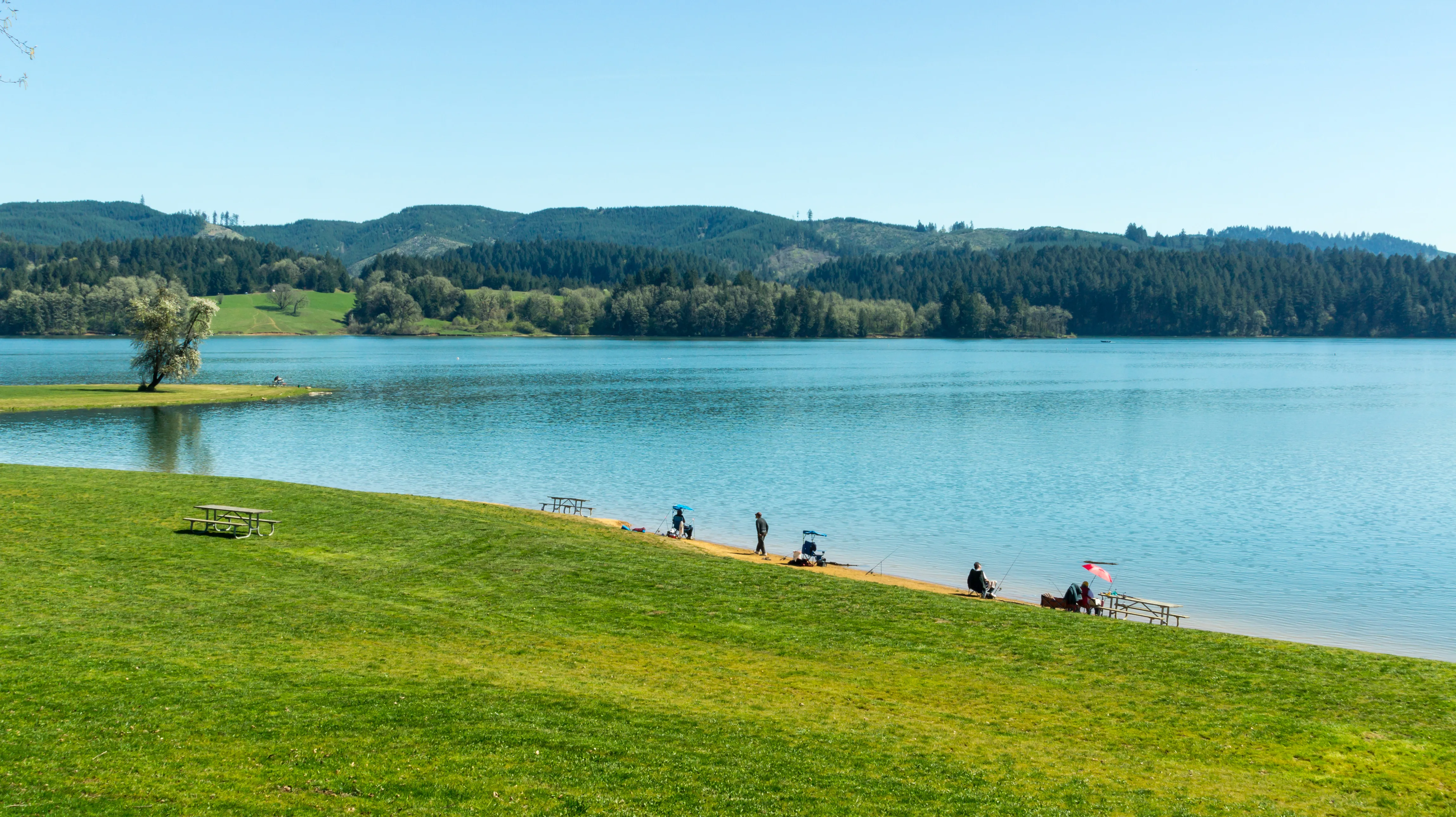
Local Expert Takeaway: Before you make an offer in Forest Grove, look up the specific elementary school that address feeds into — don't assume it's Harvey Clarke, and don't assume it matters less than the purchase price. If your kids are lottery age for Forest Grove Community School, submit that application the moment you establish residency. Families who land their kids in the right school here consistently report being happier with the district than the B− grade would have led them to expect. The $485,000 median price in this market is a real value compared to Hillsboro or Beaverton at similar school quality tiers, and that math holds up once you do the campus-level homework.
Are the schools in Forest Grove good for families relocating from out of state?
It depends on which school your address feeds into. Families who land at Harvey Clarke Elementary or get into Forest Grove Community School by lottery generally report strong satisfaction. The district as a whole reflects socioeconomic complexity that shows up in aggregate test scores, but individual campus experiences vary significantly — and the high school's honors and AP programming is genuinely strong for motivated students.
What is the graduation rate at Forest Grove High School?
The graduation rate at Forest Grove High School is typically reported in the range of 80–84% in recent years. That figure is below the Oregon statewide average and reflects the same attendance and socioeconomic pressures that affect the district more broadly. Students enrolled in the Honors Diploma or AP pathways tend to have substantially stronger outcomes than that aggregate suggests.
How does Forest Grove School District compare to Hillsboro and Beaverton school districts?
Hillsboro and Beaverton school districts both rank higher statewide and offer more extensive programs for gifted learners, IB coursework, and specialized magnet options. Forest Grove's advantage is price — at a $485,000 median home price, buyers get into a Washington County community at a meaningful discount to those districts, and the best individual schools within Forest Grove's system are competitive with their counterparts in those neighboring districts.
Explore the full Forest Grove series: The Ultimate Forest Grove Relocation Guide · Is Forest Grove Safe? · Cost of Living in Forest Grove · Best Neighborhoods in Forest Grove · Forest Grove Schools & Family Life · Forest Grove Youth Sports · Forest Grove Parks & Recreation · Retiring in Forest Grove · 1031 Tax-Deferred Exchange in Forest Grove · Forest Grove First-Time Homebuyers Guide · · Moving to Forest Grove from California · Forest Grove Realtor's Perspective
Tell us what you need help with and we'll connect you with local resources.

About the Author
Todd Davidson is the founder of Living in Oregon and Living in Washington, where he publishes in-depth city guides, neighborhood resources, and local market insights covering more than 180 communities across the Pacific Northwest. While his background is in home financing and real estate, he created these digital platforms to help families research and compare regions before making a move.