
Southern Oregon · Oregon
Retiring in Central Point: Is It the Right Fit for Your Next Chapter? (2026)
Central Point doesn't try to be a retirement destination the way Scottsdale or Bend does. There's no manufactured golf-cart lifestyle, no aggressive 55+ marketing, no manicured resort village at the center of the pitch. What you get instead is a genuine small city of about 19,000 people in the Rogue Valley — affordable by Oregon standards, close to world-class outdoor scenery, and anchored by real healthcare infrastructure. That's either exactly what you're looking for, or it's not enough. The honest answer to whether Central Point fits your retirement is: it depends heavily on what you're actually optimizing for.
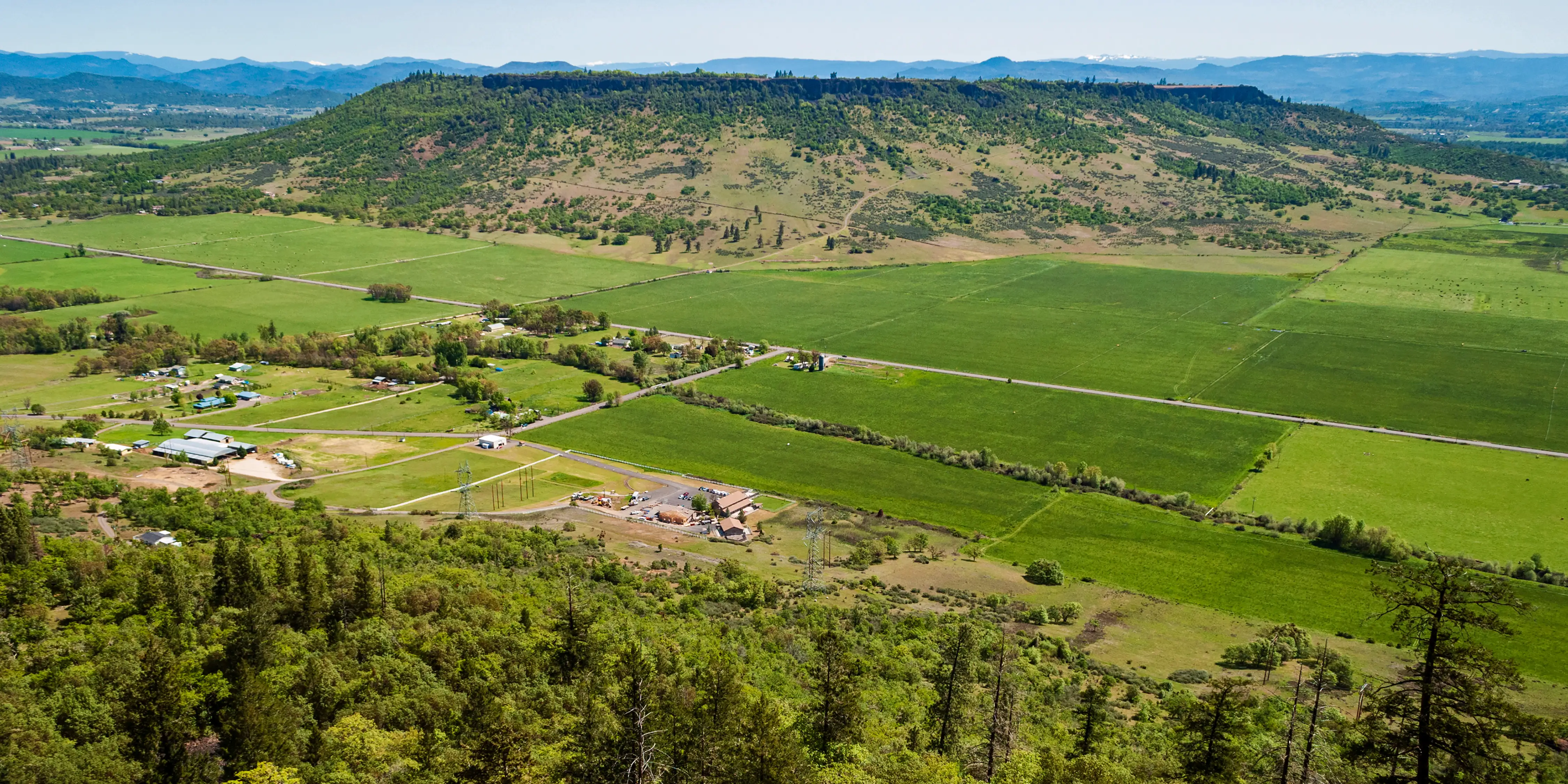
The retiree who thrives here tends to value affordability and proximity to nature over urban amenities and cultural density. With a median sold price around $390,000 and a mild Mediterranean climate that allows outdoor activity most of the year, the Rogue Valley offers a quality of life that's genuinely hard to match at this price point anywhere in the Pacific Northwest. Bear Creek Greenway runs right through the area, Table Rock dominates the eastern skyline, and Jacksonville — one of Oregon's most distinctive historic towns — sits fifteen minutes to the west. The catch is that you're not in a major metro, and if you need world-class specialists or a dense performing arts scene, you'll drive or fly for it.
This guide covers the full picture: Oregon's retirement tax environment, what healthcare actually looks like on the ground, named senior living communities with realistic cost estimates, what daily life feels like without a car, and how Central Point stacks up against nearby alternatives like Ashland, Jacksonville, and Medford.

Oregon's tax treatment of retirement income is one of the most important financial facts for anyone relocating from California, Washington, or the Midwest. The state has no sales tax — which meaningfully reduces day-to-day costs — but it does tax most income, including retirement distributions.
| Income Type | Oregon Tax Treatment |
|---|---|
| Social Security Benefits | Not taxed at state level |
| Military Pension | Exempt up to $6,250 per person; excess taxed as ordinary income |
| Federal Civil Service Pension | Partial exemption for pre-October 1991 service |
| Private Pension / 401(k) / IRA | Fully taxable as ordinary income |
| Roth IRA Qualified Distributions | Not taxed |
| Capital Gains | Taxed as ordinary income (no preferential rate) |
| Property Tax | Approximately 0.97% effective rate |
| Estate / Inheritance Tax | Oregon estate tax applies; no inheritance tax |
| Sales Tax | None |
For a retiree drawing $60,000 annually from a combination of Social Security and IRA distributions, the practical impact is meaningful but manageable. The Social Security exclusion alone saves hundreds of dollars per year compared to states that tax it fully, and the absence of sales tax helps offset Oregon's income tax burden on everyday spending. At a 0.97% property tax rate, a home at the $390,000 median produces an annual tax bill of roughly $3,783 — below what many retirees pay in California, Arizona, or Texas.
Oregon also offers a property tax deferral program for homeowners 62 and older who meet income requirements, allowing seniors to defer property taxes as a state lien on the property until it's sold. For retirees on fixed incomes who own their home outright, this can be a significant cash-flow tool worth investigating with Jackson County. Compared to Washington — which has no income tax but does tax capital gains and carries higher property tax rates in many counties — Oregon is actually competitive for retirees who rely heavily on Social Security and Roth accounts rather than traditional IRA draws.
Asante Rogue Regional Medical Center is the anchor of healthcare in this region, and for retirees evaluating a move to Central Point, it's one of the strongest arguments in the city's favor. Located at 2825 E. Barnett Road in Medford — roughly five to six miles from Central Point — this is a 378-bed regional referral hospital holding a Level II trauma designation from the Oregon Health Authority, which places it among the highest tiers of trauma care available in the state.
The scope of specialty services is what matters most for retirees. Asante RRMC operates a nationally recognized heart and stroke program, comprehensive orthopedic and spine services, a cancer care center, neurology and neurosurgery, bariatric surgery, diabetes management, pulmonology, rehabilitation services, and the only hospital-based sleep center in Southern Oregon. It also runs home care and hospice programs for patients managing chronic conditions or transitioning to end-of-life care. The system serves more than 600,000 people across nine counties in Southern Oregon and Northern California, functioning as the regional academic and referral hub for the entire southern half of the state.
Active expansion is underway through the AsanteForward2030 campaign, with the current third phase adding six new cardiac catheterization labs and thirty prep and recovery rooms specifically to increase capacity for cardiovascular care. For a retiree demographic that statistically carries elevated cardiac risk, this kind of investment in local infrastructure is directly relevant. For highly specialized oncology care, complex neurosurgery, or organ transplant, OHSU in Portland or Stanford Medical Center remains the appropriate referral destination — both accessible by air from Rogue Valley International-Medford Airport, which sits less than fifteen minutes from Central Point.
Supplemental outpatient care is well-represented locally. Providence Medical Group and Asante-affiliated primary care practices operate in the immediate area, and the Medford VA Clinic serves veterans on the southern side of the metro. Dental specialists, optometry, audiology, and physical therapy are all readily available within a short drive.
Central Point has approximately twenty senior housing options, ranging from affordable subsidized housing to resort-style independent living campuses. The Twin Creeks neighborhood has emerged as the geographic center of senior living infrastructure, with multiple communities clustered around the 888 Twin Creeks Crossing corridor.
| Community | Type | Location | Est. Monthly Cost |
|---|---|---|---|
| Twin Creeks Retirement Community | Independent Living + Memory Care | 888 Twin Creeks Crossing, Central Point | $2,800–$4,200 |
| Alderwood Assisted Living | Assisted Living | 131 Alder St, Central Point | $4,200–$5,000 |
| Grove at Pear Valley (Pear Valley Senior Living) | Assisted Living + Memory Care | 800 N. Haskell St, Central Point | $4,400–$5,200 |
| Central Point Retirement Community (PRS Living) | Affordable / Income-Qualified | Twin Creeks area, Central Point | Income-based |
| Brookdale Medford | Assisted Living | Medford (6 mi) | $3,800–$5,500 |
| Bonaventure of Medford | Independent + Assisted Living | Medford (6 mi) | $3,200–$5,000 |
| Prestige Senior Living Arbor Place | Assisted Living | Medford (6 mi) | $4,000–$5,200 |
Alderwood Assisted Living, at 64-bed capacity on Alder Street, is a smaller and more clinically oriented facility that may accept Medicaid, making it one of the more accessible options for retirees managing the transition from private pay to government-assisted funding. Grove at Pear Valley on North Haskell Street adds another assisted living and memory care option within city limits, giving families meaningful choices at comparable price points rather than a single facility monopoly.
The regional average for assisted living in this area runs approximately $4,611 per month, closely tracking the Oregon statewide average — notably more affordable than coastal Oregon markets or the Willamette Valley.

Looking to buy in Central Point? Estimate your payment.
Enter your numbers to see an estimated monthly mortgage payment.
Estimate only. Excludes HOA fees and mortgage insurance.
Walkability in Central Point is honest rather than exceptional. The older sections near the original downtown core have sidewalks and local services within a reasonable walk, but large portions of the city — particularly the newer subdivisions in Twin Creeks and Cascade Meadows — are designed around the car. A retiree who expects to run daily errands on foot will find the options limited; one who is comfortable driving to a grocery store, pharmacy, or coffee shop and treats walking as intentional recreation will actually find the infrastructure excellent. Bear Creek Greenway provides a paved multi-use trail that connects Central Point to Medford and extends for miles, making it one of the genuinely great assets for active retirees who want consistent, safe, flat walking and cycling routes.
The cultural calendar is more active than the city's size might suggest. The Jackson County Fair held at the Jackson County Fairgrounds — the county's largest annual public gathering — draws the entire region each summer. The Rogue Creamery, an internationally recognized cheese producer right in Central Point, operates a tasting room that functions as an informal community anchor, drawing both locals and visitors throughout the week. Jacksonville's Britt Festivals outdoor concert series, roughly fifteen minutes west, brings nationally touring classical, jazz, and popular music acts to an amphitheater carved into a hillside from late June through early September — a cultural amenity that significantly expands what's available to Central Point retirees without requiring a drive to Portland.
For retirees who prefer not to drive, the picture is practical but not seamless. Rogue Valley Transportation District (RVTD) operates fixed-route bus service connecting Central Point to Medford, and demand-response services exist for seniors and people with disabilities through Rogue Valley Commuter Solutions. Medical transport assistance is available through Oregon's Medicaid-linked non-emergency medical transportation program for eligible seniors. The honest reality is that Central Point rewards retirees who remain comfortable driving — those who stop driving entirely will find navigating daily life more challenging than in a denser metro.
One of the most common decisions for retirees arriving in Southern Oregon is choosing between Central Point and one of its neighboring communities. Each carries meaningfully different characteristics.
| City | Median Home Price | Hospital Access | Walkability | Senior Living Depth | Overall Fit Rating |
|---|---|---|---|---|---|
| Central Point | $390,000 | Asante RRMC (6 mi) | Moderate | Strong (20+ options) | ⭐⭐⭐⭐ |
| Medford | $429,000 | Asante RRMC (on-site) | Moderate–High | Excellent | ⭐⭐⭐⭐ |
| Ashland | $570,000+ | Asante Ashland (limited) | High | Moderate | ⭐⭐⭐½ |
| Jacksonville | $550,000+ | No local hospital | Low | Limited | ⭐⭐⭐ |
| Eagle Point | $370,000 | Asante RRMC (12 mi) | Low | Developing | ⭐⭐⭐ |
| Grants Pass | $400,000 | Three Rivers Medical (local) | Moderate | Moderate | ⭐⭐⭐ |
Central Point's combination of affordability, proximity to the region's primary trauma center, and established senior living infrastructure makes it arguably the most pragmatically sound retirement choice in Jackson County for buyers with moderate budgets.
Local Expert Takeaway: Retirees who get the most out of Central Point are typically those who want Southern Oregon's outdoor lifestyle — Table Rock hikes, Bear Creek Greenway walks, day trips to Crater Lake — without paying the Ashland premium. If you're in the $350,000–$450,000 purchase range and want newer construction with access to senior living amenities already built nearby, Twin Creeks and Cascade Meadows are where I'd focus your search first. Retirees who need dense walkability, frequent live performances, or a city with a strong arts identity within walking distance of their front door will likely find Central Point requires too much driving and should seriously consider Ashland or downtown Medford instead.
Is Central Point a good place to retire?
For the right kind of retiree, yes — genuinely so. The combination of Southern Oregon's climate, Bear Creek Greenway access, proximity to Asante Rogue Regional Medical Center, and home prices around $390,000 creates a retirement package that's hard to replicate at this price point anywhere in the Pacific Northwest. Retirees who prioritize walkability or dense cultural programming will find the fit less natural, but those who value outdoor access, affordability, and a genuine small-city pace tend to settle in quickly and stay.
What senior living options exist in Central Point specifically?
Central Point has approximately twenty senior housing options within or immediately adjacent to the city, including Twin Creeks Retirement Community — one of the area's largest independent living and memory care campuses at 888 Twin Creeks Crossing — as well as Alderwood Assisted Living on Alder Street and Grove at Pear Valley on North Haskell Street. The regional average for assisted living runs around $4,600 per month, in line with Oregon's statewide average, and income-qualified affordable options exist through PRS Living's Central Point community.
How does Oregon's retirement tax treatment compare to other states?
Oregon is a mixed picture. Social Security is not taxed at the state level, which is a meaningful advantage over states like Minnesota or Montana that tax it fully. Traditional IRA and 401(k) distributions are taxed as ordinary income, and capital gains carry no preferential rate. The complete absence of a state sales tax, however, reduces everyday costs in a way that partially offsets the income tax burden — and the property tax deferral program for homeowners 62 and older provides a useful cash-flow tool for seniors on fixed incomes.
Explore the full Central Point series: The Ultimate Central Point Relocation Guide · Is Central Point Safe? · Cost of Living in Central Point · Best Neighborhoods in Central Point · Central Point Schools & Family Life · Central Point Youth Sports · Central Point Parks & Recreation · Retiring in Central Point · 1031 Tax-Deferred Exchange in Central Point · Central Point First-Time Homebuyers Guide · · Moving to Central Point from California
Tell us what you need help with and we'll connect you with local resources.

About the Author
Todd Davidson is the founder of Living in Oregon and Living in Washington, where he publishes in-depth city guides, neighborhood resources, and local market insights covering more than 180 communities across the Pacific Northwest. While his background is in home financing and real estate, he created these digital platforms to help families research and compare regions before making a move.