Southern Oregon · Oregon
Living in Central Point: The Ultimate Relocation Guide (2026)
Maybe you've been priced out of Ashland and someone mentioned Central Point as the alternative. Maybe your employer in Medford's healthcare corridor is pulling you to Southern Oregon and you want to live somewhere that doesn't feel like an extension of the city. Maybe you drove through on I-5, saw the Table Rock formation rising above the valley floor, stopped for cheese at Rogue Creamery, and thought — wait, people actually live here? The central tension in any Central Point relocation decision is this: it is genuinely affordable in a region that has been getting less so for a decade, but affordability comes with trade-offs that a quick drive-through won't reveal.
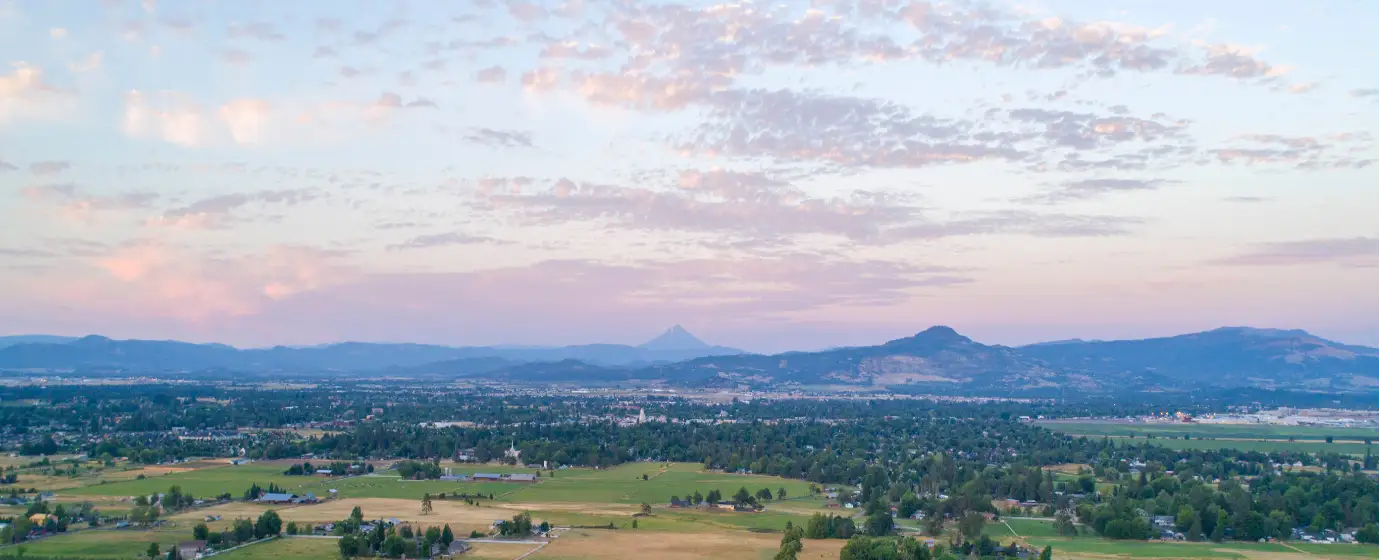
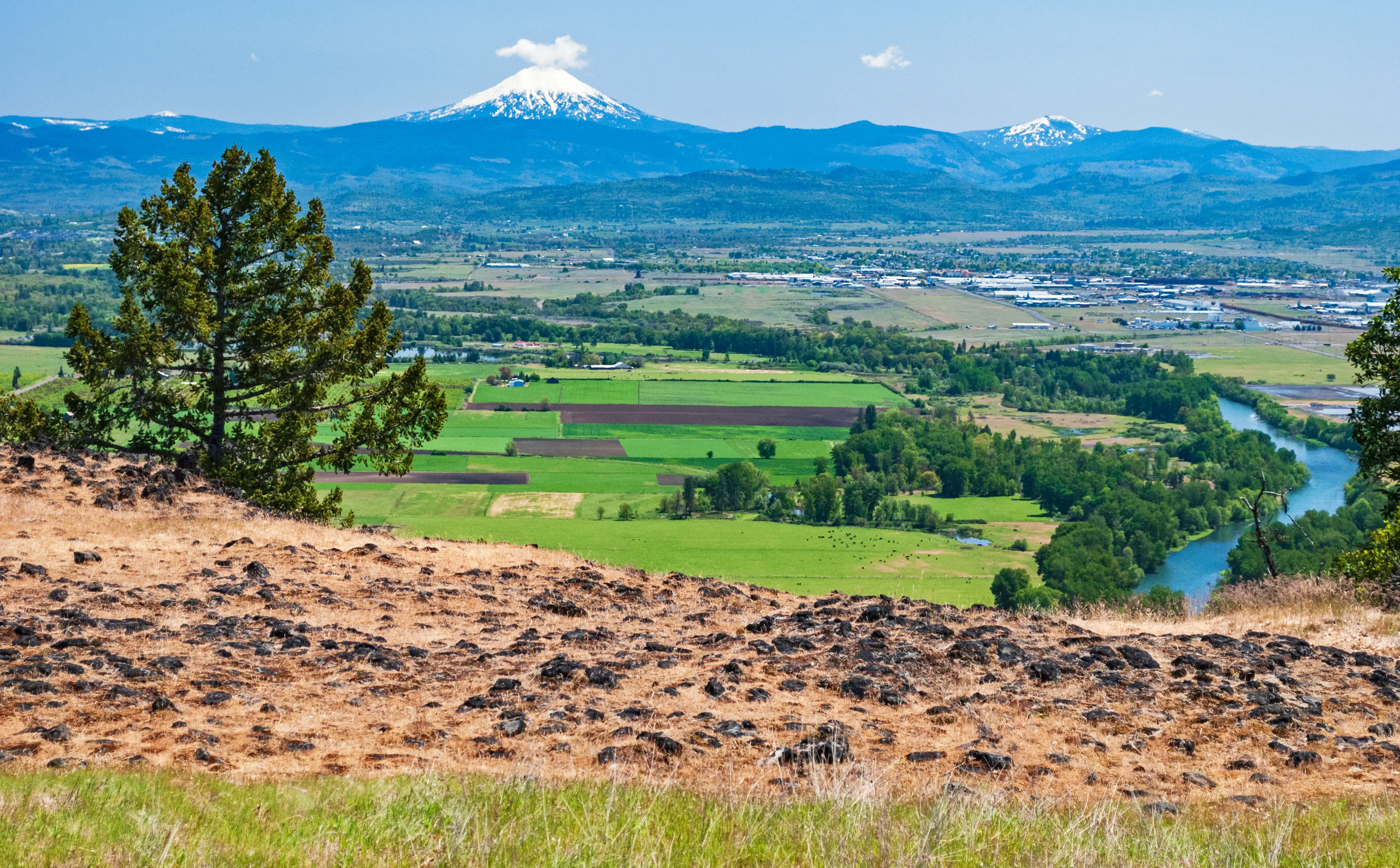
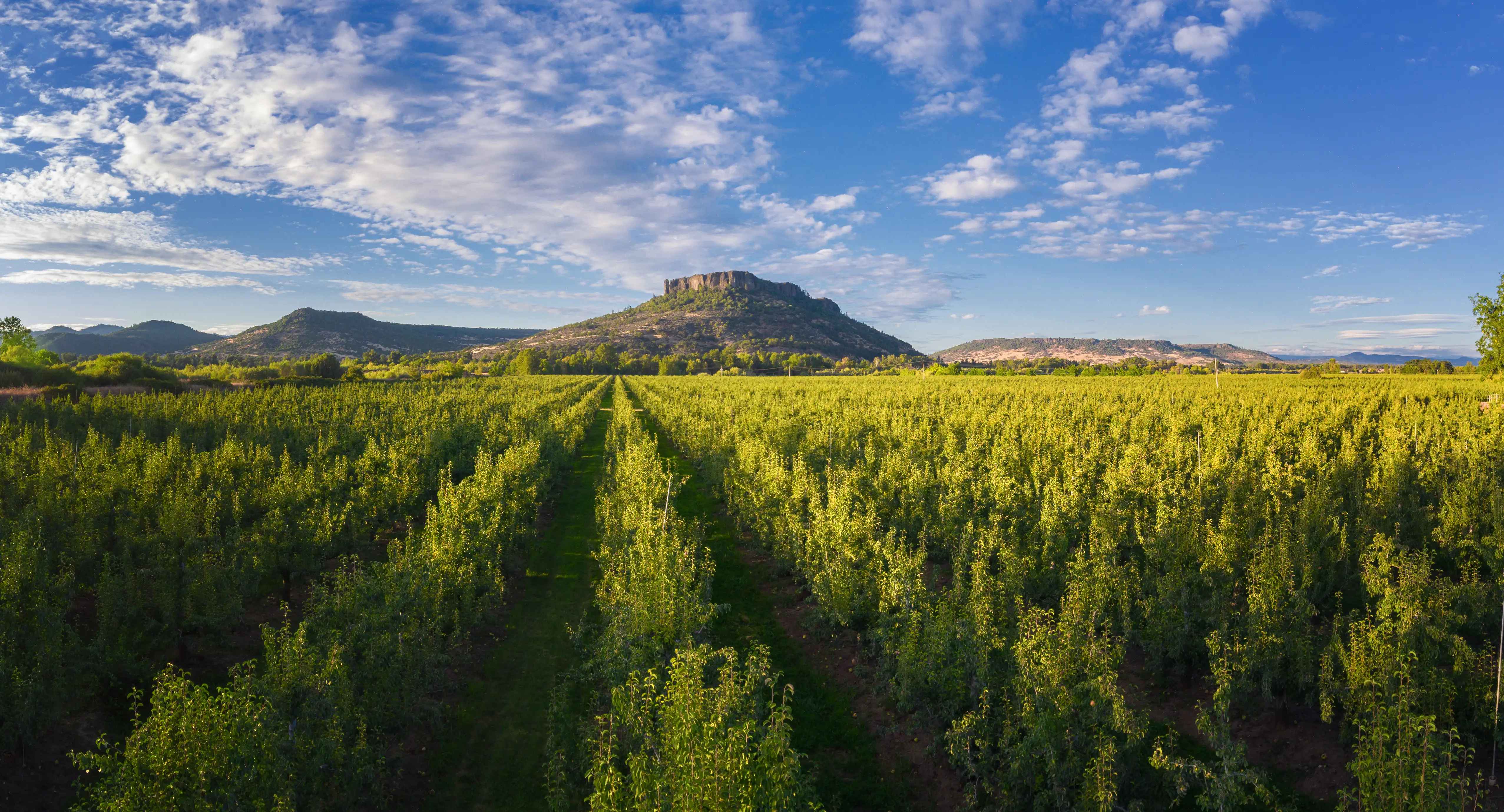
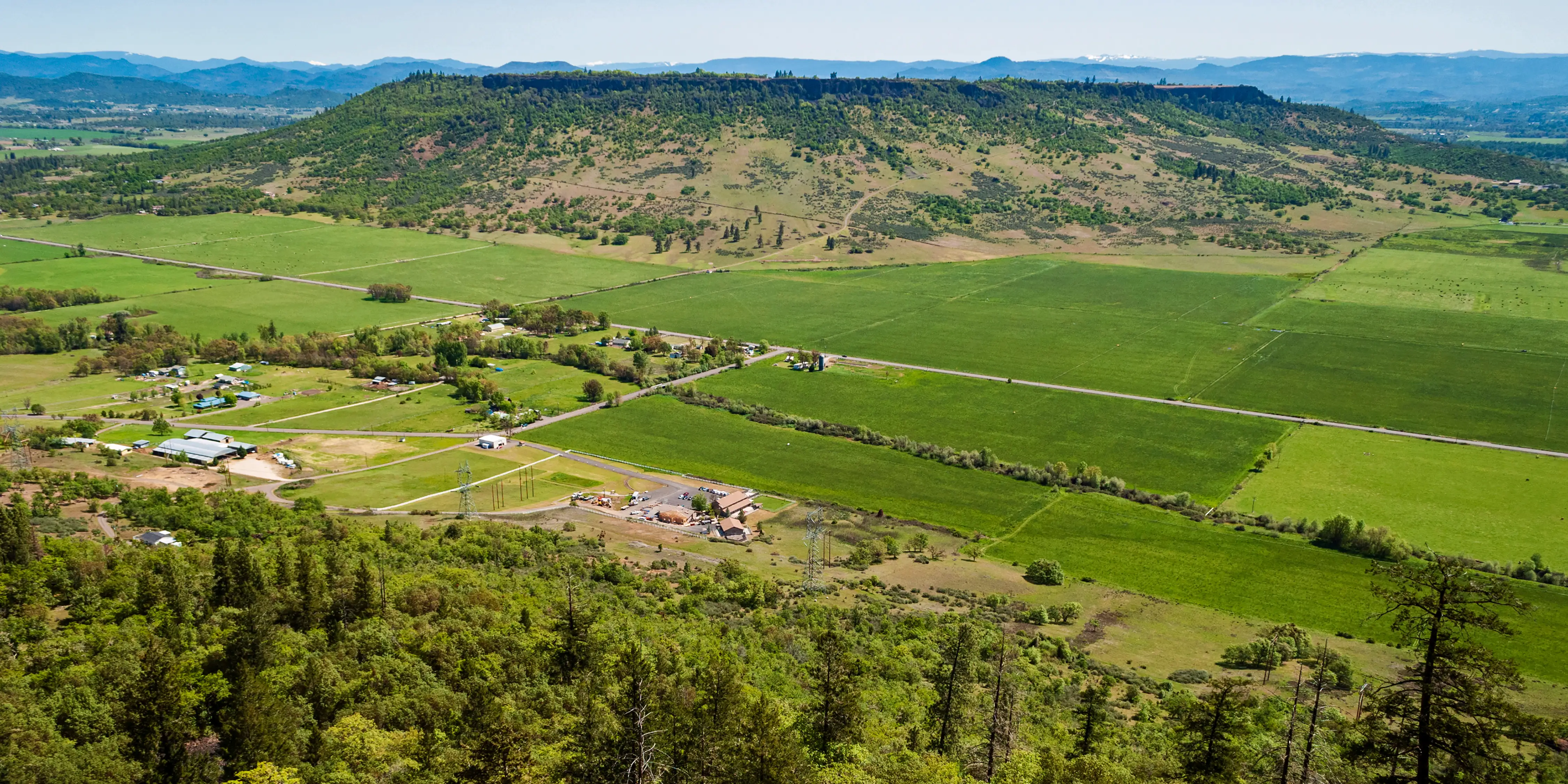
Central Point sits in Jackson County's Rogue Valley, tucked between Medford to the south and Eagle Point to the northeast, on the valley floor where Bear Creek runs through town and the volcanic silhouette of Table Rock dominates the eastern horizon. At 3.9 square miles, it's compact — not a sprawling suburb, but a real small city with its own downtown, its own school district, and its own identity that longtime residents will remind you is distinct from Medford even though the two cities share a border and a commute that takes about ten minutes. Interstate 5 runs nearby, the Rogue Valley International Airport is less than five miles from most Central Point neighborhoods, and Ashland's theater scene is roughly 25 minutes south. The geography makes the daily math easy in a way that few places in Southern Oregon can match.
This guide is for the buyer or renter who wants the honest version — not the Chamber of Commerce pitch and not the reflexive skepticism of someone who's never lived in a small market. You'll find neighborhood-level detail, a clear-eyed look at the school district, the employers that actually matter, the tradeoffs that cause people to leave, and the local quirks that make Central Point feel like a place rather than just a zip code. By the end, you'll know whether this city belongs on your shortlist or whether a neighboring community is the better fit.
Not every city works for every buyer. Central Point has a specific profile — and being honest about that profile saves everyone time.
| Best For | Why |
|---|---|
| Commuters to Medford | A 10-minute drive to Medford's healthcare and commercial core makes Central Point one of the most efficient bedroom communities in Southern Oregon |
| Families with school-age children | Central Point School District 6 offers Oregon's only K–12 dual-language immersion pathway, and the district is mid-sized enough to offer specialized programs without the anonymity of a large urban system |
| First-time buyers | A median sold price of $390,000 is a meaningful entry point in a region where Ashland and Jacksonville prices run considerably higher |
| Retirees on a fixed income | Lower cost of living, proximity to Asante Rogue Regional Medical Center, and a walkable downtown core give retirees solid daily-life infrastructure without Portland prices |
| Remote workers who want nature access | TouVelle State Park, Bear Creek Greenway, and Table Rock trailheads are all within a short drive — and the broadband penetration rate across the city runs above 86% |
| Buyers priced out of Ashland or Jacksonville | If the lifestyle appeal of Southern Oregon's historic towns is real to you but the price tags are not, Central Point is the most practical geographic compromise |
Living in Central Point is less like inhabiting a suburb and more like living in a small city that happens to have a larger city for a neighbor. The downtown along Pine Street has a functional, unhurried quality — a public library, local shops, a city hall that doesn't feel distant from its residents — and Bear Creek Greenway threads through the city in a way that gives daily life a green corridor other Rogue Valley towns don't have. Mornings on the Greenway trail, which connects to the broader 20-mile path running through Medford, feel genuinely restorative rather than performative.
The commute reality is one of the most underrated selling points of this market. If your job is in Medford — at Asante Rogue Regional, in the healthcare corridor on Barnett Road, or at any of the commercial centers along Crater Lake Avenue — you are looking at 10 minutes on a typical day. The traffic chokepoint most locals know is the Hamrick Road and Beebe Road intersection during the 7:30–8:15 a.m. window, when school traffic compounds the interstate-adjacent commercial flow. Avoiding that stretch by cutting through Pine Street adds about three minutes but eliminates most of the frustration.
The community vibe trends older — the median age runs just under 42 — but that statistic understates how many families with school-age children have moved here in the last decade. You'll see this at Don Jones Memorial Park on weekend afternoons and at the Jackson County Fairgrounds during the summer fair season, where the crowd is genuinely multigenerational. What surprises most people after six months of living here is how much of their social life organizes itself around the Rogue Valley region rather than Central Point specifically — you live here, but you drive to Medford for the brewery, to Jacksonville for the music festival, to Ashland for the play. That's not a knock. It's simply how small cities in a healthy regional ecosystem tend to work.
The town center along Pine and Manzanita doesn't have the restaurant density of Medford's downtown, and the retail options within walking distance are limited compared to what a larger city provides. The Costco and the Amazon Distribution Center node on the north end of town have added commercial gravity, but the walkability score is modest. Buyers coming from Portland or Eugene should set expectations accordingly.
The Rogue Creamery factor is real. Having one of the most decorated cheese producers in North America — and a James Beard Award winner — operating a farm store right in your city is not just a nice amenity. It's a signal about the food culture of the Rogue Valley and the kind of producer-to-table identity that Central Point has quietly built. The Creamery on Front Street is a legitimate destination, and locals treat it the way other cities treat a beloved neighborhood restaurant.
The outdoor access equation tips dramatically in Central Point's favor compared to similarly priced cities. Table Rock — both Upper and Lower — is an Oregon landmark, and the trailhead is under 20 minutes from most Central Point addresses. TouVelle State Park along the Rogue River offers fishing, wildlife, and open-air space that residents of flatland suburbs pay a premium to access elsewhere. Bear Creek Greenway, which cuts directly through the city, is paved, maintained, and genuinely used — not just present on a map.
The property tax rate runs approximately 0.97%, which is among the more reasonable rates in Southern Oregon and meaningfully lower than what buyers encounter in the Portland metro. On a home at the $390,000 median, that translates to roughly $3,780 annually — a number that registers immediately for buyers coming from California or Washington markets with higher tax burdens. Oregon's lack of a sales tax compounds the economic advantage for daily spending.
The dual-language immersion program offered by Central Point School District 6 is the kind of educational feature that families relocating from larger metro areas expect to pay a significant premium for. Central Point is the only district in the Southern Oregon region offering a K–12 Spanish/English immersion pathway, with the first full graduating cohort completing that track in spring 2026. For parents who prioritize bilingual education, this is not a minor differentiator — it's a deciding factor, and it's available at a public school tuition.
Looking to buy in Central Point? Estimate your payment.
Enter your numbers to see an estimated monthly mortgage payment.
Estimate only. Excludes HOA fees and mortgage insurance.
The school district warrants an honest conversation. The Central Point School District 6 carries a B rating on aggregate, but the underlying test score data shows math proficiency running well below state averages at both the elementary and middle school levels. Crater High School went through a significant structural reorganization for the 2024–25 school year, consolidating from three separate small schools back into one unified campus — a transition that brought institutional disruption even as it addressed some long-standing program fragmentation. Families whose children are math-focused or college-prep-oriented should research individual school programs carefully rather than relying on district-level summaries.
The retail and dining landscape within Central Point itself is limited. Most residents drive to Medford for meaningful restaurant and shopping variety, which is fine given the 10-minute commute — but it means Central Point doesn't have the self-contained walkable downtown that buyers from larger cities often imagine when they hear "small Oregon town." The Costco proximity is genuinely useful, but it's not a substitute for the restaurant corridor or the farmers market scene that anchors community life in Ashland or Jacksonville.
Why some people leave: The most common pattern among Central Point residents who eventually relocate is not dissatisfaction with the city itself but the pull toward larger amenities. Couples whose children finish high school often reassess, and young professionals who moved here for affordability sometimes recalibrate once their income rises and Ashland or Medford's core becomes financially accessible. The city's growth rate — roughly 0.05% annually in recent years — reflects a relatively stable rather than rapidly expanding population, which signals both community continuity and limited appreciation velocity for investors banking on rapid price growth.
Jackson County's weather deserves mention. Southern Oregon summers are hot — regularly exceeding 100°F in July and August — and the valley's air quality during wildfire season has become a real factor in quality-of-life planning. The Rogue Valley's geography traps smoke when regional fires are active, and the weeks between late July and mid-September can mean staying indoors more than newcomers from coastal Oregon anticipate.
Twin Creeks is Central Point's most planned residential community, built around a network of trails, open space, and a design sensibility that feels more Pacific Northwest master-planned than typical Southern Oregon subdivision. Homes here tend to run in the $420,000–$520,000 range, sitting above the citywide median, and the tradeoff is predictability — the streets are walkable, the HOA keeps things orderly, and the inventory turns over slowly because residents tend to stay. It's the neighborhood local agents mention most frequently for families relocating from the Portland metro who want a designed environment rather than a patchwork of individual housing vintages.
Best for: Families with kids who want trail access and a cohesive neighborhood environment and don't mind paying slightly above the city median.
Cascade Meadows sits on the west side of Central Point, offering a mix of established single-family homes from the 1990s and early 2000s at prices that typically land between $350,000 and $430,000. The neighborhood is quiet, the lot sizes are generous relative to what the same money buys in Medford, and the proximity to Beebe Road gives residents reasonable access to I-5 without the noise exposure of living directly adjacent to the freeway. The aesthetic is conventional suburban — not architecturally distinctive, but solid, well-maintained, and pragmatic.
Best for: First-time buyers or relocating professionals who want space and storage over walkability.
White Oak Estates occupies a mid-range position in Central Point's market, with homes typically selling in the $370,000–$450,000 corridor and a neighborhood character defined by mature trees, slightly larger parcels, and the kind of settled feel that comes from a community where ownership tenure trends longer. It doesn't have the amenity package of Twin Creeks, but the lot sizes tend to run larger and the per-square-foot cost tracks closer to the city median. Buyers who want outdoor space over community infrastructure find the value proposition here compelling.
Best for: Buyers who prioritize yard space and established landscaping over newer construction finishes.
The eastern side of Central Point along the Table Rock Road corridor has a working-class, unpretentious character — a mix of manufactured homes, older single-family construction, and rural-adjacent parcels that bring prices down into the $280,000–$370,000 range for the most accessible listings. The trade-off is distance from Central Point's commercial core and a built environment that reflects decades of incremental development rather than planned cohesion. For buyers whose budget is firm and whose priority is getting into the market, this corridor is where the entry-level opportunity actually lives.
Best for: Budget-constrained buyers who want to own in Central Point without stretching to the citywide median.
Vista Pointe is one of Central Point's higher-elevation neighborhoods, where the name earns its keep — homes on the upper streets have clear sightlines toward the Table Rock formation and across the valley floor. Prices here reflect the premium for views and newer construction, typically landing in the $430,000–$550,000 range. The neighborhood is quieter than the more traffic-proximate parts of the city, and the drive down to Pine Street or out to Medford is easy enough that the elevation doesn't create meaningful daily friction.
Best for: Buyers who want a view, newer construction, and are willing to pay above the city median for both.
The area around Mae Richardson Elementary sits in one of Central Point's more family-concentrated residential pockets, with housing stock that spans from the 1980s through more recent infill. Prices run across a wide band — from the mid-$300,000s for older homes needing updates to the low $400,000s for move-in-ready inventory — and the neighborhood's proximity to the school makes it an obvious consideration for parents with young children. It doesn't have the curb-appeal uniformity of Twin Creeks, but the community density of families with children creates a social environment that younger households find appealing.
Best for: Parents with elementary-age children who want to walk to school and keep costs below the $400,000 threshold.
Tamarack Village offers a townhouse and attached-home product that is relatively rare in Central Point's predominantly single-family market, making it a logical starting point for buyers coming from urban environments where attached housing is the norm. Prices tend to cluster in the $300,000–$380,000 range, and the lower maintenance burden appeals to buyers who don't want yard work consuming weekends. The density is higher than surrounding neighborhoods, which means slightly more noise and less privacy, but the entry price is among the lowest in the market for attached ownership.
Best for: First-time buyers or downsizers who want ownership without single-family maintenance demands.
Green Valley's character is shaped by its position near the Bear Creek Greenway corridor, which gives it genuine recreational infrastructure within easy walking or cycling distance. Homes range broadly depending on vintage and condition — from the upper $300,000s for older stock to the mid-$400,000s for updated homes — and the neighborhood has attracted buyers who prioritize outdoor access in daily life rather than reserving it for weekend trips. The tradeoff is that Green Valley sits in a part of the city where commercial services require a short drive, and the school proximity is moderate rather than exceptional.
Best for: Outdoor-oriented buyers who want Greenway access woven into daily life rather than a drive-to amenity.
| City | Best For | Median Home Price | Commute to Medford | Vibe |
|---|---|---|---|---|
| Central Point | Affordability, family programs, commuter access | $390,000 | 10 min | Small city, practical, growing |
| Medford | Urban amenities, walkable downtown, job proximity | $420,000–$450,000 | 0 min | Regional hub, more urban energy |
| Jacksonville | Historic character, walkability, wine country adjacent | $600,000+ | 15–20 min | Historic small town, premium feel |
| Ashland | Culture, Oregon Shakespeare Festival, university town | $550,000–$650,000 | 20–25 min | College town, arts-forward, expensive |
| Eagle Point | Rural feel, larger lots, quiet | $360,000–$400,000 | 15–20 min | Outer suburb, very quiet, limited services |
| Phoenix | Lower cost entry, I-5 access | $320,000–$360,000 | 10–15 min | Rebuilding post-2020 fires, in transition |
| Metric | Detail |
|---|---|
| Population | ~19,148 (2026) |
| Median Sold Home Price | $390,000 (Redfin, early 2026) |
| Median Household Income | $86,058 |
| Property Tax Rate | ~0.97% |
| Commute to Medford | ~10 minutes |
| School District | Central Point School District 6 |
| Violent Crime per 1,000 | 1.7 |
| Property Crime per 1,000 | 13.3 |
| Owner-Occupied Housing | 65.8% |
| Median Days on Market | ~68 days (early 2026) |
The Jackson County Fair is not optional. The Jackson County Fairgrounds sit directly in Central Point, and the county fair each summer is the kind of event where the fairgrounds aren't a backdrop — they're a community institution. Locals don't treat it as a tourist attraction. It's the event that closes certain roads, fills the parking lots on Don Jones Park's perimeter, and draws residents across the valley who treat Central Point as the center of the region for one week a year. If you move here and ignore the fair, neighbors will notice.
Rogue Creamery is a neighborhood landmark, not a tourist stop. Out-of-towners visit Rogue Creamery on Front Street as a food tourism detour. Long-term Central Point residents stop in the way people in other cities stop at a neighborhood butcher shop — regularly, with a purpose. The Creamery's Oregon Blue and Caveman Blue have won international recognition, and that distinction gives Central Point a food identity that is genuinely unusual for a city of this size. Locals take quiet pride in this.
The Bear Creek Greenway is the city's living room. The paved trail running through Central Point along the creek corridor functions as the community's informal gathering place — dog walkers, cyclists, families with strollers, and runners all share the path in a way that creates organic social contact between neighbors who might otherwise never interact. The Greenway connects to the broader 20-mile Rogue Valley trail system, and understanding its route is the first piece of local knowledge new residents absorb.
What I would not do if moving here: I would not buy on the street blocks directly adjacent to the Hamrick Road commercial corridor without spending a full weekday observing the truck traffic and noise patterns during peak Amazon Distribution Center delivery hours. The commercial growth on Central Point's north end has transformed what were quiet residential approaches into high-frequency freight corridors at hours that don't appear in weekend open-house visits. Drive it on a Tuesday morning before you make an offer anywhere in that zone.
Local Expert Takeaway: If your budget is firm at or below $400,000 and your job is in Medford's healthcare or commercial corridor, Central Point is the most logical market in Southern Oregon — not as a compromise but as a genuinely strategic position. The dual-language immersion program at Crater High School and the Greenway access are assets that are harder to find than the price suggests. Prioritize Twin Creeks or Cascade Meadows for longer hold value, avoid the blocks immediately east of Hamrick Road without a weekend-to-weekday site check, and move quickly when pricing is at or below $375,000 — those listings don't sit for 68 days.
✅ Central Point delivers real affordability in a competitive Southern Oregon market — the $390,000 median sold price is among the lowest of any established city in the Rogue Valley, and the 10-minute commute to Medford's job core is a daily-life advantage that buyers from larger metros consistently undervalue until they've lived it.
⚠️ The school district requires homework — the B-rated Central Point School District 6 has meaningful program strengths, including a rare K–12 dual-language immersion track, but math proficiency scores at the elementary and middle levels run below state averages. Families should research individual school programs rather than treating the district rating as a single-number verdict.
📍 Know your neighborhood before you make an offer — Central Point's 3.9 square miles contain significant variation, from the planned trail community of Twin Creeks to the entry-level manufactured home corridor along Table Rock Road. The difference between a satisfying purchase and a frustrating one often comes down to which section of a small city a buyer lands in.
Is Central Point a good place to live in 2026?
For buyers whose priorities are affordability, outdoor access, and a short commute to a regional employment hub, Central Point delivers a consistently strong case. The median sold price of $390,000, combined with a property tax rate running around 0.97%, creates a monthly cost structure that is meaningfully more accessible than what Ashland or Jacksonville can offer for equivalent home size. The trade-off is a more limited in-city dining and retail scene and a school district whose test score performance is a work in progress.
What is the crime rate in Central Point?
Central Point's violent crime rate runs approximately 1.7 incidents per 1,000 residents, which is low by both Oregon state standards and national comparisons for cities of this size. The property crime rate of 13.3 per 1,000 residents is more moderate — broadly comparable to other Southern Oregon communities — and reflects the kinds of opportunistic property offenses that affect most mid-size Pacific Northwest cities. Most residents describe the city as feeling safe for families.
How does Central Point compare to Medford for homebuyers?
Central Point's median sold price runs roughly $30,000–$60,000 below Medford's, and buyers get more square footage and lot size for the money at that discount. The practical tradeoff is that Central Point's in-city retail and restaurant density is lower, meaning most residents drive to Medford for dining variety and major shopping — a minor inconvenience that the 10-minute commute makes easy to absorb. Buyers who want urban walkability gravitate toward Medford's core; buyers who want space, value, and regional access increasingly choose Central Point.
Explore the full Central Point series: The Ultimate Central Point Relocation Guide · Is Central Point Safe? · Cost of Living in Central Point · Best Neighborhoods in Central Point · Central Point Schools & Family Life · Central Point Youth Sports · Central Point Parks & Recreation · Retiring in Central Point · 1031 Tax-Deferred Exchange in Central Point · Central Point First-Time Homebuyers Guide · · Moving to Central Point from California
Tell us what you need help with and we'll connect you with local resources.

About the Author
Todd Davidson is the founder of Living in Oregon and Living in Washington, where he publishes in-depth city guides, neighborhood resources, and local market insights covering more than 180 communities across the Pacific Northwest. While his background is in home financing and real estate, he created these digital platforms to help families research and compare regions before making a move.