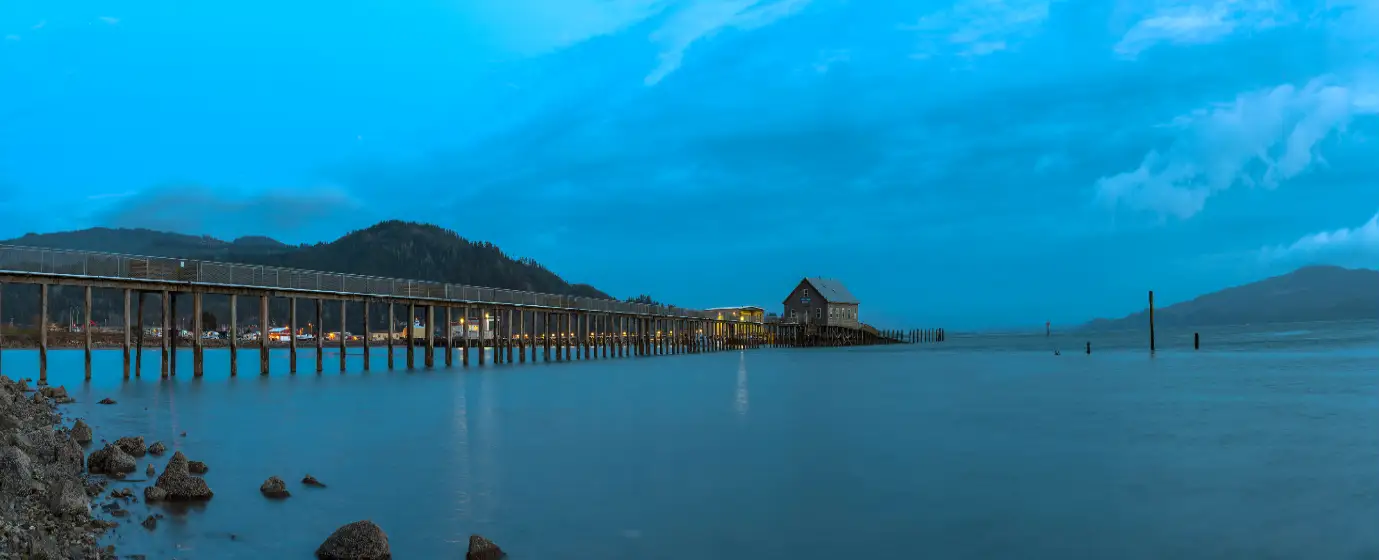
Oregon Coast · Oregon
Living in Tillamook: The Ultimate Relocation Guide (2026)
Maybe you've been priced out of Portland's west side and someone in a Facebook group mentioned Tillamook as the move that finally made homeownership feel possible. Maybe your company went fully remote and you started thinking seriously about trading your Beaverton commute for a view of the bay. Or maybe you drove through on a summer weekend, watched the fog burn off the hillsides above the Tillamook Valley, smelled the sea air, and thought — why don't more people know about this place? The honest answer is that plenty of people do know. What they're wrestling with is the central tension that every serious Tillamook buyer eventually confronts: this is a genuinely beautiful, affordable coastal town with real community roots — and it is 90 minutes from Portland on a two-lane highway through a river canyon.
That geographic reality shapes everything here. Tillamook sits at the southeast end of Tillamook Bay, cradled between the Coast Range and the Pacific, where five rivers — the Tillamook, Trask, Wilson, Kilchis, and Miami — drain into the same watershed before reaching the ocean. The town itself covers just 1.7 square miles, with a population hovering around 5,125. The economy still runs on dairy — the Tillamook County Creamery Association draws roughly a million visitors a year to its facility north of town on Highway 101 — but healthcare, timber, and an expanding wave of remote workers have diversified the local employment picture meaningfully over the past five years.
This guide will help you figure out whether Tillamook is the right fit for your specific situation. You'll get an honest read on who thrives here, which neighborhoods are worth your attention, what the housing market actually looks like for buyers today, and the tradeoffs that cause some people to love it for decades and others to leave after two winters. The goal is to give you enough real, specific information that you can make a confident decision — not just a hopeful one.
Not every buyer is chasing the same thing, and Tillamook rewards some lifestyles dramatically more than others. Before diving into neighborhood comparisons and market data, this table cuts to the intent-level question: does your situation actually match what this town offers?
| Best For | Why |
|---|---|
| Remote workers | Fully remote professionals get the Oregon Coast lifestyle at a fraction of Cannon Beach or Manzanita prices, with reliable internet access now available in most of the city |
| First-time buyers | Recent sold prices in the $390,000–$420,000 range for a 3BR starter home represent genuine affordability compared to the Portland metro — with a 0.57% property tax rate keeping carrying costs low |
| Retirees seeking coastal calm | Mild (if very wet) winters, no state sales tax, a slower pace of life, and proximity to the Three Capes Scenic Route make this a compelling retirement option |
| Outdoor lifestyle households | Fishing, kayaking, clamming, hiking the Wilson River Trail — the outdoor infrastructure here is woven into daily life, not a weekend drive away |
| Families priced out of metro suburbs | Schools are workmanlike rather than exceptional, but the community is tight-knit and raising kids here carries a different kind of richness than a subdivision near I-5 |
| Commuters (2-3 days/week) | Hybrid workers who can tolerate the 90-minute Highway 6 run two or three times a week often find the trade genuinely worth it — especially compared to daily Portland commutes |
The first thing most people notice after moving to Tillamook is that the sky behaves differently here than anywhere else they've lived. Cloud systems move through the valley fast — a wall of grey rolling in off the bay one hour, patches of gold light on the farmland the next. Locals stop reacting to weather the way transplants do. You learn to dress for rain as a default and celebrate the sun when it arrives, which it does, briefly and brilliantly, especially in July and August when monthly rainfall drops to barely an inch.
Daily life in town is compact by design. At 1.7 square miles, Tillamook doesn't sprawl — you can walk most of it in twenty minutes. The town center anchors along Main Avenue and 3rd Street, where you'll find the county courthouse, the library, a handful of local restaurants, and the kind of hardware store that still knows your name. Fred Meyer and Safeway handle most grocery runs. The nearest big-box retail beyond that is Tillamook's own commercial strip along Highway 101, which handles everything from farm supply to sporting goods.
The commute reality deserves direct treatment. Route 6 through the Wilson River canyon is a genuinely scenic drive — and also a genuinely stressful one in winter conditions, after heavy rain, or during logging truck traffic hours. The 90-minute Portland estimate assumes dry roads and no delays, which is not something you can assume in November or January. Hybrid workers who make the trip twice a week often build in buffer time and treat the drive as part of the lifestyle, not a grudge. Full-time commuters who tried it long-distance tend to either relocate back to the metro or find remote arrangements quickly.
What surprises most people after six months of living here is how quickly the town's smallness stops feeling like a limitation and starts feeling like a feature. You recognize faces at the Tillamook County Fair in August. You know which mornings the farmers market runs well and which vendors sell out early. The town's civic identity runs deep — Tillamook has been the county seat since 1853, and that institutional rootedness shows up in ways you can't fake: in the longevity of local businesses, in the volunteer fire culture, in the way people still show up for community events that bigger cities stopped holding decades ago.
The housing value proposition is real. In a state where the median home price in metro Portland runs well above $500,000, buying a three-bedroom house in Tillamook for $390,000–$420,000 — with a property tax rate of 0.57% — represents the kind of financial breathing room that most Oregon buyers stopped believing existed. Ownership rates in the city run around 43%, meaning a meaningful share of residents are renters who could potentially afford to buy with the right market conditions. For buyers coming from coastal California or the Portland eastside, the sticker shock runs in reverse.
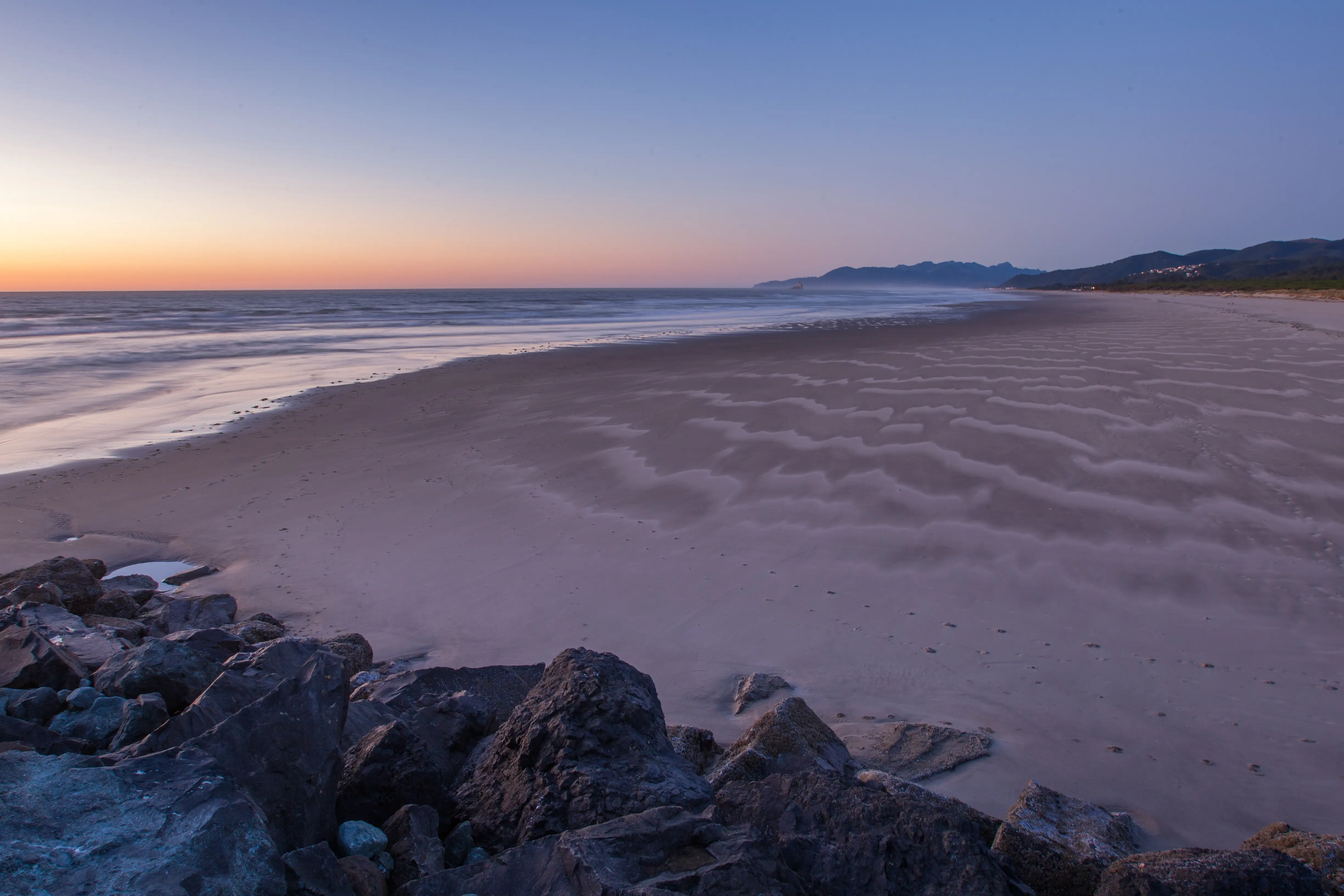
The outdoor access is not incidental — it is the lifestyle. The Wilson River Trail system starts within a short drive of town. Munson Creek Falls, one of the tallest waterfalls in the Coast Range at over 260 feet, sits less than 10 miles southeast. Cape Meares, Netarts Bay, and the Three Capes Scenic Route offer tidepooling, clamming, and surfing access that residents of most Oregon cities pay resort prices to visit once a year. Kayakers launch from multiple points along Tillamook Bay with almost no planning required.
The dairy heritage isn't just a tourism hook — it's a genuine point of local pride that creates a food culture unusual for a town this size. The Tillamook County Creamery Association operates one of the most-visited food facilities in the Pacific Northwest, and its presence ripples outward through the local economy in ways that are easy to underestimate. Blue Heron French Cheese Company, the Tillamook Forest Center, and the Latimer Quilt & Textile Center (a genuinely impressive collection of historic Pacific Northwest textiles housed in a 1932 National Guard armory) add cultural texture that most towns of 5,000 people simply don't have.
Adventist Health Tillamook serves as the community hospital and one of the city's anchor employers, providing healthcare access that is better than you might expect for a rural coastal community. For retirees especially, the presence of a full-service hospital within city limits is not a minor consideration — it's often the deciding factor between a coastal town that works long-term and one that doesn't.
Looking to buy in Tillamook? Estimate your payment.
Enter your numbers to see an estimated monthly mortgage payment.
Estimate only. Excludes HOA fees and mortgage insurance.
The rain is not a tradeoff that can be soft-pedaled. Tillamook receives approximately 88 inches of precipitation annually — more than double Portland's rainfall and more than most Pacific Northwest cities outside the Olympic Peninsula. From November through April, daytime highs hover in the high 40s to high 50s, and stretches of grey that last for weeks are not unusual. People who love it here tend to genuinely love the rain — they find it cozy, they find the green stunning, they invest in good rain gear and carry on. People who merely tolerate rain somewhere along the spectrum between "it's fine" and "I didn't realize it would be this much" frequently leave within two winters.
The amenity gap is real and worth taking seriously. AreaVibes scores Tillamook's amenities category at an F — and while that grading system has its quirks, the underlying reality is accurate. There is no movie theater, no urgent care clinic separate from the main hospital, no Target, no mid-scale restaurant scene. The nearest Costco is in Warrenton, about 50 miles north. Specialty shopping, reliable dining variety, and most big-box retail require either a Highway 101 drive north toward Astoria or the 90-minute inland run to Portland. Buyers who normalize this adjustment tend to shop strategically and plan trips — others find the friction genuinely wearing after the first year.
Flooding is not an abstract risk in Tillamook — it is a recurring physical reality. Approximately 29% of Tillamook County properties face severe flood exposure over a 30-year horizon, and winter flood events in the river valleys are common enough that locals track river gauges with casual expertise. Buyers should research specific parcel flood zone classifications carefully before making offers, particularly in lower-lying areas near the bay and river corridors. Flood insurance requirements can materially change the monthly ownership cost on properties that look attractively priced on a listing sheet.
The school district carries a C+ rating, which reflects outcomes that are functional but not exceptional. Families relocating from high-performing suburban districts often find the transition requires adjustment — not because the teachers aren't committed, but because the resources, extracurricular depth, and academic acceleration pathways available in larger districts simply don't exist at the same level in a small coastal system. That said, the close-knit school environment and lower student-to-community ratio create a different kind of engagement that some families value highly.
Downtown is the civic and commercial core — Main Avenue, the historic county courthouse, the library, and the majority of Tillamook's walkable retail all concentrate within a few blocks of each other. Homes here tend to be older Craftsman and Victorian-era stock, many of which have been updated over the years. City-wide median pricing applies, though specific blocks vary considerably based on condition and lot size. The honest tradeoff is that downtown living means proximity to Highway 101 traffic noise and the occasional commercial activity that comes with being in the center of a working small city.
Best for: Buyers who want to walk to most of what Tillamook offers and don't mind older housing stock.
The Slough area sits adjacent to the tidal wetlands and waterways that frame the eastern edge of Tillamook Bay, offering a distinctly different residential character from the town core. Properties here often come with larger lots and views of the marsh — a selling point for birders and kayakers who want water access essentially from their backyard. Flood zone considerations are more pronounced in this area than almost anywhere in the city, which is the primary caveat buyers need to factor into their evaluation.
Best for: Outdoor-focused buyers who have researched flood insurance requirements and prioritize natural setting over walkability.
The Kilchis River corridor runs northeast of the city proper, where residential properties increasingly blend with rural agricultural land along the river bottomland. Homes here tend to offer more space and privacy than in-town options, with the river providing steelhead and salmon fishing access that draws serious anglers. The tradeoff is distance from town services and increased flood risk during high-water events, which can be significant in a valley that receives 88 inches of rain annually.
Best for: Anglers, rural lifestyle buyers, and households who want acreage within a short drive of Tillamook's services.
The Highway 6 Corridor refers to the residential and rural-residential properties that line the approach into Tillamook from the east — the Wilson River canyon route that serves as the primary connection to Portland. Properties here tend to be more rural in character, often on larger lots with timber or pasture surroundings. For hybrid commuters, living along this corridor can shave a few minutes off the Portland run, but the tradeoff is limited walkability and total dependence on a vehicle for every errand.
Best for: Remote workers and hybrid commuters who prioritize space and rural quiet over in-town convenience.
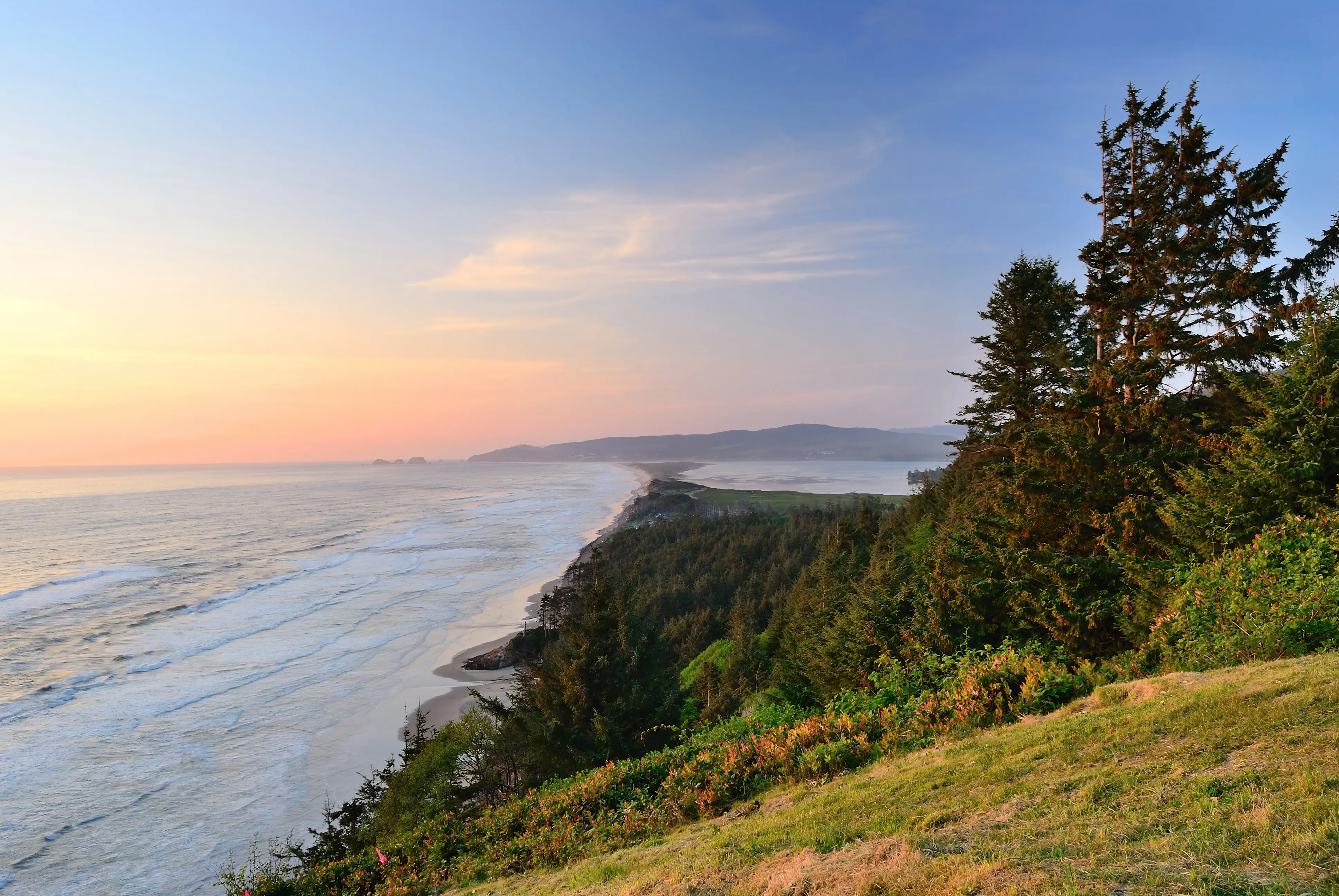
Bayocean occupies a narrow peninsula that separates Tillamook Bay from the Pacific Ocean — one of the more unusual residential settings anywhere on the Oregon Coast. The area has a dramatic history: the original Bayocean townsite was largely claimed by ocean erosion in the mid-20th century, and what remains today carries a certain end-of-the-road quietness that feels unlike anywhere else in Tillamook County. Properties here are genuinely scarce and tend to price accordingly given the combination of setting and scarcity.
Best for: Buyers seeking maximum coastal solitude and willing to accept the access limitations that come with peninsula living.
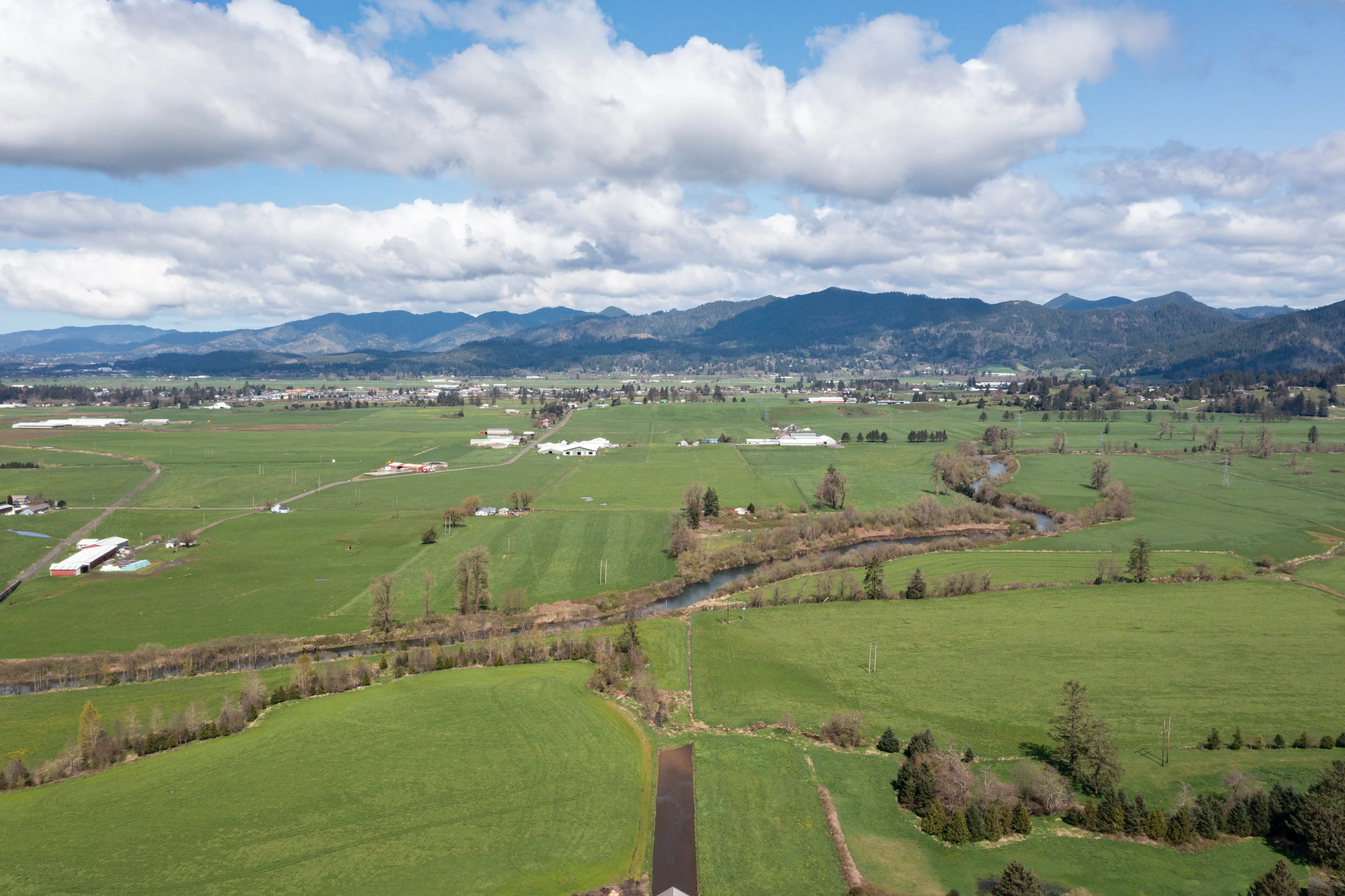
Fairview is a rural community southeast of Tillamook proper, set among the dairy farms and rolling pastureland that define the inland valley character of the region. Housing here skews toward older farmhouses, manufactured homes, and rural-residential parcels with acreage. Buyers drawn to Fairview are typically chasing land and privacy rather than walkability or community amenities — and the pricing often reflects that, with options available below the city median for buyers willing to take on rural living in full.
Best for: Agricultural lifestyle buyers, hobby farmers, and households who want maximum space at the lowest per-square-foot entry point.
Hoquarton is one of Tillamook's older established residential neighborhoods, sitting close enough to the downtown core to maintain genuine walkability while offering slightly more established street character than the immediate commercial center. The neighborhood takes its name from the historical Hoquarton Slough, which was drained and filled during early development. Homes here represent a mix of mid-century and early-century construction with a range of condition and update levels.
Best for: Buyers who want close-in residential character with walking distance to Main Avenue and the town core.
South Prairie sits along the southern approach to Tillamook, where Highway 101 passes through dairy country before reaching the city limits. Residential options in this area tend toward rural-residential character — larger lots, quieter roads, and the kind of wide-open agricultural views that define the Tillamook Valley aesthetic. It's close enough to town services to feel practical while retaining a decidedly non-urban character that appeals to buyers making a deliberate lifestyle change.
Best for: Buyers making the full lifestyle shift to rural coastal Oregon who still want quick access to Tillamook's services and employers.
| City | Best For | Home Price (approx.) | Portland Commute | Vibe |
|---|---|---|---|---|
| Tillamook | Remote workers, first-time buyers, retirees | $390K–$420K (sold) | 90 min via Hwy 6 | Working coastal town with deep community roots |
| Cannon Beach | Premium coastal living, vacation investment | $900K+ | 90 min via US-26 | Tourist-centric, very limited affordable inventory |
| Manzanita | Quiet retirement, coastal lifestyle | $700K–$850K | 105 min | Small, walkable, upscale-casual |
| Pacific City | Beach lifestyle, surf culture | $500K–$650K | 105 min via Hwy 22 | Laid-back beach town, growing fast |
| Seaside | Families, affordability among coastal towns | $450K–$550K | 80 min via US-26 | Touristy main street, more amenities than Tillamook |
| Garibaldi | Ultra-affordable coastal entry point | $280K–$380K | 100 min | Fishing village, minimal services, very rural |
The comparison that matters most for most buyers is Tillamook versus Seaside or Pacific City. Seaside offers slightly better amenity access and a shorter Portland run but at higher prices and with a more tourist-trafficked main street. Pacific City has a warmer surf culture reputation but fewer services and a longer highway run to major retail. Tillamook sits in the middle of that spectrum — more affordable than both on the coast proper, with deeper community infrastructure, but further from interstate access than Seaside.
| Metric | Data |
|---|---|
| Population | ~5,125 (2026 estimate) |
| Median sold home price | $390,000–$420,000 (city of Tillamook, mid-2026) |
| Property tax rate | 0.57% |
| Median household income | $58,176 |
| Commute to Portland | ~90 minutes via Highway 6 |
| Annual precipitation | ~88 inches |
| Violent crime rate | 2.3 per 1,000 residents |
| Property crime rate | 36.43 per 1,000 residents |
| School district rating | C+ (Tillamook School District) |
| AreaVibes livability score | 76 out of 100 |
| Major employers | Tillamook County Creamery Association, Adventist Health Tillamook, Tillamook County Government, Hampton Lumber |
| No state sales tax | ✅ Oregon statewide |
The Tillamook County Fair is not optional. Running every August at the Tillamook County Fairgrounds, it is one of the oldest county fairs in Oregon and functions as a genuine community gathering — not a commercial spectacle. Livestock competitions, carnival rides, and the kind of pie contest judging that people take seriously are all part of it. Moving here and skipping the fair in your first year is technically possible, but you'll have missed one of the clearest windows into what this community actually values.
The Latimer Quilt & Textile Center is genuinely worth your time. Housed in a 1932 National Guard armory building, it holds a Pacific Northwest textile collection that draws fiber arts enthusiasts from across the region. It's the kind of institution that sounds like a footnote until you walk through the door and realize how much curatorial care has gone into it. Locals are quietly proud of it in the way that people are proud of things they didn't have to hype to keep going.
The Tillamook Air Museum holds the largest wooden structure in the world. That Blimp Hangar — technically a WWII-era Naval Air Station facility — is visible from miles away approaching town on Highway 6, and it houses an aircraft collection that consistently surprises first-time visitors. It's not a recreation center or a regional attraction — it's a legitimate aviation museum inside an engineering landmark, and it functions as one of Tillamook's most distinctive cultural anchors.
What I would not do: I would not buy a property in any of the lower-elevation areas near the bay or river corridors without running a specific flood zone check on that parcel first. The county-wide flood exposure statistics are not abstract — winter flood events affect specific streets and specific properties with a regularity that can catch buyers off guard. The Hoquarton and downtown areas close to the Hoquarton Slough drainage, properties adjacent to the Kilchis River bottomland, and anything fronting the bay's tidal margin all deserve extra scrutiny before an offer goes in. The savings on a lower-listed property can evaporate quickly when flood insurance requirements arrive.
Local Expert Takeaway: If you're seriously considering Tillamook, run the numbers on the actual sold price range — $390,000 to $420,000 for a livable three-bedroom — combined with the 0.57% property tax rate and Oregon's zero sales tax environment before you compare it to anything in the metro. That monthly ownership math often surprises buyers who came in expecting coastal Oregon to be out of reach. For neighborhood focus, the Hoquarton and downtown-adjacent blocks give you the most community integration with the best walkability Tillamook offers — and they tend to sell faster than anything out on the rural corridors. If you're a hybrid commuter, be honest with yourself about the Highway 6 run in January before you commit to a property that requires it twice a week.
✅ Tillamook delivers genuine Oregon Coast affordability — with recent sold prices in the $390,000–$420,000 range for city-proper homes, a 0.57% property tax rate, and no state sales tax, the monthly ownership math is often better than buyers expect.
⚠️ The rain and the commute are the two non-negotiables — 88 inches of annual precipitation and a 90-minute Highway 6 run to Portland are structural features of life here, not occasional inconveniences. Be honest with yourself about both before making an offer.
📍 Flood zone research is essential for any Tillamook purchase — lower-elevation properties near the bay, river corridors, and tidal margins carry real exposure that listing prices don't always reflect. A flood zone check is not optional.
Is Tillamook a good place for families?
Tillamook offers a close-knit community environment, outdoor access that's genuinely woven into daily life, and home prices that make ownership realistic for households at the median income level. The Tillamook School District carries a C+ rating, which is workmanlike rather than exceptional, but families who value community character and outdoor lifestyle often find the overall package compelling — particularly compared to what the same budget buys in Portland suburbs.
What is the crime rate in Tillamook?
Violent crime runs at approximately 2.3 incidents per 1,000 residents — a low figure consistent with small rural Oregon communities. Property crime is considerably higher at 36.43 per 1,000, which is worth noting for buyers evaluating the area. The property crime figure reflects patterns common to tourist-adjacent communities and small towns with limited retail density, rather than indicators of serious safety concerns.
How does Tillamook compare to nearby coastal cities?
Tillamook sits below Cannon Beach, Manzanita, and Pacific City on price while offering more community infrastructure than ultra-rural options like Garibaldi. It has deeper civic roots and more employment anchors than most towns its size on the Oregon Coast, but fewer amenities and entertainment options than Seaside to the north. For buyers prioritizing affordability, outdoor access, and genuine community — over resort-town atmosphere or metro-adjacent convenience — Tillamook typically comes out ahead in a direct comparison.
Explore the full Tillamook series: The Ultimate Tillamook Relocation Guide · Is Tillamook Safe? · Cost of Living in Tillamook · Best Neighborhoods in Tillamook · Tillamook Schools & Family Life · Tillamook Youth Sports · Tillamook Parks & Recreation · Retiring in Tillamook · 1031 Tax-Deferred Exchange in Tillamook · Tillamook First-Time Homebuyers Guide · · Moving to Tillamook from California
Tell us what you need help with and we'll connect you with local resources.

About the Author
Todd Davidson is the founder of Living in Oregon and Living in Washington, where he publishes in-depth city guides, neighborhood resources, and local market insights covering more than 180 communities across the Pacific Northwest. While his background is in home financing and real estate, he created these digital platforms to help families research and compare regions before making a move.
Check Out the Oregon Coast Rankings: Oregon Coast Cost of Living — All 16 Cities Ranked · Best Places to Retire on the Oregon Coast · Best Oregon Coast Cities for Families · Best Oregon Coast Cities for Remote Workers · Oregon Coast Real Estate Market Report 2026 · Oregon Coast vs. Washington Coast