
Portland Metro · Oregon
There's a specific moment most first-time buyers in Sherwood describe — usually somewhere between getting pre-approved and writing their third offer — when the process stops feeling exciting and starts feeling like a test they didn't study for. The numbers on paper looked manageable. The neighborhood seemed perfect. Then the counteroffer came in $40,000 over asking, and suddenly they're wondering whether they should have moved to Newberg instead. Sherwood rewards buyers who understand the market before they walk into it. This guide exists for that reason.
The median home price in Sherwood sits at approximately $720,000 — a figure that shapes everything about the first-time buyer experience here. At that price point, a typical purchase gets you a three-bedroom detached home in an established neighborhood like Sherwood Village or Woodhaven, with a two-car garage and a yard. It does not get you a gut renovation project. It does not get you a starter condo for $280,000. Sherwood's entry point is higher than most Oregon cities, and the gap between renting here and owning here is real — but so is the long-term case for buying.
This guide walks you through the entire first-time buyer process as it actually unfolds in this specific market: what budget you need, what the qualification reality looks like, where the realistic entry-point neighborhoods are, what mistakes buyers consistently make, and what financial assistance might close the gap between what you have saved and what you need to close.
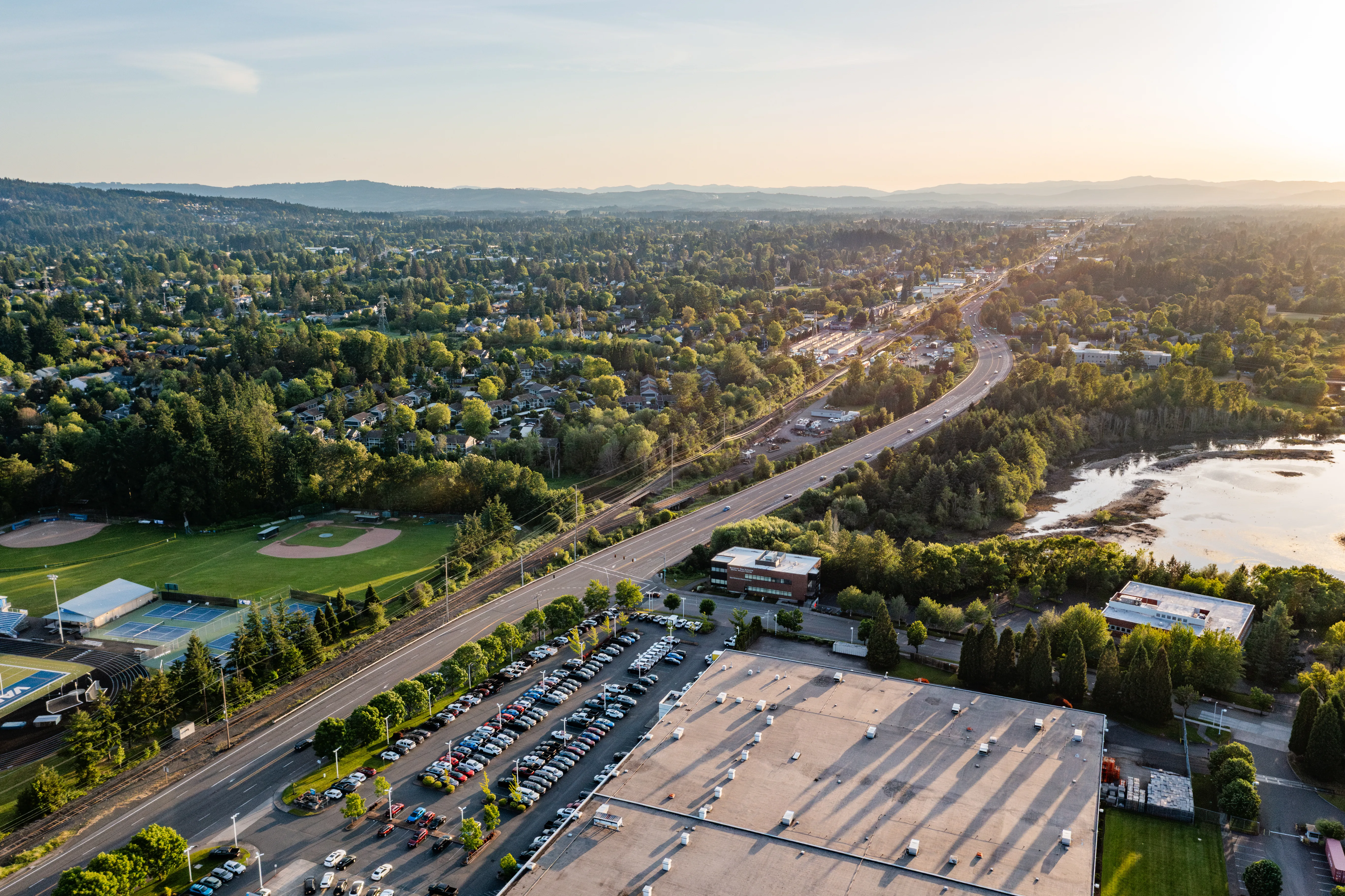
Sherwood is not the easiest first-time buyer market in the Portland Metro, but it is one of the most defensible. The school district earns consistent A-ratings, the commute to Portland runs roughly 30 minutes on surface roads, and the city's character — Old Town walkability, the Robin Hood Festival, Cannery Square, a genuinely community-oriented feel — holds resale value in ways that newer exurban developments don't. You're not just buying a house. You're buying into a city with roots and momentum.
The honest challenge is price. True entry-level detached single-family homes are scarce below $550,000, and the $350K–$450K range that defines starter inventory in markets like Newberg or outer Hillsboro simply does not exist for detached product in Sherwood. Attached homes, townhomes, and condo-style units near the Woodhaven Crossing corridor represent the most realistic sub-$500K options. First-time buyers who come in expecting to stretch a $400,000 budget into a yard and a driveway typically leave disappointed — unless they have a substantial down payment or qualify for assistance programs. Neighborhoods like Tualatin South and Sherwood Town Center offer the most realistic entry points for buyers working with tighter budgets.
Where Sherwood wins on the first-time buyer calculus is the longer game. Properties here have held value through multiple market cycles, the Sherwood School District boundary is a consistent driver of demand, and the city is genuinely livable in a way that makes the mortgage feel worth it after year two. Buyers who get in at the right price point — even if they had to stretch slightly — tend to stay.

What I tell first-time buyers about Sherwood is this: the price point is real, but the fear of it is often overblown. I've watched buyers spend eight months convinced they couldn't afford this market, then close on a home in Tualatin South or near Old Town at a number that made total sense for their household income. The inventory is tighter than Portland proper, but competition has softened slightly from the 2022 peak — homes are averaging around 29 days on market right now, which gives buyers room to be thoughtful rather than panicked.
What buyers consistently underestimate in Sherwood is how much the school district boundary affects long-term value. Homes that sit just inside the Sherwood School District boundary hold value differently than homes a quarter-mile outside it. I always pull the boundary map on the first showing of any home near the district edge, because that line affects both your kids' school placement today and your resale pool five years from now. The other thing buyers miss: attached homes and townhomes in this market have appreciated at rates comparable to detached product — if you're considering Woodhaven Crossing or a similar community as your entry point, that's not a compromise, that's a strategy. If you're considering Sherwood and want insight into which neighborhoods align with your priorities and budget, I'd welcome the opportunity to share what I've learned from helping hundreds of families make this move successfully.
Honesty first: Sherwood is a premium suburb, and the price tiers reflect that. The table below gives you a realistic map of what to expect at each budget level, based on current market conditions.
| Price Range | What You Typically Find | Neighborhood Examples | Competition Level |
|---|---|---|---|
| Under $350K | Attached condos, rare older units; detached homes do not exist at this price | Woodhaven Crossing (condo-style units) | Low — very limited inventory |
| $350K–$450K | Townhomes, attached homes, some older condos; no detached single-family | Sherwood Town Center corridor, select attached product | Moderate |
| $450K–$550K | Entry-level detached homes, often 1970s–1980s ranch style; may need updates | Tualatin South, older Sherwood Village pockets | Moderate to competitive |
| $550K–$650K | Solid 3BR detached homes, updated kitchens; established neighborhoods | Heron Ridge, Eddy Ridge, Cedar Brook | Competitive |
| $650K+ | Median and above; newer builds, larger lots, premium finishes | Woodhaven, Sherwood View Estates, Kings Point Brittany, Parrett Mountain | Highly competitive |
The realistic first-time buyer entry point in Sherwood — for a detached single-family home — starts around $500,000 to $520,000 for older construction in good condition. Buyers stretching toward the $550,000–$620,000 range will find significantly better selection, fewer deferred maintenance concerns, and homes that require less immediate capital after closing.
The tier that consistently represents the best value for a first-time buyer right now is the $520,000–$600,000 range in neighborhoods like Tualatin South and the older pockets of Heron Ridge — homes that haven't been renovated to Instagram-kitchen standards and therefore haven't commanded a full renovation premium, but are structurally sound and well-located. Buyers who focus here, rather than chasing the newest builds at the top of their qualification, tend to find the best price-per-square-foot in the city.
| Step | What Happens | Typical Timeline | What First-Timers Get Wrong |
|---|---|---|---|
| Get finances in order | Pull credit, review debt-to-income, build savings picture | 1–3 months before searching | Underestimating cash needed — down payment + closing costs + reserves |
| Pre-approval | Lender reviews income, credit, assets; issues approval letter | 3–5 business days | Getting pre-qualified (not pre-approved) — agents and sellers notice the difference |
| Find an agent | Interview agents with specific Washington County experience | Before active search begins | Using a relative or friend who works primarily in another market |
| Active search | Tour homes, track inventory, refine priorities | 6–12 weeks typical | Waiting for "more inventory" — Sherwood's inventory is structurally limited |
| Making offers | Offer price, terms, earnest money, contingencies | 1–3 days after identifying a home | Offering list price and expecting to win — in competitive tiers, homes close above asking |
| Under contract | Mutual acceptance; timelines and contingencies activated | Day 1 of contract | Missing contingency deadlines — can cost earnest money |
| Inspection | Licensed inspector reviews all systems; buyer decides on requests | Days 5–10 of contract | Waiving inspection to compete — costly on 1980s-era Sherwood ranch homes |
| Appraisal | Lender orders appraisal to confirm value | Days 10–20 of contract | Not having a plan if appraisal comes in low |
| Final walkthrough | Buyer verifies condition matches contract terms | 24–48 hours before closing | Skipping it — condition issues after possession are hard to resolve |
| Closing | Sign documents, fund loan, receive keys | 30–45 days from mutual acceptance | Not locking their rate — float-down windows exist; use them |
In Sherwood specifically, the offer process is more competitive at the $550,000–$700,000 tier than the raw days-on-market figure suggests. Many homes that eventually close in 29 days received multiple offers in the first week — the clock starts after seller negotiation, not after first showing. Earnest money norms in Washington County run 1%–2% of purchase price, and sellers on well-priced Sherwood homes will expect at least $8,000–$12,000 in earnest money on a $600,000 offer.
Buyers should not waive inspection on Sherwood's older housing stock. The 1970s and 1980s ranch-style homes that make up the more affordable end of the market — common in Tualatin South and older Sherwood Village pockets — frequently carry deferred maintenance on HVAC systems, older electrical panels, and original roofing. An inspection isn't just protection; it's information that affects your offer strategy. In this market, experienced agents negotiate inspection credits rather than asking sellers to make repairs, which moves faster and keeps deals together.

Looking to buy in Sherwood? Estimate your payment.
Enter your numbers to see an estimated monthly mortgage payment.
Estimate only. Excludes HOA fees and mortgage insurance.
A conventional loan in today's market technically accepts a 620 credit score, but that number should be treated as a floor, not a target. The practical difference between a 650 and a 740 score on a $420,000 loan is meaningful — you might be looking at a rate that's 0.5%–0.75% higher, which translates to roughly $140–$200 more per month on your mortgage payment. Over five years, that's real money. If your score is in the low-to-mid 600s, spending three to six months improving it before applying often produces better results than rushing to the market.
FHA loans accept a 580 minimum score with 3.5% down, and go as low as 500 with 10% down — though finding a lender willing to go below 580 takes more legwork. The tradeoff is mortgage insurance for the life of the loan unless you refinance later. On a $420,000 FHA loan, that mortgage insurance premium adds meaningfully to your monthly cost, and it doesn't automatically fall off when you hit 20% equity the way it does on conventional loans.
On income: a rough guide using the 28% front-end debt-to-income rule at current rates suggests you need roughly $90,000–$95,000 in gross annual household income to comfortably qualify for a $400,000 loan, approximately $100,000–$110,000 for $450,000, and approximately $115,000–$125,000 for $500,000. Sherwood's median household income of $109,966 puts a dual-income household in solid position for the $450,000–$500,000 range — but single-income buyers often find qualification tighter than they expected. DTI — debt-to-income ratio — measures your total monthly debt payments against your gross monthly income. Most lenders want total DTI (including your new mortgage) below 43%–45%. Car payments and student loans eat into this number faster than buyers realize.
Mistake 1: Treating the list price as the purchase price. In Sherwood's competitive tiers, list price is a marketing tool, not a sales price. Homes in Heron Ridge and Eddy Ridge at the $580,000–$650,000 level routinely close at or above asking when priced correctly. Buyers who budget to list price then get surprised by the final closing number are making the most common and most expensive mistake in this market.
Mistake 2: Skipping inspection on older ranch homes. The 1970s and 1980s-era homes that populate Tualatin South and some older Sherwood Village streets are priced attractively relative to newer construction — but they carry age-related systems that require scrutiny. Older furnaces, original roof decking, outdated panel boxes, and crawl space moisture issues are common findings. A buyer who waives inspection to compete and closes on a $510,000 home that needs $35,000 in immediate repairs has not saved anything.
Mistake 3: Ignoring school district boundary lines. Sherwood's A-rated school district is a core driver of demand, but the boundary does not follow obvious geographic lines in every neighborhood. Homes near the district edge — particularly in areas bordering Tualatin or King City — may fall outside the Sherwood School District. This affects both your family's school placement and your resale value, because future buyers will check that boundary map before making offers.
Mistake 4: Buying at the top of their qualification. A lender's maximum approval number and your actual comfortable monthly budget are not the same figure. Getting approved for $620,000 doesn't mean a $620,000 home fits your life. Factor in property taxes at Sherwood's approximately 1.01% rate, HOA fees where applicable, and the reality of maintaining a home at this price point. Many buyers find the number that lets them sleep at night is $50,000–$80,000 below their approval ceiling.
Mistake 5: Waiting for prices to drop. Buyers who sat out 2023 and 2024 expecting a meaningful correction in Sherwood watched values hold and then tick back up. The Tualatin Valley's land constraint — Sherwood is bordered by urban growth boundary lines and agricultural land — means supply doesn't expand quickly. Waiting for an opportunistic moment that the fundamentals don't support is how first-time buyers in this market lose two years and end up competing for the same homes at higher prices.
For buyers with budgets in the $450,000–$580,000 range, three areas of Sherwood offer the most realistic entry points without requiring heroic compromise on quality or location.
Tualatin South sits at the northern edge of Sherwood near the Tualatin city boundary and tends to carry slightly lower price points than comparable square footage deeper in the city. Older ranch-style homes here often list in the $490,000–$560,000 range — modest finishes, established lots, and straightforward layouts that hold up well for buyers who want a detached home without paying a premium for a renovated kitchen. The tradeoff is that homes here can require more near-term maintenance investment, and buyers should budget accordingly after closing.
Sherwood Town Center and the attached/townhome product near the Cannery Square corridor represents the most accessible entry point for buyers whose budgets top out below $500,000. These properties lack the yard and garage configuration of a traditional detached home, but they offer Sherwood's walkability advantage — Old Town Sherwood, local dining, and the Sherwood Center for the Arts are within reach on foot. For a single buyer or couple without school-age children, this corridor offers genuine lifestyle value at a price point that's achievable without exhausting every program available.
Heron Ridge is a step up in price — typically $550,000–$640,000 for a solid three-bedroom home — but it earns its place on this list because the value-per-dollar is more consistent than in some of Sherwood's newer developments. Homes here were built for livability rather than maximized square footage, the lot sizes are reasonable, and the neighborhood feeds cleanly into Sherwood's school system. First-time buyers who can stretch to this range with a conventional loan and a 5%–10% down payment often find Heron Ridge checks more boxes than anything lower on the price ladder.
✅ Sherwood's school district, commute access, and neighborhood stability make it a strong long-term buy — even at a price point that feels like a stretch on day one.
⚠️ The realistic entry point for a detached home is $500,000+ — buyers expecting $400,000 to buy a yard and a driveway in Sherwood will need to either adjust their budget, consider attached homes, or look at neighboring markets.
📍 Tualatin South, Sherwood Town Center, and Heron Ridge offer the most accessible first-time buyer entry points in the city without sacrificing commute, schools, or long-term resale potential.
Can I buy a home in Sherwood as a first-time buyer?
Yes — but go in clear-eyed about the price point. Sherwood is not an entry-level market by Oregon standards, with a median home price of $720,000. That said, attached homes and townhomes in the Sherwood Town Center corridor and some older detached product in Tualatin South are accessible in the $450,000–$560,000 range with the right loan and down payment strategy.
Is FHA financing a good option for first-time buyers in Sherwood?
FHA financing is a strong option for many first-time buyers in Sherwood, since it allows a lower down payment and more flexible credit requirements than most conventional loans. A local lender can walk you through your specific numbers based on today's rates.
What credit score do I need to buy a house in Oregon?
FHA loans accept as low as 580 for 3.5% down. Conventional loans technically start at 620, but the rate you receive at 620 versus 700+ is meaningfully different in dollar terms. Most buyers in Sherwood's price range benefit from targeting a 680 or higher before applying — lenders at that level offer better pricing, and in a competitive offer situation, a clean pre-approval letter from a strong lender carries weight.
Browse current listings updated daily — filtered for Sherwood buyers by Elizabeth Davidson, your local expert.
Powered by Elizabeth Davidson · Cascade Hasson Sotheby's International Realty · 503-939-2035
Explore the full Sherwood series: The Ultimate Sherwood Relocation Guide · Is Sherwood Safe? · Cost of Living in Sherwood · Best Neighborhoods in Sherwood · Sherwood Schools & Family Life · Sherwood Youth Sports · Sherwood Parks & Recreation · Retiring in Sherwood · 1031 Tax-Deferred Exchange in Sherwood · Sherwood First-Time Homebuyers Guide · · Moving to Sherwood from California · The Sherwood Realtor's Perspective · Top 10 Questions a Realtor Gets About Sherwood
Tell us what you need help with and we'll connect you with local resources.

About the Author
Todd Davidson is the founder of Living in Oregon and Living in Washington, where he publishes in-depth city guides, neighborhood resources, and local market insights covering more than 180 communities across the Pacific Northwest. While his background is in home financing and real estate, he created these digital platforms to help families research and compare regions before making a move.