
Portland Metro · Oregon
Moving to Sherwood from California: The Honest Comparison (2026)
The Bay Area software engineer who finally bought a yard. The San Diego family who opened their first July utility bill and felt nothing but relief. The Sacramento couple who sold a 1,400-square-foot townhome and bought a four-bedroom house with a real backyard for less than their previous mortgage. California-to-Oregon migration has been building for years, and Sherwood keeps showing up near the top of the shortlist — not because of marketing, but because the math is genuinely hard to argue with when you're earning a remote tech salary and watching California home equity compound.
The hard part deserves equal airtime. Sherwood is not California. The winters are gray in a way that photos cannot fully communicate — 142 sunny days a year versus the 257 to 284 you've been living with. The food scene is smaller, the social energy quieter, and the beach is not 45 minutes away. Transplants who arrive expecting a Pacific Northwest version of their California life tend to have a rougher adjustment than those who arrive expecting something genuinely different. The guide that names these realities upfront is more useful than a sales pitch.
This post walks through the full California-to-Sherwood comparison: cost of living by California origin market, what your home equity actually buys here at current prices, the real tax picture (Oregon has income tax — the "no sales tax" benefit is real but not the whole story), the weather and lifestyle shift, and a comparison tool that lets you look up your specific California city. The goal is an honest picture, not a recruitment brochure.
| Sherwood, Oregon | Bay Area (San Jose/SF) | Southern CA (SD/LA) | Sacramento Metro | Central Valley | |
|---|---|---|---|---|---|
| Median Home Price (approx. 2026) | $720,000 | $1.5M–$2.0M+ | $800K–$1.1M | $490K–$560K | $340K–$420K |
| Effective Property Tax Rate | ~1.01% | ~1.1–1.2% | ~1.1–1.25% | ~1.1–1.2% | ~1.0–1.1% |
| State Income Tax (top bracket) | 9.9% | 13.3% | 13.3% | 13.3% | 13.3% |
| State Sales Tax | 0% | 7.25–10.25% | 7.25–10.75% | 7.25–8.75% | 7.25–9.0% |
| Avg. Monthly Utilities | ~$115–$130 | ~$180–$230 | ~$175–$220 | ~$160–$200 | ~$170–$210 |
| Avg. 1BR Rent | ~$1,500–$1,800 | ~$2,800–$3,500+ | ~$2,200–$2,800 | ~$1,500–$1,800 | ~$1,100–$1,400 |
A buyer leaving Walnut Creek with $1.4 million in home equity and buying in Sherwood at the $720,000 median walks away from escrow with either no mortgage or a deeply modest one — and a lower top marginal income tax rate by 3.4 percentage points. The cost-of-living index gap is real too: San Diego's overall cost of living runs roughly 20% above Sherwood's, and San Jose's runs more than 80% above the national average versus Sherwood's approximately 38%.
The gap narrows significantly for Sacramento and Central Valley sellers, but the financial logic still holds. Oregon's absence of sales tax on a typical household spending $60,000 annually on taxable goods translates to $4,000–$6,000 in annual savings at California combined rates. That figure doesn't show up in a mortgage calculator, but it shows up every time you buy a car, renovate a kitchen, or outfit your kids for the school year.
Oregon's income tax is the single most common blind spot for California transplants. The assumption that leaving California means leaving high taxes behind is only partially correct — Oregon's graduated income tax runs from 0% to 9.9%, and the 9.9% bracket kicks in at $125,000 for single filers. A California household earning $150,000 pays a top marginal rate of 9.3% in California (with a 1% mental health surcharge on income above $1M); the same Oregon household pays 9.9% on dollars above that threshold. On a $150,000 income, the net difference in state income tax is modest — often less than $1,000 — which surprises people who expected Oregon to feel dramatically lighter.
| Tax Item | California | Oregon | Net Impact |
|---|---|---|---|
| Top Marginal Income Tax | 13.3% | 9.9% | OR saves ~3.4% on highest earners |
| State Sales Tax | 7.25–10.75% | 0% | Significant savings on purchases |
| Effective Property Tax Rate | ~1.1–1.25% | ~1.01% | Modestly lower in OR |
| Capital Gains (state) | Up to 13.3% | Up to 9.9% | OR advantage on investments |
| Property Tax Growth Cap | Prop 13 (2% cap) | Measure 50 (3% cap) | Similar long-term protection |
| Estate/Inheritance Tax | None (state) | None (state) | Equal |
Oregon's Measure 50 caps annual growth in assessed value at 3% — similar in spirit to California's Proposition 13, though the mechanics differ. Long-term owners in Sherwood benefit from this meaningfully: a home bought today at $720,000 will see its assessed value grow slowly relative to market appreciation, keeping property taxes stable over time. For a retiree on a fixed income or a buyer planning to hold for 15+ years, this protection is genuinely valuable.
On a $150,000 household income, a rough comparison puts California state income taxes at approximately $10,000–$11,500 and Oregon at $11,000–$12,500 — Oregon is slightly higher at this income band. The trade: you're surrendering a small margin on income tax and gaining it back many times over through zero sales tax, lower utility costs (Sherwood's utility index sits below the national average), and a home purchase that likely cost 40–60% less than what you left behind.

The thing I see California buyers consistently underestimate about Sherwood is how fast the market moves for well-priced properties. Homes here are receiving an average of two offers and going pending in under 30 days — buyers who arrive expecting to take their time the way they might in a slower market often lose their first one or two homes before adjusting their strategy. Sherwood is not overheated, but it is competitive, and the equity advantage California sellers bring to the table is also their greatest asset in those situations: cash-heavy offers or offers with oversized down payments are still meaningful differentiators here.
What I also see is buyers who assume the $720,000 median means the market is uniform at that price. It isn't. Neighborhoods like Parrett Mountain and Heron Ridge command meaningfully more, while entry points in areas like Far West or Sherwood View Estates can run closer to $600,000–$650,000 for the right property. California buyers with Bay Area equity often have more flexibility to cherry-pick the best-positioned neighborhoods — and I'd rather they know that before they fall in love with a home in an area that may not serve them as well for resale or appreciation over a five-year horizon. If you're considering Sherwood and want insight into which neighborhoods align with your priorities and budget, I'd welcome the opportunity to share what I've learned from helping hundreds of families make this move successfully.
A buyer leaving Menlo Park, Palo Alto, or San Jose with $1.5 million in net equity is one of the most straightforwardly positioned buyers in the entire Sherwood market. At $720,000 median, that equity covers the home outright with capital left over — and at the upper end of Sherwood's market, premium properties in Parrett Mountain or Heron Ridge in the $900,000 to $1.1 million range are still all-cash buys with meaningful reserves remaining. That's a position that simply does not exist for most buyers competing locally.
For this equity range, the neighborhoods worth understanding are Parrett Mountain — where larger lots, vineyard-adjacent views, and rural character attract buyers who want land — and Heron Ridge, which offers newer construction and a more polished suburban feel closer to central Sherwood. Both represent Sherwood's high end, and both are well within reach without leverage for most Bay Area sellers.
A buyer from Irvine, La Jolla, or Pasadena in this equity range enters the Sherwood market in a strong position. A $900,000 home equity seller can buy at Sherwood's median outright, or put 50–60% down on a $900,000 home in Eddy Ridge or Kings Point Brittany and carry a modest monthly payment. Southern California buyers in this bracket frequently have more purchasing power in Sherwood than they did in their home market — it's one of the most noticeable psychological shifts transplants describe.
The practical reality is that the majority of Sherwood's desirable inventory sits between $650,000 and $950,000, and Southern California equity in this range covers most of it without stress. Buyers from San Diego in particular often find Sherwood's market pricing almost disorienting — homes with better square footage, newer construction, and real yards cost less than the condos they were competing for.
Sacramento sellers face a closer comparison — median prices in Sacramento's suburbs have risen sharply, and the gap between leaving and arriving is narrower than it was in 2020. A buyer with $500,000 in equity selling in Folsom or Elk Grove arrives in Sherwood with a strong down payment — likely 50–70% down on a median-priced home — which still produces a manageable mortgage and substantially more home than they're leaving behind. The state income tax reduction matters more to this buyer than to others since they're not eliminating a mortgage but rather right-sizing one.
Inland Empire sellers from Riverside or San Bernardino County similarly find the value proposition meaningful. More square footage, better school ratings, and lower long-term tax rates than California's effective total tax burden — and the sales tax savings alone on everyday spending add up meaningfully over a decade.
This is the most modest relative advantage, but it's still real. A buyer from Fresno or Bakersfield with $350,000 in equity can put 40–50% down on a Sherwood home and carry a mortgage that is often lower than what they were paying in California once the income tax difference and zero sales tax are factored in. The neighborhoods that work best for this buyer are Far West, Woodhaven, and Sherwood View Estates — areas where older construction and slightly larger lots are priced below the citywide median. Entry-level Sherwood runs in the $550,000–$650,000 range for 3-bedroom homes with yards, which is still a meaningful upgrade from Central Valley pricing for buyers who want to live in a well-rated school district with direct commuter access to Portland.

Looking to buy in Sherwood? Estimate your payment.
Enter your numbers to see an estimated monthly mortgage payment.
Estimate only. Excludes HOA fees and mortgage insurance.
The number worth sitting with is 142. That's how many sunny days Sherwood gets in an average year. Los Angeles averages 284. San Diego runs close to 266. Sacramento, which isn't known as a sunshine capital, still clocks 269. The gap is not subtle — Sherwood's winter involves months of overcast, drizzly gray that most Californians haven't genuinely experienced. February is the low point, with an average of 4.1 hours of sunshine per day. Buyers who research the rainfall numbers without also processing what persistent cloud cover feels like by March sometimes struggle emotionally in ways that catch them off guard.
The trade is genuine and real once summer arrives. Sherwood's July and August are legitimately beautiful — dry, warm, and clear, with temperatures peaking around 82°F and nearly 11 hours of sunshine daily in peak summer. The outdoor culture that California transplants are used to — hiking, cycling, community gathering in parks — exists here from June through September at a quality that surprises people who assumed Oregon meant constant rain. After a year, the complaints from transplants tend to be specific: they miss year-round beach access, they miss the concentrated dining and nightlife of San Francisco or Los Angeles, and some miss the social energy of a denser urban California environment. What they don't miss is the $300 utility bill, the three-hour round-trip commute, or the housing anxiety that defined their California years.
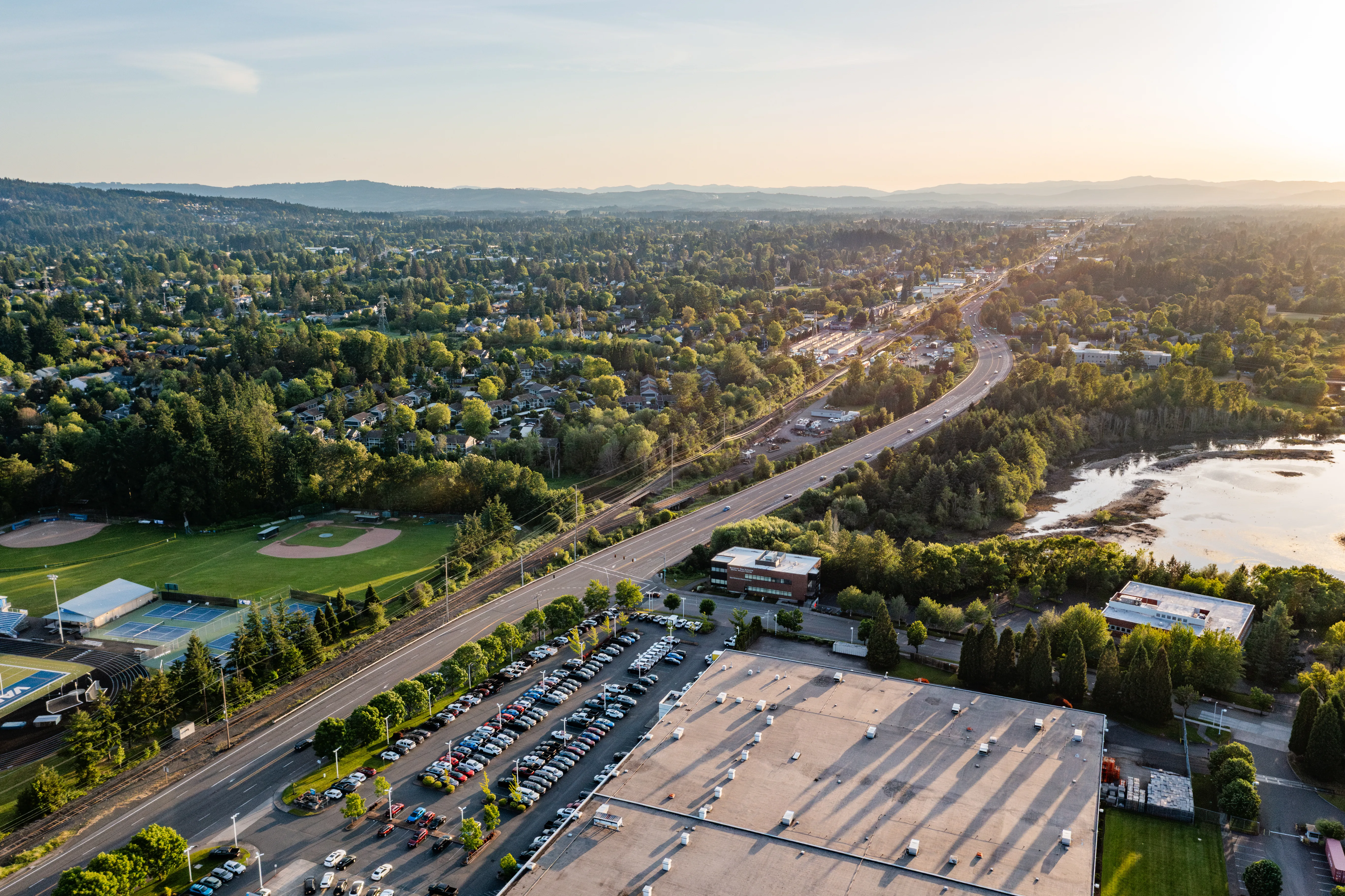
Sherwood specifically offers something that most California markets don't at any price point: a manageable small-city pace with genuine community roots. The Robin Hood Festival draws the whole city together every August. Old Town Sherwood has the kind of walkable, locally-owned character that neighborhoods in San Jose or the Inland Empire would charge a premium to approximate. After a year, most transplants describe Sherwood as quieter, slower, and — if they leaned into it — more livable than what they left.
If you want to see how Sherwood compares directly to the city you're leaving, use the tool below — it covers the 120 largest California cities with current housing and tax data.
Home prices: Redfin median sale data, Q1–Q2 2026. Select your city to compare.
Ready to talk through what your specific California equity could do in Sherwood? Todd can model your exact scenario in a single call.
Assuming the whole city is uniform. Sherwood's neighborhoods have real character differences that matter for daily life and resale. Old Town Sherwood is walkable and charming in a way that neighborhoods on the city's outer edges simply aren't. Parrett Mountain sits at higher elevation with rural lot sizes and a completely different feel than the planned subdivisions near Tualatin South. Buyers who make an offer sight-unseen based on the city name alone — without spending a day walking these different areas — sometimes end up in a neighborhood that doesn't fit their lifestyle.
Underestimating radon testing. Oregon, and Washington County specifically, sits in an elevated radon zone. California buyers frequently have no experience with radon as a standard home inspection item and are caught off guard when their inspector flags it. Radon mitigation systems are common, inexpensive, and not a reason to walk away from a home — but arriving at the inspection without knowing to specifically request radon testing is a mistake.
Not accounting for winter commuting. Sherwood's 30-minute commute to Portland is real and manageable — in October. By January, Highway 99W and the Tualatin Valley Highway carry congestion that stretches commute times, and occasional ice or snow on the Chehalem Mountains corridor toward Newberg can create real delays. California drivers frequently underestimate how quickly conditions change on Pacific Northwest roads in winter and arrive without the tire situation or the driving habits that locals develop over years.
Expecting the California tech campus commute experience. Many California transplants arrive with the assumption that Sherwood's proximity to Lam Research and Nike's Beaverton campus means the drive feels like Silicon Valley campuses with good traffic management. The Tualatin Valley corridor at peak hours during the work week is not a frustrating crawl, but it is not a campus loop either. Buyers who specifically move to Sherwood for the Lam Research proximity will find it genuinely close and convenient — but buyers expecting the whole region to feel compact in the California tech corridor sense tend to recalibrate after the first few weeks.
Bay Area sellers arriving with $1.2 million or more in equity face a decision that most buyers never get to make: whether to carry a mortgage at all. At Sherwood's $720,000 median, an all-cash purchase eliminates rate sensitivity entirely and positions the buyer competitively in any bidding situation. For buyers who prefer to retain liquidity, a 50–60% down payment on a home priced above $720,000 keeps the loan in conventional territory — Sherwood's pricing range mostly avoids jumbo territory for buyers putting substantial equity to work. If the California property was held as an investment, a 1031 exchange deserves a direct conversation before closing — see the Sherwood 1031 Exchange guide for the mechanics.
Southern California sellers typically arrive with enough equity for a 30–50% down payment on a Sherwood home, landing squarely in conventional mortgage territory with strong approval profiles. This buyer rarely needs creative financing — the challenge is more often timing the California sale and Oregon purchase to avoid a gap or a bridge loan. A local lender with experience in simultaneous close transactions is more valuable here than simply chasing the lowest rate.
Sacramento and Inland Empire buyers sit in a tighter position but a workable one. A $400,000 equity seller putting 50% down on a $650,000 Sherwood home carries a $325,000 conventional mortgage — a manageable monthly payment in the range of $1,900–$2,200 depending on rate. OHCS programs and Oregon's various down payment assistance options are generally aimed at lower purchase prices, but buyers landing below $500,000 may qualify for specific programs worth exploring before defaulting to a conventional route.
Local Expert Takeaway: The single thing California buyers most consistently underestimate about Sherwood is how quickly the market acts on well-priced homes. Arriving without a lender letter, or assuming you have time to "look around for a month," commonly results in losing the first two or three homes you want. Get fully underwritten — not just pre-qualified — before your first open house, and have your California equity documented clearly so your lender can structure a bridge or contingency-removal scenario on day one if needed.
Is moving from California to Sherwood worth it?
For California households paying more than $3,500 per month in housing costs, with at least $400,000 in home equity, and the flexibility to adapt to a Pacific Northwest climate, Sherwood makes a strong financial case. The income tax difference is smaller than most people expect, but the combination of zero sales tax, significantly lower housing costs, Sherwood's A-rated school district, and a 30-minute Portland commute adds up to a meaningfully different financial life within the first two to three years.
How much cheaper is housing in Sherwood vs. California?
Against the Bay Area, Sherwood's $720,000 median is roughly 50–65% below comparable single-family home prices in San Jose or the Peninsula. Against Southern California markets like Irvine or La Jolla, the gap is 30–50%. Sacramento is the closest comparison — Sherwood's median runs approximately 30–40% higher than Sacramento's, meaning Sacramento sellers see a smaller relative gain but still trade up in school quality, climate access to Portland's economy, and long-term tax structure.
What do I need to know about moving from California to Oregon?
Oregon requires a state income tax return, vehicle registration within 30 days of establishing residency, and an Oregon driver's license within 30 days. Radon testing should be included in any home inspection — it's not optional, it's standard practice here. Budget for winter-appropriate gear and tires if you haven't owned them before. And give yourself a full calendar year before judging the winters — most California transplants who leave do so in February or March after their first gray stretch; most who stay describe year two as the point where Sherwood finally felt like home.
Browse current listings updated daily — filtered for Sherwood buyers by Elizabeth Davidson, your local expert.
Powered by Elizabeth Davidson · Cascade Hasson Sotheby's International Realty · 503-939-2035
Explore the full Sherwood series: The Ultimate Sherwood Relocation Guide · Is Sherwood Safe? · Cost of Living in Sherwood · Best Neighborhoods in Sherwood · Sherwood Schools & Family Life · Sherwood Youth Sports · Sherwood Parks & Recreation · Retiring in Sherwood · 1031 Tax-Deferred Exchange in Sherwood · Sherwood First-Time Homebuyers Guide · · Moving to Sherwood from California · The Sherwood Realtor's Perspective · Top 10 Questions a Realtor Gets About Sherwood
Tell us what you need help with and we'll connect you with local resources.

About the Author
Todd Davidson is the founder of Living in Oregon and Living in Washington, where he publishes in-depth city guides, neighborhood resources, and local market insights covering more than 180 communities across the Pacific Northwest. While his background is in home financing and real estate, he created these digital platforms to help families research and compare regions before making a move.