
Mt Hood / Columbia Gorge · Oregon
Living in Sandy: The Ultimate Relocation Guide (2026)
Maybe your company just shifted to a remote-first model and you've been staring at a Portland apartment lease wondering why you're paying so much to sit in traffic twice a week. Maybe someone at a family gathering mentioned Sandy and you filed it away — the town near Mount Hood, right? — and then looked up the median home price and did a double take. Or maybe you've already driven out on Highway 26 past the Safeway and Joe's Donuts and felt something that surprised you: this feels like an actual town, not just a sprawl of subdivisions held together by a Target.
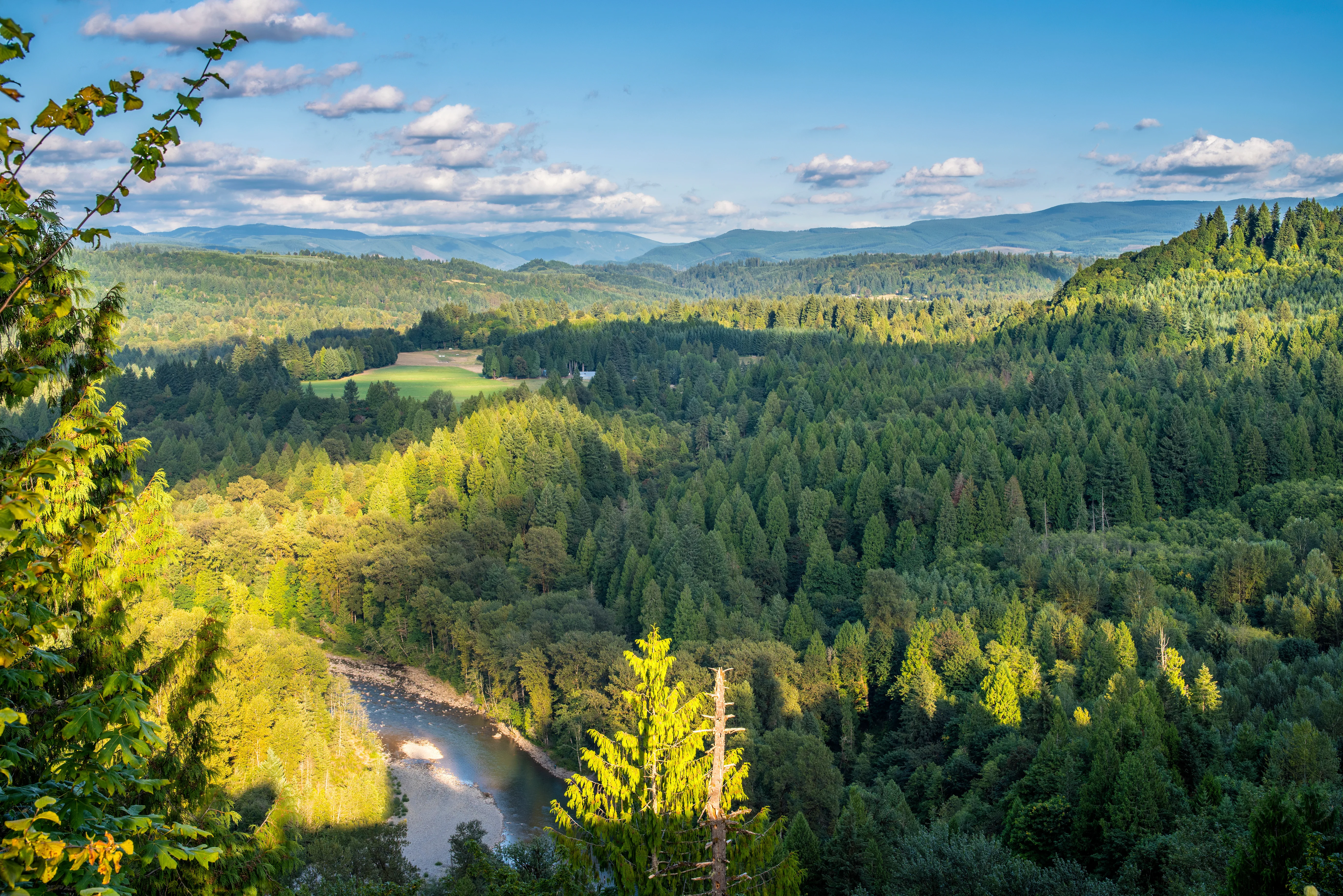
Sandy occupies a peculiar and appealing position in the Oregon real estate landscape. It sits 28 miles east of Portland on U.S. 26 — close enough to the metro for a workday commute, far enough to feel genuinely removed from it. The Cascade foothills begin here, Mount Hood frames the eastern skyline, and the Sandy River runs through the surrounding terrain in a way that shapes recreation, real estate, and daily life in ways that flat suburban alternatives simply can't replicate. At roughly 13,000 residents spread across just 2.63 square miles, Sandy has actual population density, a real commercial core, and a community identity that doesn't depend on Portland to tell it who it is.
What this guide will help you figure out is whether that combination — below-Portland pricing, real small-town character, a school district punching well above its weight, and one of the most unusual civic internet utilities in the Pacific Northwest — actually fits your life. The commute math is real, the tradeoffs are real, and so are the upsides. Read all of it before you make an offer.

Not every buyer is the right fit for Sandy, and the most useful thing a relocation guide can do is say that plainly. The table below cuts through the noise.
| Best For | Why |
|---|---|
| Portland commuters (3–4 days/week) | 42-minute average drive west on Hwy 26; viable hybrid schedule without downtown pricing |
| Remote workers | SandyNet gigabit fiber reaches 100% of city limits — faster, cheaper, and more reliable than most Portland ISPs |
| Families with school-age children | Oregon Trail School District ranks among Oregon's top 15; Sandy High graduation rate well above state average |
| First-time buyers | Median sold price of $542,000 sits below most Portland metro suburbs at equivalent freeway distance |
| Outdoor enthusiasts | Gateway position to Mount Hood — skiing, hiking, and river access within 20–30 minutes |
| Buyers seeking small-town identity | 13,000 residents, a real downtown, community events, and a civic culture that isn't defined by Portland |
Living in Sandy means waking up in a town that has a clear geographic identity and a daily rhythm that doesn't require a car trip to Portland to feel complete. The commercial spine runs along Highway 26 — called Proctor Boulevard through the downtown corridor — and within a few blocks you'll find the grocery, the hardware store, medical offices, and the kind of locally owned businesses that anchor community life in a way strip malls don't. Jonsrud Viewpoint, perched above the Sandy River valley at SE Firwood Road, offers a view of Mount Hood and the valley floor that locals take for granted and newcomers photograph immediately.
The commute reality deserves honest treatment. The 42-minute average to downtown Portland assumes reasonable traffic conditions on Hwy 26, and that assumption holds about four mornings out of five. What it doesn't account for is the Hwy 26 bottleneck between Sandy and the I-205 interchange — westbound in the 7–8:15 a.m. window and eastbound between 5 and 6:30 p.m., that corridor thickens. The compensating variable is that Sandy's mean travel time to work is actually reported around 26 minutes, which suggests a meaningful portion of residents work locally or in the mountain recreation corridor rather than commuting all the way to Portland.
The community vibe is harder to quantify but easy to observe. Sandy has a 63% family-with-children rate among households and a median age of 34.8 — these are young, kid-centric demographics. The town center reflects it: the Sandy Community Campus hosts events through most of the year, the downtown corridor has a farmers market feel in summer, and the school district's presence in local civic life is visible in a way it isn't in bedroom communities twice Sandy's size. What surprises most people after six months here is how much they actually know their neighbors — not in a forced way, but because the town is small enough that routines overlap.
The one geographic reality worth naming: Sandy is not Portland's eastern suburb the way Beaverton is its western one. There is no MAX line, no light rail alternative, no park-and-ride that meaningfully shortcuts the Hwy 26 drive. If your life requires daily trips downtown and flexibility to do them at non-standard hours, that dependency on a single highway corridor is the honest friction in the Sandy equation.
The school district is the most underreported asset in the Sandy real estate story. Oregon Trail School District 46 serves about 4,300 students across 10 schools, holds a School Digger ranking among Oregon's top 15 districts, and produced the 2024 Oregon State Teacher of the Year. Sandy High School's CTE programs are particularly notable — eight programs of study, a middle college track that allows students to earn up to 72 college credits alongside their diploma, and vocational training in machining and welding that meets employer skill standards at rates among the highest in Clackamas County. A 96.3% graduation rate in 2025, against a state average of 83%, is not a rounding error — it's a structural indicator of a district that takes outcomes seriously.
The SandyNet fiber network is the kind of civic infrastructure that other cities commission studies about and never build. Sandy built it. The city-owned utility brings gigabit-speed symmetric internet to every address within city limits, with a 300 Mbps symmetrical plan available at $39.95/month and a full gigabit tier that undercuts most metro ISPs on both price and performance. For remote workers, self-employed residents, or households with multiple simultaneous users, this is not a minor amenity — it's a monthly budget line that frequently saves $50–80 compared to cable alternatives in Portland.
The outdoor access is the other factor that keeps people here well past their expected departure date. Mount Hood ski areas — Timberline Lodge, Mt. Hood Meadows, Mt. Hood Skibowl — are 30–45 minutes from Sandy's downtown. The Sandy River and its tributaries offer fishing, swimming, and trail access in ways that require a day trip from Portland but are routine errands from Sandy. Meinig Memorial Park, situated along the Sandy River corridor at the east end of town, provides a genuine recreational anchor within the city itself.
Finally, the affordability narrative holds up under scrutiny. A $542,000 median sold price places Sandy below most comparable-distance suburbs on the west side of Portland — communities along the Hwy 217 or Hwy 99W corridors with equivalent square footage and lot size typically run $100,000–$150,000 higher. For first-time buyers and families who've been outbid in Gresham or priced out of Lake Oswego entirely, Sandy represents a legitimate entry point into homeownership with meaningful upside, given that year-over-year appreciation recently cleared 16%.

Looking to buy in Sandy? Estimate your payment.
Enter your numbers to see an estimated monthly mortgage payment.
Estimate only. Excludes HOA fees and mortgage insurance.
The single-highway dependency is worth naming plainly. Every westbound commuter in Sandy is on Hwy 26, and when that road has an accident, a slide, or a construction closure — which happens — there is no practical alternate route that doesn't add 20–30 minutes. That's a structural risk that suburban communities with freeway grid access don't face. Buyers who prioritize schedule flexibility or work irregular hours should sit with this reality before committing.
Sandy's commercial footprint is limited by design and by size. The grocery situation is adequate — Safeway anchors the retail corridor — but the specialty retail, restaurant variety, and entertainment options that Portland buyers expect as baseline suburban amenity require a drive west. There is no regional mall, no AMC multiplex, no expanding restaurant row. Sandy is growing, and the commercial base is improving, but buyers who downsize from Hillsboro or Beaverton-adjacent neighborhoods sometimes find the adjustment to a genuinely small-town retail environment takes longer than expected.
The poverty rate in Sandy sits at roughly 8%, which is below state and national averages and reflects generally strong household economics. The school district's free and reduced-price lunch rate of 34.4% indicates that the community's economic range is broader than the median income figure alone suggests — something that shapes classroom demographics and district funding conversations in ways worth understanding before enrolling kids.
Why some people leave Sandy comes down to one of two things: the commute eventually wins, or their career or social life migrates them back toward Portland and the friction of the drive shifts from manageable to chronic. Buyers who leave Sandy rarely cite the town itself as the problem — they cite the highway.
Sandy Heights occupies the elevated terrain on the north side of town, offering sight lines toward Mount Hood and generally newer construction than the historic core. Homes here run in the $500,000–$580,000 range on larger lots, and the neighborhood draws families with school-age children who want move-in-ready homes without the downtown noise. The honest tradeoff is that walkability is minimal — you're car-dependent for everything except the view.
Best for: Families seeking newer construction and mountain views without a premium price tag.
Sandy Bluff is one of the two neighborhoods that generate the most buyer attention on Redfin listings, and it earns that attention. Positioned on the bluffs above the Sandy River corridor, it offers some of the most topographically interesting lots in the city, with homes priced generally in the $530,000–$620,000 range depending on view and vintage. Buyers should know that the terrain can mean longer driveways and steeper access — a non-issue in summer, occasionally relevant in an ice event.
Best for: Buyers who prioritize natural setting and don't mind trading flat lots for character.
Bornstedt Village is Sandy's most recognizable planned neighborhood development, centered near Bornstedt Park in the southeast quadrant of the city. It's a newer, walkable-within-the-neighborhood community with consistent architectural standards and families with young children as the dominant demographic. Prices in Bornstedt Village cluster tightly — the $520,000–$570,000 range covers most of the single-family inventory — and the park access makes it one of the most livable day-to-day locations in Sandy.
Best for: Families with young children who want a cohesive neighborhood feel and park access.
Cascadia Village sits in the western portion of Sandy and represents a more modestly priced entry point compared to Sandy Bluff or Bornstedt. Inventory here tends toward slightly older construction at lower price points — buyers can often find entry-level listings in the $470,000–$510,000 range, which makes it one of the more accessible footholds in a market where the median has been climbing. The neighborhood is quiet and residential without distinctive architectural character.
Best for: First-time buyers and value-oriented buyers who prioritize price-per-square-foot over neighborhood prestige.
Cedar Ridge takes its name partly from Cedar Ridge Middle School, which anchors the broader district identity in this part of town. The neighborhood itself is mid-range in both price and age, with homes typically in the $510,000–$570,000 range and a demographic mix that leans toward established families rather than first-time buyers. School proximity is the obvious draw — Cedar Ridge Middle earned U.S. News recognition as one of Oregon's top middle schools, and its presence within easy reach matters to buyers with middle-schoolers.
Best for: Families with middle school-age children who want walkable school access.
Stonebrook is a quietly popular neighborhood that flies under the radar compared to Sandy Bluff and Bornstedt, but offers solid value for buyers who've done their homework. The housing stock is primarily single-family homes in the $505,000–$555,000 range, with lot sizes that give residents room to breathe. It's a neighborhood where people park in their garages and know the families on their street — unremarkable in the best possible way.
Best for: Buyers who want a solid residential neighborhood without paying a premium for a name.
Downtown Sandy — the corridor along Proctor Boulevard — is the city's commercial and community heart, and the residential addresses immediately adjacent to it have a different character than the subdivisions farther out. Living downtown in Sandy means walkable access to the Safeway, local restaurants, the farmers market, and civic facilities, at a slight price premium for that convenience. Homes and smaller multi-family properties in this area run across a broad range depending on condition, but the proximity to services is the real asset.
Best for: Buyers who want the most walkable daily life Sandy can offer and are comfortable with less yard space.
Pioneer Highlands sits at the higher elevations on Sandy's periphery, where lot sizes increase and the mountain views become more expansive. It's an area that appeals to buyers who've already found Sandy appealing and want to trade some commute convenience for space and scenery. Pricing in Pioneer Highlands trends toward the upper end of Sandy's range — $560,000–$620,000 and above for larger parcels — and the neighborhood skews toward established households rather than first-time buyers.
Best for: Buyers upgrading within Sandy who want larger lots and elevated views.
| City | Best For | Median Home Price | Commute to Portland | Vibe |
|---|---|---|---|---|
| Sandy | Outdoor access + school quality + SandyNet remote work | $542,000 | ~42 min | Small-town, family-oriented, mountain gateway |
| Gresham | Affordability, MAX light rail access | ~$430,000 | ~25–30 min | Urban suburban, transit-dependent |
| Troutdale | Columbia Gorge access, shorter commute | ~$455,000 | ~25 min | River-town suburban, less mountain feel |
| Boring | Maximum rural privacy near Sandy | ~$520,000 | ~45 min | Rural residential, minimal services |
| Estacada | Deep rural character, Clackamas River | ~$430,000 | ~50 min | Small-town rural, very limited retail |
| Welches / Brightwood | Year-round mountain living | ~$480,000–$560,000 | ~55–65 min | Resort corridor, seasonal population |
| Metric | Sandy, OR (2026) |
|---|---|
| Population | ~13,000–13,400 |
| Median Sold Home Price | $542,000 (March 2026) |
| Median Household Income | $108,984 |
| Property Tax Rate | ~0.80% |
| Cost of Living Index | 124 (24% above national avg) |
| Commute to Portland | ~42 minutes via Hwy 26 |
| Violent Crime per 1,000 | 0.6 |
| Property Crime per 1,000 | 15.2 |
| School District | Oregon Trail SD 46 |
| High School Graduation Rate | 96.3% (2025) |
| Internet | SandyNet municipal fiber, 100% city coverage |
| Median Age | 34.8 years |
Joe's Donuts is not optional. The red-and-white shop at 39230 Proctor Boulevard has been a Highway 26 institution for decades, drawing lines that extend out the door on weekend mornings from people making the drive to Mount Hood. For Sandy residents, the ritual of picking up a box before a ski day or a Saturday morning hike is less a tourist activity and more a neighborhood habit. Moving here and skipping it for the first three months would be a legitimate social miss.
The Sandy Mountain Festival is the civic calendar anchor. Held in August at the Sandy Community Campus and downtown corridor, the multi-day event brings together live music, a parade, vendors, and the kind of community mass participation that reminds newcomers why they left the city. It's been running long enough that most families have photos that span a decade of kids in front of the same booth. Verify the current year's dates through the City of Sandy's official calendar, but the event's trajectory has been consistently active.
Jonsrud Viewpoint is where Sandy's soul lives. Technically a 3.5-acre park maintained by the City of Sandy at the end of SE Viewpoint Terrace off Firwood Road, Jonsrud offers a panoramic view of the Sandy River valley and Mount Hood that costs nothing and requires zero hiking. Locals bring out-of-town guests there before anywhere else. If you buy in Sandy and haven't been to Jonsrud at golden hour, you haven't properly moved in yet.
What I would not do: I would not buy in the Hwy 26 commercial corridor — the stretch immediately adjacent to the highway, west of the downtown core — without driving it at rush hour first. The noise, truck traffic, and commercial adjacency compress what looks like a reasonable price into a property that has real resale liability. Sandy's residential streets one or two blocks off that corridor feel like an entirely different town. The price gap between highway-adjacent and interior residential can be $30,000–$50,000, and it's almost always worth paying.
Local Expert Takeaway: Sandy's strongest value proposition in 2026 is the combination of a top-tier school district, municipally owned gigabit fiber, and a median sold price that still sits below comparable-distance west-side suburbs — but that gap is narrowing. If you're a remote worker or hybrid commuter with kids in the 5–12 age range, Sandy's fundamentals align more cleanly than almost anywhere else at this price point in Clackamas County. Prioritize neighborhoods like Sandy Bluff and Bornstedt Village for best long-term resale positioning, and avoid the Hwy 26 commercial adjacencies unless you've stress-tested the noise at 7 a.m. on a Tuesday.
✅ Sandy's school district and municipal fiber are genuinely differentiated assets — the graduation rate and SandyNet coverage set it apart from comparably priced communities in the region.
⚠️ Highway 26 is the single point of failure for Sandy commuters — if your job requires daily downtown Portland presence or schedule flexibility, simulate the commute before you commit.
📍 The median sold price of $542,000 is moving — up 16.2% year-over-year as of March 2026, with entry-level listings starting around $470,000 for older construction. Waiting-and-watching in this market has carried a cost.
Is Sandy a good place for families with children?
Sandy is one of the more family-oriented communities in eastern Clackamas County, and the school district backs that up with outcomes rather than just amenities. Oregon Trail School District's 96.3% graduation rate sits more than 13 points above the Oregon state average, Cedar Ridge Middle School holds U.S. News recognition among the top 30% of Oregon middle schools, and the district's CTE programs offer vocational and college-credit pathways that comparable suburban districts don't match. Add in the outdoor access, manageable crime levels, and a median age of 34.8, and the demographic story is clearly family-centric.
What is Sandy's crime rate?
Sandy's violent crime rate sits at approximately 0.6 incidents per 1,000 residents — well below both national and Oregon state averages. Property crime runs at about 15.2 per 1,000, which is worth noting for standard precautions but doesn't register as a defining concern for most buyers moving from Portland or suburban Clackamas County communities. Sandy's small-town scale and owner-occupancy rate of roughly 73% tend to support neighborhood stability in ways that larger cities don't replicate.
How does Sandy compare to Gresham for a Portland commuter?
Gresham wins on commute time and MAX access — that's the honest answer. If you're in a downtown Portland office five days a week and don't want to depend on a car, Gresham's light rail connection is a structural advantage Sandy can't match, and Gresham's median home price runs roughly $100,000–$110,000 below Sandy's. Sandy wins on school district quality, outdoor access, small-town character, and the SandyNet fiber infrastructure. The decision usually comes down to how much your daily commute pattern matters versus how much you weight school quality and the mountain-adjacent lifestyle.
Explore the full Sandy series: The Ultimate Sandy Relocation Guide · Is Sandy Safe? · Cost of Living in Sandy · Best Neighborhoods in Sandy · Sandy Schools & Family Life · Sandy Youth Sports · Sandy Parks & Recreation · Retiring in Sandy · 1031 Tax-Deferred Exchange in Sandy · Sandy First-Time Homebuyers Guide · · Moving to Sandy from California
Tell us what you need help with and we'll connect you with local resources.

About the Author
Todd Davidson is the founder of Living in Oregon and Living in Washington, where he publishes in-depth city guides, neighborhood resources, and local market insights covering more than 180 communities across the Pacific Northwest. While his background is in home financing and real estate, he created these digital platforms to help families research and compare regions before making a move.