
Mt Hood / Columbia Gorge · Oregon
Best Neighborhoods in Sandy: Where to Buy or Rent (2026)
Sandy doesn't punish buyers for making a quick decision — it rewards buyers who slow down. At 3.7 square miles and roughly 13,000 residents, the city looks manageable on a map. But which side of Highway 26 you end up on, whether you're backing up to a ravine or a neighbor's fence, and whether your street has a Mount Hood sightline or a highway noise problem — these details shape daily life in ways that no Zillow listing will tell you.
The city splits roughly into two zones: the elevated bluff areas to the south and west, where terrain creates natural separation between subdivisions and where many newer builds sit, and the flatter commercial corridor along Highway 26 and into downtown, where proximity to services is real but so is the noise. Bornstedt Village and Cascadia Village anchor the family-friendly middle ground near town. Sandy Heights and Cedar Ridge appeal to buyers who want established neighborhoods with mature trees and a sense of permanence.
This guide covers the eight neighborhoods worth your serious attention, where renters should focus their search, and the mistakes relocating buyers consistently make when they treat Sandy as a single uniform market.

| Neighborhood | Best For | Price Range | Vibe |
|---|---|---|---|
| Sandy Heights | View buyers, established feel | $540K–$680K | Elevated, residential, Mt. Hood views |
| Cascadia Village | First-time buyers, walkability | $345K–$420K | Townhome community, close to downtown |
| Cedar Ridge | Families with kids, quiet streets | $500K–$620K | Quiet suburban, parks nearby |
| Bornstedt Village | Families, school proximity | $510K–$640K | Planned community, larger lots |
| Stonebrook | New construction seekers | $520K–$650K | Clean suburban, newer builds |
| Meadow Ridge | Ranch-style buyers, newer homes | $490K–$610K | Newer development, open feel |
| Pioneer Highlands | Mid-range buyers, established streets | $480K–$590K | Older established, varied housing stock |
| Sandy Bluff / Bluff Rd | Buyers who want separation and views | $530K–$670K | Elevated, quieter, some HOA |
| Downtown Sandy | Renters, walkability seekers | $430K–$540K | Compact, commercial mix, mixed-use |
| Champion Village | Budget-conscious buyers, entry-level | $380K–$470K | Affordable, modest lots, functional |
| Buyer Type | Best Neighborhood | Why |
|---|---|---|
| First-time buyer | Cascadia Village | Entry-level townhomes starting around $345K, walkable to downtown corridor |
| Luxury buyer | Sandy Heights or Sandy Bluff | Highest price ceilings, best Hood views, larger lots |
| Walkability seeker | Downtown Sandy / Cascadia Village | Closest on-foot access to shops, Joe's Donuts, Meinig Park |
| Families with kids | Bornstedt Village | Larger homes, near schools and parks, quieter streets |
| Commuters to Portland | Cedar Ridge or Stonebrook | Good Highway 26 access, residential quiet on return |
| Large lot buyers | Pioneer Highlands | More land per dollar than newer subdivisions |
| Renters | Cascadia Village area / Downtown Sandy | Best apartment and townhome rental inventory |
Sandy Heights sits on elevated ground in the northwest section of the city, and the neighborhood's biggest selling point announces itself from the end of Sandy Heights Street: a clean sightline to Mount Hood on any clear Pacific Northwest morning. The housing stock runs from renovated mid-century ranches to newer two-story builds, with most homes in the $540K–$680K range. The catch is that this neighborhood's desirability has pushed prices to the upper edge of Sandy's market, meaning buyers get the view but also absorb the premium — first-time buyers working with tighter budgets will likely need to look elsewhere.
Best for: Buyers prioritizing Hood views and established residential character who have flexibility at the upper end of Sandy's price range.
Cascadia Village is Sandy's most walkable neighborhood in practical terms — a three-bedroom townhome here puts you within a short walk of the downtown corridor, the splash pad area, and Joe's Donuts, Sandy's most famous institution at the corner of Highway 26 and Proctor Boulevard. Attached townhomes in this area start around $345,000–$420,000, making it the clearest entry point into Sandy OR real estate for buyers who don't want to stretch into the mid-$500Ks. The trade-off is density — you're sharing walls, HOA rules apply in most sections, and lot privacy is limited compared to what the same budget would get you in Pioneer Highlands.
Best for: First-time buyers, downsizers, and buyers who want walkable access to downtown Sandy without a six-figure down payment.
Cedar Ridge delivers what many families moving to Sandy are actually searching for: quiet residential streets, a neighborhood park with a playground and picnic space, and a setting far enough from Highway 26 that traffic noise isn't part of your evening. Homes here run in the $500K–$620K range, with a mix of renovated older builds and some newer construction. The proximity to Sandy Cinema and neighborhood services makes it practical for daily life, but the same Highway 26 that provides convenient access to Portland also creates congestion during peak hours — Cedar Ridge buyers heading west in the morning will feel that commute reality on the US-26 corridor.
Best for: Families with school-age children who want a calm street environment and park access without venturing into Sandy's highest price tiers.
Bornstedt Village is the neighborhood that comes up most often when families with kids ask local agents where to focus. Larger lot sizes, proximity to Bornstedt Park, and a planned community structure with HOA give it a tidier feel than older Sandy neighborhoods. Homes typically list in the $510K–$640K range. What buyers should understand before committing is that the HOA in the Bluff at Bornstedt subdivision adds a monthly cost that doesn't show up in the listing price, and access via Bornstedt Road means one more turn off the main corridor — not a dealbreaker, but worth mapping your commute route before assuming it flows seamlessly.
Best for: Families wanting larger homes with park access, HOA maintenance, and a neighborhood that reads as polished and intentional.
Stonebrook is Sandy's clearest answer to buyers who've toured older stock and want something built in this century. The neighborhood runs mostly ranch-style and two-story single-family homes, newer construction with open floor plans and updated kitchens that don't require immediate renovation budgets. Prices sit in the $520K–$650K range. The downside typical of newer suburban development applies here: the landscaping is young, the trees haven't filled in, and the neighborhood has a work-in-progress quality that takes years to soften into something that feels settled.
Best for: Buyers who want newer construction, clean systems, and no renovation surprises, and who can accept that mature landscaping is still a few years away.
Meadow Ridge shares DNA with Stonebrook — newer single-family development, a mix of ranch and two-story homes, and prices in the $490K–$610K range. What differentiates it is the slightly more open, pastoral feel created by its positioning on flatter ground away from Sandy's bluff terrain. Meadow Ridge Park provides the neighborhood's main gathering point. The practical downside is that this openness also means less natural screening from neighboring properties — buyers coming from dense Portland who want a sense of rural separation will find Meadow Ridge feels more suburban than the topography of Sandy's elevated areas.
Best for: Buyers who prefer flat terrain, newer builds, and access to a neighborhood park without the premium of the bluff-area neighborhoods.
Pioneer Highlands is the neighborhood where Sandy's square-footage-per-dollar calculation tilts most favorably. Lots run larger than what you'll find in Stonebrook or Meadow Ridge, and the established character means mature trees, settled landscaping, and neighbors who have lived on the street for a decade or more. Prices in the $480K–$590K range reflect the older housing stock — buyers should budget for potential updates to kitchens, bathrooms, and mechanical systems that newer construction doesn't require. For buyers willing to do that math honestly, Pioneer Highlands delivers more land and more neighborhood character per dollar than most of Sandy's newer subdivisions.
Best for: Large-lot buyers and buyers who prefer established neighborhood character over new construction, who are comfortable with renovation trade-offs.
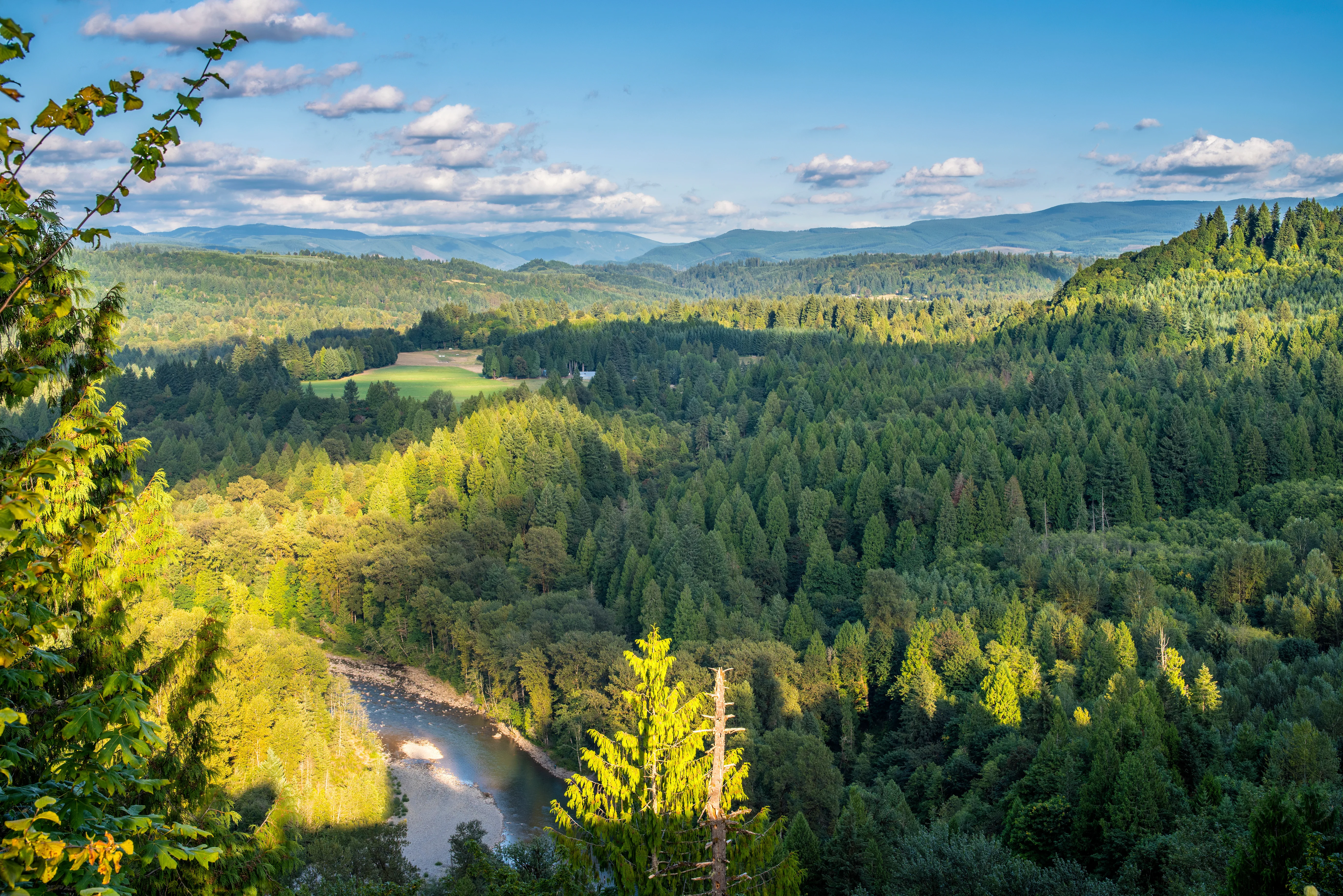
Sandy Bluff and the Bluff Road corridor represent Sandy's most elevated residential terrain, with homes positioned to take advantage of territorial views across the Sandy River valley. The "Bluff at Bornstedt Village" platted subdivision sits within this zone, with HOA oversight and access typically via the Cascadia Village Drive connection. Homes here run in the $530K–$670K range. The elevation and HOA structure create genuine separation from the density of the downtown core, but buyers should be clear-eyed about the access: when Highway 26 is moving slowly due to ski season traffic or an incident, getting on and off the bluff area adds minutes to an already 42-minute Portland commute.
Best for: Buyers who prioritize views, neighborhood separation, and HOA-maintained standards, and whose commute timing gives them flexibility around peak ski-season corridor congestion.

Looking to buy in Sandy? Estimate your payment.
Enter your numbers to see an estimated monthly mortgage payment.
Estimate only. Excludes HOA fees and mortgage insurance.
Assuming Highway 26 traffic is consistent year-round. Sandy sits at the western gateway to the Mount Hood Recreation Area, and that designation is not just a marketing phrase — it has real traffic consequences. Friday evenings from November through March, Highway 26 through Sandy can back up significantly as weekend skiers head to Timberline and Mt. Hood Meadows. Buyers who commute from Portland should drive the route on a Friday evening in January before committing to a neighborhood. Streets that feed directly onto Highway 26, particularly near the Proctor Boulevard intersection, absorb the most spillover.
Buying on square footage without checking lot topography. Sandy's terrain is genuinely varied for a city of its size. Homes on the bluff terrain south of downtown can sit on steep-sloped lots that look impressive on satellite view but limit usable yard space. Two homes at the same price point in Stonebrook and Sandy Heights might offer very different outdoor livability — and the Zillow square footage number doesn't capture any of that. Walk the lot boundary on a showing, especially for anything marketed with "views."
Underestimating the difference between townhome and single-family living in Cascadia Village. Buyers who tour Cascadia Village townhomes sometimes don't fully reckon with the HOA restrictions on exterior modifications, parking arrangements, and shared-wall noise realities until they're past the inspection period. Cascadia Village is genuinely the best entry point into Sandy OR real estate at current prices, but first-time buyers moving from apartment living should spend time in the neighborhood on a weekend afternoon before assuming it matches what a single-family home on Pioneer Highlands would feel like.
Forgetting to map the school boundary, not just the school district. Oregon Trail School District covers the city, but not every home in Sandy falls into the same elementary school attendance zone. Families prioritizing a specific school — Sandy Grade School versus an outlying feeder — should verify the attendance boundary before assuming district membership is sufficient. The difference between two streets a few blocks apart can mean different elementary assignment, and that detail tends to matter far more to families after move-in than it seemed to during the search.
| Area | Ideal For | Typical Rent Range | Trade-off |
|---|---|---|---|
| Cascadia Village | Singles, couples, families | $1,400–$1,900/mo (townhomes) | Shared walls, HOA rules |
| Downtown Sandy corridor | Walkability seekers, young renters | $1,200–$1,600/mo (apartments) | Street noise, limited parking |
| Bornstedt Village area | Families, long-term renters | $1,700–$2,100/mo (single-family) | Less inventory, moves fast |
| Cedar Ridge / Meadow Ridge | Families, suburban preference | $1,600–$2,000/mo (single-family) | Scattered inventory, competitive |
| Pioneer Highlands | Budget-conscious, large household | $1,500–$1,900/mo (older SFR) | Older systems, less move-in ready |
Local Expert Takeaway: The single most important geographic decision in Sandy is whether you're buying on the bluff terrain or on the flatlands near the Highway 26 corridor. Bluff-area neighborhoods like Sandy Heights and Sandy Bluff offer the views and separation buyers come here for, but they add real commute friction during ski season — a detail that catches newcomers off guard by February. If your timeline is flexible, tour Bornstedt Village and Cedar Ridge first: they sit in Sandy's sweet spot between highway access and neighborhood quiet, typically in the $510K–$640K range, and they're where buyers with kids tend to land when they stay longer than five years.
What are the best neighborhoods in Sandy, Oregon for families?
Bornstedt Village and Cedar Ridge are the two neighborhoods local agents most consistently mention for households with school-age children. Both offer larger homes in the $500K–$640K range, proximity to parks, and streets that feel removed from the Highway 26 commercial corridor. Stonebrook and Meadow Ridge are also worth considering for families who want newer construction with lower maintenance demands.
Is Sandy, Oregon a good place to buy a home in 2026?
Sandy's housing market is competitive relative to its size, with a median sold price of $542,000 and homes averaging 70–76 days on market citywide. Well-positioned homes in Sandy Heights and Bornstedt Village move considerably faster than that average. For buyers priced out of Gresham or Troutdale, Sandy offers comparable school district quality and a shorter gap between list and sale price than much of the Portland metro east corridor.
How does living in Sandy Oregon compare to nearby Gresham or Boring?
Sandy sits roughly 12 miles east of Gresham along Highway 26, which adds approximately 15–20 minutes to a Portland commute but delivers a noticeably quieter, more small-town character with direct access to the Mount Hood Recreation Area. Boring, immediately to the north, has even lower density and fewer services. Buyers who want Sandy's combination of community services, a functioning downtown, Joe's Donuts as a genuine Friday morning institution, and the Mount Hood gateway location without fully committing to rural living will find the trade-offs favor Sandy over both alternatives.
Explore the full Sandy series: The Ultimate Sandy Relocation Guide · Is Sandy Safe? · Cost of Living in Sandy · Best Neighborhoods in Sandy · Sandy Schools & Family Life · Sandy Youth Sports · Sandy Parks & Recreation · Retiring in Sandy · 1031 Tax-Deferred Exchange in Sandy · Sandy First-Time Homebuyers Guide · · Moving to Sandy from California
Tell us what you need help with and we'll connect you with local resources.

About the Author
Todd Davidson is the founder of Living in Oregon and Living in Washington, where he publishes in-depth city guides, neighborhood resources, and local market insights covering more than 180 communities across the Pacific Northwest. While his background is in home financing and real estate, he created these digital platforms to help families research and compare regions before making a move.