Central Oregon · Oregon
Living in Prineville: The Ultimate Relocation Guide (2026)
Maybe you've been priced out of Bend and someone at the coffee shop mentioned Prineville as the alternative. Maybe you're a remote worker who discovered that Central Oregon's high desert lifestyle doesn't require a $700,000 mortgage — and started doing the math. Or maybe you're relocating for work with Apple, Meta, or Les Schwab and realized that Prineville, not Bend, is actually where the jobs are. Whatever brought you here, the central tension of this city is the same for almost every newcomer: Prineville offers genuinely affordable Central Oregon living, but it asks you to trade urban convenience, proximity, and polish to get it. That's not a knock — for the right buyer, it's the whole point.
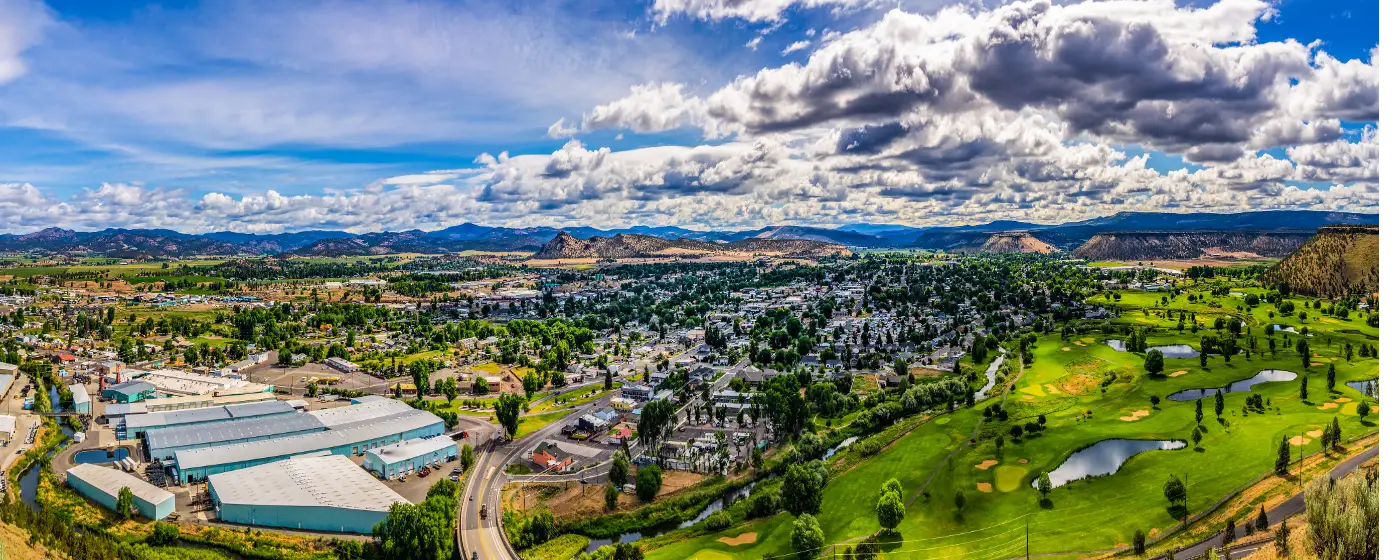
Prineville sits at the eastern edge of the Cascade foothills along the Crooked River, about 33 miles northeast of Bend and nearly 50 minutes by car through the canyon on US-26. It is the county seat of Crook County and the only incorporated city in the county. The Ochoco Mountains rise to the east, rimrock formations bracket the valley, and the high desert stretches out in every direction with the kind of open sky that people from the Willamette Valley describe as either liberation or isolation, depending on the month. With a population approaching 12,000 and growing faster than almost any comparably sized Oregon city, Prineville is no longer a secret — but it still feels like one.
This guide is built for people who are seriously weighing the move and need real information: what the housing market actually looks like right now, which neighborhoods suit which kinds of buyers, what the commute to Bend feels like at 7 a.m. in February, and what long-term residents wish someone had told them before they signed. By the end, you'll know whether Prineville is genuinely your next chapter or whether the tradeoffs are ones you'd rather not live with.
Not every city works for every buyer. Prineville has a specific personality, and understanding who fits here — and who doesn't — will save you weeks of second-guessing.
| Best For | Why |
|---|---|
| Remote workers | Low home prices, fast fiber internet from Apple/Meta infrastructure investment, quiet high-desert environment for focused work |
| First-time buyers | Median sold price around $410,000 — entry point that's genuinely accessible compared to Bend or Redmond |
| Commuters to Bend | Doable 50-minute drive; many residents make it work, especially with hybrid schedules |
| Outdoor lifestyle seekers | Immediate access to Ochoco National Forest, Crooked River, Prineville Reservoir, and Barnes Butte trails |
| Retirees on fixed income | Low property tax rate, affordable housing, stable small-town community, and growing healthcare access via St. Charles Prineville |
| Families with kids | Tight-knit community, lower cost of living, and room for horses, gardens, and real outdoor childhoods |
Prineville feels like a real town rather than a suburb built around someone else's city. The Crook County Courthouse anchors a genuine downtown with the Bowman Museum across the street, local diners, a hardware store, and the kind of foot traffic that comes from people who actually live nearby rather than people who drove in for an event. On a Tuesday afternoon in October, you can walk the length of downtown in ten minutes and recognize three people you've seen at the Crooked River or the post office. That intimacy is either exactly what you want or the first thing that makes you nervous.
The commute reality deserves honesty. The 50-minute drive to Bend on US-26 is scenic in a way that genuinely makes it more bearable — the canyon stretch along the Crooked River is legitimately beautiful. But it is 50 minutes in good conditions, and conditions are not always good. Winter ice on the canyon road, summer construction delays, and the occasional wildlife encounter are real factors. Most residents who work in Bend either negotiate hybrid schedules, carpool, or factor the drive into their lifestyle budget as the price of affordable housing. The average internal commute within Prineville itself runs under 25 minutes, which means most local employers are genuinely close.
The community leans conservative and outdoors-oriented. Friday nights during football season at Crook County High School feel like the entire town shows up, because a meaningful percentage of it does. The Crooked River and Prineville Reservoir draw residents most weekends from spring through fall, and the Ochoco National Forest is used year-round by hikers, hunters, and off-road enthusiasts who treat it as an extended backyard. What surprises most people after six months of living here is how much of their social life organizes itself around the landscape rather than restaurants or bars — Prineville socializes outside more than almost anywhere in Oregon at its population size.
The town center is compact but functional. Grocery access, medical care at St. Charles Prineville, a handful of dining options, and essential retail are all within a reasonable drive from most neighborhoods. The gap is in higher-end retail, specialty dining, and entertainment — for those, residents budget a Bend trip roughly once a week or once every two weeks.
The housing value is real and persistent. At a median sold price of $410,000, Prineville offers Central Oregon living at roughly 60 cents on the dollar compared to Bend. That gap has narrowed somewhat over the past two years, but it hasn't closed. A buyer who stretches to $450,000 in Prineville is looking at single-family homes with garages, yards, and views that simply don't exist at that price point west of Redmond. For households earning in the $72,000 to $75,000 range — right at Prineville's median income — the math works in a way that Bend's market hasn't permitted for years.
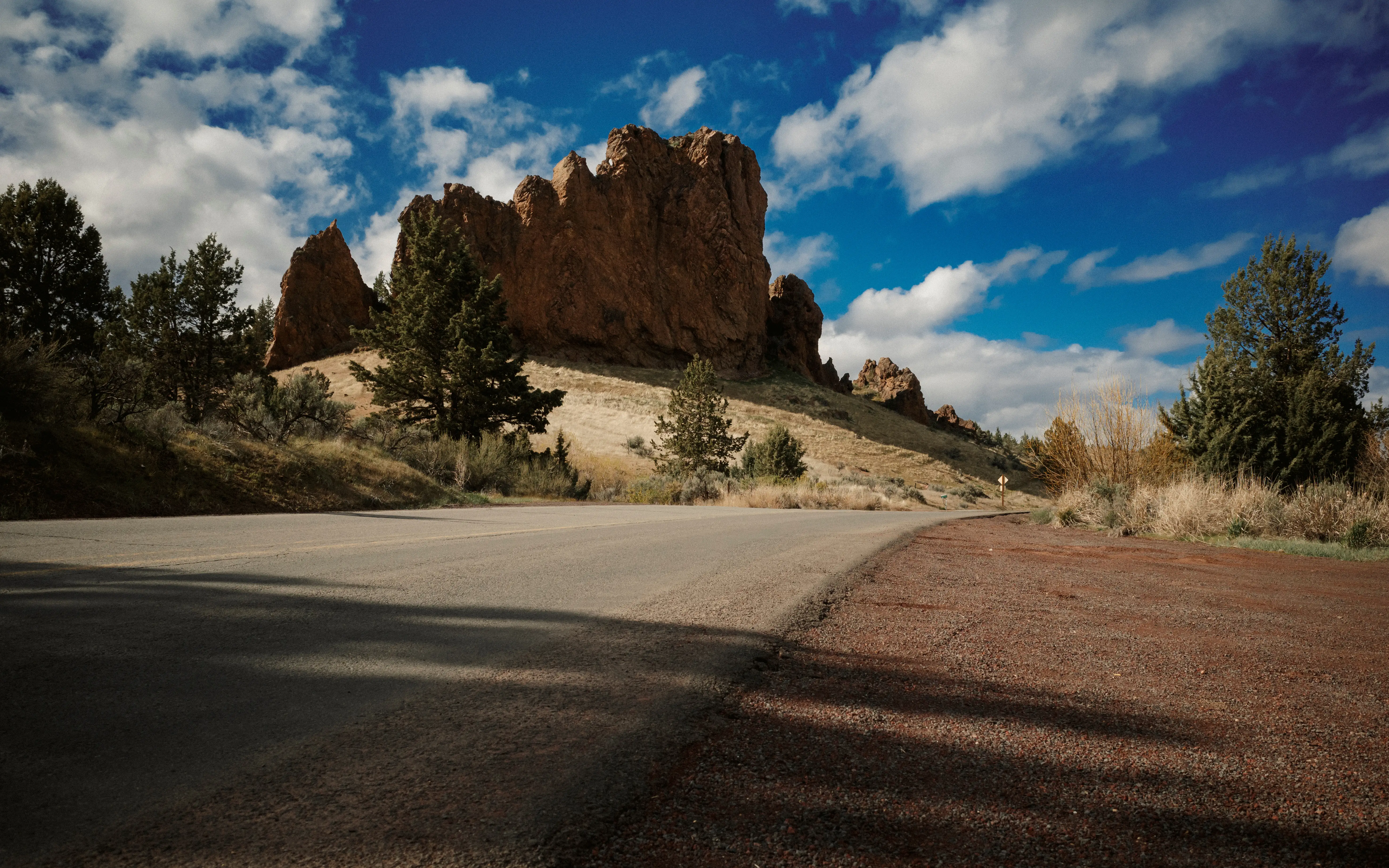
The outdoor access is immediate, not aspirational. Barnes Butte looms above the IronHorse neighborhood with trail access starting at your street. The Crooked River Wetlands complex runs along the city's edge. Meadow Lakes Golf Course sits inside town. Prineville Reservoir State Park is a 20-minute drive. The Ochoco Mountains offer hundreds of miles of forest roads, campgrounds, and trails without the summer crowds that compress Bend's trail systems. People who move to Bend for the outdoor lifestyle often discover they're competing for parking at the trailhead; Prineville residents rarely do.
The Apple and Meta data center campuses have quietly transformed Prineville's employment base over the past decade. Both companies have invested hundreds of millions in local infrastructure, and the ripple effects — fiber internet availability, tax revenue, and a small but steady influx of tech workers — have stabilized the local economy in ways that weren't predictable fifteen years ago. Les Schwab Tire Centers maintains its headquarters here, and St. Charles Prineville provides reliable local healthcare employment. The result is a more economically diverse city than its size would suggest.
Property taxes are among the lowest in the Pacific Northwest. At approximately 0.57%, Prineville's effective rate is well below state and national averages. On a $410,000 home, that translates to roughly $2,337 annually — a figure that compresses monthly ownership costs meaningfully and explains why some buyers who could afford Bend still choose Prineville.
Looking to buy in Prineville? Estimate your payment.
Enter your numbers to see an estimated monthly mortgage payment.
Estimate only. Excludes HOA fees and mortgage insurance.
The 50-minute Bend commute is the most commonly cited reason people leave Prineville. This is worth examining clearly rather than softening. For buyers with fully remote jobs, it's essentially irrelevant — they're gaining a cheaper mortgage and an extraordinary landscape. For hybrid workers commuting two or three days a week, it's manageable and most residents in that category adjust to it within a few months. For daily commuters, the canyon drive compounds over weeks into a significant time and fuel cost that erodes the housing savings faster than initial spreadsheets suggest. This is the calculation worth running honestly before making an offer.
The amenity gap is real. Prineville has functional retail — Bi-Mart, a grocery store, basic services — but it does not have a Target, a Trader Joe's, a movie theater, or the range of restaurants that a city of comparable size west of the Cascades would offer. Bend absorbs that demand for most residents, which is fine if you've made peace with it. Buyers who underestimate how much this affects daily quality of life are the ones who most commonly list within two or three years of purchasing.
Healthcare access is improving but still limited compared to Bend. St. Charles Prineville handles routine care and urgent needs, but specialty medicine, elective procedures, and complex care require a trip to Bend's larger St. Charles campus. Families with members who have ongoing medical needs should map that drive explicitly before committing to a Prineville address.
Finally, Prineville gets cold winters with occasional snow, and the high desert climate swings hard between seasons. Residents who moved from the Willamette Valley sometimes underestimate the adjustment — not to the beauty, which is obvious, but to the practical rhythms of a dry, high-altitude environment. Summer temperatures regularly reach the mid-90s; winters bring consistent freezing nights from November through March. The landscape is remarkable, but it demands a specific kind of practical adaptation that not every buyer is ready for.
Downtown is the most historically authentic part of the city, anchored by the Crook County Courthouse and the Bowman Museum on Third Street. Housing stock here skews older — mid-century construction, smaller lots, more walkable than anywhere else in town — and buyers willing to take on a renovation can find genuine value. Pioneer Park and Ochoco Creek Park are within walking distance, and the Wildland Firefighters Monument adds a distinctive local character you won't find in any planned subdivision. The compromise is that some blocks show their age, and parking-adjacent commercial noise is part of the package.
Best for: Buyers who value walkability, history, and the lowest entry prices in town.
Juniper Canyon draws buyers who want space, privacy, and the ability to do something with their land. Parcels here run toward five acres, surrounded by native juniper in a landscape that feels distinctly Central Oregon. The Prineville Reservoir is nearby, and off-grid potential is genuine — some parcels support well and septic setups that cost far less than city utility connections. The tradeoff is distance from town services, which means everything from groceries to school pickup requires a drive.
Best for: Remote workers, self-sufficient buyers, and anyone who needs land more than neighborhood amenities.
IronHorse is Prineville's most polished planned community — newer construction, well-maintained streets, and direct access to the Barnes Butte Trail System from within the neighborhood itself. Elevated lots offer rimrock and valley views, and the proximity to Barnes Butte Elementary makes the school run straightforward for families. Prices run above the city median in this neighborhood, reflecting the newer builds and the trail access premium. The planned-subdivision feel is the honest downside for buyers who prefer organic neighborhood character.
Best for: Families and outdoor enthusiasts who want newer construction and trail access without leaving the city.
West Hills sits above town with some of Prineville's most appealing acreage-adjacent lots — typically an acre or more per parcel — while remaining closer to downtown services than the more distant rural communities. Views here can be genuinely impressive, looking back over the valley and toward the Ochocos. The housing stock is a mix of established single-family homes that were built with space in mind. What buyers give up is any walking infrastructure — this is a drive-everywhere neighborhood that rewards self-sufficiency.
Best for: Buyers who want land and views without committing to a 20-minute drive from town every time they need groceries.
Ochoco West operates less like a neighborhood and more like a private rural community, located about nine miles from Prineville proper. The amenity package is unusually robust for a rural area: a community pool, private fishing lake, shooting range, horse stables, and a community center. Adjacent private land opens up for ATVs, hiking, and horseback riding in ways that more conventional neighborhoods simply can't offer. The catch is the nine-mile distance from Prineville's services — this is a lifestyle commitment, not just a home purchase.
Best for: Equestrian buyers, outdoor-lifestyle households, and retirees who want a structured rural community.
The east side of Prineville runs along the US-26 corridor with established residential blocks, a mix of housing ages, and reasonably direct access to the Crooked River. It's less characterized by a single identity than IronHorse or West Hills — more of a functional residential zone with solid bones and pricing that tends to sit at or just below the city median. For buyers who need access to the highway and don't require neighborhood prestige, Prineville East delivers reliable value.
Best for: Practical buyers, commuters, and households that prioritize access to the highway corridor over neighborhood character.
Highlands offers a semi-rural feel with lots that run toward two acres and views of the Ochoco Mountains that genuine compete with anything the more expensive rural communities offer. Paved roads, proximity to town services, and privacy without distance make this one of the more balanced options in Prineville's portfolio. The housing mix includes both stick-built single-family homes and manufactured homes on permanent foundations, so buyers focused on specific construction types should verify individual listings.
Best for: Buyers who want mountain views, privacy, and acreage without driving 20 minutes to reach a grocery store.
Longhorn Ridge is one of Prineville's premium rural options — a thoughtfully planned gated community with five-acre homesites, paved internal roads, and adjacency to BLM land that effectively expands your usable outdoor space without you owning it. Horses are permitted. The views are wide and the sense of space is immediate. Three phases have been developed, meaning the community continues to grow while retaining its uncrowded character. What buyers sacrifice is proximity — this is a lifestyle choice that assumes you've already made peace with the drive.
Best for: Equestrian buyers and privacy-focused households who want gated community infrastructure with rural character.
| City | Best For | Median Home Price | Commute to Bend | Vibe |
|---|---|---|---|---|
| Prineville | Affordability, outdoor space, authenticity | ~$410,000 | 50 min | Working-town high desert, growing |
| Redmond | Highway access, mid-sized services, balance | ~$460,000 | 20 min | Suburban with airport access |
| Bend | Amenities, employment hub, lifestyle | ~$697,000 | — | Urban-outdoor, premium market |
| Madras | Ultra-affordable, Jefferson County schools | ~$325,000 | 45 min | Small rural, limited services |
| Sisters | Boutique lifestyle, mountain views, retirement | ~$650,000 | 25 min | Resort-adjacent, premium small-town |
| Terrebonne | Closest unincorporated neighbor, rural feel | Below regional median | 30 min | Loose, rural, near Smith Rock |
| Metric | Detail |
|---|---|
| Population | Approximately 11,500–12,000 (2026, growing ~3% annually) |
| Median Sold Home Price | $410,000 (March 2026); rolling 12-month range $410K–$428K |
| Property Tax Rate | Approximately 0.57% effective rate |
| Median Household Income | Approximately $72,000–$75,000 |
| Commute to Bend | ~50 minutes via US-26 |
| Violent Crime Rate | 2.4 per 1,000 residents |
| Property Crime Rate | 11 per 1,000 residents |
| School District | Crook County School District (rated B-) |
| Major Employers | Apple, Meta, Les Schwab, St. Charles Prineville, Crook County School District |
| Median Age | 38.4 years |
| Homeownership Rate | Approximately 60% |
Prineville has a rodeo tradition that pre-dates most of its current residents by generations. The Crooked River Roundup, held each June at the Crook County Fairgrounds, is not a tourism event dressed up as local culture — it's the real thing, attended heavily by people whose families have lived in Crook County for decades. If you move to Prineville in May and someone mentions the Roundup is coming, clear your calendar.
The city's relationship with Apple and Meta is genuinely unusual for a town this size. Both tech giants maintain massive data centers here, drawn by cheap hydroelectric power and land availability. Most residents work nowhere near those facilities, but the tax revenue from those campuses has funded local infrastructure improvements that a city of 12,000 would typically not be able to afford. Prineville has better fiber internet than most Oregon cities ten times its size — a direct byproduct of that corporate presence.
The Wildland Firefighters Monument on the east end of downtown deserves more than a passing mention. Prineville is considered by many in the firefighting community to be the spiritual home of wildland firefighting in the American West, and the monument reflects that with genuine gravity. It's not a tourist attraction — it's a community anchor. Newcomers who take the time to learn its history tend to understand Prineville's identity much faster than those who don't.
What I would not do if moving to Prineville: I would not buy in Ochoco West or Indian Rock Estates without driving the route to town services on a winter morning first. Nine miles on a rural road is 9 miles on a wet, potentially icy rural road in January — and it changes how you feel about a 7 a.m. school run or an unexpected trip to the pharmacy. The communities themselves are genuinely appealing, but the distance math changes seasonally in ways that deserve a realistic test before you commit.
Local Expert Takeaway: If your budget tops out around $420,000 and you're seriously considering Central Oregon, make IronHorse and West Hills your first two neighborhood tours — they represent Prineville's strongest value per dollar with the most reliable resale demand. Buyers who skip directly to the rural communities like Longhorn Ridge or Ochoco West without first understanding the service-distance tradeoff tend to list faster than the market average. And if you're commuting to Bend, negotiate hybrid scheduling before you close, not after — that 50-minute canyon drive changes character significantly in winter, and the buyers who've planned for it fare far better than those who assumed conditions would mirror fall weather year-round.
✅ Prineville's median sold price of $410,000 makes it the most affordable entry point into Central Oregon's real estate market — a genuine advantage for first-time buyers and remote workers who want the landscape without the Bend price tag.
⚠️ The 50-minute Bend commute is non-negotiable — it's scenic and manageable for hybrid workers, but daily commuters should model the time and fuel cost honestly before signing.
📍 IronHorse and West Hills consistently offer the best combination of neighborhood infrastructure, trail access, and resale demand among Prineville's established subdivisions.
Is Prineville a good place for families?
Prineville works well for families who value outdoor space, lower housing costs, and tight-knit community character. The Crook County School District carries a B- rating with a full K-12 infrastructure including Crook County High School, and the recreational environment — Barnes Butte trails, Crooked River, Ochoco National Forest — gives children access to outdoor experiences that many larger cities simply can't match at an affordable price point.
What is the crime rate in Prineville?
Prineville's violent crime rate sits at 2.4 incidents per 1,000 residents, which is low by Oregon standards and well below state averages for cities of comparable size. Property crime runs at 11 per 1,000 residents — moderate, and consistent with small Western cities that have seen population growth outpace law enforcement staffing. Most residents describe feeling safe in their neighborhoods, and the figures reflect a community where violent crime is genuinely rare.
How does Prineville compare to Redmond and Bend?
Prineville is the most affordable of the three, with a median sold price roughly $50,000 below Redmond and nearly $290,000 below Bend. What buyers give up is proximity — Redmond is 20 minutes from Bend and has significantly more retail infrastructure, while Bend offers full urban amenities. Prineville's value proposition is strongest for buyers who work locally, work remotely, or have already made peace with the canyon commute as part of their lifestyle.
Explore the full Prineville series: The Ultimate Prineville Relocation Guide · Is Prineville Safe? · Cost of Living in Prineville · Best Neighborhoods in Prineville · Prineville Schools & Family Life · Prineville Youth Sports · Prineville Parks & Recreation · Retiring in Prineville · 1031 Tax-Deferred Exchange in Prineville · Prineville First-Time Homebuyers Guide · · Moving to Prineville from California
Tell us what you need help with and we'll connect you with local resources.

About the Author
Todd Davidson is the founder of Living in Oregon and Living in Washington, where he publishes in-depth city guides, neighborhood resources, and local market insights covering more than 180 communities across the Pacific Northwest. While his background is in home financing and real estate, he created these digital platforms to help families research and compare regions before making a move.