
Central Oregon · Oregon
Is Prineville Safe? Crime Rates, Safest Neighborhoods & Local Reality (2026)
Prineville doesn't make headlines for crime, and that's largely the point. For a small Central Oregon city of about 12,400 people sitting at the edge of the high desert, the safety picture here is more nuanced than either the "it's totally fine" reassurances from locals or the middling grades on aggregator sites might suggest. The honest answer is that Prineville is safer than most Oregon cities by nearly every current measure — but like any working-class community with a commercial core, it has pockets where property crime clusters and a few corridors that see more activity than the rest.
What the raw numbers reveal is that Prineville's crime rate has fallen significantly over the past few years, with a particularly sharp drop recorded in 2024. The city's overall crime index sits well below both state and national averages when measured against current FBI data. Property crime — primarily larceny rather than burglary or car theft — is the relevant category here. Violent crime, by contrast, runs noticeably lower than Oregon's statewide rate, and the city has reported zero murders and zero robberies in recent data.
This guide walks through what those numbers mean in practice, which parts of town see the most incidents, how Prineville compares to neighboring cities in the region, and what locals actually do differently because of where they live — not because they're worried, but because knowing your community means knowing its rhythms.
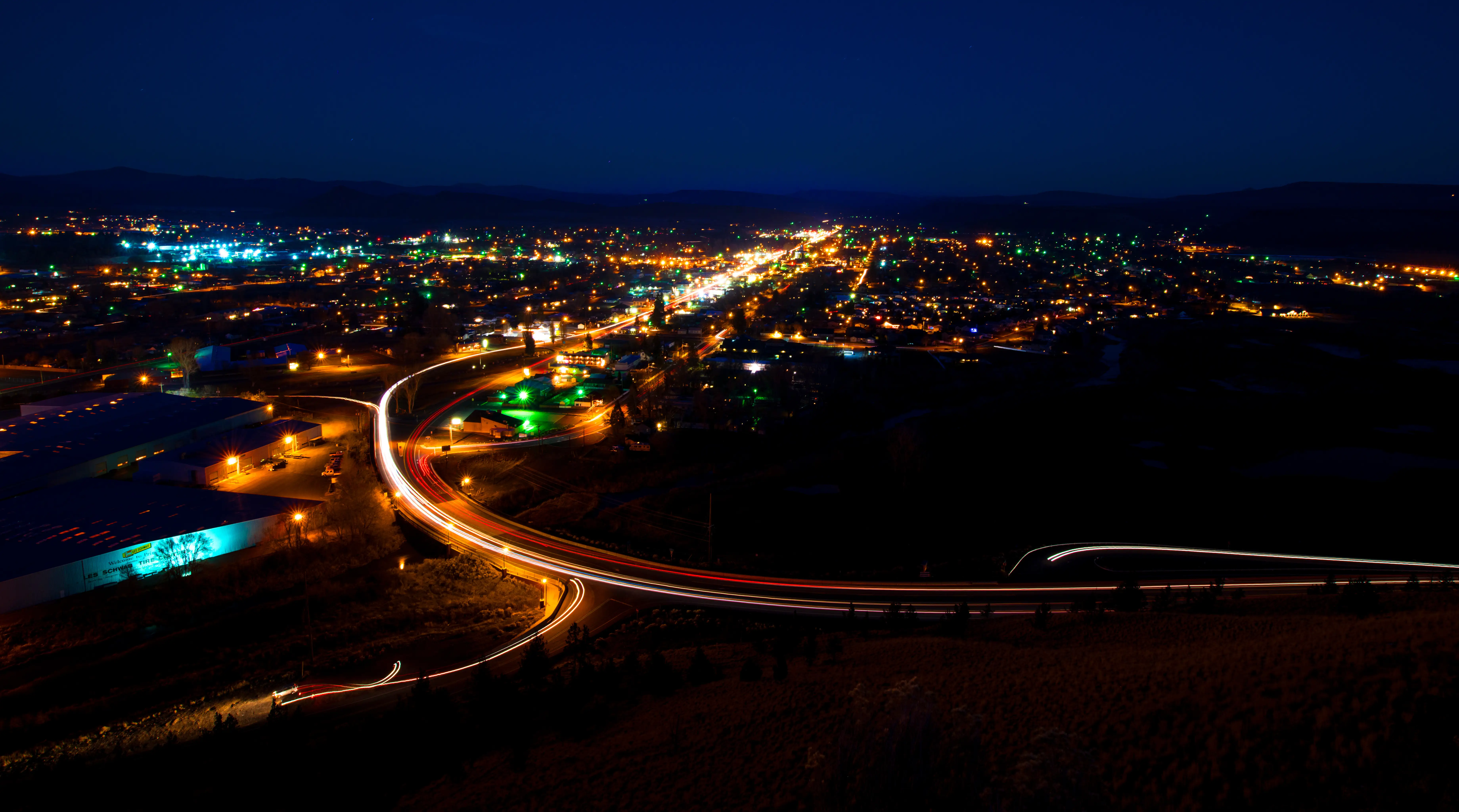
Based on 2024 FBI data — the most current full-year dataset available — Prineville's overall crime rate runs roughly 37% below the national average and more than 64% below Oregon's statewide rate. That's a meaningful gap, particularly for buyers coming from larger Oregon cities where property crime has historically dragged state averages upward. The city recorded approximately 169 total incidents across violent and property categories in 2024, a figure that represents a significant decline from prior years — by some estimates, total crime fell nearly 48% compared to 2023.
The structural reality behind these numbers matters. Prineville is a small, largely owner-occupied community with relatively low residential density and a commercial core concentrated along a few corridors. That configuration tends to produce lower crime rates compared to cities with large apartment complexes, transient populations, or high-traffic retail sprawl. The Apple and Meta data centers on the city's eastern edge have added jobs without adding the kind of late-night commercial activity that often accompanies crime spikes in boom towns.
It's worth noting that different rating platforms reach different conclusions from the same underlying data. CrimeGrade.org assigns Prineville a C- and places it in the 36th percentile for safety nationally — a figure that reflects methodology differences rather than contradicting the FBI numbers. More recent analyses using 2024 UCR data consistently show Prineville performing better than both state and national benchmarks. The trend direction — downward over 13 years of tracked data — is the most reliable signal for anyone making a long-term relocation decision.
Prineville's violent crime rate runs at approximately 2.4 per 1,000 residents, which local police data suggests is around 33% below the national average and nearly 28% below Oregon's own rate. In practical daily terms, this is a city where you're unlikely to encounter the kind of street-level violence that shapes behavior in larger urban cores. The 2024 data shows zero murders and zero robberies — the violent incidents that did occur were primarily in the assault category, concentrated in situations that locals largely describe as interpersonal rather than stranger-related.
Property crime runs at approximately 11 per 1,000 residents, with larceny — shoplifting, package theft, minor vehicle break-ins — making up the overwhelming share of that figure. Burglary and car theft rates are notably low. The activity clusters predictably: the commercial strip along 3rd Street and the downtown retail area see the most incidents, driven largely by the concentration of stores and visitor foot traffic rather than residential vulnerability. The southwest side of the city, by contrast, records some of the lowest raw incident counts in all of Prineville.
Downtown sits along 3rd Street and the blocks surrounding the Crook County Courthouse, and it carries the highest crime concentration in the city — but context matters here. Most of what drives those numbers is retail-adjacent larceny happening at businesses rather than residential break-ins. Families who live in the small number of homes within a few blocks of the commercial core do report seeing more foot traffic and occasional overnight nuisance activity near the parking areas along Main Street, but the daytime environment around the Bowman Museum and courthouse is genuinely calm.
Best for: Buyers who want walkable access to downtown services and understand that retail corridors everywhere carry elevated property crime tallies.
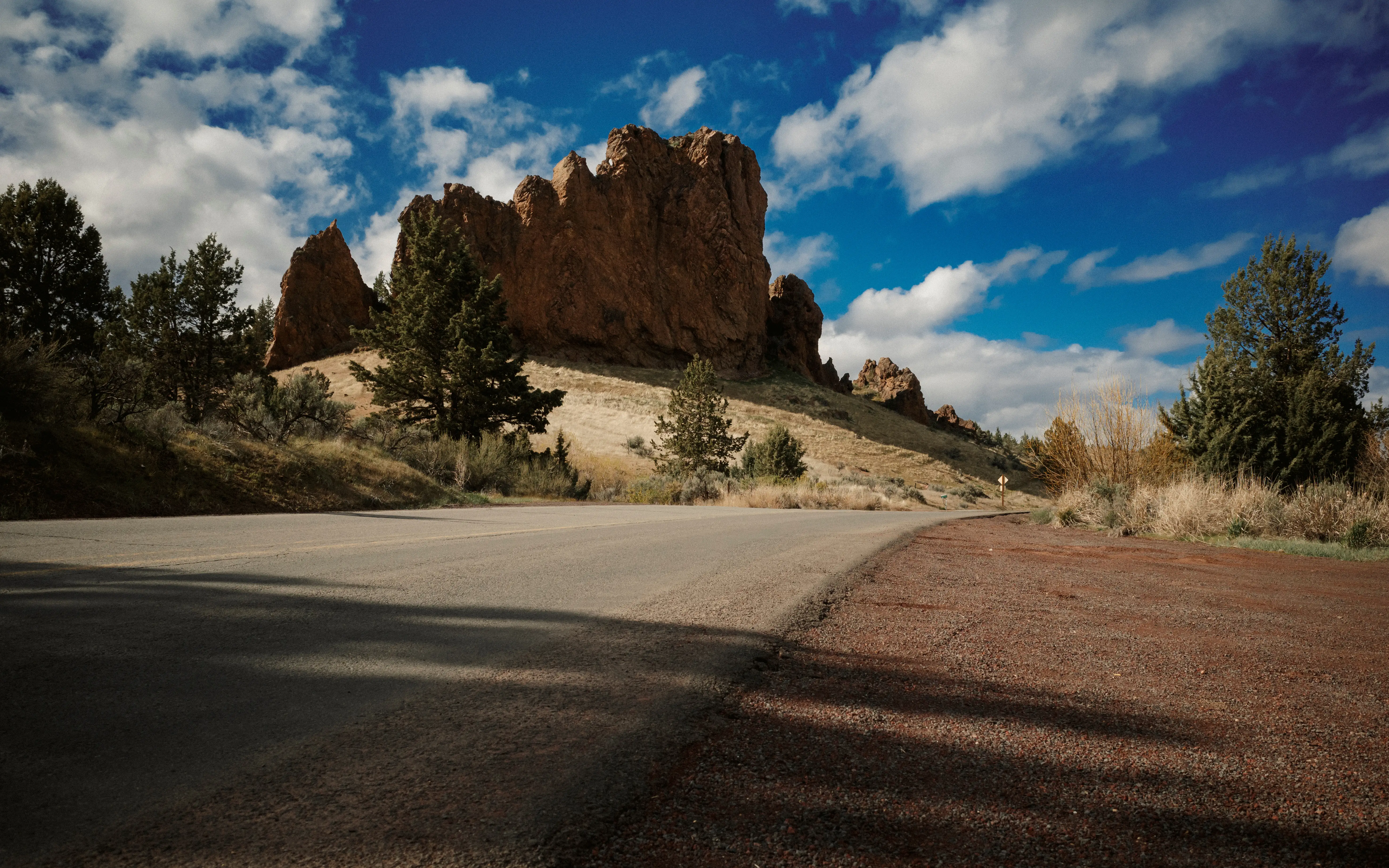
Juniper Canyon sits on Prineville's northwest edge, where the terrain opens up into high desert terrain and lot sizes expand. The lower residential density here works in its favor from a property crime standpoint — fewer concentrated targets, less foot traffic, more neighbors who notice unfamiliar vehicles. It's the kind of area where people tend to know each other by name, which functions as informal community surveillance.
Best for: Buyers prioritizing space and quiet over proximity to retail or schools.
IronHorse is a planned subdivision on the south side of town with relatively newer construction and an HOA structure that tends to attract owner-occupants rather than rentals. That ownership concentration correlates with lower property crime risk across most small cities. Streets are well-lit, lots are maintained, and the community is compact enough that unusual activity tends to get noticed.
Best for: Families with school-age children who want a clean suburban environment close to Crook County School District facilities.
West Hills occupies the higher ground on Prineville's western edge, where larger lots and views of the surrounding canyon country define the feel. The area has an established, stable character — not a new subdivision, but not an area showing signs of disinvestment either. Locals here tend to describe the neighborhood as one of the calmer parts of town, and the distance from the commercial core keeps it largely removed from the larceny patterns that show up downtown.
Best for: Buyers looking for established homes with elbow room and a quieter residential character.
Ochoco West stretches along the western reaches near Ochoco Creek, adjacent to the trail and green space corridors that run through town. The park access is a genuine asset, and the residential mix here skews toward longtime Prineville families. Property crime risk in this corridor is consistent with the city's residential average rather than the elevated figures you'd see downtown.
Best for: Buyers who want established neighborhood character and access to Ochoco Creek Park without paying for a newer subdivision.
Highlands sits in the southeastern quadrant — statistically the safest directional zone in Prineville according to available crime distribution data. Newer construction, owner-occupied households, and lower density combine to produce some of the lowest incident counts anywhere in the city. If you're making a purely numbers-driven safety decision, the southeast side of Prineville is where that logic points.
Best for: Safety-conscious buyers who prioritize newer construction and the lowest possible crime exposure in the city.
| City | Violent Crime/1K | Property Crime/1K | Overall Safety Profile |
|---|---|---|---|
| Prineville | 2.4 | 11.0 | Below OR and US average; improving trend |
| Bend | ~2.6 | ~25.0 | Higher property crime; larger retail economy |
| Redmond | ~3.1 | ~28.0 | Elevated property crime; rapid growth pressures |
| Madras | ~5.8 | ~38.0 | Highest violent crime in the region; significant challenges |
| Sisters | ~1.2 | ~12.0 | Very low violent crime; small population base |
| Terrebonne | ~2.0 | ~9.0 | Unincorporated; limited data; rural character |
Prineville compares favorably to its two closest neighbors on the highway — Bend and Redmond — particularly on property crime. Bend's property crime rate runs roughly double Prineville's, driven by a larger retail economy and higher population density. Madras, to the north on Highway 26, faces more serious crime challenges across both categories and is a genuinely different situation. Sisters, though tiny, maintains very low crime figures but with a population base too small to draw meaningful comparisons.
Looking to buy in Prineville? Estimate your payment.
Enter your numbers to see an estimated monthly mortgage payment.
Estimate only. Excludes HOA fees and mortgage insurance.
The apps that aggregate crime scores often paint Prineville with a broader brush than it deserves, in part because they weight older datasets or use methodologies that don't account for how dramatically the city's numbers have shifted since 2022. What locals actually pay attention to is more granular. The stretch of 3rd Street between Main and Belknap sees the most retail-adjacent activity — this is where the Bi-Mart and surrounding commercial tenants generate the larceny tallies that show up in aggregate stats. Living two miles east of that corridor in a residential neighborhood feels like a different city statistically.
Vehicle break-ins, when they do happen, tend to cluster around the trailhead parking areas near Ochoco Creek and Pioneer Park on weekend mornings — times when cars sit unattended for a few hours. What most Prineville residents do as a matter of habit isn't elaborate: they don't leave anything visible in parked cars, they know their immediate neighbors, and they use the non-emergency line at 541-447-4168 to report suspicious activity rather than waiting to see if it escalates. The Prineville Police Department is a state-accredited agency with 24/7 officer availability, a staffing ratio that works for a city this size, and three dedicated school resource officers — a notable commitment for a department of 19 sworn officers.
The one thing the numbers can't capture is the social reality of a small city where a significant portion of the population works for the same handful of employers — Les Schwab, St. Charles Prineville, the school district, the data centers. That kind of economic familiarity creates informal accountability that doesn't appear in any crime index. Prineville isn't crime-free, but it's a place where people know each other, which changes the texture of daily life in ways that aggregate safety scores simply don't reflect.

Local Expert Takeaway: Buyers focused on safety should prioritize the southeastern quadrant — Highlands, Longhorn Ridge, and the newer residential streets off SE Combs Flat Road consistently show the lowest incident rates in the city. If you're considering anything within three blocks of the 3rd Street commercial corridor, walk the block at different times of day rather than relying on aggregate scores — the retail activity there inflates the surrounding numbers without meaningfully affecting residential risk.
✅ Prineville's violent crime rate runs below both the Oregon state average and the national average, with zero murders and zero robberies recorded in the most recent full-year FBI dataset — a notable distinction for a city of its size.
⚠️ Property crime is the relevant category to watch, and it clusters heavily in the downtown commercial corridor along 3rd Street. Residential neighborhoods — especially on the south and west sides — see a fraction of those numbers.
📍 The southeast side of Prineville, including Highlands and Longhorn Ridge, consistently records the lowest crime counts in the city and represents the clearest choice for buyers whose primary concern is safety.
Is Prineville a safe place to live?
By current FBI data, Prineville's overall crime rate sits roughly 37% below the national average and more than 64% below Oregon's statewide rate — making it one of the safer small cities in the region. The 2024 numbers reflect a significant downward trend that has continued for over a decade, with both violent and property crime declining in recent years.
What type of crime is most common in Prineville?
Larceny — primarily shoplifting and minor theft near retail corridors — makes up the overwhelming share of reported incidents. Burglary and car theft rates are low, and violent crime (assault, robbery, murder) runs well below state and national averages. The commercial stretch along 3rd Street generates the most incident reports; residential neighborhoods see considerably less activity.
How does Prineville compare to Bend and Redmond for safety?
Prineville compares favorably to both. Bend's property crime rate runs roughly double Prineville's, driven by a much larger retail and tourism economy. Redmond's property crime figures are similarly elevated relative to Prineville's. For buyers weighing Central Oregon options with safety as a primary factor, Prineville's numbers are consistently better than its larger neighbors across the highway.
Explore the full Prineville series: The Ultimate Prineville Relocation Guide · Is Prineville Safe? · Cost of Living in Prineville · Best Neighborhoods in Prineville · Prineville Schools & Family Life · Prineville Youth Sports · Prineville Parks & Recreation · Retiring in Prineville · 1031 Tax-Deferred Exchange in Prineville · Prineville First-Time Homebuyers Guide · · Moving to Prineville from California
Tell us what you need help with and we'll connect you with local resources.

About the Author
Todd Davidson is the founder of Living in Oregon and Living in Washington, where he publishes in-depth city guides, neighborhood resources, and local market insights covering more than 180 communities across the Pacific Northwest. While his background is in home financing and real estate, he created these digital platforms to help families research and compare regions before making a move.