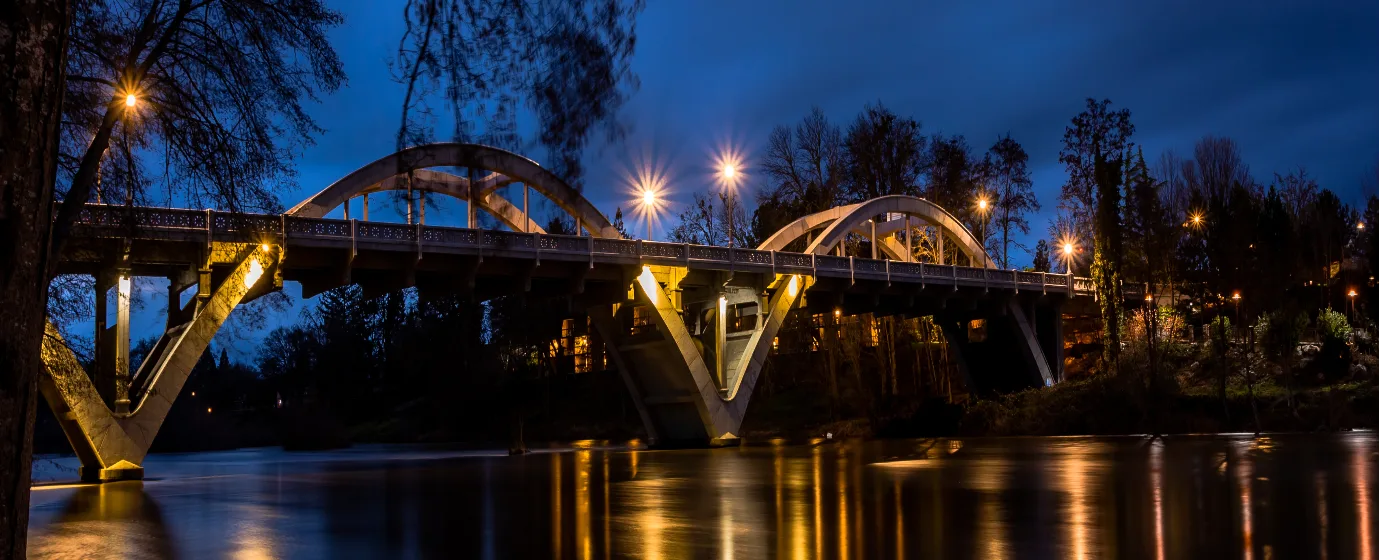
Southern Oregon · Oregon
Living in Grants Pass: The Ultimate Relocation Guide (2026)
Maybe you've been watching Oregon real estate for two years and every city that made sense on paper somehow turned into a bidding war. Maybe someone from Southern Oregon mentioned Grants Pass at a dinner party and you half-dismissed it before quietly Googling it at midnight. Or maybe you've been priced out of Ashland, frustrated by Medford's sprawl, and you're wondering if there's a middle option — a real town with a real downtown that doesn't cost $600,000 for a starter home. Grants Pass is that city, but understanding it requires getting past the surface. The central tension here is real: this is a place with genuine small-city character, river access, and price points that seem almost impossible by West Coast standards — yet it also carries the economic pressures and social complexity that come with a community where nearly 1 in 7 residents lives below the poverty line.
Grants Pass sits along the Rogue River in Josephine County, roughly 35 minutes northwest of Medford via I-5. It is the county seat and the commercial hub for a region that extends into some of the most rural stretches of Southern Oregon. The city is surrounded by the Siskiyou Mountains and the Klamath Mountains, giving it a valley-floor geography that shapes everything from summer heat to wildfire smoke patterns. The I-5 corridor runs directly through the city, which is both an economic lifeline and a geographic dividing line. Downtown sits close to the river on the western side; the newer commercial and residential growth has pushed east and north. Daily life here orbits a relatively compact urban core, with most errands accomplished within a 10-minute drive.
This guide will help you figure out whether Grants Pass actually fits your life — not just your budget. You'll find honest neighborhood breakdowns, commute realities, school context, employer anchors, and the local quirks that no Zillow listing will tell you. If Grants Pass is the right move, this will confirm it. If it's not, you'll know that too.
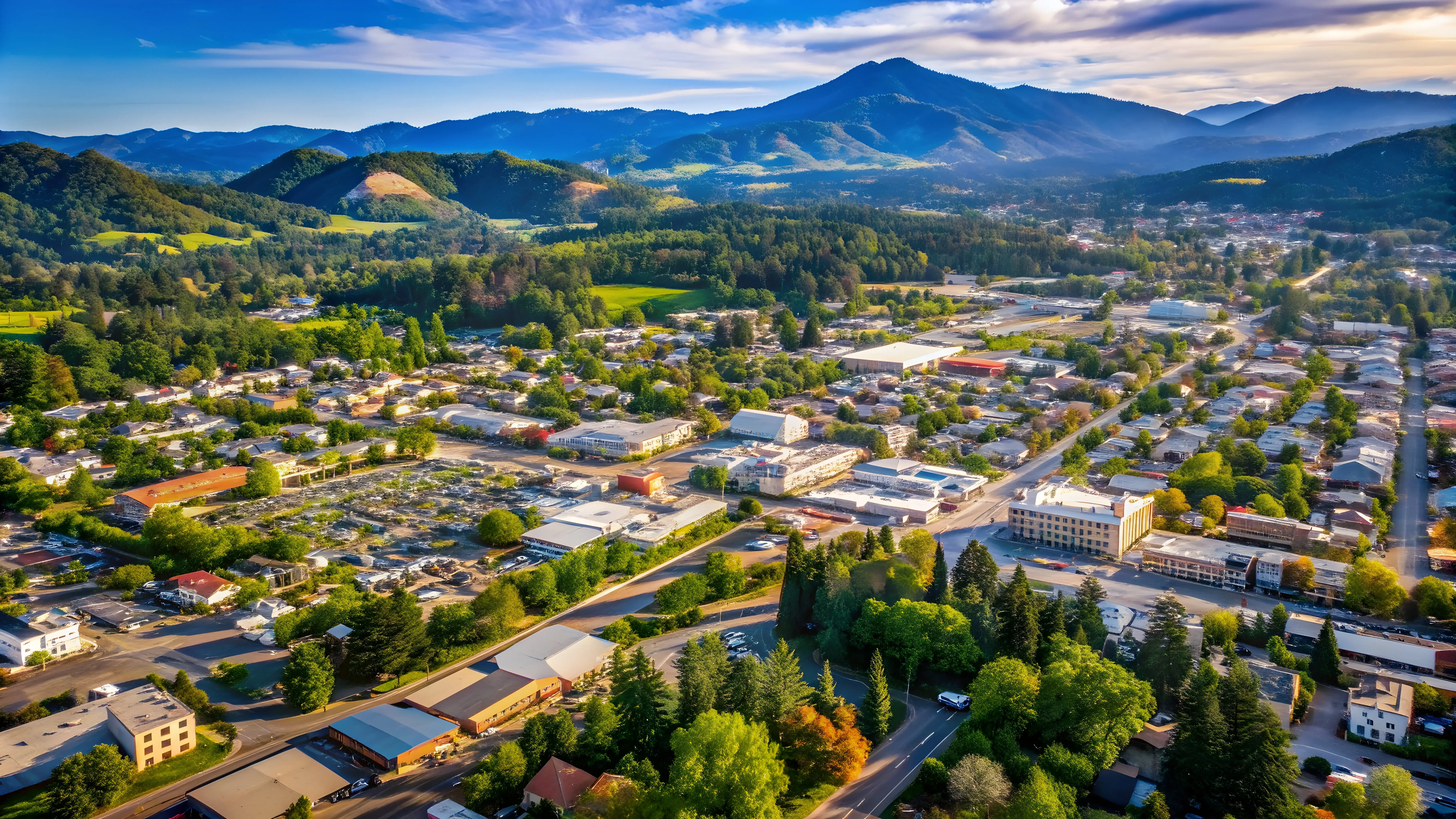
Not every city suits every buyer, and Grants Pass has a specific profile of people who genuinely thrive here. Use the table below as a quick filter before diving into the details.
| Best For | Why |
|---|---|
| Remote workers from California | Home prices averaging around $405,000 (Zillow ZHVI, mid-2026) against a California salary stretch significantly further here; no state sales tax adds to the advantage |
| Retirees seeking affordable outdoor access | Rogue River, mild climate, and a significant retiree community (~23% of residents are 65+) make this one of Southern Oregon's more practical retirement cities |
| First-time buyers | Entry-level homes well below the city median exist in areas like Fruitdale and parts of the Southeast; one of few Oregon cities where a $300K budget still buys a livable house |
| Families wanting space over walkability | Larger lots in North Valley and Meadow Wood, good school infrastructure, and room for garages, gardens, and workshops at prices that aren't punishing |
| I-5 corridor commuters | A 35-minute drive to Medford's employment base, and quick access north toward Roseburg, makes Grants Pass viable as a commuter home base |
| Buyers priced out of Ashland or Medford | Ashland runs $200,000–$300,000 higher on comparable homes; Grants Pass offers a similar Southern Oregon lifestyle at a substantial discount |
The first thing most people notice when they arrive in downtown Grants Pass is that it still functions like a downtown. The "It's the Climate" sign hanging above 6th Street has been greeting visitors since the 1950s, and the surrounding blocks hold a genuine mix of locally owned coffee shops, galleries, antique stores, and restaurants — not the ghost-town storefronts you'll find in comparable-sized Southern Oregon communities. Riverside Park runs along the Rogue River and serves as the city's living room: people fish there in the morning, watch whitewater kayakers in the afternoon, and gather for summer concerts in the evening. It's not performative small-town charm. It's what the city actually does.
The geographic reality shapes daily life more than most relocation articles acknowledge. I-5 is the spine of the city, and which side of it you land on matters. The western side of the freeway — where downtown, Riverside Park, and much of the Historic Core sit — has a distinctly older, more walkable character. The eastern and northern corridors, where newer commercial development and subdivisions have expanded over the past two decades, feel more conventionally suburban. Buyers who choose Meadow Wood or the Northeast quadrant because of the price or lot size sometimes find the commute into downtown takes longer than they expected, particularly around the Rogue River Highway interchange during peak morning traffic.
Commuting out of Grants Pass is manageable for I-5 users but not painless. The 35-minute drive to Medford on a clear Tuesday morning can stretch toward 50 minutes during summer construction season or when a single incident backs up the freeway near the Merlin Road interchange — which happens more than traffic apps predict. Commuters heading north toward Roseburg are looking at roughly 70 minutes on a normal day. The saving grace is that the city's average internal commute runs around 18 minutes, meaning most people who work locally spend very little time in a car relative to the Oregon average.
What surprises many people after six months of living here is how quickly the outdoor access becomes the organizing principle of their weekends. The Rogue River is not a backdrop — it's an activity. Residents float it in summer, fish it year-round, and kayak its whitewater sections through Hellgate Canyon. The Illinois Valley, Crater Lake, and the Oregon Caves are all within reach. For buyers coming from dense metropolitan areas, the shift from "planning outdoor trips" to "walking to the river on a Tuesday" is something most don't anticipate until they're living it.
The price-to-space ratio is the headline — and it's real. For buyers coming from Portland, the Bay Area, or coastal Oregon, the ability to purchase a 3-bedroom home on a quarter-acre lot for under $400,000 feels almost suspicious. It isn't. Grants Pass consistently offers more house per dollar than any comparably livable city in Oregon's southern half. The Zillow ZHVI sits at $405,464 (mid-2026), and entry-level properties in areas like Fruitdale or Lincoln Park exist meaningfully below that figure.
Oregon's tax structure works significantly in buyers' favor here. There is no state sales tax, and Josephine County's property tax rate runs approximately 0.53% — lower than both Medford and Ashland. On a home at the city median, that translates to roughly $2,100 per year in property taxes, a number that shocks buyers relocating from California or Washington where comparable properties carry tax bills two to three times higher.
The climate is Southern Oregon's best-kept practical advantage. Grants Pass averages around 300 days of sunshine per year and sits in a sheltered valley that keeps winters far milder than inland Pacific Northwest cities. Snowfall is rare and typically gone within a day or two. Summers are hot — reliably over 90°F in July and August — but the low humidity makes them tolerable in a way that California's Central Valley heat is not. The trade-off is wildfire smoke, which has become a genuine August reality across this region and is worth factoring into the lifestyle calculus.
The local employer base is more stable than the city's modest median income suggests. Three Rivers Hospital anchors the healthcare sector and represents one of the largest single employers in the county. The Grants Pass School District and Rogue Community College together support a significant education workforce. Fire Mountain Gems, one of the world's largest gem and jewelry suppliers, operates here and provides manufacturing employment not dependent on regional government cycles. MasterBrand Cabinet Company adds a manufacturing anchor that has proven durable across economic cycles. For remote workers — who make up roughly 9% of the workforce, an unusually high share — the combination of fast rural internet infrastructure and low overhead makes Grants Pass genuinely attractive.
The community identity is unusually strong. Grants Pass has the Boatnik festival every Memorial Day weekend, a long-running celebration on the Rogue River that includes hydroplane races, carnival rides, and a downtown parade. The Saturday Market runs from April through October and draws consistent local participation rather than tourist crowds. Wildlife Images Rehabilitation & Education Center, one of the most respected wildlife rehabilitation facilities in the Pacific Northwest, is located here and reflects something real about the community's relationship with the surrounding landscape. These aren't imported amenities — they're things that grew out of the place itself.

Looking to buy in Grants Pass? Estimate your payment.
Enter your numbers to see an estimated monthly mortgage payment.
Estimate only. Excludes HOA fees and mortgage insurance.
The poverty rate is not a footnote. At approximately 14.4% of residents living below the poverty line, Grants Pass carries visible economic stress in ways that buyers from higher-income regions may find jarring. The downtown core is genuinely pleasant and well-maintained, but the city has struggled with homelessness in its city parks — a situation that drew national media attention in 2023 when the Grants Pass v. Johnson case worked its way toward the U.S. Supreme Court. That context doesn't mean the city is unsafe in a traditional crime sense; violent crime runs at 2.7 per 1,000 residents, which is moderate for a city this size. But it does mean the social landscape is more complicated than the outdoor-lifestyle marketing imagery suggests.
Property crime is the more relevant concern for incoming homeowners. At 29 incidents per 1,000 residents, the property crime rate is elevated compared to smaller Oregon towns, and it's worth factoring into insurance costs and neighborhood selection. The areas with the strongest property crime history tend to cluster around certain commercial corridors rather than residential neighborhoods — but buyers should ask specifically about the block or subdivision they're considering rather than relying on citywide averages.
Healthcare access is limited for a city of this size. Three Rivers Hospital is a capable regional facility, but Grants Pass lacks the specialist depth of Medford, which has two competing hospital systems and a wider range of subspecialties. Residents who need oncology, complex cardiac care, or specialized surgical services routinely drive to Medford — or, in serious cases, to Portland. This is a meaningful quality-of-life consideration for older buyers or anyone with complex medical needs.
Why some people leave Grants Pass tends to come down to one of three things: professional ceiling, healthcare access, or the smoke season. The local job market, while stable, doesn't offer the career advancement options of a major metro, which eventually pushes younger professionals toward Portland or Bend. The August wildfire smoke, which has grown denser and longer in recent years, genuinely drives some families out — particularly those with respiratory sensitivities. And for buyers who arrive expecting the walkability and cultural density of Ashland, the gap between expectation and reality on that front can be surprising. Grants Pass is a working regional city, not a cultural destination.
The Historic Core is the oldest and most architecturally distinct part of Grants Pass, a federally recognized National Historic District where Victorian homes, Craftsman bungalows, and early-20th-century commercial buildings line streets within easy walking distance of the Rogue River. Home prices here carry a walkability premium — buyers get smaller lots and older systems in exchange for the ability to walk to the Grants Pass Museum of Art, the Rogue Theatre, weekend farmers market, and the river trail. This is where the city's independent restaurant and gallery scene is most concentrated, and where the "It's the Climate" sign still hangs above 6th Street as it has since the 1950s. The historic overlay adds a design review step before exterior renovations, which some buyers find limiting.
Best for: Buyers who prioritize walkability and community atmosphere and don't need a large yard or modern mechanical systems.
North Valley covers the suburban and semi-rural territory north and northeast of the city core, where the homes grow larger and the lots stretch out into something approximating genuine country living without fully leaving city services. Ranch homes, two-story traditional plans, and newer custom builds share the landscape here, often with views toward the Siskiyou Mountains. Buyers wanting a shop, a garden, or room for horses on the periphery end up in North Valley more than anywhere else. Some properties run on private wells and septic systems, so utility type warrants specific due diligence before making an offer.
Best for: Buyers who want space, garages, and a rural feel within a 10-minute drive of downtown services.
Fruitdale sits on the southeastern edge of Grants Pass — rural in character, close enough to services that you barely notice the distance. The Rogue River runs north of the area, and Chinook Park provides river access with a boat launch that locals rely on heavily through the summer float season. The housing stock is mostly mid-century and 1970s–1990s ranch-style construction, with prices ranging from roughly $230,000 to $630,000 — a spread that reflects the mix of original condition properties and significantly updated homes. The median runs around $477,000 for the neighborhood, which prices it above the city median despite its rural feel. Tom Pearce Park, the largest park in this part of the city, anchors outdoor recreation for the area.
Best for: Buyers who want river proximity and a genuine rural feel without going too far from town, and who can navigate some older housing stock.
Meadow Wood is where Grants Pass's upper tier of residential real estate concentrates. Properties here are typically larger in both home size and lot, frequently featuring landscaped grounds, views, and finishes above what the city median would suggest. Premium homes reach toward $800,000, particularly those with mountain views or elaborate outdoor spaces — though the area isn't exclusively luxury, and entry points exist well below that ceiling. The neighborhood's main draw is privacy and quality of construction rather than walkability or river access. Buyers choosing Meadow Wood are trading proximity to downtown for space and residential quiet.
Best for: Move-up buyers or relocating executives who want a larger, higher-finish home and aren't prioritizing walkability or urban access.
The Northeast quadrant of the city reflects the newer residential growth that has pushed east of I-5 over the past two decades. Subdivisions here tend toward conventional ranch and two-story layouts on standard lots, with newer infrastructure and a more uniform aesthetic than the Historic Core or North Valley. Families with school-age children are the dominant demographic, and the area has relatively convenient access to the commercial corridors along Redwood Highway and Highway 99. The trade-off is a less distinctive neighborhood character — this is functional suburban Grants Pass rather than the more individualized pockets closer to the river.
Best for: Families with kids who prioritize newer construction and school proximity over architectural character.
The Northwest sector sits between the downtown core and the North Valley corridor, offering a transitional mix of older and mid-century residential stock alongside some of the city's more established tree-canopied streets. Homes here tend to be priced closer to the city median, with less architectural drama than the Historic Core and less space than North Valley proper. The area benefits from convenient access to both downtown amenities and the highway north — a practical middle ground that suits buyers who don't want to fully commit to either urban or suburban living.
Best for: Buyers seeking a middle path between walkable downtown access and residential quiet, at prices near the city median.
The Southeast side encompasses a range of residential types, from established neighborhoods to more rural pockets approaching the Fruitdale transition zone. Price points here can come in below the city median, making the Southeast one of the more accessible entry points into homeownership in Grants Pass. The neighborhood has a workaday character — fewer of the amenity features that drive prices up in Meadow Wood or the Historic Core, but solid housing stock in the $300,000–$380,000 range for buyers willing to prioritize value over prestige.
Best for: First-time buyers and value-oriented buyers who want a freestanding home below the city median.
The Southwest side of the city sits closest to I-5 access heading toward Medford, which makes it a practical base for commuters. The housing mix is varied — a combination of older ranches, some manufactured home communities, and conventional subdivisions — and prices reflect that variety. Buyers in the Southwest tend to be more commuter-oriented or cost-driven than lifestyle-oriented, and the area lacks the scenic or architectural interest of the Historic Core and North Valley. That said, the freeway proximity that makes it less desirable aesthetically is exactly what makes it logistically useful.
Best for: I-5 commuters who want the most practical access to the Medford corridor at the most accessible price point.
| City | Best For | Home Price | Commute | Vibe |
|---|---|---|---|---|
| Grants Pass | Space, value, river access | ~$405,000 (ZHVI) | 35 min to Medford | Working regional city with real downtown |
| Medford | Employment base, healthcare, services | ~$380,000–$430,000 | — | Larger city, more commercial, less scenic |
| Ashland | Cultural amenities, walkability, prestige | $550,000–$650,000+ | 50 min from GP | College town, arts-forward, expensive |
| Rogue River | Rural pace, small community | ~$320,000–$360,000 | 20 min to GP | Quiet bedroom town, very limited services |
| Cave Junction | Deep rural living, lowest prices | ~$250,000–$300,000 | 45 min to GP | Remote, limited employment, scenic |
| Gold Hill | Affordable I-5 access, small town | ~$280,000–$330,000 | 25 min to GP | Tiny community, freeway convenient |
| Category | Detail |
|---|---|
| Population | Approximately 40,000 (PSU/city official, 2026 projection) |
| Median Home Price (ZHVI) | $405,464 (Zillow, mid-2026) |
| Median Household Income | $59,646 |
| Property Tax Rate | ~0.53% annually |
| Median Rent | Approximately $1,027/month |
| Commute to Medford | ~35 minutes via I-5 |
| School District | Grants Pass School District (Niche: B rating) |
| Violent Crime Rate | 2.7 per 1,000 residents |
| Cost of Living Index | 111 (11% above national average) |
| Remote Workers | ~9% of workforce — among highest nationally |
Boatnik is not just a festival — it's a civic event. Every Memorial Day weekend, the Rogue River becomes the center of the city's social calendar. The Boatnik festival brings hydroplane racing on the river, a carnival along the banks, and a parade through downtown that closes streets and draws the whole community out. If you're moving here in May, your first weekend might involve neither unpacking nor furniture — it'll be spent at the river watching racing boats while your neighbors introduce themselves. Plan accordingly, and embrace it.
Wildlife Images is genuinely extraordinary. Most cities this size don't have a nationally recognized wildlife rehabilitation center within their limits. Wildlife Images Rehabilitation & Education Center on Upper River Road has been operating since 1981 and has rehabilitated thousands of native Pacific Northwest animals, from bald eagles to black bears. Locals treat it as a community institution, and volunteer involvement is high. It's the kind of place that reflects something specific about Southern Oregon's relationship with its landscape — not a zoo, not a tourist attraction, but a working facility that takes its mission seriously.
The Saturday Growers Market runs April through October on G Street and draws a consistent local crowd that isn't primarily tourist-facing. The market has been running for decades and represents one of the more genuine community gathering points in the city — the kind of weekly tradition that actually shapes social networks in a small city.
What I would NOT do if moving to Grants Pass: I would not buy a home on the east side of I-5 in the Northeast or Southeast quadrants without first driving the 7th Street and Redwood Highway commercial corridor at 5:15 PM on a weekday. The freeway interchange at that hour, combined with the regional big-box retail traffic, creates a bottleneck that buyers don't anticipate when they visit on a Saturday morning. The difference between a home that's a 5-minute trip to downtown and one that's a 20-minute crawl is often which side of that interchange you're on. Know the route at rush hour before you commit.

Local Expert Takeaway: If your budget is between $320,000 and $420,000 and you're coming from a California metro area, Grants Pass is genuinely one of the five most practical landing spots in Oregon — but neighborhoods matter more here than the citywide median suggests. The Historic Core and North Valley offer the most durable long-term appeal; the Southeast quadrant offers the lowest entry point but requires a more careful eye on property crime patterns by block. Don't let the August smoke season catch you off guard — visit in late August if you can, not just in spring, to understand what you're actually signing up for.
✅ Grants Pass delivers on price and space — the Zillow ZHVI of $405,464 combined with a 0.53% property tax rate and no state sales tax makes this one of Oregon's most financially accessible livable cities.
⚠️ The property crime rate and smoke season are real factors — 29 per 1,000 residents on property crime warrants neighborhood-specific research, and late-summer wildfire smoke is a genuine August reality that respiratory-sensitive buyers should experience firsthand before committing.
📍 Your neighborhood choice within Grants Pass shapes your daily life more than the city itself — the river-adjacent Historic Core and North Valley live very differently from the I-5-adjacent commercial corridors on the east side.
Is Grants Pass a good place to raise a family?
Yes, with realistic expectations. The Grants Pass School District carries a B rating on Niche, and the city offers strong outdoor infrastructure for active families — river access, parks, and proximity to wilderness that few comparably priced cities in Oregon can match. Families with children make up roughly 28% of households. The key variables are school quality at the individual building level and neighborhood selection; not all parts of the city offer the same residential character or proximity to the better-reviewed schools.
What is the crime situation in Grants Pass?
Violent crime runs at 2.7 per 1,000 residents, which is moderate rather than alarming for a city of this size and income profile. Property crime at 29 per 1,000 is the more significant concern for homeowners, and it's unevenly distributed across the city — certain commercial corridors account for a disproportionate share of incidents. Buyers should look at neighborhood-level data for specific streets rather than relying solely on citywide figures when evaluating a property.
How does Grants Pass compare to Medford for someone relocating from out of state?
Medford is larger, has a more developed employment base, two competing hospital systems, and a broader range of retail and specialty services — it's the functional capital of the Southern Oregon region. Grants Pass offers a more intimate city character, river access, lower property taxes, and home prices that run competitively with or below Medford's depending on the neighborhood. Buyers who work in Medford but want more of a small-city feel and a lower price point frequently choose Grants Pass as their base and absorb the 35-minute I-5 commute as the cost of that trade-off.
Explore the full Grants Pass series: The Ultimate Grants Pass Relocation Guide · Is Grants Pass Safe? · Cost of Living in Grants Pass · Best Neighborhoods in Grants Pass · Grants Pass Schools & Family Life · Grants Pass Youth Sports · Grants Pass Parks & Recreation · Retiring in Grants Pass · 1031 Tax-Deferred Exchange in Grants Pass · Grants Pass First-Time Homebuyers Guide · · Moving to Grants Pass from California
Tell us what you need help with and we'll connect you with local resources.

About the Author
Todd Davidson is the founder of Living in Oregon and Living in Washington, where he publishes in-depth city guides, neighborhood resources, and local market insights covering more than 180 communities across the Pacific Northwest. While his background is in home financing and real estate, he created these digital platforms to help families research and compare regions before making a move.