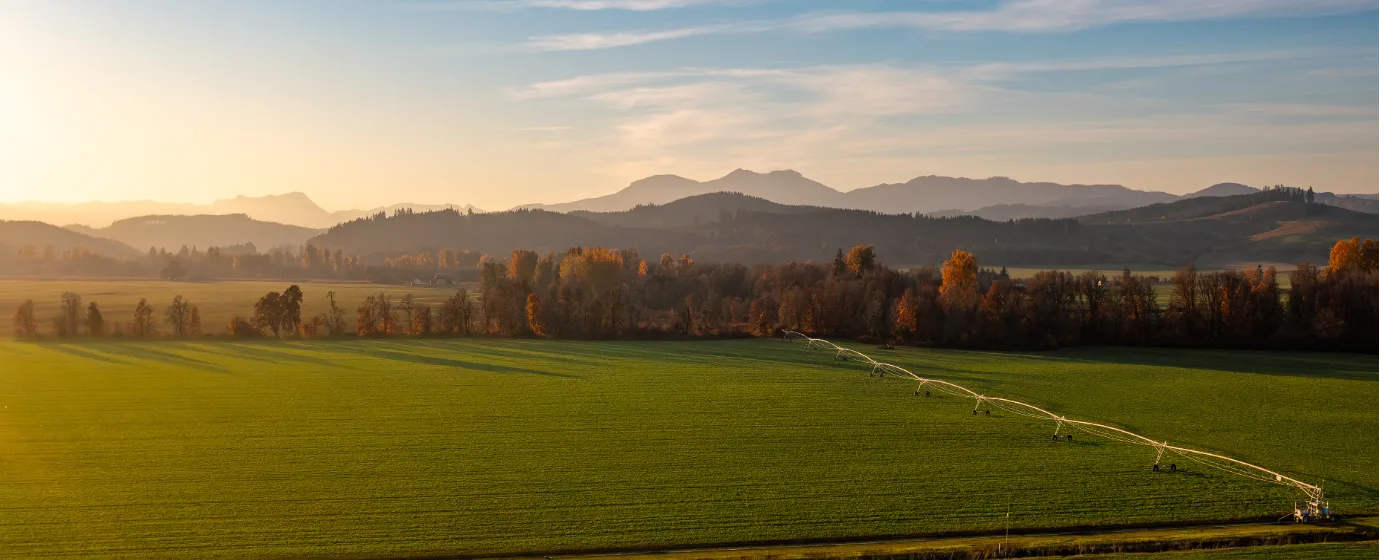
Willamette Valley · Oregon
Living in Dallas: The Ultimate Relocation Guide (2026)
Maybe your company is relocating you to the Salem metro and someone passed along a spreadsheet with three or four Willamette Valley towns to consider. Maybe you've been watching Portland home prices climb for two years straight and finally decided to look west. Maybe you just drove through Dallas on Highway 22 and noticed it was bigger — and more real — than you expected for a town this size. The central tension of Dallas, Oregon is this: it's genuinely affordable by Pacific Northwest standards, with a median sold price right around $442,000, but it asks something in return. You are trading proximity for space, urban amenity for community scale, and the easy anonymity of a suburb for a place where people actually know their neighbors.
Dallas sits 15 miles west of Salem — the state capital — on the western edge of the Willamette Valley, tucked between the Coast Range foothills and the valley floor. It is the county seat of Polk County, which means a certain amount of civic infrastructure comes with the address: a working courthouse, county services, a downtown that actually functions as a downtown. The Rickreall Creek runs through town. The hills to the west keep things green longer than the valley floor cities. And the distance from Salem, while short on paper, matters in practice — those 20 minutes on Highway 22 become the daily rhythm of life here for anyone commuting east.
This guide will help you figure out whether Dallas is the right fit for your household. That means honest coverage of the housing market, the neighborhood geography, the commute reality, the school situation, and the specific lifestyle tradeoffs that only become clear after you've lived here a few months. There are buyers for whom Dallas is a genuinely smart move in 2026. There are others who will be happier in Monmouth or closer to Salem's core. By the end of this, you'll know which side of that line you're on.

Dallas doesn't suit every buyer equally. The table below maps intent to honest outcome — before you spend a Saturday on open houses, it helps to know whether your priorities actually align with what this market delivers.
| Best For | Why |
|---|---|
| Salem commuters | 20 minutes to Salem on Highway 22; significantly lower home prices than Salem proper |
| First-time buyers | $442K median sold price is among the most accessible entry points in the Willamette Valley |
| Retirees and 55+ buyers | Dallas Retirement Village, age-restricted communities, low density, slower pace |
| Families with kids | Established neighborhoods, city park system, aquatic center, strong community ties |
| Remote workers | Space and value per square foot; broadband available to roughly 88% of households |
| Small-town lifestyle seekers | County seat character, historic downtown, walkable core, tight-knit community events |
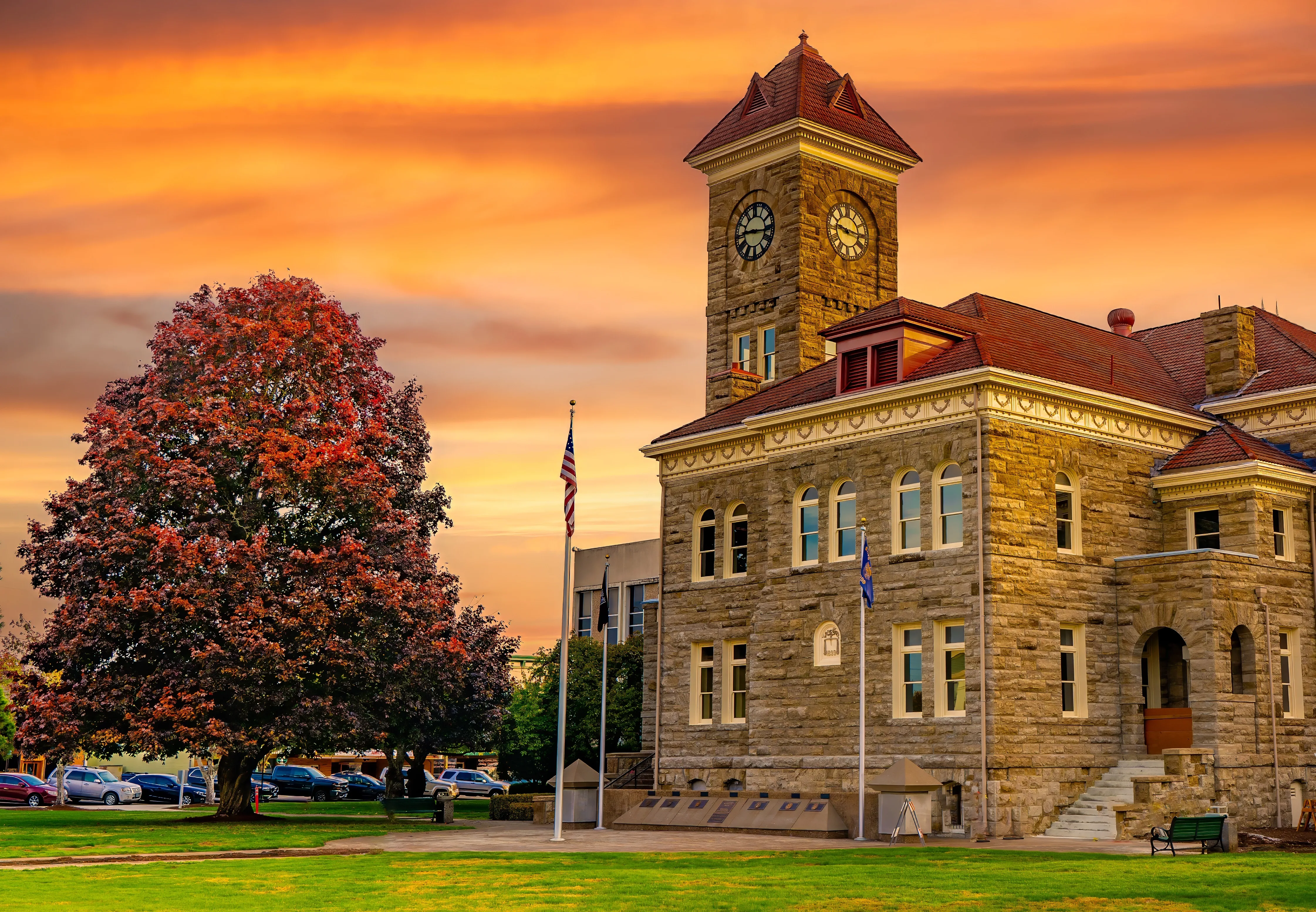
The first thing that registers when you spend time in Dallas is that it operates at a different speed than the Salem metro. The downtown moves at a pace that feels deliberate rather than sleepy — there are people on the sidewalks, businesses that are actually open on weekdays, and a functional civic center that reminds you this is a county seat, not a bedroom community with a gas station. The Dallas Courthouse anchors the core, and the surrounding blocks of restored historic buildings give the downtown a sense of permanence that newer Oregon suburbs simply don't have.
Daily life here is shaped by one geographic reality more than anything else: Highway 22. That corridor east to Salem is your connection to the region's major medical center, its larger retail infrastructure, and its employment base. The commute is genuinely 20 minutes in normal conditions, but it is not a mindless commute. The two-lane stretches and the morning volume through Rickreall mean you develop a feel for timing quickly. Locals who've been here a few years know to leave before 7:30 a.m. or after 8:15 a.m. — the window in between can add 15 minutes.
What surprises most people after six months of living in Dallas is how much of their daily life never requires getting on the highway at all. The Safeway on Ellendale Avenue handles most grocery runs. West Valley Hospital is inside city limits. The Dallas Public Library, the Aquatic Center on Southeast LaCreole Drive, and Dallas City Park are all within a few minutes of the residential core. For families especially, the town has enough amenity infrastructure that weekend life rarely requires driving to Salem.
The community vibe skews neighborly and intergenerational. With roughly 23% of residents 65 or older and a median age near 41, Dallas doesn't feel like a young-professional-dominated suburb. It feels like a town where the hardware store owner knows the high school football coach and the city councilmember shops at the same Safeway. That dynamic is either deeply appealing or mildly claustrophobic depending on your social temperament.
Affordability with genuine space. The $442,000 median sold price isn't a compromise disguised as a deal — it represents actual houses on actual lots. The median price per square foot runs approximately $312, which means buyers in the mid-$400s are routinely landing 1,400–1,600 square feet of usable space. Compare that to Salem's tighter west side or Corvallis, and the value equation becomes clear quickly.
A downtown that actually works. Most Oregon cities this size have a downtown that functions primarily as a historical footnote. Dallas's historic core, now on the National Register of Historic Places following its 2024 designation, has real commercial activity: local restaurants, boutique retail, the West Valley Taphouse, the Dallas Cinema, and the Rotary Amphitheater on the courthouse lawn. The Dallas Downtown Association has been driving restoration and investment for years, and the results are visible.
Outdoor access without the crowds. The Rickreall Creek Trail System connects neighborhoods to the creek corridor, and the Delbert Hunter Arboretum and Botanical Garden off Southeast Uglow Avenue gives the city a quiet, undervisited gem that feels out of scale with a town of 18,000. Dallas City Park and Roger Jordan Community Park between them cover substantial acreage for sports fields, walking, and open space. The proximity to the Coast Range means wine country drives and forest trailheads are 20–30 minutes out.
Essential services inside city limits. West Valley Hospital, operated under the Salem Health system, keeps urgent and routine medical care local. Combined with the Dallas Retirement Village, a prominent senior care facility, the city has a healthcare infrastructure that punches above its size class. For retirees especially, this matters enormously — not having to drive to Salem for a routine appointment changes the texture of daily life.
A city growing into itself. Dallas has expanded roughly 8% since the 2020 census and is growing faster than the majority of similarly sized U.S. cities. New construction is adding inventory across neighborhoods like River Gleann and the northern subdivisions, which means buyers aren't choosing between a static older stock — there are contemporary floor plans available at prices that would be impossible in Salem proper.

Looking to buy in Dallas? Estimate your payment.
Enter your numbers to see an estimated monthly mortgage payment.
Estimate only. Excludes HOA fees and mortgage insurance.
The commute dependency is real and worth examining carefully before you commit. Everything east of Dallas — Salem's hospital network, its major employers, its retail districts, its interstate access — sits behind that Highway 22 corridor. On a normal Tuesday morning, 20 minutes is accurate. During harvest season on the valley floor, after an accident near Rickreall, or on a rainy Friday afternoon, that number climbs. Buyers who are doing two-car commutes into Salem need to budget time, not just miles.
The school district rating reflects a genuine challenge. The Dallas School District carries a C+ composite rating, and that figure isn't an artifact of methodology — it reflects a district navigating resource constraints that are common in smaller Oregon districts but nonetheless real. Families with school-age children should visit the schools, talk to parents who live here, and factor the district profile into their decision. Some families find the community engagement and smaller class sizes offset the rating; others decide they need to be closer to higher-rated districts. Both are reasonable conclusions.
Retail and dining options are limited. Dallas has a Safeway, a handful of local restaurants, and a downtown retail corridor that's improving but still modest. For Costco runs, a broader restaurant selection, or specialty retail, you're driving to Salem. After a year or two, most residents stop noticing the gap — but buyers arriving from larger metros often take several months to recalibrate their expectations around what "convenient" means in a small city.
Why some people leave. The honest answer is usually one of three things: their career grows past what the local employment market can support, their kids age into high school and they want a district with more extracurricular resources, or they miss the social infrastructure of a larger city and find that the small-town dynamic that felt cozy at first begins to feel limiting. These aren't failures of Dallas — they're legitimate lifestyle preferences that the city simply can't accommodate at its scale.
The historic core is the most active real estate market in the city by listing volume, and the 2024 National Historic District designation has given it a narrative that didn't exist a few years ago. Homes here tend to be older, with the character and the maintenance realities that come with that territory, but the walkability to the courthouse lawn, the Rotary Amphitheater, and the West Valley Taphouse is genuine. Crime data from Homes.com identifies this as the safest neighborhood in the city — a counterintuitive finding for a downtown, but one that reflects the civic engagement and foot traffic that comes with a functioning county seat core.
Best for: Buyers who want walkability, historic character, and proximity to Dallas's civic and commercial core.
Listed in MLS databases as Bridlewood Equestrian Estates, this established subdivision on Dallas's northern residential edge offers the kind of finish level — granite counters, primary suites with walk-ins, 9-foot main-floor ceilings — that typically commands a premium. Homes here sit above the city-wide median, and the neighborhood's character is settled and mature rather than transitional. The condo product along Bridlewood Drive provides an entry point into the neighborhood for buyers who want the address without the full single-family price tag.
Best for: Move-up buyers and professionals who want a finished, established neighborhood with better-than-average specs.
River Gleann attracts buyers specifically looking for newer construction at Willamette Valley prices. Homes built in the early 2020s dominate the inventory here, with cul-de-sac layouts, hill views, and walking path access to the creek corridor. Listings consistently describe the neighborhood as "highly sought-after," and the volume of repeat buyer interest bears that out. The catch is that the newer build quality comes with HOA considerations and less mature landscaping than older established neighborhoods.
Best for: Buyers prioritizing newer construction, hill views, and a quieter residential setting.
Salt Creek Road runs southwest of the city toward the Coast Range foothills, and the properties along this corridor offer something unusual for a city of this size: genuine acreage. Five-acre parcels with horse stalls, shops, barns, and RV hookups are common MLS listings here, and the proximity to Salt Creek Cider House gives the area a specific agricultural identity. This is not a suburban subdivision — it's semi-rural living that happens to be within 10 minutes of a Safeway.
Best for: Buyers who want acreage, animals, and rural character without sacrificing city proximity.
The northern extension of the Salt Creek corridor shares the semi-rural character of its southern counterpart but sees less MLS inventory at any given time. Buyers who want the Salt Creek lifestyle but find the southern corridor fully absorbed tend to look here first. The tradeoff versus the main Salt Creek area is primarily about inventory availability rather than lifestyle difference — the two corridors are functionally similar.
Best for: Acreage buyers who want privacy and rural feel with the same access profile as Salt Creek.
This is one of the more specific real estate products in the Dallas market: a 55-plus age-restricted community of 134 homes adjacent to the Dallas Golf Course, primarily one-story ranch designs, with a clubhouse and a quiet, intimate scale. Located about 12 miles from downtown Salem, it offers the proximity to Salem services that retiring buyers often prioritize while maintaining a genuinely small-scale community feel. It's not for buyers who want neighborhood density or younger community energy.
Best for: Active retirees 55+ who want golf course access, one-story living, and a managed community environment.
Ellendale Avenue is Dallas's primary north-south commercial corridor, and the residential areas west of it represent some of the city's most accessible single-family inventory. Homes here tend toward the lower end of the city-wide median, reflecting a mix of ages and conditions in the housing stock. For first-time buyers or buyers on a firm budget, Ellendale West offers the most realistic entry point into Dallas homeownership. The proximity to Safeway and the city's main commercial strip is a practical upside that compensates for the lack of neighborhood polish.
Best for: First-time buyers and budget-conscious households who want proximity to services and an accessible price point.
Oakdale sits in the southeastern residential quadrant of Dallas and draws buyers who want an established neighborhood with more lot size than the downtown-adjacent streets provide. The area's character is quiet, family-oriented, and unpretentious — houses with backyards where kids actually play in them. It's not a destination neighborhood in the way that Bridlewood or River Gleann might be marketed, but it holds its value steadily and offers the kind of suburban stability that a certain type of buyer specifically wants.
Best for: Families with kids who want established neighborhood character, yard space, and a lower-key address.
| City | Best For | Median Home Price | Commute to Salem | Vibe |
|---|---|---|---|---|
| Dallas, OR | Affordable Willamette Valley homeownership | $442,000 | 20 min | Small-city county seat, community-oriented |
| Salem, OR | Career access, urban amenity, larger districts | $370,000–$420,000 | 0 min | State capital, mid-size city, mixed suburban-urban |
| Monmouth, OR | University town character, walkable core | $350,000–$390,000 | 25 min | College-town energy, younger demographic |
| Independence, OR | Waterfront access, small-town pace | $330,000–$360,000 | 22 min | River town, growing retail, very small scale |
| Rickreall, OR | Rural acreage, wine country proximity | Varies widely | 15 min | Unincorporated, agricultural, minimal services |
| Falls City, OR | Maximum rural affordability, deep valley character | $280,000–$320,000 | 35 min | Very small, remote feel, limited services |
| Metric | Dallas, OR |
|---|---|
| Population (2026) | ~18,366 |
| County | Polk County (county seat) |
| Median Sold Price (March 2026) | $442,000 |
| Property Tax Rate | Approximately 0.67% |
| Median Household Income | ~$71,549 |
| Commute to Salem | ~20 minutes |
| Violent Crime per 1,000 | 2.78 |
| Property Crime per 1,000 | 19.63 |
| School District | Dallas School District (C+) |
| Median Gross Rent | ~$1,376/month |
| Owner-Occupied Housing | ~67% |
| Annual Population Growth | ~1.26% |
Western Days. Dallas holds its annual Western Days celebration in late summer, a community tradition that fills the downtown corridor with live music, a parade, and the kind of all-ages street fair that small Oregon towns do better than anywhere else. It's genuinely well-attended by locals — not a tourist event dressed up as a community one — and it's a reliable indicator of how tightly Dallas's civic identity is tied to its historic agricultural and timber roots.
The Delbert Hunter Arboretum. Most newcomers drive past it for months before realizing what it is. The Delbert Hunter Arboretum and Botanical Garden, tucked off Southeast Uglow Avenue, is a legitimate botanical collection maintained on a volunteer and city-partnership model. It's free, it's quiet on weekdays, and it's the kind of place longtime residents treat as their own private park while it remains almost unknown to people who moved here recently. Find it early.
Friday afternoons on the courthouse lawn. The Rotary Amphitheater on the Dallas Courthouse lawn comes alive periodically with local music, food vendors, and community programming through the warmer months. It's less of a formal events series and more of a recurring gathering that the downtown community has claimed as its own. For newcomers trying to get a feel for the social fabric quickly, spending a Friday evening there in the spring or summer is more informative than any neighborhood tour.
What I would not do if moving to Dallas: I would not buy in the Salt Creek corridor without driving that road at 7:00 a.m. on a weekday first. The rural character is real and appealing, but the access to Highway 22 from the south end of Salt Creek Road adds meaningful time to the Salem commute that the map doesn't make obvious. The buyers who end up frustrated with that location are almost always the ones who fell in love with the acreage on a Saturday afternoon and didn't account for the Tuesday morning reality.
Local Expert Takeaway: If you're choosing between a newer build in Dallas's northern subdivisions and a home in Salem's west side, the Salem commute math matters more than most buyers initially weight it. But if you're comparing Dallas to Monmouth or Independence, Dallas wins on services, civic infrastructure, and community scale — and the $442,000 median sold price leaves meaningful room for a first renovation without overpaying for the privilege. Focus your search on River Gleann and the Ellendale corridor first; those areas give you the clearest picture of where the market is actually trading in mid-2026.
✅ Dallas offers one of the most accessible median home prices in the Willamette Valley — $442,000 with genuine space, established neighborhoods, and a functioning historic downtown that's improving with real investment.
⚠️ The 20-minute Salem commute is accurate in ideal conditions, but Highway 22 has real chokepoints. Buyers doing daily Salem commutes should test the drive during peak hours before committing to a location on the western end of the corridor.
📍 The school district's C+ rating is a legitimate consideration for families — visit the schools, talk to local parents, and factor the district profile into your decision alongside the home price advantages.
Is Dallas, Oregon a good place for families?
Dallas can be a strong fit for families who value space, community connection, and affordability over proximity to top-rated school districts. The city's park system, Dallas Aquatic Center, and Roger Jordan Community Park give kids genuine outdoor infrastructure, and the small-city scale means kids often know their neighbors in a way that larger suburbs don't replicate. Families who need access to larger school programs or extracurricular depth sometimes find the district limiting as children reach high school age.
What is the crime rate in Dallas, Oregon?
Dallas reports approximately 2.78 violent crimes per 1,000 residents — a figure that compares favorably to many mid-size Oregon cities. Property crime runs roughly 19.63 per 1,000, which is moderate and broadly consistent with small Willamette Valley cities of similar size. Downtown Dallas is identified by local crime data as one of the safer areas of the city, which reflects the civic activity and foot traffic in that corridor.
How does Dallas compare to nearby Monmouth and Independence?
Dallas tends to run higher on home prices than both Monmouth and Independence, but it delivers more in return: a fully functioning downtown, county seat services, West Valley Hospital inside city limits, and a broader commercial base. Monmouth's university-town character brings a younger demographic and walkable energy that Dallas doesn't replicate. Independence offers waterfront proximity to the Willamette River at a lower price point. For buyers who want the most complete small-city infrastructure package in Polk County, Dallas typically wins that comparison — but at a modest price premium over its smaller neighbors.
Explore the full Dallas series: The Ultimate Dallas Relocation Guide · Is Dallas Safe? · Cost of Living in Dallas · Best Neighborhoods in Dallas · Dallas Schools & Family Life · Dallas Youth Sports · Dallas Parks & Recreation · Retiring in Dallas · 1031 Tax-Deferred Exchange in Dallas · Dallas First-Time Homebuyers Guide · Moving to Dallas from California
Tell us what you need help with and we'll connect you with local resources.

About the Author
Todd Davidson is the founder of Living in Oregon and Living in Washington, where he publishes in-depth city guides, neighborhood resources, and local market insights covering more than 180 communities across the Pacific Northwest. While his background is in home financing and real estate, he created these digital platforms to help families research and compare regions before making a move.