
Willamette Valley · Oregon
Living in Woodburn: The Ultimate Relocation Guide (2026)
Maybe you've been pricing homes in the Salem metro and someone mentioned Woodburn as a place where you can still find a single-family house under $450,000 without landing in a flood zone or a community with no amenities. Maybe your company runs freight or distribution along the I-5 corridor and Woodburn just landed on your short list for the first time. Or maybe you drove through on your way between Portland and Salem, saw the outlet mall, the tulip field signs, and a town that looked more working-class than it did suburban polished — and you couldn't quite tell if that was a problem or a feature.
That first impression is worth sitting with. Woodburn is the third-largest city in the Salem metro area, positioned roughly 30 miles south of Portland and connected to everything by Interstate 5. It's a genuinely diverse, economically active small city — not a suburb in disguise — where approximately 62% of residents are Hispanic, where Russian Old Believer families have lived for generations, and where the median household income of around $67,000 lands well below what it takes to live comfortably in Portland anymore. The city has real employers, real schools, real infrastructure, and real trade-offs that anyone considering a move here deserves to understand before signing anything.
This guide will help you figure out whether Woodburn fits your actual life — not just your spreadsheet. We'll cover who this city genuinely works for, what neighborhoods are worth knowing, how the commute to Portland actually plays out, what the school system delivers, and the specific friction points that surprise new residents once the moving boxes are unpacked.
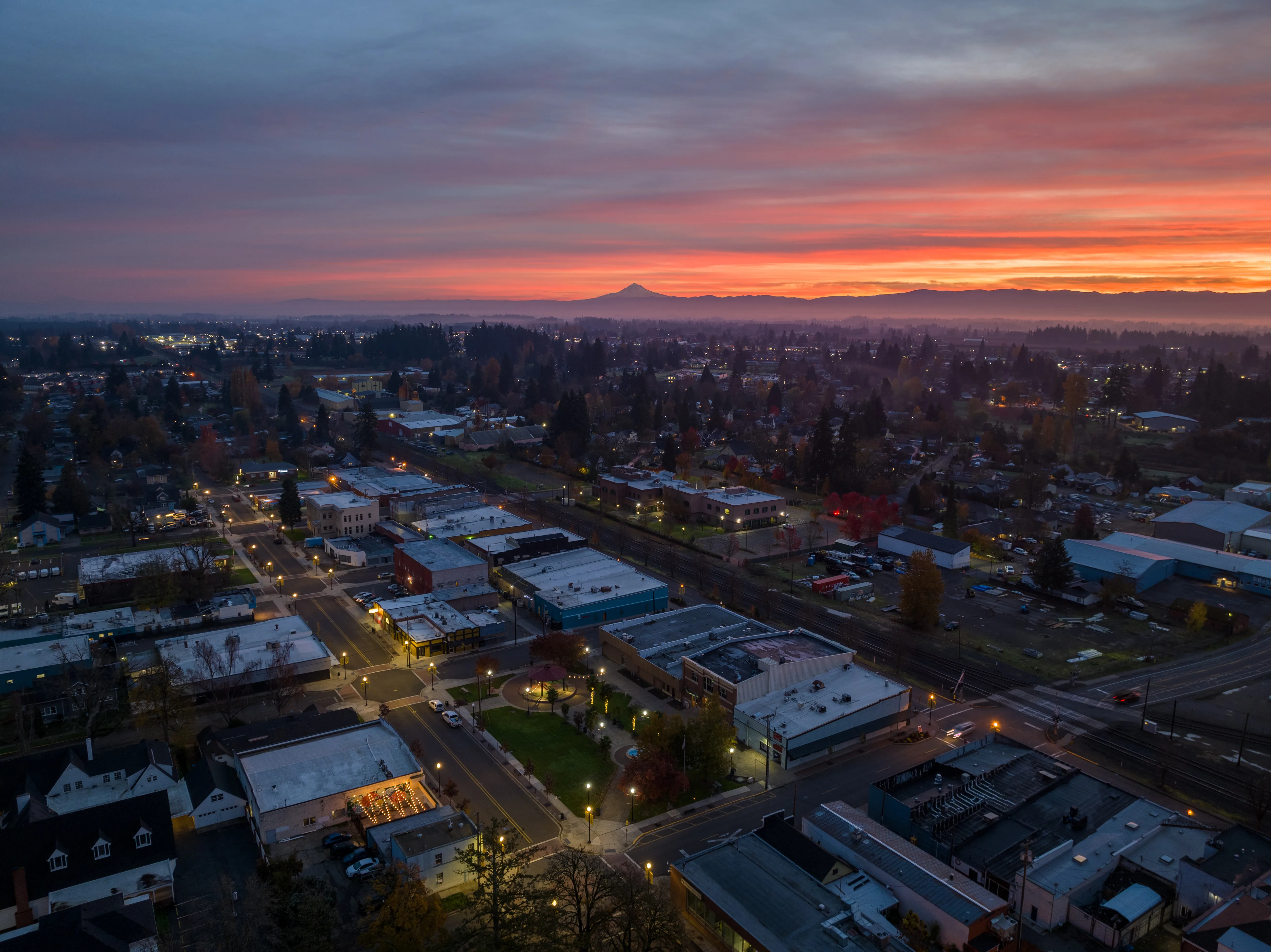
Woodburn is a city with a clear value proposition for certain buyer profiles and a clear mismatch for others. The table below gives you the honest verdict before you read further.
| Best For | Why |
|---|---|
| First-time buyers | Entry-level homes start around $321,900 for new construction; the median sold price sits at $430,000 — one of the most accessible price points in the Portland-to-Salem corridor |
| Commuters to Salem | Salem's government and healthcare employers are 20–25 minutes south; Woodburn gives you more house for significantly less money than Salem's Westside neighborhoods |
| Distribution and logistics workers | Safeway Distribution, US Foods, and Do it Best Corp all operate here; living where you work eliminates the I-5 commute entirely |
| Budget-conscious Portland commuters | The 40-minute drive to Portland on a light traffic morning is real; buyers who can work from home 3–4 days a week find the savings worth it |
| Retirees (budget-focused) | Woodburn Senior Estates is an age-restricted community with low price points; the Woodburn Aquatic Center and proximity to Woodburn Company Store and services support a no-fuss lifestyle |
| Latino and immigrant families | Bilingual services, Spanish-language schools, a deep community infrastructure, and cultural events like La Fiesta Mexicana create a sense of belonging that simply doesn't exist at this scale in most Oregon cities |
Woodburn is compact — just over six square miles — and I-5 splits the practical experience of living here into two distinct zones. The commercial and outlet corridor along Highway 214 near the freeway feels transactional: big-box retail, the Premium Outlets, fast food, and the kind of strip development you'd find outside any mid-sized Oregon city. The interior streets north of downtown, around Settlemier Park and the original residential grid, feel much quieter and more rooted. Understanding which version of Woodburn you're actually buying into matters more than any single metric.
The walkability score of 47 tells you what you need to know about how most people get around: you will drive to most things, and that is simply part of life here. A grocery run, a doctor's appointment, a soccer game — all require a car. The one exception is downtown Woodburn and the streets surrounding Settlemier Park, where density is high enough that errands on foot are occasionally feasible. Public transit use is negligible, with fewer than 1% of commuters relying on it, so if your household is car-free by choice, this isn't your city.
The community vibe is something Portland newcomers often don't expect: it is genuinely multicultural in a way that goes beyond demographics on a chart. Walking through the core of Woodburn on a Saturday morning, you'll hear Spanish and Russian spoken in the same parking lot, pass a Russian Orthodox church a few blocks from a taqueria that's been there for twenty years, and see families from five different backgrounds at Centennial Park. That cultural texture is not a surface-level feature — it's been building here for generations, and it shapes everything from the school system to the grocery store offerings to what the Friday evening scene looks like.
The traffic chokepoint that catches new residents off guard is the Highway 214 and I-5 interchange during afternoon commute hours, typically between 4:30 and 6:30 p.m. Southbound backups from Portland onto the Woodburn exit can add 15–20 minutes on heavy days. Buyers who work in Portland and plan to commute daily should drive the route at 5 p.m. on a Thursday before making an offer — the 40-minute average masks real variation.
The price of entry is real. In a regional market where Salem's established neighborhoods routinely push $500,000+ and any Portland suburb with a decent school rating runs $600,000–$800,000, Woodburn's $430,000 median sold price represents genuine financial breathing room. Families who buy here at that figure and stay for a decade have historically captured strong appreciation — the ten-year appreciation rate of approximately 129% places Woodburn in the top 10% nationally, a number that surprises almost everyone who pegs it as a starter-city afterthought.
The cultural calendar is one of the most distinctive in the Willamette Valley. The Wooden Shoe Tulip Festival out on Meridian Road runs from mid-March through late April and draws visitors from across the Pacific Northwest — but for residents, it's just where you take out-of-town guests in April. La Fiesta Mexicana at Legion Park, running in its current form since 1964, has grown into a multi-day event with lucha libre, a soccer tournament, live music, carnival, and more than 60 vendors. For families with roots in Mexican culture, finding a community that hosts an event of that scale — in their own city, free during the day — is not a small thing.
The aquatics and recreation infrastructure punches above the city's size. The Woodburn Aquatic Center gives families a year-round swimming facility that smaller nearby cities like Hubbard or Aurora can't match. Centennial Park and Settlemier Park provide green space across the city's core, and Legion Park anchors the events calendar. For households that want outdoor recreation without driving 45 minutes, the Silverton–Mt. Angel area is only 7–12 miles east via Highway 214, putting Silver Falls State Park within easy reach.
The employment concentration here is genuinely unusual for a city of 30,000. Safeway Distribution, US Foods, and Do it Best Corp represent serious industrial employment that doesn't exist in most towns this size. Workers who land jobs at those facilities and live in Woodburn enjoy short commutes, stable employment, and the ability to own a home at a price point that would be impossible if they commuted to do the same work from Portland.

Looking to buy in Woodburn? Estimate your payment.
Enter your numbers to see an estimated monthly mortgage payment.
Estimate only. Excludes HOA fees and mortgage insurance.
The school district is the most common reason buyers reconsider. Woodburn School District carries a C- rating on most third-party evaluations, a district-reported four-year graduation rate of 77.6% for the Class of 2025, and a high school that sits below state average on most performance metrics. For families with school-age children where academic outcomes are a primary driver of the decision, this matters — and glossing over it would be dishonest. The district does offer genuine bilingual programming in Spanish, Russian, and English, and CTE students graduate at a 93% rate, but the overall picture requires families to go in with open eyes, connect with the schools directly, and often supplement at home.
The cost of living index sits at 112 — slightly above the national average — which surprises buyers who expect a blue-collar city to be cheaper across the board. The gap is almost entirely driven by Oregon's high cost of housing relative to national medians, not by local services or utilities. A household needs an estimated income of roughly $87,200 to comfortably afford a median-priced home at current interest rates, which puts meaningful pressure on a city where the median household income runs approximately $67,000. The math works better for dual-income households or buyers arriving with equity from a higher-priced market.
Property crime is the metric that comes up most in online discussions about Woodburn. At approximately 25 incidents per 1,000 residents, the rate is elevated compared to smaller, quieter Oregon cities. This doesn't translate into an unsafe feeling in most residential neighborhoods, but it does mean keeping your garage closed and being deliberate about where you park. The concentrated commercial corridor near the outlets sees the majority of activity.
Why some people leave: the I-5 noise profile bothers residents whose homes sit within a few hundred feet of the freeway more than they expected. Portland commuters who accepted the 40-minute average sometimes find the consistency frustrating when traffic turns it into 65 minutes on a bad week. And buyers who move here specifically for the price point and then want walkable coffee shops, wine bars, and weekend farmer's markets often discover that Woodburn isn't trying to become that kind of city — and feel the mismatch within the first year.
Woodburn Estates wraps around the Woodburn Golf Course on the city's west side and represents the closest thing Woodburn has to a prestige address. Homes here tend toward larger lots, more mature landscaping, and construction quality above the city median. The golf course access is a genuine lifestyle differentiator for buyers who play, and the relative quiet on the west side insulates residents from the commercial noise near I-5. City-wide median pricing applies here as a floor, with upper-end homes pushing above $500,000 for larger floor plans.
Best for: Move-up buyers who want the most polished residential setting in Woodburn without leaving the city.
Marion Pointe is one of the more established planned neighborhoods in the city, situated close to Lincoln Elementary, French Prairie Middle School, and Woodburn High School — an unusual concentration of schools within a short distance. The layout is classic PNW planned suburban: cul-de-sacs, attached garages, HOA landscaping standards. Buyers with school-age children prioritize this location specifically for the short walk to three school levels.
Best for: Families with kids who want the most walkable school access available in Woodburn.
Smith Creek is a newer residential development that attracts buyers looking for modern construction without the premium attached to Woodburn Estates. Floor plans tend to be larger and more open than older city-center homes, and the neighborhood sits away from the I-5 commercial corridor. The compromise is a car-dependent location that requires driving for every errand.
Best for: Buyers prioritizing newer construction and larger floor plans over walkability or location.
Brighton Pointe offers a mix of newer single-family homes and is among the developments that have benefited from Woodburn's HB 2001 zoning updates, which now permit middle housing by right in residential zones. Pricing tends to track the city-wide median closely. The neighborhood is relatively quiet, positioned away from the major commercial strips.
Best for: First-time buyers or young families looking for newer construction in a lower-profile neighborhood at or below the city median.
Woodburn Senior Estates is an age-restricted community that functions as Woodburn's primary purpose-built retirement option. Pricing here runs well below the city median — often in the $200,000–$280,000 range for manufactured or smaller attached homes — making it one of the most affordable homeownership options in the region for residents 55 and older. The Woodburn Aquatic Center and the Woodburn Company Store provide day-to-day lifestyle infrastructure within a short drive.
Best for: Retirees on fixed incomes who want low-maintenance homeownership in a cost-effective, age-restricted setting.
The Settlemier and Hayes corridor represents Woodburn's most historically rooted residential area, anchored by Settlemier Park and within walking distance of the downtown core. The Settlemier House, a Victorian-era landmark, sits nearby and reflects the neighborhood's long history. Homes here are older — many built mid-20th century — with smaller lots and more walkable access to parks and downtown than anywhere else in the city. Prices can dip below the city median for buyers willing to take on older construction.
Best for: Buyers who want the most walkable neighborhood in Woodburn and value historic character over new construction finishes.
South Woodburn is primarily a working-class residential zone that absorbs a significant share of the city's housing demand from distribution and industrial workers employed locally. Home prices here track at or below the city median, and the housing stock is a mix of older single-family homes and some newer infill. The honest tradeoff is proximity to industrial activity and a more utilitarian neighborhood character compared to the northwest or east sides.
Best for: Workers employed in Woodburn's distribution sector who want to minimize commute time and maximize affordability.
Heritage Park is a stable residential neighborhood that sits in the interior of the city, away from the freeway corridor. It offers a mix of housing types at pricing close to the city-wide median, with reasonable access to parks and the elementary school network. Nothing dramatically distinguishes Heritage Park from neighboring residential areas, but it's consistently cited as a solid, quiet option for households who want predictability.
Best for: Buyers who want a stable, mid-city residential option without strong preferences for any specific amenity.
| City | Best For | Median Home Price | Commute to Portland | Vibe |
|---|---|---|---|---|
| Woodburn | Affordability, cultural community, distribution employment | $430,000 | ~40 min | Working-class, diverse, practical |
| Salem | Government/healthcare jobs, established neighborhoods | ~$380,000–$430,000 | ~55 min | Mid-size city, full services |
| Canby | Quiet suburban feel, good schools, I-5 access | ~$480,000–$530,000 | ~35 min | Small-town suburban, quieter |
| Silverton | Small-town charm, arts community, Silver Falls proximity | ~$450,000–$500,000 | ~60 min | Artsy, walkable small city |
| Mt. Angel | Very small-town, low prices, Oktoberfest culture | ~$350,000–$390,000 | ~55 min | Tight-knit, very small |
| Aurora | Rural quiet, historic downtown, ultra-small scale | ~$500,000+ | ~35 min | Antique-and-farm aesthetic |
| Metric | Detail |
|---|---|
| Population | ~30,449 (2024 estimate) |
| Median Home Price (Sold, March 2026) | $430,000 |
| Median Household Income | $67,469 |
| Property Tax Rate | ~0.94% |
| Commute to Portland | ~40 minutes (I-5) |
| Walk Score | 47 — minimally walkable |
| School District Rating | C- (Woodburn School District 103) |
| Graduation Rate (Class of 2025) | 77.6% |
| Violent Crime per 1,000 Residents | 3.4 |
| Property Crime per 1,000 Residents | 25 |
| Largest Demographic Group | Hispanic (62.6%) |
| Median Age | 38.5 years |
The tulip festival is your backyard, not a destination. The Wooden Shoe Tulip Farm at 33814 S Meridian Road draws traffic from Portland and Seattle every spring, running mid-March through late April. For residents, this means one of the most visually spectacular seasonal backdrops in the Willamette Valley is five minutes away and a ritual that never gets old — even when the Meridian Road backup reminds you to leave early on weekends.
La Fiesta Mexicana is a genuine civic institution. First held in 1964 as a single downtown event, the festival at Legion Park has grown into one of the largest and longest-running Hispanic celebrations in Oregon. The 2026 dates — August 21–23 — bring lucha libre, a full soccer tournament, a parade, and dozens of food and craft vendors to a city that treats this not as a tourism draw but as a community homecoming. Residents who've lived here for thirty years still show up every year.
The Old Believer community is visible in ways that matter. Woodburn's Russian Orthodox Old Believer families — who arrived from Turkey in the 1950s after escaping post-revolution persecution — maintain a distinct cultural presence through their churches, dress, and community life. Walking through certain residential streets east of downtown, the architectural style of the Orthodox churches is striking. It's a reminder that Woodburn's diversity has layers that a demographics spreadsheet doesn't capture.
What I would not do: I would not buy on the streets immediately adjacent to the I-5 on-ramps along Highway 214 without spending a night in the area first. The freeway noise at those intersections — particularly on the east side near the Woodburn exit — runs continuous and louder than buyers typically anticipate from a daytime showing. The price discount on those homes exists for a reason, and it tends to matter more at 6 a.m. on a weekday than it does during a Saturday afternoon open house.

Local Expert Takeaway: If you're buying in Woodburn in 2026, the single most important variable after price is school access — specifically, whether you can reach Lincoln Elementary and French Prairie Middle School on foot or a short drive from the home you're considering. The Marion Pointe and Settlemier corridors solve that problem most directly. For buyers without school-age children, the Woodburn Estates/Golf area or newer developments in Smith Creek and Brighton Pointe offer the cleanest entry into a market that has historically appreciated well above Oregon averages. Don't sleep on the new construction options — starting in the low $320s, the townhome inventory represents one of the few places in the Portland-to-Salem corridor where you can still buy new without stretching.
✅ Woodburn's affordability is real — at a $430,000 median sold price and new construction entries in the low $300s, this is one of the most accessible ownership markets remaining in the Portland-Salem corridor.
⚠️ The school district requires honest evaluation — a 77.6% graduation rate and a C- district rating means families with school-age children should visit campuses, research individual schools, and go in with a clear plan rather than assumptions.
📍 Location within the city matters more than most buyers realize — the difference between a home near Settlemier Park and one near the I-5 interchange on Highway 214 is not just price, it's noise level, walkability, and daily quality of life.
Is Woodburn a good place for families?
It depends heavily on your priorities. Woodburn offers genuine affordability, strong cultural community infrastructure, and recreation amenities including the Woodburn Aquatic Center and multiple city parks. Families who are comfortable navigating a below-average school district — or who plan to supplement their children's education — often find the cost savings and community character worth it. Families for whom school performance is the primary driver typically look at Canby or the Silverton area instead.
What is the crime rate in Woodburn?
Woodburn's violent crime rate runs approximately 3.4 incidents per 1,000 residents, which is relatively moderate for a city of its size. The property crime rate of about 25 per 1,000 is higher and is the more relevant figure for most residents — auto break-ins and retail theft, concentrated near the commercial corridors, account for the majority of incidents. Most established residential neighborhoods away from the Highway 214 strip report a quiet, low-incident daily experience.
How does Woodburn compare to nearby cities for homebuyers?
Woodburn's primary competitive advantage over Canby, Silverton, and Aurora is price. You get more square footage, newer construction options, and a broader selection at $430,000 than you will in most comparable Willamette Valley cities north of Salem. The compromise is a lower-rated school district and a more urban, working-city character rather than the small-town or suburban polish buyers find in Canby or Silverton. For buyers whose priority is maximizing homeownership value along the I-5 corridor, Woodburn consistently comes out ahead.
Explore the full Woodburn series: The Ultimate Woodburn Relocation Guide · Is Woodburn Safe? · Cost of Living in Woodburn · Best Neighborhoods in Woodburn · Woodburn Schools & Family Life · Woodburn Youth Sports · Woodburn Parks & Recreation · Retiring in Woodburn · 1031 Tax-Deferred Exchange in Woodburn · Woodburn First-Time Homebuyers Guide · · Moving to Woodburn from California
Tell us what you need help with and we'll connect you with local resources.

About the Author
Todd Davidson is the founder of Living in Oregon and Living in Washington, where he publishes in-depth city guides, neighborhood resources, and local market insights covering more than 180 communities across the Pacific Northwest. While his background is in home financing and real estate, he created these digital platforms to help families research and compare regions before making a move.