
Mt Hood / Columbia Gorge · Oregon
Living in Hood River: The Ultimate Relocation Guide (2026)
Maybe your company shifted to remote and you finally have the freedom to live somewhere that matches how you actually want to spend your weekends. Maybe you've been watching Hood River content online — kiteboarders launching off the Columbia, orchard rows blazing orange in October, that volcanic peak sitting impossibly large above everything — and you're wondering if it's as good in real life as it looks on a screen. Maybe you just drove through on Highway 30, stopped for lunch, and couldn't leave. Whatever brought you here, the central tension of Hood River is real: this is genuinely one of the most spectacular small towns in the Pacific Northwest, and it costs every penny of what that reputation demands.
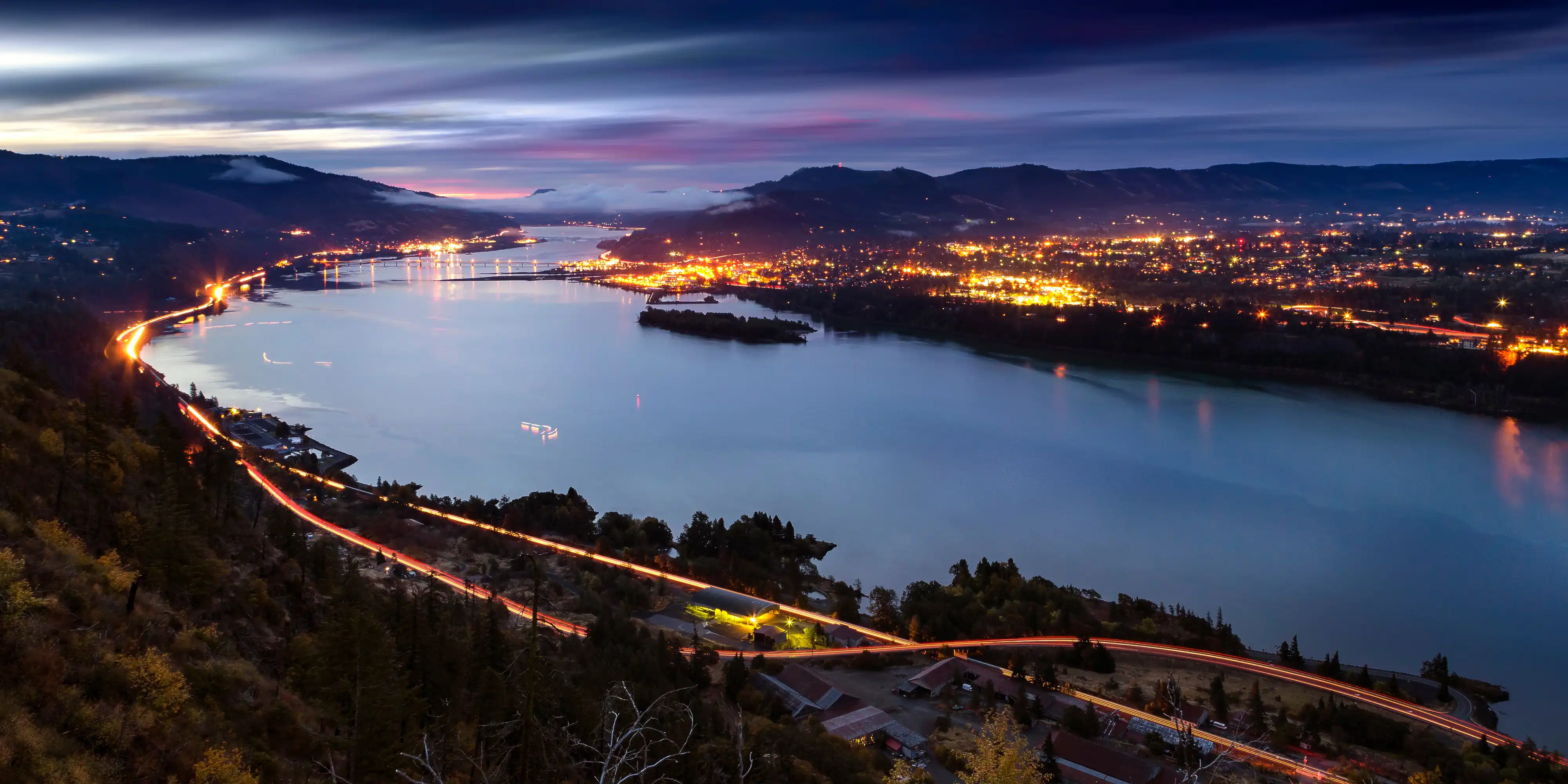
Hood River sits in the Columbia River Gorge, 60 miles east of Portland, pinned between the Columbia River to the north and the lower flanks of Mount Hood to the south. The city covers just over two square miles, with a population of approximately 8,365 — small enough that you'll recognize faces at the farmer's market, large enough to sustain a genuinely impressive restaurant and brewery scene. Washington state is a bridge crossing away. The gorge winds that funnel through this corridor — consistently 15 to 35 knots on most summer days — turned Hood River into the windsurfing and kiteboarding capital of the world, and that athletic, outdoors-first identity shapes everything from the coffee shops to the real estate market. The median sold price runs approximately $730,000, and that number doesn't flinch regardless of which direction interest rates are moving nationally.
This guide is built for the person trying to make an actual decision. You'll find honest breakdowns of who Hood River fits well and who it doesn't, a neighborhood-by-neighborhood look at where buyers are actually landing, the commute realities for Portland-area workers, and the tradeoffs that don't show up in the Instagram highlights. By the end, you'll know whether Hood River is your next address or the place you visit with admiration and leave with your wallet intact.
Hood River doesn't work for everyone, and part of what makes it work so well for the right buyer is understanding that up front. The table below cuts through the guesswork.
| Best For | Why |
|---|---|
| Remote workers with Portland-area salaries | You get big-city income and small-town pricing relative to Portland's neighborhoods — the math works if you're not commuting daily |
| Outdoor recreation households | Windsurfing, skiing, hiking, mountain biking, and kayaking are all within 45 minutes — this is the lifestyle infrastructure |
| Retirees seeking active living | Mild four-season climate, walkable downtown, strong healthcare access, and a community that stays engaged |
| Families wanting small-town roots | Safe, diverse community with strong outdoor culture and a school district that outperforms its size |
| Wine and food-focused buyers | The fruit valley, local breweries, and farm-to-table restaurant scene rival cities ten times Hood River's size |
| Portland commuters with flexible schedules | The 67-minute drive to Portland is manageable 2–3 days per week; daily commuting is a different conversation entirely |
The first thing you notice after the scenery settles is how compressed everything is. Downtown Hood River runs roughly along Oak Street and the blocks immediately surrounding it — boutiques, gear shops, art galleries, and an improbable density of good restaurants for a city this size. You can walk from the waterfront at Hood River Event Site to a coffee shop, a wine bar, and a craft brewery without moving your car. That walkability is real, but it's concentrated in a small core; once you're in the residential neighborhoods above downtown, a car is essential for groceries and school runs.
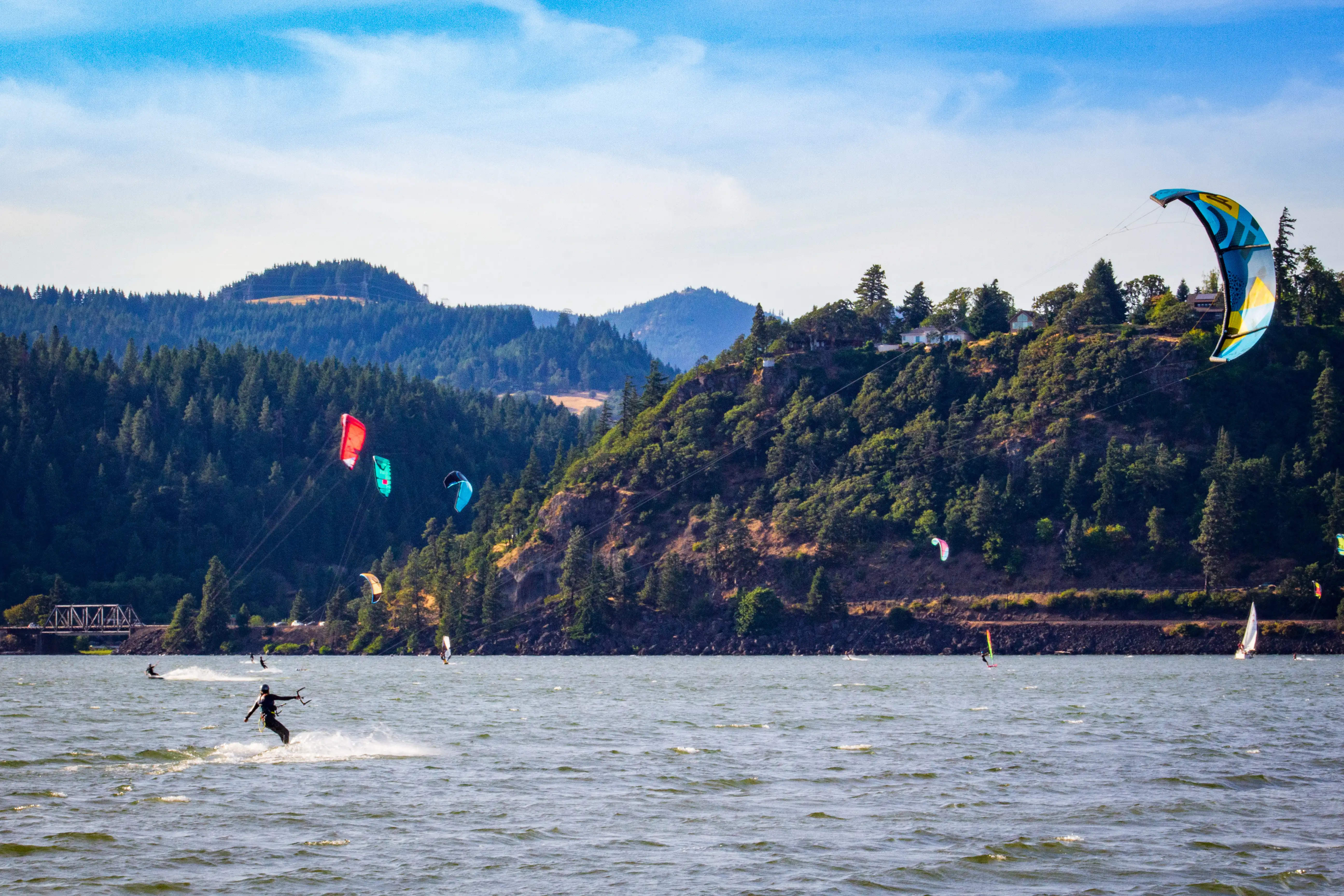
The gorge wind is a genuine daily presence, not a background detail. By late morning on a summer day, the thermals have built and the river turns white with chop. For kiteboarding households, this is the whole point. For everyone else, it means outdoor dinner plans that end with tablecloths in the parking lot and a light jacket in July that surprises visitors from California. Locals stop noticing it within a few months, but it's worth understanding before you commit to a house with a west-facing patio.
The commute to Portland deserves a frank conversation. At 67 minutes under normal conditions, the drive via I-84 is scenically unmatched — the Columbia River Gorge is genuinely beautiful at 65 mph — but it is not forgiving when weather hits. Winter ice events or a single truck accident can turn a 67-minute drive into two and a half hours. Most Hood River residents who work in Portland have negotiated two or three days per week in the office; daily round-trips add up to roughly 2.5 hours of drive time on good days, and that compounds quickly. The buyers who thrive here are either fully remote, work locally, or have made an honest reckoning with that drive time.
The community itself has a warm, engaged quality that's harder to quantify but immediately felt. Hood River has a notably diverse demographic fabric — the county's Hispanic population share sits around 31%, significantly higher than the Oregon average — and that diversity shows up in the restaurant scene, in the schools, and in the agricultural workforce that shapes the valley culture. Residents commonly describe the town as genuinely interested in itself, with active city engagement, strong local institutions, and an outdoor culture that functions as a shared language.
The outdoor access is not a marketing line. Mount Hood's ski resorts sit roughly 45 minutes from downtown Hood River. The Columbia River launches for windsurfing and kiteboarding are within walking distance of the city center. The Historic Columbia River Highway State Trail offers paved multi-use path stretching east through the gorge. Indian Creek Trail connects neighborhoods to green space without touching a road. In most Pacific Northwest cities, you drive to access nature; in Hood River, nature is the organizing principle around which the city was built.
The dining and brewery scene is legitimately punching above its weight. Full Sail Brewing, one of Oregon's most established craft breweries, is headquartered here and operates a production facility and taproom that draws visitors from across the region. The farm-to-table culture in Hood River is supported by genuine proximity — orchards in the Hood River Valley produce apples, pears, and cherries that end up on restaurant menus within miles of where they were grown. For a city of 8,365, having more than 30 restaurants is a remarkable density, and the quality tracks the numbers.
Hood River holds one quirk that surprises most people when they first encounter it: it is the only city in Oregon where public consumption of alcohol on sidewalks and in parks is completely unrestricted. This isn't a loophole or a temporary allowance — it's a reflection of how the city has chosen to manage its identity as a recreation and tourism destination. The result is a downtown atmosphere on summer evenings that feels more like a European street culture than a typical Oregon small town. For some buyers, this is a selling point; for others, it's worth factoring into decisions about where and how you'll spend time outdoors with kids.
The investment case for Hood River real estate has held steady through several broader market cycles. Limited buildable land, continued demand from Portland-area buyers and second-home purchasers, and Hood River's national reputation as an outdoor destination create a structural floor on pricing. The 5% year-over-year appreciation in the trailing 12-month median sold price reflects a market that has absorbed higher interest rates without the price corrections seen in more speculative suburban markets. Buyers who purchased here five or ten years ago have seen substantial equity appreciation, and the fundamentals that drove that trend haven't materially changed.
Looking to buy in Hood River? Estimate your payment.
Enter your numbers to see an estimated monthly mortgage payment.
Estimate only. Excludes HOA fees and mortgage insurance.
The price point is the first honest conversation. At a $730,000 median sold price with an effective property tax rate of approximately 0.56%, Hood River costs more to enter than most Oregon cities outside the Portland core. Buyers coming from mid-sized Oregon markets or relocating from less expensive states often arrive with a mental picture calibrated to a different number. The $550,000–$900,000 range covers the realistic buyer experience, with waterfront and view properties routinely exceeding $1 million. Entry-level inventory is limited; the lower end of that range typically means older construction, smaller footprints, or locations that require a car for every errand.
The job market requires serious consideration for buyers who are not remote workers or retirees. Hood River's major employers — Full Sail Brewing, One Community Health, Hood River County School District, Slingshot Sports, Diamond Fruit Growers, Insitu, and Consolidated Community Credit Union — provide meaningful local employment, but specialized career paths in tech, law, finance, or advanced healthcare largely require a Portland commute or a fully remote arrangement. This isn't a hidden flaw; it's simply the arithmetic of a small city. Buyers who arrive expecting Portland-level career optionality without the Portland commute tend to find the reality more limiting than anticipated.
Seasonal tourism changes the character of downtown in ways that some long-term residents find grating. Summer weekends bring significant visitor traffic to the waterfront, downtown restaurants, and retail. Parking near Hood River Event Site and the marina becomes competitive. The infrastructure of a city of 8,365 is supporting visitor volumes that can feel disproportionate on a July Saturday afternoon. Most locals have adapted by timing their downtown trips differently or accepting it as the price of living somewhere people want to visit — but the seasonal rhythm is real, and buyers who moved here specifically for the quiet small-town feel sometimes find summer harder than expected.
The wind deserves its own mention in the tradeoffs column. Consistent gorge winds in the 15–35 knot range through late spring and summer are transformative for water sports and genuinely challenging for everything else. Outdoor events, backyard barbecues, and recreational cycling all require the wind to be factored in as a variable, not a background condition. New residents from calmer climates typically take six to twelve months to fully recalibrate their outdoor expectations. It's not a dealbreaker — it's simply a defining feature of this specific geography that you'll either make your peace with or not.
Best for: Remote workers or retirees who want maximum walkability and don't mind trading yard space for location.
Best for: Buyers with flexible budgets who prioritize views and prefer living above the downtown activity.
Best for: Families with school-age children and buyers entering the Hood River market for the first time.
Best for: Retirees and established households who want larger lots and a quieter pace without leaving city limits.
Best for: High-budget buyers prioritizing panoramic gorge views and newer construction above all else.
Best for: Families who want a planned neighborhood environment and consistent housing stock without paying Westside premiums.
Best for: Buyers who want rural adjacency and more outdoor space without fully leaving the city's service footprint.
Best for: Buyers oriented toward skiing and mountain recreation who want a residential address that reflects that priority.
| City | Best For | Home Price | Commute to Portland | Vibe |
|---|---|---|---|---|
| Hood River, OR | Outdoor lifestyle, remote workers | ~$730,000 | 67 min | Active, scenic, expensive |
| Cascade Locks, OR | Budget buyers wanting gorge access | ~$350,000 | 45 min | Small, rustic, limited services |
| Mosier, OR | Maximum rural quiet, small acreage | ~$450,000 | 75 min | Tiny, tight-knit, agricultural |
| White Salmon, WA | Hood River lifestyle, lower taxes | ~$550,000 | 75 min | Similar feel, Washington state benefits |
| Bingen, WA | Entry-level gorge market | ~$380,000 | 75 min | Blue-collar, no-frills, improving |
| The Dalles, OR | Affordability, full services | ~$375,000 | 85 min | Larger, more practical, less scenic |
| Metric | Detail |
|---|---|
| Population | ~8,365 |
| Median Sold Price | ~$730,000 |
| Property Tax Rate | ~0.56% effective on market value |
| Median Household Income | ~$85,647 |
| Commute to Portland | ~67 minutes via I-84 |
| Violent Crime per 1,000 | 1.3 |
| Property Crime per 1,000 | 25.4 |
| School District | Hood River County School District (B rating) |
| Major Employers | Full Sail Brewing, One Community Health, HRCSD, Insitu |
| Neighboring Cities | Cascade Locks, Mosier, White Salmon, Bingen, Odell |
Hood River's open container ordinance is the most immediately surprising thing for new residents from other Oregon cities. The legal right to walk downtown with a beer or glass of wine isn't a technicality — it shapes how summer evenings actually feel along Oak Street and near the waterfront. Locals treat it as part of the town's culture rather than a novelty, and it contributes to a social openness downtown that feels distinct from any other Oregon city.
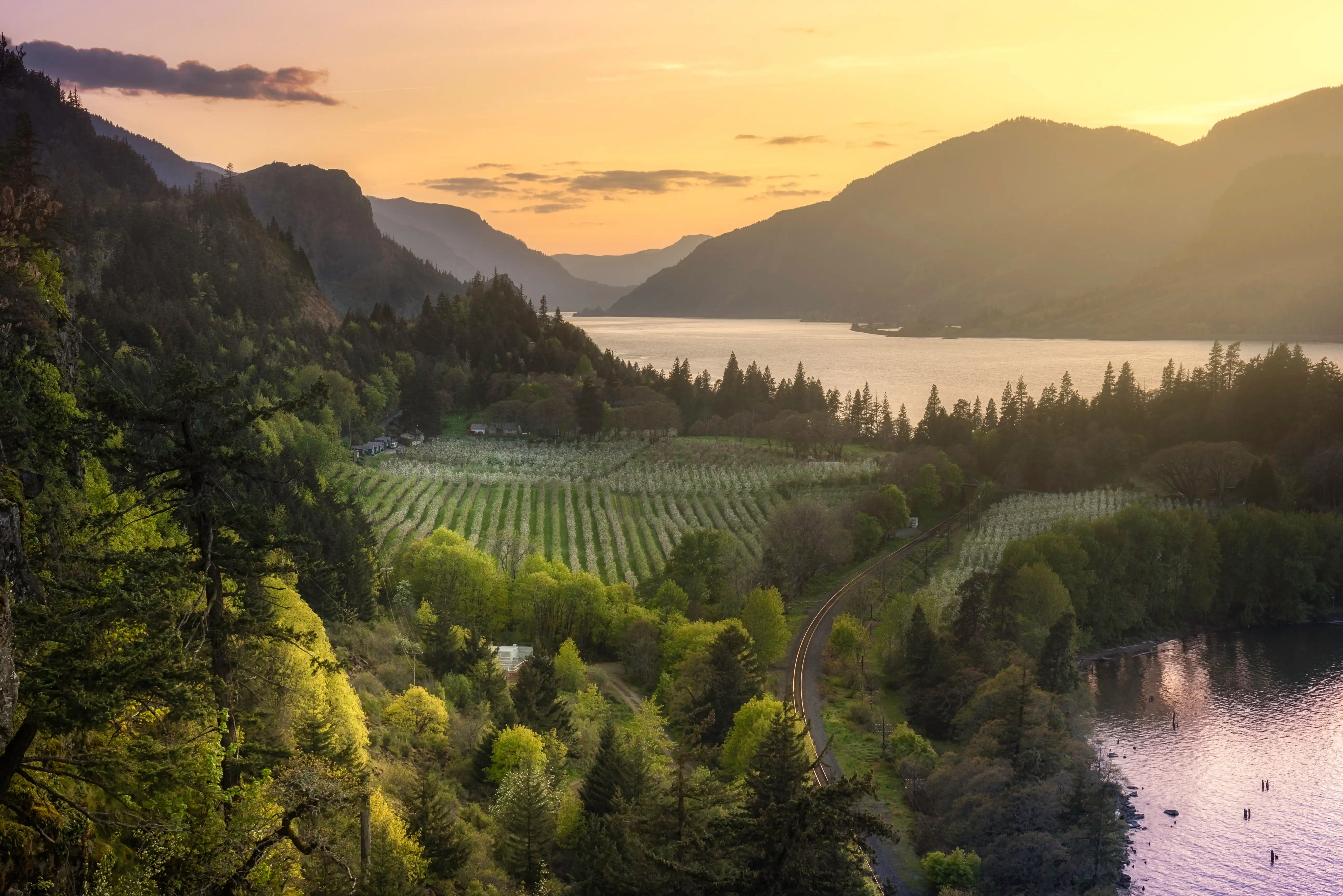
The Hood River Valley Blossom Festival, held each April when the orchards in the surrounding valley come into bloom, is one of the more reliably beautiful regional events in the Pacific Northwest. It draws visitors from Portland and beyond, but it's also a genuinely local tradition — the kind of annual marker that gives Hood River residents a shared calendar rhythm. The valley loop drive during blossom week, with Mount Hood visible above the orchards, is the kind of experience that reminds long-time residents why they pay what they pay to live here.
The Harvest Fest in October follows the same agricultural calendar logic, celebrating the apple and pear harvest with local vendors, food, and the particular atmosphere of the valley in fall color. Between Blossom in April and Harvest in October, Hood River runs a cultural calendar anchored by its agricultural identity — which gives the city a sense of seasonal arc that purely urban communities often lack.
What I would not do if moving to Hood River: I would not buy on the north-facing slopes near the waterfront core expecting an easy escape on weekend mornings. The intersection of I-84 on-ramps and the downtown street grid creates genuine congestion on Saturday and Sunday mornings from June through September, when visitor traffic and local recreational traffic converge simultaneously. Buyers who discover this after moving in tend to develop strong opinions about it. If your weekend starts with a ski run or a mountain bike ride requiring a car departure before 8 a.m., choose a neighborhood with direct access to Highway 35 south rather than routing through downtown.
Local Expert Takeaway: If your budget sits between $680,000 and $800,000, spend time comparing Willow Ponds and the Eastside before defaulting to whichever has an open house this weekend — the day-to-day lifestyle differences between those two areas are meaningful and don't show up in listing photos. Buyers seriously considering the Heights or Westside should account for the view premium explicitly: you're paying $100,000 to $200,000 above comparable non-view construction, and that only makes sense if the view is genuinely part of how you'll use the home. For anyone commuting to Portland two or more days per week, live as close to the I-84 on-ramp as your neighborhood priorities allow — those minutes add up across a year of drives.
✅ Hood River offers a genuinely rare combination of world-class outdoor recreation, a strong food and brewery culture, and a walkable small-city downtown — in a package that holds its real estate value better than most Pacific Northwest markets its size.
⚠️ The $730,000 median sold price and a limited local job market mean Hood River works best for remote workers, retirees with equity from prior homes, or buyers who have fully priced in the Portland commute reality.
📍 Neighborhood choice matters significantly here — the price spread between Eastside and Westside properties can exceed $300,000 for similar square footage, and the daily lifestyle experience of each area is genuinely different.
Is Hood River a good place for families?
Hood River is widely regarded as a strong place to raise children, with a safe community environment, a school district rated B by major platforms, and outdoor recreation infrastructure that keeps active kids engaged year-round. The city's diversity — Hood River County has one of Oregon's highest Hispanic population shares — gives families with children a community fabric that differs meaningfully from many Pacific Northwest small towns. The honest caveat is that housing costs make the entry point steep for families earlier in their careers.
What is the crime rate in Hood River?
Hood River's violent crime rate runs approximately 1.3 incidents per 1,000 residents — well below state and national averages — making it one of the safer small cities in the Pacific Northwest. Property crime is higher at approximately 25.4 per 1,000, which reflects the reality of a high-tourism destination with seasonal visitor traffic. Most residents describe the community as safe for daily life, and the crime profile is consistent with other outdoor recreation destination towns in Oregon.
How does Hood River compare to nearby White Salmon, Washington?
White Salmon sits directly across the Columbia River and offers a Hood River lifestyle experience at meaningfully lower home prices — typically in the $550,000 range versus Hood River's $730,000 median. Washington state has no income tax, which provides additional financial benefit for buyers with significant earned income. The practical tradeoffs are a bridge crossing to access Hood River's restaurant and retail scene, and slightly longer commute routing to Portland. Many buyers who love Hood River's character but find the price point challenging look seriously at White Salmon as an alternative.
Explore the full Hood River series: The Ultimate Hood River Relocation Guide · Is Hood River Safe? · Cost of Living in Hood River · Best Neighborhoods in Hood River · Hood River Schools & Family Life · Hood River Youth Sports · Hood River Parks & Recreation · Retiring in Hood River · 1031 Tax-Deferred Exchange in Hood River · Hood River First-Time Homebuyers Guide · · Moving to Hood River from California
Tell us what you need help with and we'll connect you with local resources.

About the Author
Todd Davidson is the founder of Living in Oregon and Living in Washington, where he publishes in-depth city guides, neighborhood resources, and local market insights covering more than 180 communities across the Pacific Northwest. While his background is in home financing and real estate, he created these digital platforms to help families research and compare regions before making a move.