Southern Oregon · Oregon
Living in Ashland: The Ultimate Relocation Guide (2026)
Maybe you've been priced out of the Bay Area and someone mentioned a small Oregon city where a Shakespeare festival runs nine months a year and the winters are mild by Pacific Northwest standards. Maybe you spent a long weekend here, walked the creek trail through Lithia Park, ate dinner within a block of the plaza, and thought: I could actually live here. Or maybe you're a remote worker whose spreadsheet says Ashland checks every box — arts scene, good schools, outdoor access, no state sales tax — and you're trying to figure out what the spreadsheet isn't telling you. What it isn't telling you is that Ashland occupies a genuinely unusual position in Oregon real estate: a town of roughly 21,000 people whose housing market ranks among the most expensive not just in the state, but consistently among the priciest in the entire country. The central tension of moving here is real. Ashland is beautiful, cultured, and deeply livable — and it costs accordingly.
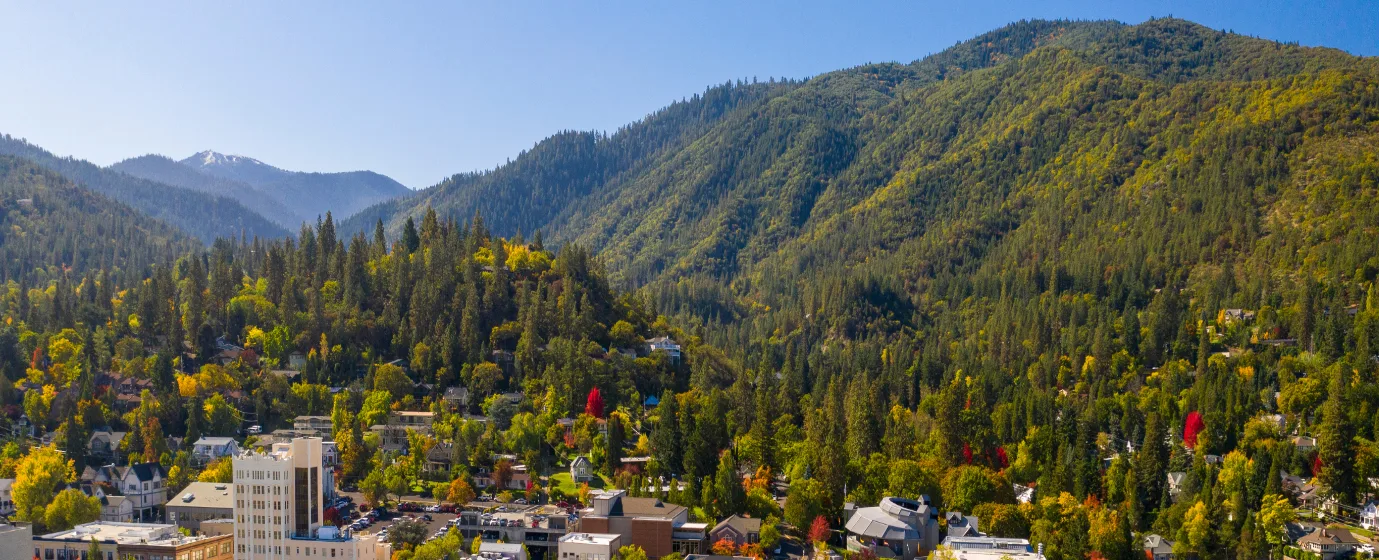
Sit it on a map and the geography starts to explain a lot. Ashland sits at nearly 2,000 feet in the foothills of the Siskiyou and Cascade ranges, tucked against the mountains 15 miles north of the California border and about 12 miles southeast of Medford on I-5. The Rogue Valley opens up to the north; Mount Ashland rises to the south. Daily life here is shaped by that position — the Medford airport is 20 minutes away, Crater Lake is a day trip, and the California border means a steady stream of transplants from Los Angeles and San Francisco who've traded coastal prices for Southern Oregon weather and a downtown they can walk. The city runs buses through the Rogue Valley Transportation District (RVTD), but most residents drive, and the average commute clocks in around 17 minutes.
This guide is designed to help you cut through the romantic version of Ashland — the festival brochures and the Lithia Park Instagram reels — and make a clear-headed decision about whether this is actually the right move for your life, your budget, and your family. We'll cover who genuinely thrives here, which neighborhoods fit which buyers, how costs stack up against nearby cities, and the honest tradeoffs that don't show up in any listing description. By the end, you'll know whether Ashland is your answer or whether one of its neighbors is a better fit.

Not every buyer is buying the same Ashland. The city attracts a remarkably wide range of people for its size, and the reasons they move here — and the parts they love — tend to be very different.
| Best For | Why |
|---|---|
| Arts-focused retirees | Oregon doesn't tax Social Security benefits, OSF runs nearly year-round, and the median age here skews toward 47+ — you won't feel out of place |
| Remote workers from high-cost cities | Bay Area and LA transplants consistently find the lifestyle quality equivalent at a fraction of their previous costs — even if Ashland isn't cheap by Oregon standards |
| Families with school-age children | Ashland School District earns a B+ rating, SOU is a neighbor, and the outdoor infrastructure for kids is genuinely exceptional |
| Outdoor enthusiasts | Mount Ashland Ski Area, Emigrant Lake, and dozens of trail systems are accessible within 20–30 minutes from downtown |
| Commuters to Medford | At 15 minutes on I-5, Medford's healthcare and retail infrastructure is accessible without paying Medford prices for culture |
| First-time buyers with equity or help | Entry-level inventory does exist — Quiet Village and parts of East Ashland offer a foothold — but this market rewards preparation and speed |
Ashland doesn't feel like a suburb. It doesn't feel like a resort town either, exactly, though the Oregon Shakespeare Festival's presence gives the downtown a seasonal energy that's hard to describe until you've experienced it — the plaza fills with tourists from May through October, restaurants operate on a different rhythm, and housing demand ticks up every spring when the production season opens. Year-round residents learn to plan around it: booking the restaurants you want in shoulder season, knowing which blocks of the plaza will be crowded on a Saturday in July, and appreciating the relative quiet that settles over the city between November and February.
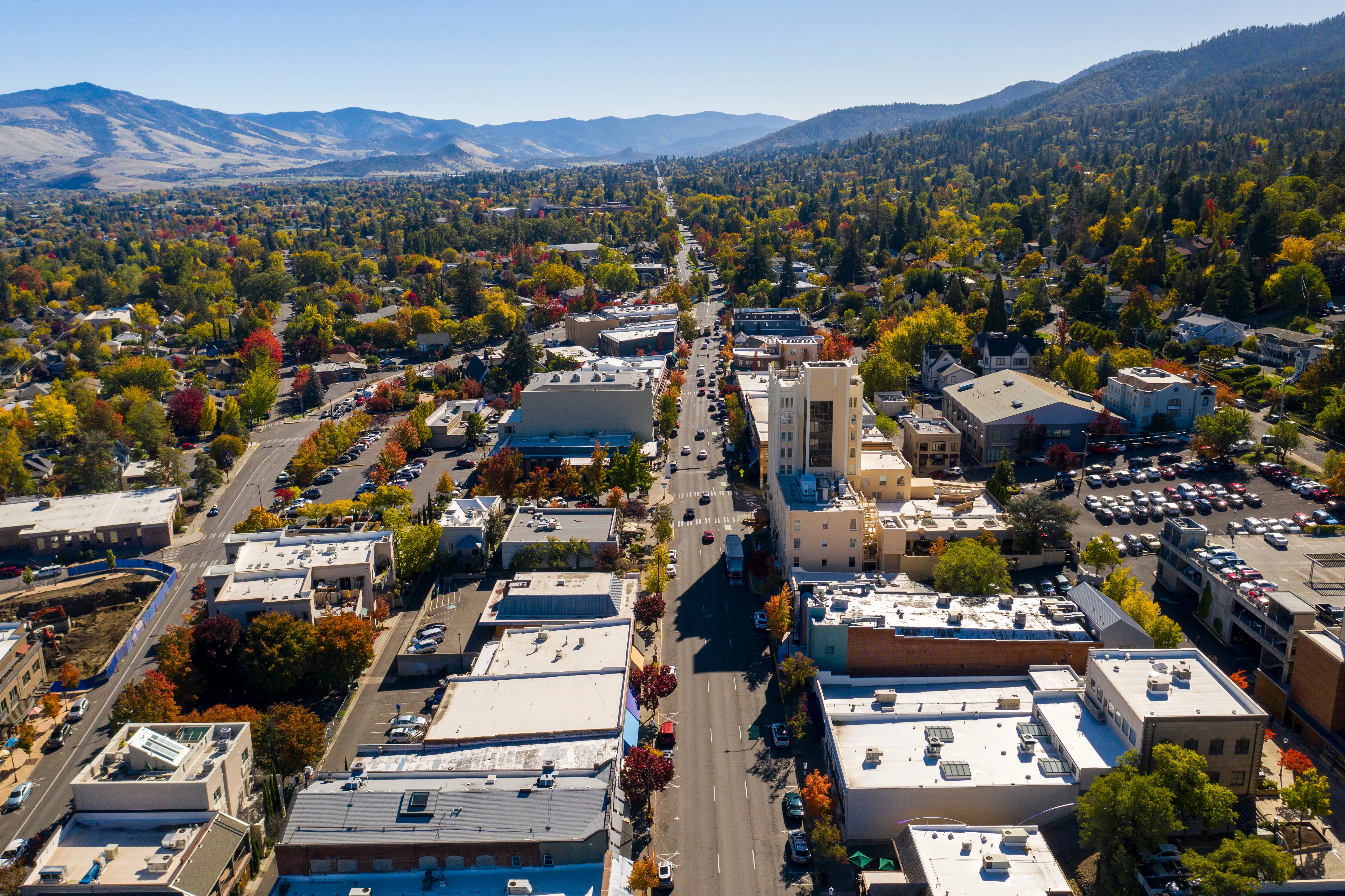
The physical layout of daily life here revolves around Lithia Park, the creek corridor, and the downtown plaza — three elements that form the functional and social spine of the city. Walk Score rates Ashland at 55, which feels about right: the core neighborhoods are genuinely walkable to the co-op, the farmers market, and the plaza's restaurants, but outlying neighborhoods like Mountain Ranch or North Ashland are car-dependent by design. The ±6.6 square miles of city limits mean you're never far from the edge of town, which is both a feature and a limitation.
The commute reality for most working residents involves either Medford or Southern Oregon University as the primary destination. SOU is physically embedded in the city, making it a walkable employer for faculty and staff. The 15-minute drive to Medford on I-5 is genuinely manageable most of the year, though the corridor through Talent and Phoenix picks up congestion during morning and evening rush windows — 7:30 to 8:30 AM northbound and 5 to 6 PM southbound are the times to avoid if you have flexibility. The Rogue Valley International Airport in Medford, 20 minutes from downtown Ashland, handles direct flights to major hubs and is one of the underappreciated practical advantages of this location for remote workers who travel regularly.
What surprises most people after six months of living here is how much the city's creative and intellectual density shapes social life in ways that don't show up in any city ranking. Ashland has more artists, designers, and media workers than 90% of U.S. communities, and more residents working in tech fields than 95% of U.S. places — a combination that produces a social environment closer to a small college town than a Southern Oregon agricultural community. Conversations at the Ashland Food Co-op or the Saturday farmers market at the plaza tend to run deep and go long.
The Oregon Shakespeare Festival is not just a tourist attraction — it's the economic and cultural engine that shapes what Ashland is allowed to become. Running nine months annually across multiple stages, OSF brings professional theater at a caliber rarely found outside of major metropolitan areas. Residents get subscriber access, last-minute ticket opportunities, and the general lift that comes from living in a city whose downtown is designed around arts and dining rather than strip malls.
The outdoor access is comprehensive and immediate in a way that distinguishes Ashland from most comparably sized cities. Mount Ashland Ski Area sits at 7,500 feet and is accessible within 30 minutes of downtown, offering runs for beginners and experienced skiers without a mountain resort price tag. Emigrant Lake, just outside city limits to the east, is the summer answer — swimming, kayaking, and camping within a 10-minute drive. The trail network winding through and above the city, including the Siskiyou Mountain Park system and the upper reaches of Lithia Park, provides thousands of feet of elevation gain for hikers and trail runners without leaving the zip code.
Ashland's public school system punches above its weight for a city this size. The Ashland School District's B+ rating reflects a genuine commitment to academic outcomes in a community that takes education seriously — Southern Oregon University's presence keeps the intellectual culture of the city unusually high, and the crossover between SOU faculty families and the K–12 school system is palpable in parent involvement and school culture. Willow Wind Community Learning Center provides a small-school alternative for families looking for project-based learning inside the public system.
The absence of Oregon state sales tax, combined with the state's exemption of Social Security income from taxation, makes Ashland's true cost of living more competitive than headline numbers suggest — particularly for retirees. The city's overall cost of living runs approximately 7% above the national average, but for buyers arriving from coastal California or Seattle, the delta is often a meaningful improvement in purchasing power. No sales tax on a new car, no sales tax at the co-op, no state sales tax on home goods or clothing — it adds up across a year in ways that slowly feel significant.
Looking to buy in Ashland? Estimate your payment.
Enter your numbers to see an estimated monthly mortgage payment.
Estimate only. Excludes HOA fees and mortgage insurance.
The wildfire disclosure is one that every Ashland buyer needs to absorb before they make an offer, not after. Every single property in Ashland — all 9,200-plus of them — carries some level of wildfire exposure over a 30-year horizon. The Almeda Fire of 2020, which devastated Talent and Phoenix just north of Ashland, was a stark reminder of how quickly Southern Oregon fire conditions can shift. Insurance costs and availability have changed meaningfully since then, and buyers should expect higher homeowners insurance premiums than they'd see in western Oregon cities. This is not a reason to avoid Ashland — it's a reason to investigate your specific parcel's risk profile, ask about defensible space, and shop insurance before you close.
The housing cost relative to local wages is a structural tension that doesn't resolve itself. The median household income in Ashland sits around $68,000, while the median sold price is in the $560,000–$566,000 range. That's a price-to-income ratio that makes traditional homeownership challenging for people employed locally — teachers, co-op workers, city employees, restaurant staff. The city's homeownership rate of 51.6% reflects that reality. Remote workers with out-of-market salaries, retirees with accumulated equity, and buyers with family assistance have reshaped the demand side of the market in ways that make it genuinely competitive.
Why some people leave Ashland comes down to a cluster of practical frustrations that accumulate over time. Healthcare access beyond what Asante Ashland Community Hospital offers requires Medford — specialists, complex procedures, and major hospital services are 15 to 20 minutes north, which is manageable but not invisible. Grocery options are limited by the city's size; the Ashland Food Co-op serves the community well, but buyers accustomed to multiple Whole Foods or a large regional grocery selection will find the options narrower than expected. The Medford Costco and Trader Joe's are easily accessible, but the daily errand ecosystem is smaller than buyers from larger metros expect.
The city's population is also quietly declining — down from its 2021 peak and trending modestly lower each year, a pattern that reflects both housing affordability pressure and demographic shifts. Whether that reads as a warning sign or as a city preserving its character depends entirely on what brought you here.
The Railroad District sits immediately east of the downtown plaza along the rail corridor and represents Ashland at its most walkable and historically textured. Craftsman bungalows and Victorian-era cottages line streets where you can walk to the co-op, the farmer's market, and OSF performances without moving your car. Entry-level cottages start around $450,000, though fully renovated properties regularly exceed $700,000 — and the median real estate price for this corridor runs around $810,000, making it among the priciest addresses in Oregon. The downside is inventory: Railroad District homes sell fast, and competition for anything well-priced is consistently active.
Best for: Buyers who want the most walkable, historically rich address in Ashland and have the budget to compete for it.
The neighborhoods immediately adjacent to Lithia Park — particularly those climbing the hillside above the creek — offer some of the most scenic residential settings in Southern Oregon. Homes here start around $550,000 and scale well past $800,000 for larger properties with park views or direct trail access. The Japanese Garden at Lithia Park and the park's 93-acre creek corridor are effectively your backyard. Parking and summer foot traffic from tourists are the regular friction points for residents who choose this address.
Best for: Buyers who prioritize natural beauty and proximity to Ashland's signature park, and can absorb the premium for that access.
Northwest Ashland occupies a quieter residential pocket where the terrain begins to lift toward the foothills and the density drops off from the urban core. Homes tend toward larger lots, more privacy, and a mix of construction eras from the 1980s through early 2000s. Pricing generally runs in a range that trails the Railroad District and Lithia Park area by a meaningful margin, offering more square footage for the dollar. The trade-off is walkability — daily errands require a car, and the neighborhood's relationship to downtown is drive-dependent.
Best for: Buyers who want more home and more land without leaving Ashland, and are comfortable with a car-centric daily routine.
The University District surrounds Southern Oregon University's campus on the city's south side and carries the energy you'd expect from a neighborhood orbiting an active university. Bungalows, smaller craftsman homes, and mid-century properties mix with rental conversions along streets like Siskiyou Boulevard. Pricing is variable — the neighborhood has both investor-owned rentals and owner-occupied homes with genuine long-term residents — and buyer research here requires distinguishing between the two. Faculty and staff from SOU make up a significant portion of the owner-occupied base, and the neighborhood's walkability to the campus and to downtown is a genuine asset.
Best for: SOU-affiliated buyers, academics, and households with young adults who want proximity to the university and a walkable connection to the plaza.
The "3 Tiers" describes a set of neighborhoods arranged by elevation above the city floor, primarily on the hillside south and west of the downtown core. As you move up the tiers, lot sizes increase, views improve, and the general sense of spaciousness expands — along with the price. The median sold price for this area ran approximately $655,000 as of late 2025, above the city-wide median, and reflects the premium attached to hillside setting and mountain views. Access requires navigating steeper residential roads, and winter ice conditions on higher streets are a real seasonal consideration.
Best for: Buyers seeking elevated views, larger lots, and a quieter residential feel while remaining within Ashland's city limits.
Mountain Ranch sits at the outer edges of Ashland's footprint, where the city gives way to rural character and the properties take on an acreage-adjacent quality that's unusual for a city address. Homes here are typically larger, lots run bigger, and the sense of separation from Ashland's tourist activity is pronounced. It's among the most car-dependent addresses in the city, and the drive to the plaza or to SOU is more errand than stroll. For buyers who want a rural feel without surrendering a Ashland zip code, it delivers.
Best for: Buyers who want space, quiet, and a semi-rural feel within Ashland's boundaries.
North Ashland stretches along the I-5 corridor on the city's northern edge, making it the most commuter-logical address for those heading daily to Medford. The neighborhood is more practical than picturesque — residential streets that developed in the latter half of the 20th century, proximity to the freeway interchange, and generally more affordable price points than the central and southern neighborhoods. North Mountain Park Nature Center anchors the area with genuine green space and programming. Buyers who spend most of their lives in Medford and want the Ashland address without paying for the Lithia Park premium find North Ashland worth a serious look.
Best for: Commuters to Medford and buyers prioritizing value and freeway access over downtown walkability.
Quiet Village is one of the few remaining areas in Ashland where a buyer can find a detached single-family home in the $380,000–$500,000 range — an entry point that's meaningful in a market where much of the inventory starts above $550,000. The neighborhood lives up to its name: residential streets, modest lot sizes, owner-occupied households, and a calm that stands in contrast to the activity around the plaza and OSF venues. The proximity to Medford-bound I-5 makes it practical for commuters, and its relative affordability makes it the most common answer when buyers ask where to find a foothold in Ashland.
Best for: First-time buyers and budget-conscious households who want an Ashland address at the most accessible price point in the market.
| City | Best For | Median Home Price | Commute to Medford | Vibe |
|---|---|---|---|---|
| Ashland | Arts, culture, outdoor access, SOU | ~$560,000–$566,000 | 15 min | University-meets-arts-town; worldly and walkable core |
| Medford | Value, retail access, healthcare hub | ~$370,000–$400,000 | N/A (it is Medford) | Regional commercial center; more suburban, more inventory |
| Jacksonville | Historic character, wine country lifestyle | ~$500,000–$550,000 | 15 min | Preserved gold rush town; boutique and quiet |
| Talent | Affordability, proximity to Ashland culture | ~$320,000–$360,000 | 12 min | Recovering post-Almeda; working-class roots, artsy edge |
| Phoenix | Lower entry point, I-5 access | ~$300,000–$340,000 | 10 min | Rebuilding after 2020 fire; practical and unpretentious |
| Central Point | Family affordability, Medford adjacency | ~$350,000–$390,000 | 10 min | Suburban, family-oriented, lower price-to-income ratio |
| Category | Detail |
|---|---|
| Population | ~20,800–21,300 (2026 estimates vary; declining modestly from 2021 peak) |
| Median Sold Home Price | ~$560,000–$566,000 (spring 2026) |
| Property Tax Rate | ~0.89% of assessed value |
| Median Household Income | ~$68,000 |
| School District | Ashland School District (B+ rating) |
| Commute to Medford | 15 minutes via I-5 |
| Violent Crime per 1,000 | 3.6 |
| Property Crime per 1,000 | 18 |
| Walk Score | 55 (moderately walkable; core neighborhoods higher) |
| Nearest Airport | Rogue Valley International, Medford — 20 minutes |
| Wildfire Risk | Major risk; 100% of properties have 30-year exposure |
| Key Employers | SOU, Ashland School District, OSF, Asante Hospital, City of Ashland |
The OSF Effect on Daily Life is something transplants discover in their first full summer and never entirely stop adapting to. When Oregon Shakespeare Festival season is in full swing from roughly April through October, the downtown plaza operates at a different scale — restaurant wait times spike on performance nights, parking on the blocks near the Bowmer and Elizabethan theaters becomes genuinely competitive, and the short-term rental inventory in the city tightens. Long-term residents learn to dine at 5:15 PM or after 9:00 PM on show nights and to shop at the co-op on Tuesday mornings rather than Saturday afternoons.
Lithia Water is an Ashland tradition that polarizes newcomers within the first week. The city's founders developed the Lithia Park springs as a therapeutic destination, and the naturally mineralized lithium water still flows from the fountain on the plaza. Everyone tries it. Almost everyone makes the same face. It's sulfurous, mineral-forward, and an acquired taste that most residents never acquire — but the ritual of watching someone taste it for the first time is a reliable rite of passage.
The Ashland Fourth of July is worth mentioning specifically because it's one of the genuine community gatherings that transcends the city's sometimes-bifurcated split between tourists and residents. Lithia Park fills with locals, the fireworks launch from above the park, and the event has an unforced small-town quality that can catch newcomers off guard after experiencing the rest of summer as more festival-tourist-facing. This is the day Ashland feels most like a town rather than a destination.
What I would not do if moving to Ashland: I would not buy in the upper tiers of the hillside neighborhoods — above Grandview Drive, specifically — without a serious conversation with your insurance broker first. The combination of wildfire exposure, steeper access roads, and the post-Almeda Fire changes to insurance availability in Southern Oregon means that what looks like a dreamy hillside setting can come with annual insurance costs and availability challenges that don't show up in the listing description. Do the insurance homework before the offer, not after.

Local Expert Takeaway: If your budget is at or below the city-wide median, focus your search on Quiet Village and North Ashland first — those are the neighborhoods where your dollar still buys a detached single-family home with reasonable lot size. If you're coming in above $650,000 and want the Ashland experience that actually matches the brochure, the Railroad District and Lithia Park area deliver that lifestyle, but plan to move fast: properties in those corridors are spending fewer than three weeks on market in 2026. Wildfire insurance should be the first phone call you make, not the last.
✅ Ashland genuinely delivers on arts, outdoor access, and school quality for a city its size — the Oregon Shakespeare Festival, Mount Ashland, and the Ashland School District are real assets, not marketing copy.
⚠️ The price-to-income gap is real. A $560,000–$566,000 median home price against a $68,000 median household income means this market is accessible primarily to equity buyers, remote workers with out-of-market salaries, and retirees — not to most locally employed households.
📍 Wildfire risk touches every parcel. Budget for higher homeowners insurance and do that research before making an offer, particularly on hillside properties above the city floor.
Is Ashland a good place to raise a family?
Yes, with some honest caveats. The Ashland School District's B+ rating reflects strong academic outcomes, and the city's trail systems, parks, and outdoor programming give kids an unusually rich environment for a town this size. The main friction point for families is the cost of homeownership relative to local wages — households employed locally often find the entry-level inventory in Quiet Village or East Ashland to be the only realistic foothold, while families with remote income or equity from a prior home sale have considerably more flexibility across the market.
What is the crime situation in Ashland?
Ashland's violent crime rate of 3.6 per 1,000 residents is relatively low for a Pacific Northwest city, and most residents describe the city as feeling safe on a day-to-day basis. Property crime at 18 per 1,000 runs higher than the violent crime figure, consistent with patterns in walkable downtown-centric cities where retail and vehicle break-ins account for a meaningful share of reports. The areas immediately around the downtown plaza and OSF venues see higher foot traffic and correspondingly more property crime incidents than the quieter residential neighborhoods.
How does Ashland compare to Medford for someone moving to Southern Oregon?
The two cities serve different needs almost entirely. Medford is the regional commercial and healthcare hub — larger, more affordable, with more retail infrastructure and greater housing inventory across a wider price range. Ashland is smaller, more culturally oriented, more expensive, and more walkable at its core. Buyers who prioritize school quality, arts access, and downtown livability typically choose Ashland; buyers who prioritize housing value, retail convenience, and healthcare proximity often end up in Medford or one of its closer suburbs. The 15-minute I-5 connection means many households effectively use both cities daily.
Explore the full Ashland series: The Ultimate Ashland Relocation Guide · Is Ashland Safe? · Cost of Living in Ashland · Best Neighborhoods in Ashland · Ashland Schools & Family Life · Ashland Youth Sports · Ashland Parks & Recreation · Retiring in Ashland · 1031 Tax-Deferred Exchange in Ashland · Ashland First-Time Homebuyers Guide · · Moving to Ashland from California
Tell us what you need help with and we'll connect you with local resources.

About the Author
Todd Davidson is the founder of Living in Oregon and Living in Washington, where he publishes in-depth city guides, neighborhood resources, and local market insights covering more than 180 communities across the Pacific Northwest. While his background is in home financing and real estate, he created these digital platforms to help families research and compare regions before making a move.