
Central Oregon · Oregon
Moving to Madras from California: The Honest Comparison (2026)
The Bay Area software engineer who's been working remotely for three years finally does the math. Their 900-square-foot condo in San Jose is worth $1.1 million. Their property taxes alone are running $12,000 a year. They pull up Zillow for Madras, Oregon — almost as a joke — and find a 4-bedroom new construction with a yard, a garage, and a view of the Cascades for $405,000. The joke stops being funny when they realize they could own it outright. That's the moment California-to-Madras migration actually begins: not when someone gets tired of California, but when the math becomes impossible to ignore.
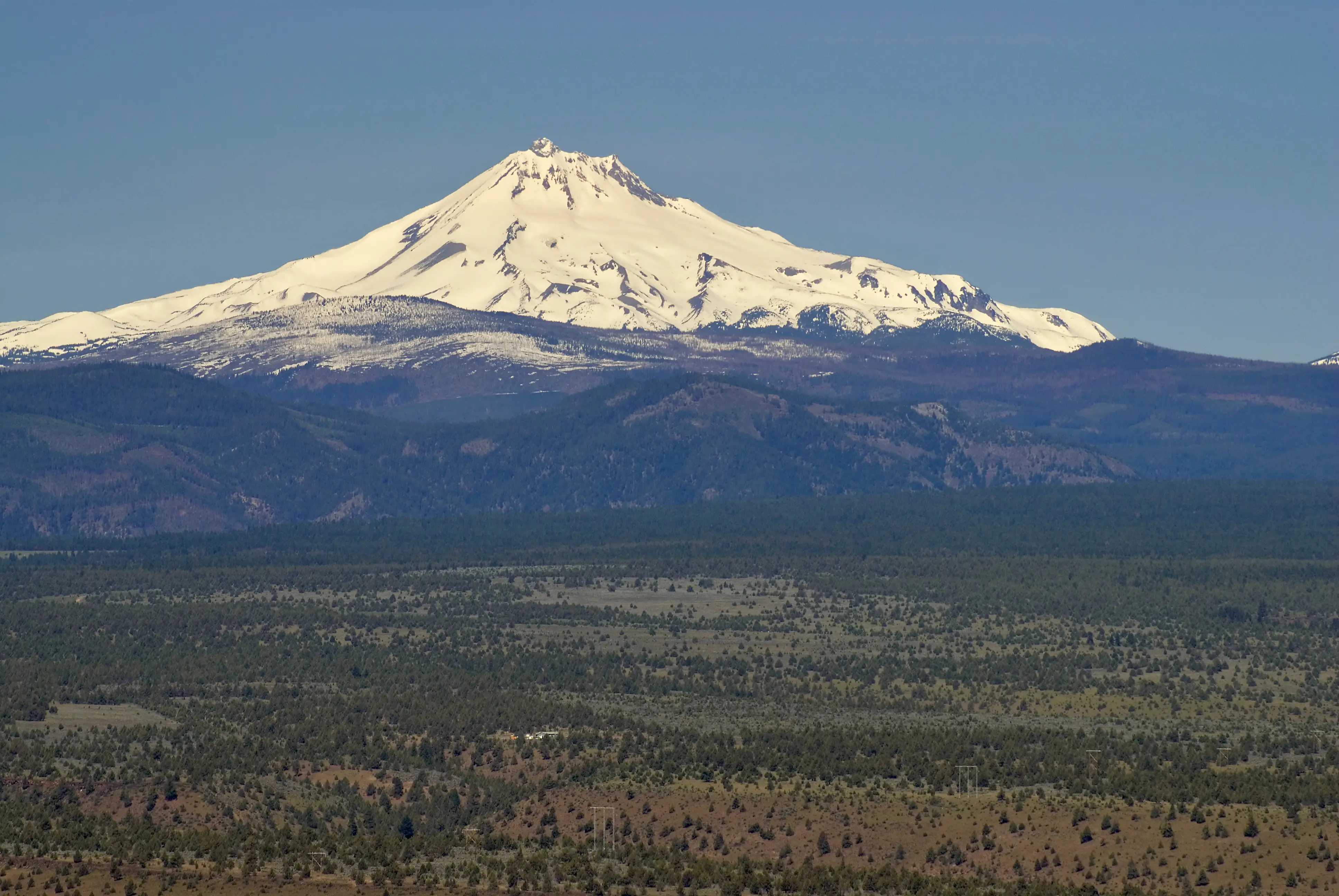
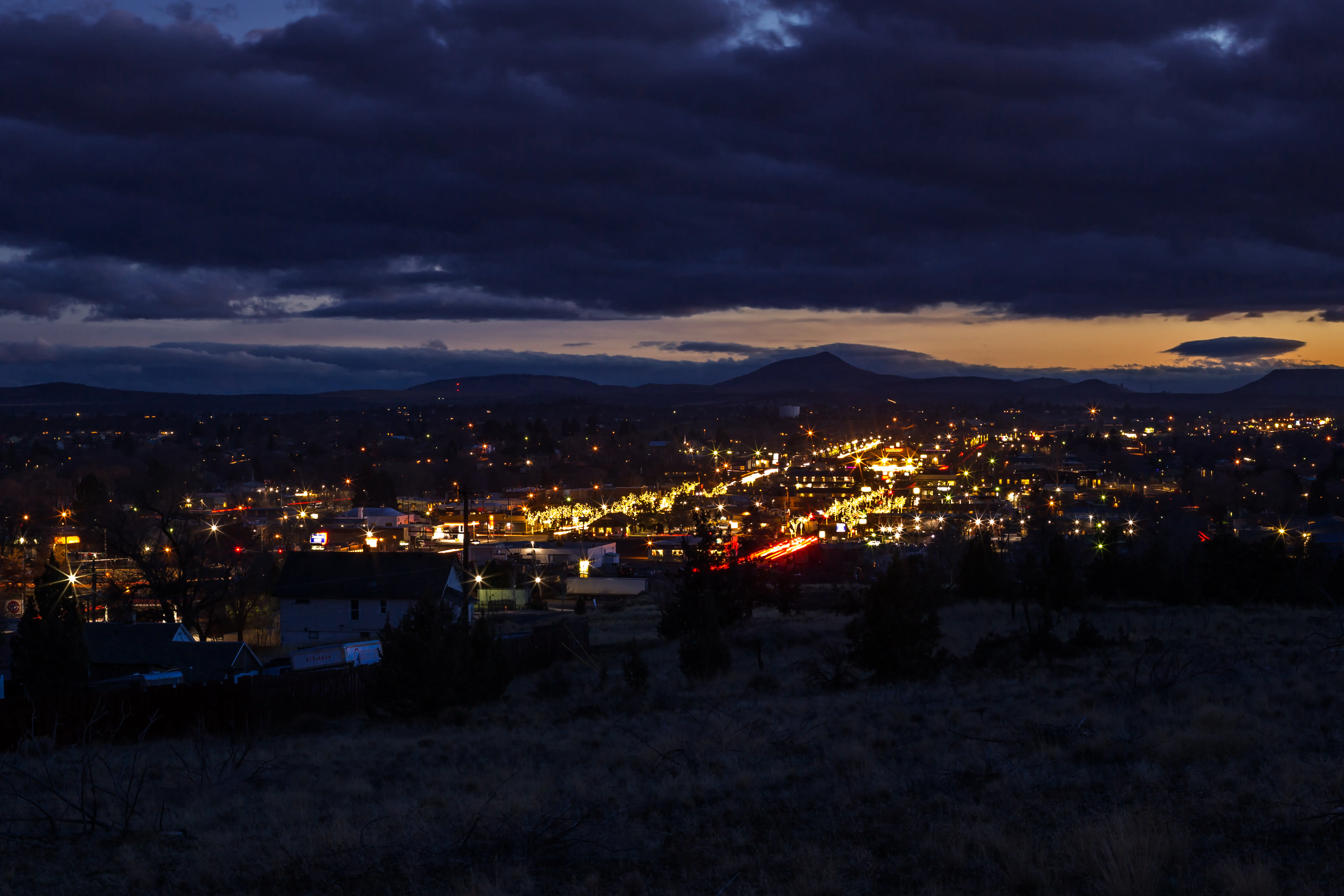
Here's what nobody tells you before you start making offers: Madras is genuinely different from California in ways that go well beyond the price tag. The city sits on the high desert plateau of Central Oregon, 45 miles north of Bend, at 2,200 feet elevation. The pace is slower — not in a frustrating way, but in a way that takes adjustment. The summers are exceptional. The winters involve real snow and real cold that California transplants sometimes don't anticipate. The food scene, the nightlife, the density of social options — none of it resembles what a Walnut Creek or Irvine resident is used to. This guide exists because the surprise factor, in both directions, is significant.
What follows is a direct comparison built for California buyers — broken down by the equity you're likely carrying, the tax picture you'll actually walk into, the lifestyle trade-offs that are real and worth naming, and a tool that lets you compare your specific California city directly. The goal isn't to sell you on Madras. It's to help you decide clearly.
| Category | Madras, Oregon | Bay Area | Southern CA | Sacramento Metro | Central Valley |
|---|---|---|---|---|---|
| Median Home Price (approx. 2026) | $407,500 | $1.3M–$1.8M | $750K–$1.1M | $520K–$620K | $350K–$460K |
| Property Tax Rate (effective) | 0.76% | ~1.1–1.2% | ~1.1–1.2% | ~1.0–1.1% | ~0.9–1.1% |
| State Income Tax (top bracket) | 9.9% | 13.3% | 13.3% | 13.3% | 13.3% |
| State Sales Tax | None | 7.25–10.75% | 7.75–10.75% | 7.75–8.75% | 7.25–9.0% |
| Avg Utilities (monthly est.) | $140–$160 | $175–$250 | $160–$230 | $150–$200 | $145–$195 |
| Avg 1BR Rent | $900–$1,100 | $2,800–$3,800 | $2,100–$2,900 | $1,400–$1,700 | $950–$1,200 |
A buyer leaving Walnut Creek with $1.4 million in home equity and purchasing in Madras at $407,500 is not just cutting their mortgage — they're likely eliminating it entirely, with $900,000 or more remaining to invest, renovate, or deploy into income-producing property. That figure isn't theoretical. It's the basic arithmetic of what's happening in Jefferson County right now, as Bend becomes increasingly unattainable and Madras absorbs the overflow.
The sales tax elimination alone is worth pausing on. A California household spending $70,000 annually on taxable goods and services — at an effective blended rate of around 8.5% — is paying roughly $5,950 per year in sales tax that simply vanishes when they cross the Oregon border. That's a raise that requires no negotiation and no promotion.
The single most common misconception California transplants bring to Oregon is that they're escaping to a low-tax state. Oregon has no state sales tax, which is true and meaningful. What Oregon does have is a graduated state income tax that reaches 9.9% at the top bracket — structurally similar to California's, though the California top rate of 13.3% is considerably higher. A California household earning $150,000 per year pays approximately $15,000–$17,000 in state income tax under California's schedule. The same household in Oregon pays roughly $11,000–$13,000 — a meaningful reduction, but not the dramatic escape some buyers imagine.
What Oregon's property tax system actually delivers is a longer-term structural advantage that compounds over time. Measure 50 caps assessed value increases at 3% per year after purchase — which means a buyer who locks in at Madras's current median price is partially insulated from the kind of reassessment volatility that California buyers experienced (paradoxically, in the opposite direction, under Prop 13). At a 0.76% effective rate on a $407,500 home, annual property taxes run approximately $3,097 — compared to $8,000–$14,000 on the California properties many of these buyers are leaving. Oregon also offers a property tax deferral program for homeowners 62 and older, which carries particular relevance for semi-retired buyers relocating from California on fixed incomes.
| Tax Item | California | Oregon | Net Impact for CA Transplant |
|---|---|---|---|
| State Income Tax (top bracket) | 13.3% | 9.9% | Savings of ~$3,000–$5,000/yr on $150K income |
| State Sales Tax | 7.25–10.75% | None | Savings of ~$4,000–$7,000/yr on typical household spending |
| Property Tax (effective rate) | ~1.1–1.2% | 0.76% | Savings of ~$3,000–$6,000/yr vs. CA equivalent home |
| Assessed Value Cap | Prop 13 (varies) | 3%/yr (Measure 50) | Predictable long-term increases |
| Senior Property Tax Deferral | Limited programs | Available at 62+ | Significant for retirees |
| Capital Gains (state) | 9.3–13.3% | 9.9% | Modest improvement |
The full tax picture, taken together, is genuinely favorable for most California transplants — just not in the dramatic "zero tax" way some online forums suggest. A $150K earner moving from San Jose to Madras is realistically looking at $8,000–$12,000 in combined annual tax relief across income, property, and sales tax. That's a real number, but it's also a number that comes with tradeoffs in services, infrastructure, and proximity to metro-level amenities.
A buyer leaving a home in Palo Alto, Fremont, or the East Bay with $1.4 million or more in equity is arriving in Madras with the ability to purchase outright — not just avoid a mortgage, but potentially buy Madras's top-tier residential properties and still have six figures in reserves. The upper end of Madras's market sits in the $500,000–$600,000 range for larger homes on generous lots, with some rural residential and ranch properties commanding more. At this equity level, the conversation isn't about qualifying for a loan — it's about deciding what kind of property best fits the next chapter, and whether a 1031 exchange into an income-producing Central Oregon property makes more sense than a pure residential purchase.
Neighborhoods that represent the best value at this equity level include Willowbrook, where 4-to-5-bedroom homes in the 2,400–2,600 square foot range have listed in the $499,000–$529,000 range — a price point that would be laughable in any Bay Area ZIP code. Bitterbrush Estates and the eastern edge of Hillcrest also attract buyers looking for newer construction with more space. The honest reality is that at this equity level, the limiting factor in Madras isn't what you can afford — it's the depth of available inventory at the top of the market, which is thinner than what Bay Area buyers are accustomed to researching.
A buyer selling a home in Irvine, La Jolla, or the South Bay with $900,000 in equity has a genuinely transformative entry into the Madras market. That equity covers Madras's median sold price approximately twice over, meaning a cash purchase with substantial funds remaining. The practical question for most SoCal sellers at this level is whether to deploy equity into a primary residence and a separate investment property, or simply buy the nicest home in Madras outright and invest the remainder elsewhere. Either scenario is financially accessible from this starting position.
At $700,000–$900,000 in equity, buyers can sit at the top of Madras's active market — purchasing larger, newer construction or properties with meaningful land — while maintaining significant liquidity. Neighborhoods like Strawberry Heights, Morning Crest, and the newer sections of Madras Ranchos represent strong value for buyers at this level who want space, newer finishes, and reasonable proximity to the Madras Aquatic Center and Highway 26. Southern California buyers accustomed to $1.1 million for a 1,700-square-foot 3-bedroom in Torrance often experience genuine culture shock when they realize what $500,000 physically looks like in Madras.
Sacramento and Inland Empire sellers represent a different buyer profile — the relative equity gain is more modest, but the case for the move is still financially compelling when the full picture is assembled. A buyer leaving Elk Grove or Rancho Cucamonga with $500,000 in equity can purchase a Madras home outright at the median, eliminate their mortgage entirely, and immediately reduce their monthly burn rate by $2,500–$3,500 compared to carrying a California mortgage. Add the elimination of sales tax and the reduction in property tax, and the monthly cash flow improvement is real even if the equity multiple isn't as dramatic.
At this equity level, the Palmain area and Canyonview represent entry-level opportunities with room to grow, while the mid-range of Madras's market — 3-to-4-bedroom homes in the $350,000–$430,000 range — offers solid value without stretching. The Inland Empire buyer relocating to Madras is often the one most pleasantly surprised by what they get per square foot — particularly buyers who've been living in 1,400-square-foot homes in Ontario or Fontana and step into 1,800-square-foot homes with a garage and a yard in Madras for the same or less total outlay.
The Central Valley seller — Fresno, Visalia, Bakersfield — carries the most modest relative advantage in this comparison, and it's worth being honest about that. At $350,000 in equity, a Madras purchase still requires a small mortgage for the median-priced property, and the lifestyle gap between Fresno and Madras, while real in climate and pace, isn't as dramatic as the gap between San Francisco and Madras. What the Central Valley buyer does gain: property taxes drop from the effective California rate to 0.76%, sales tax becomes zero, and Madras's summer climate — hot, dry, and sunny — is more familiar than it would be for a coastal California buyer.
Entry-level Madras inventory in the $280,000–$360,000 range makes sense for Central Valley buyers working with tighter equity. Older single-family homes on Yarrow and Hillcrest-area streets, and smaller properties in the Metolius-adjacent western sections of Madras, represent accessible price points without sacrificing basic functionality. The honest conversation here is that Central Valley buyers considering Madras should also be seriously considering whether Madras's rural service infrastructure and limited dining and entertainment options are a step forward or lateral from what they're leaving. For buyers prioritizing outdoor access, lower density, and cost reduction, Madras delivers. For buyers prioritizing cultural amenities and metro-level services, it's a more complicated answer.

Looking to buy in Madras? Estimate your payment.
Enter your numbers to see an estimated monthly mortgage payment.
Estimate only. Excludes HOA fees and mortgage insurance.
Here's what most California-to-Oregon guides get wrong: they treat Oregon's weather as a single entity. Madras is not the Willamette Valley. It sits in a high desert rain shadow east of the Cascades, which fundamentally changes the picture. Madras receives approximately 11 inches of rain per year — less than Los Angeles. Annual sunshine hours run around 3,248, which is more than San Francisco (around 3,072) and more than San Diego (around 3,054). If your California weather concern is gray skies and fog — the thing that drives people out of the Bay Area specifically — Madras is genuinely competitive. The summer months are hot, dry, and beautiful, with highs in the low 80s, daylight stretching past 9 p.m., and humidity dropping to the mid-40s. This is the thing California transplants most consistently rave about after a year of living here.
What the sunshine numbers don't capture is the winter. Madras drops below freezing regularly from November through February, receives approximately 14 inches of snow annually, and sits at an elevation where cold is real and persistent. The temperature range runs from around 26°F at the low end to 87°F at the summer peak. A buyer leaving San Diego, where January highs are in the mid-60s, needs to make a genuine mental shift — not just buy a heavier coat. Winter driving on Highway 26 toward Mount Hood is a fundamentally different experience than navigating the 405. The outdoor lifestyle that characterizes Central Oregon summers largely retreats indoors or requires gear and planning in the winter months in a way that Southern California outdoor culture simply doesn't.
After a year in Madras, most California transplants report the same small catalog of genuine surprises. The traffic — or rather the absence of it — ranks near the top. Nobody who lived in Los Angeles or the South Bay has any concept of what it means to never sit in traffic. The housing space is a close second: having a yard, a garage, a second bedroom, and a room for a home office without paying $3,500 a month is a lived experience, not an abstraction. What transplants miss is harder to generalize, but the patterns are consistent — year-round access to beach or warm ocean water, the density of restaurant and entertainment options in any direction, and the specific social energy that comes from living in a large metro area. Madras has genuine community — the Madras Aquatic Center draws families year-round, Richardson's Rock Ranch offers something you simply can't find in California, and the Central Oregon outdoor culture in summer is world-class. But the city of 7,900 people is not going to replicate what a transplant had in a metro of five million. The ones who thrive here are the ones who came for what Madras actually is, not for a cheaper version of where they were.
If you want to see how Madras compares directly to the city you're leaving, use the tool below — it covers the 120 largest California cities with current housing and tax data.
Home prices: Redfin median sale data, Q1–Q2 2026. Select your city to compare.
Ready to talk through what your specific California equity could do in Madras? Todd can model your exact scenario in a single call.
Mistake 1: Treating the whole city as uniform. Madras has meaningful character differences between areas that a two-hour drive-through visit won't reveal. The newer subdivisions on the south and east ends of town — Willowbrook, Bitterbrush Estates, Morning Crest — feel genuinely different from the older blocks near downtown and the Hillcrest area. Buyers who purchase without spending multiple days in different parts of the city sometimes find their neighborhood's walkability, neighbor demographics, or road conditions weren't what they expected. The city's proximity to Highway 97 and the rail corridor also matters — some areas have more freight traffic noise than buyers from quieter California suburbs anticipated.
Mistake 2: Underestimating the winter driving reality. A buyer who's been commuting in San Diego or the East Bay has essentially no reference point for what it means to drive on Highway 26 or Highway 97 in January. Snow tires are not optional in Madras — they're a practical requirement for anyone planning to leave the immediate area during winter months. The 45-mile drive to Bend, which runs 45–55 minutes in summer, can become a significantly longer and more stressful drive when the roads ice or when conditions deteriorate near Redmond. California buyers who plan to drive to Bend regularly for shopping, medical appointments, or entertainment should account for winter driving conditions in their decision-making.
Mistake 3: Assuming Oregon home prices only go up. Madras's active market data shows homes averaging 81-plus days on market and the Redfin competitiveness score sitting at 48 out of 100 — this is not a rising tide market. The median sold price sits at $407,500, but that number is relatively flat and there are automated estimates that trail it meaningfully. California buyers arriving from markets where homes appreciated 40% in four years sometimes expect Oregon to follow the same trajectory. Madras is a value market, not a speculation market. Buying here because it's financially sensible for your family's life is a sound decision. Buying here as a pure appreciation play involves more uncertainty than some transplants expect.
Mistake 4: Not testing for radon. Oregon has elevated radon zones, and Jefferson County is among the areas where radon testing in homes is genuinely warranted — not a formality. California buyers who've completed dozens of home purchases in Los Angeles or San Jose may have never encountered a radon contingency. In Madras, it should be a standard part of any inspection process, particularly for homes with basements or below-grade spaces. It's inexpensive to test, easily addressed with mitigation if necessary, and not something to skip.
Bay Area sellers arriving with $1 million or more in equity rarely need a traditional mortgage product in Madras, but the structure of the transaction still matters. Cash closings — which are entirely realistic at this equity level — eliminate appraisal risk and contingency delays, and they can be the deciding factor in a competitive offer situation even in a measured market like Madras. For Bay Area buyers who owned an investment property rather than a primary residence in California, a 1031 tax-deferred exchange into Central Oregon income-producing property is worth exploring before the sale closes. The timeline on a 1031 is strict — 45 days to identify, 180 days to close — so the conversation needs to happen before the California escrow, not after.
Southern California sellers stepping into Madras at the $400K–$550K range with $700,000-plus in equity are in an excellent position for a conventional purchase with large down payment, likely avoiding jumbo thresholds entirely at Madras price points. Rates and terms are relatively standard at this price range in Jefferson County, and lenders familiar with Central Oregon rural markets are worth seeking out — not every California lender has a strong handle on how appraisals work in markets like Madras where comparable sales are limited.
Sacramento and Inland Empire buyers working with $400,000–$650,000 in equity may find that a portion of Madras's inventory — particularly the sub-$350,000 range — is within reach as an outright cash purchase, sidestepping financing and qualification questions entirely for that slice of the market. Buyers with more equity to work with can instead put a modest amount down and finance the rest, keeping the remainder liquid for other goals.
Local Expert Takeaway: The single thing most California buyers underestimate about Madras is how much the winter driving reality changes the livability calculus of their neighborhood choice. A home in Morning Crest or Willowbrook that's beautiful in August can feel genuinely isolated in January if the buyer didn't account for road conditions on their most common routes — particularly if they're planning regular trips to Bend for healthcare, groceries, or social life. Buy in the part of town that keeps you connected to your daily routes in December, not just in June.
✅ California sellers carrying $700,000 or more in equity can purchase Madras's top-tier homes outright and still have meaningful reserves — the equity math here is real and substantial.
⚠️ Oregon has a state income tax with a 9.9% top bracket — don't arrive expecting a zero-income-tax state. The advantage over California is real but more moderate than some buyers expect.
📍 Madras's high desert climate is sunnier than San Francisco and San Diego by sunshine hours — but winters with snow and cold are genuine, and winter driving on Central Oregon highways requires preparation that California driving simply doesn't.
Is moving from California to Madras worth it financially?
For most California sellers carrying significant equity, the financial case is strong and specific. Eliminating or dramatically reducing a mortgage, cutting property taxes from an effective 1.1%+ to 0.76%, and losing a state sales tax bill that ran thousands of dollars annually — that's a real, compounding financial shift. The buyers who find the move "worth it" in the fullest sense are those whose lifestyle expectations align with what Madras actually offers: space, outdoor access, a slower pace, and genuine community in a small city. The buyers who find it complicated are those who underestimated how much they valued metro-level amenities and social density.
How much cheaper is housing in Madras compared to California?
The median sold price in Madras sits at $407,500 — compared to $1.3M–$1.8M in the Bay Area, $750K–$1.1M across much of Southern California, and $520K–$620K in the Sacramento metro. In practical terms, a Bay Area buyer selling at the median and purchasing at Madras's median is looking at a price difference of $800,000 to $1.4 million. That figure, when converted to mortgage elimination and investable equity, is the single most powerful driver of California-to-Madras migration.
What do California transplants miss most after moving to Madras?
The honest answer varies by origin city, but the most consistent themes are year-round warm-weather outdoor access, restaurant and food scene density, and the ambient social energy of living in a large metro. California transplants from coastal cities particularly miss beach access — something Central Oregon simply cannot replicate. What most transplants say they don't miss: traffic, the monthly cost of living in California, neighbor density, and the psychological weight of housing insecurity that comes from watching prices outpace income for years. The transplants who report the highest satisfaction after 12–18 months are those who came to Madras for what it genuinely offers, rather than those hoping it would approximate California at a lower price point.
Explore the full Madras series: The Ultimate Madras Relocation Guide · Is Madras Safe? · Cost of Living in Madras · Best Neighborhoods in Madras · Madras Schools & Family Life · Madras Youth Sports · Madras Parks & Recreation · Retiring in Madras · 1031 Tax-Deferred Exchange in Madras · Madras First-Time Homebuyers Guide · Moving to Madras from California
Tell us what you need help with and we'll connect you with local resources.

About the Author
Todd Davidson is the founder of Living in Oregon and Living in Washington, where he publishes in-depth city guides, neighborhood resources, and local market insights covering more than 180 communities across the Pacific Northwest. While his background is in home financing and real estate, he created these digital platforms to help families research and compare regions before making a move.