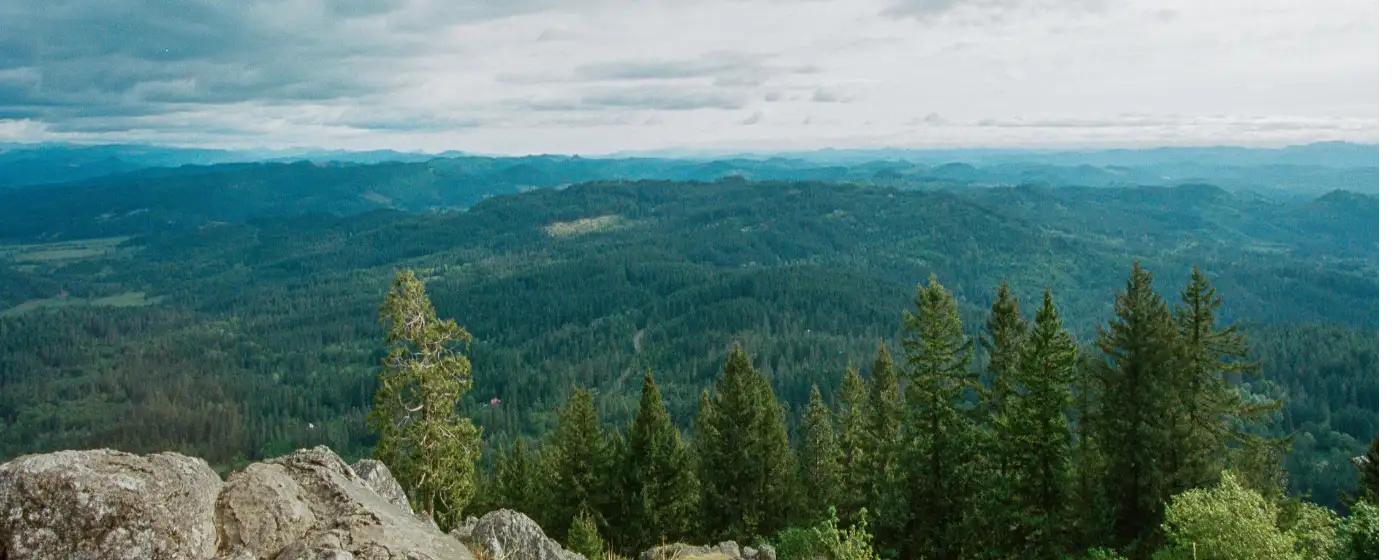
Willamette Valley · Oregon
Living in Junction City: The Ultimate Relocation Guide (2026)
Maybe you've been watching Eugene home prices climb year after year and finally decided to look fifteen miles up Highway 99 to see what's left. Maybe someone at work mentioned Junction City offhand — small town, farmland views, surprisingly reasonable prices — and you filed it away until now. Or maybe you're relocating from somewhere entirely different and Junction City came up in a spreadsheet search that filtered for sub-$500K medians within commuting distance of a mid-sized Oregon city. However you got here, there's a central tension worth naming right away: Junction City looks, on paper, like the obvious affordable alternative to Eugene. In practice, it's something more specific than that — a genuine small town with its own identity, its own tradeoffs, and its own reasons to stay.
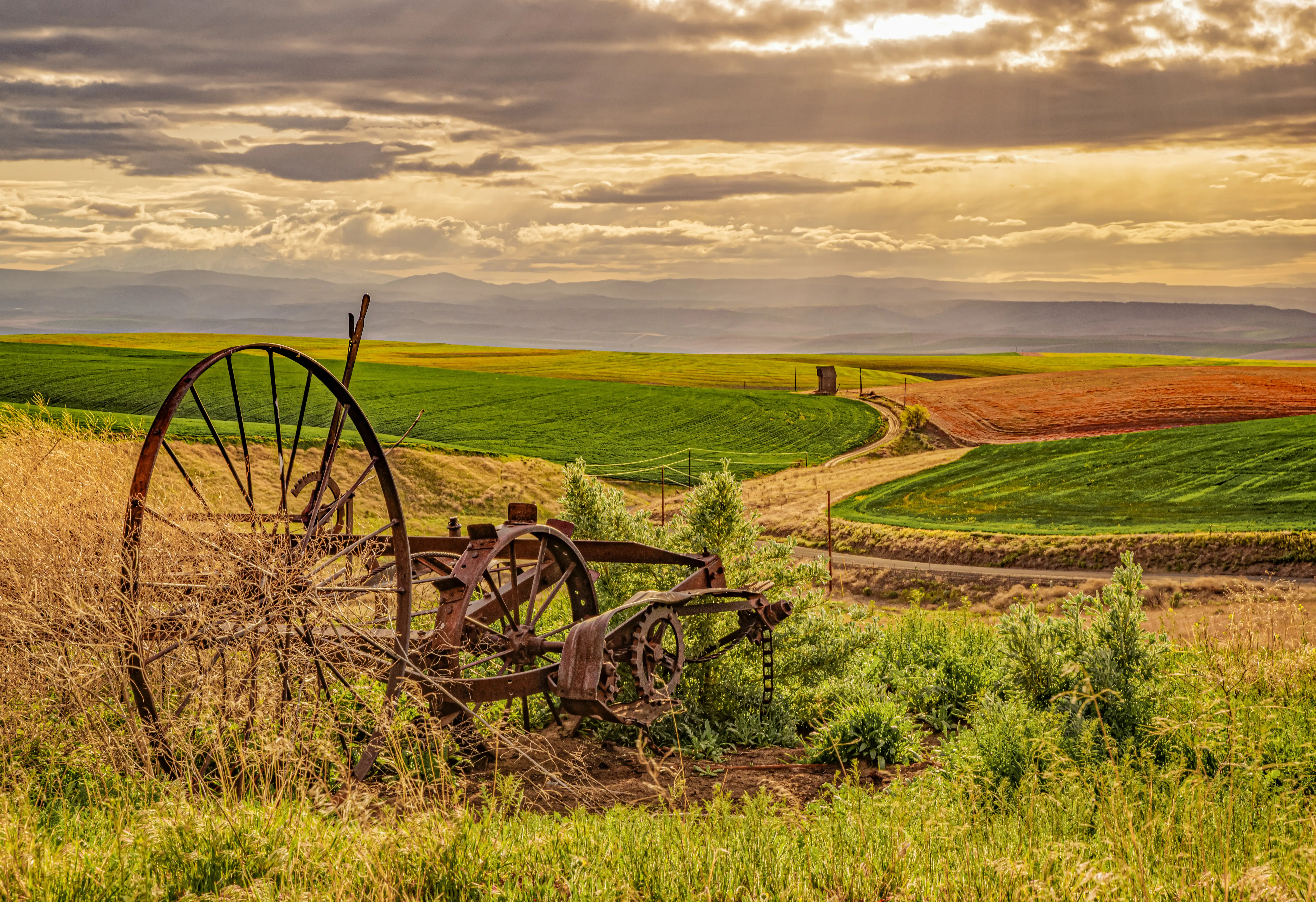
Geographically, Junction City sits in the northern Willamette Valley, roughly fifteen miles from Eugene's city limits, with farmland spreading in every direction and the Long Tom River winding through the surrounding landscape. The Willamette River itself is only three miles away. The city covers just 2.4 square miles, which tells you something important: this is not a sprawling suburb with multiple distinct commercial corridors and mixed-use nodes. It is a compact, agricultural-rooted community of approximately 7,400 residents where daily life is organized around a modest Main Street, a handful of neighborhood parks, and proximity to Eugene for anything the local economy doesn't provide. Highway 99 — locally called Ivy Street through the commercial stretch — is the practical spine of the city.
This guide will help you figure out whether Junction City actually fits your life, not just your budget. You'll find an honest look at the housing market, the schools, the neighborhood character, the commute reality, and the specific tradeoffs that cause some buyers to love it and others to pack up within two years. If you're weighing Junction City against Eugene, Harrisburg, or Coburg, there's a comparison table to help you think through that decision with real numbers attached.

The right buyer for Junction City is usually someone who's made peace with a small-town pace and genuinely values what that pace provides — not someone who's settling for it because they missed out on Eugene. The table below maps the most common buyer profiles to honest verdicts.
| Best For | Why |
|---|---|
| Eugene commuters | 20 minutes on Highway 99 or I-5 to Eugene; manageable daily commute with a real cost-of-living payoff |
| First-time buyers | Median sold prices well below Eugene with 66% single-family detached housing stock and genuine entry-level inventory |
| Families prioritizing outdoor lifestyle | Three miles from the Willamette River; multiple neighborhood parks; Scandinavian Festival culture builds strong community ties |
| Remote workers | Lower cost of living and quieter surroundings without sacrificing Eugene access for errands, medical care, or culture |
| Retirees on fixed income | Among the more affordable small towns in Lane County; low property tax rate; accessible healthcare at the Oregon State Hospital campus nearby |
| Agricultural lifestyle seekers | Surrounding farm country; acreage properties within or just outside city limits; genuine rural-adjacent character |
The first thing most people notice when they drive through is that Junction City doesn't pretend to be something it isn't. There's no fabricated town square with Edison bulbs and a beer garden, no developer-built "downtown district" with chain restaurants dressed up as local. What you get instead is a Main Street that still functions the way Main Streets did before retail shifted to big-box corridors — a post office, a hardware store, local diners, a grange hall that's been in continuous operation for generations. Ivy Street (Highway 99) handles the practical retail: a Safeway, a handful of local restaurants including Smok'n Gingers BBQ and Raven Grill House, and the kind of strip-mall convenience that covers daily needs without much fuss.
The commute to Eugene is genuinely manageable — twenty minutes under normal conditions via Highway 99 or a quick jog onto I-5. That said, the stretch through Coburg Road into Eugene can back up during morning rush hour, and buyers who'll be making that drive five days a week should do a test run at 7:45 a.m. before signing anything. Remote workers and reverse commuters (those whose employers are north toward Salem or Portland) often find the geography works even better in their favor.
The community vibe is best described as unpretentious and grounded. Neighbors tend to know each other. The Scandinavian Festival — held every August since 1961 at the festival grounds on West 5th Avenue — isn't a tourist draw so much as a community anchor: local nonprofits fundraise there, kids grow up volunteering at the booths, and the four-day event (each day honoring Finland, Norway, Sweden, or Denmark in rotating order) has been designated an Oregon Heritage Tradition. That kind of continuity says something about the social fabric here.
What surprises most people after six months of living in Junction City is how quickly the pace becomes the point. Buyers who moved from Eugene expecting to feel like they were missing out typically report the opposite — they find themselves driving into Eugene for what they need and returning home to something quieter and more spacious. The friction comes not from boredom but from the gaps: limited restaurant variety, no specialty grocery store, and a medical and entertainment ecosystem that still requires that fifteen-mile drive.
The most obvious reason people stay is the cost of housing. With a median sold price in the $410,000–$450,000 range and a property tax rate of approximately 0.78%, the monthly math is significantly friendlier than anything comparable in Eugene proper. A three-bedroom detached home with a real yard is still attainable here for buyers working with conventional financing at average incomes — which is not something that can be said about most Willamette Valley cities with Eugene's access.
The outdoor access is quietly excellent. The Willamette River sits three miles from city limits, offering kayaking, fishing, and riverside picnicking without a crowd. The Long Tom River corridor runs through the surrounding countryside. Within town, Day Memorial Park, Toftdahl Park, and Tequendama Park give families with kids genuine green space — playgrounds, athletic fields, walking loops — without requiring a drive. City Park anchors the town's recreational core and hosts community events throughout the year.
Junction City's agricultural surroundings aren't just scenery — they're a lifestyle feature for a specific kind of buyer. Access to farm stands, u-pick operations, and rural acreage properties is built into the local geography. Lochmead Farms, the Junction City-based dairy and Dari Mart retail operation, is part of the local economic and cultural identity in a way that connects residents to the Valley's agricultural roots more directly than most small Oregon towns manage.
The small-town scale creates real social connectivity. With roughly 7,400 residents in 2.4 square miles, Junction City is the kind of place where your kids' soccer coach is also the parent you see at the Safeway on Saturday morning. That density of familiarity is either deeply appealing or quietly suffocating depending on your personality — but for families with school-age children, retirees, and people who've consciously chosen to step back from urban anonymity, it's often the reason they cite most when asked why they stayed.
The climate deserves a mention as an underrated positive. Junction City sits in the Willamette Valley's rain shadow to the degree that Eugene and the surrounding valley are generally milder than the coast or the Cascades. About 115 days of precipitation per year sounds like a lot until you've lived somewhere with actual winters. Snow averages around five inches annually and rarely sticks long. The growing season is long, which is part of why the agricultural economy surrounding the city has sustained itself for generations.
Looking to buy in Junction City? Estimate your payment.
Enter your numbers to see an estimated monthly mortgage payment.
Estimate only. Excludes HOA fees and mortgage insurance.
The school district is the most significant honest tradeoff, and it's worth naming clearly. Junction City School District serves around 539 high school students at Junction City High School, with an 82% graduation rate and academic proficiency scores — roughly 21% in English and 14% in Math — that fall well below Oregon state averages. The district's overall rating hovers at B- in composite assessments, and families relocating from higher-performing districts in California, the Portland metro, or coastal markets often find the schools the deciding factor that pushes them back toward Eugene. The proximity to Eugene does give some families a workaround — certain magnet and alternative programs in the Eugene 4J and Bethel districts may be accessible for some situations — but that's not a guaranteed solution and requires research specific to your circumstances.
The retail and dining landscape is genuinely limited. Safeway handles the grocery run adequately, but buyers who are accustomed to a Trader Joe's, a New Seasons, or a PCC nearby will make that Eugene drive regularly. Restaurant options along Ivy Street are decent but narrow — there's no sushi, no Ethiopian, no ramen spot, no brewery taproom with rotating food trucks. This doesn't bother everyone equally, but buyers who eat out frequently or follow a specific dietary lifestyle should honestly map out how often they'll be driving to Eugene for food and factor that into the lifestyle calculation.
Why some people leave tends to come down to the same two issues compounded over time. The school trajectory becomes more visible as kids get older, and parents who entered the district optimistic about elementary school often find themselves reconsidering by middle school. The second factor is professional isolation — while the Eugene commute is manageable, Junction City's own job market is limited to a relatively narrow set of employers. Remote workers and those commuting to Eugene or Springfield largely avoid this problem, but people whose careers require local networking, in-person industry events, or access to a concentrated professional community tend to find the small-town economy limiting within a few years.
Property crime is the more meaningful safety concern here relative to violent crime, which remains low. The property crime rate of 14 per 1,000 is worth knowing — not alarming by national standards, but higher than some smaller Lane County communities. Monitoring the specific streets and blocks nearest the commercial corridor, particularly on Ivy Street, is the common-sense approach most longtime residents take.
The blocks closest to Main Street and the 5th Avenue corridor contain Junction City's oldest housing stock — single-family homes from the 1920s through the 1960s on modest lots with mature trees and the kind of architectural character that new construction can't replicate. Prices in this area typically run at the lower end of the city-wide median, reflecting the age of the homes and the deferred maintenance that comes with older inventory. The Scandinavian Festival Grounds sit at the edge of this zone, making August weekends particularly lively.
Best for: Buyers who value character over square footage and want to walk to city amenities.
The commercial spine of Junction City, Ivy Street and the residential streets immediately behind it offer the highest concentration of daily convenience — Safeway, local restaurants, and quick access to Highway 99 for the Eugene commute. Homes here tend to be postwar construction with practical layouts, and prices generally track the city-wide median. Traffic noise from the highway is a real factor on the blocks immediately adjacent.
Best for: Commuters who prioritize a fast on-ramp to Eugene over a quiet residential setting.
The neighborhoods north of 6th Avenue and stretching toward the city's northern boundary contain a mix of mid-century and more recent construction, often on larger lots than you'll find closer to downtown. This area has attracted buyers looking for more space without stepping up into acreage territory, and it sees relatively steady demand. Prices here align with the broader city-wide range.
Best for: Families with kids who want more yard space and a quieter residential feel.
The streets surrounding Day Memorial Park offer one of the more family-friendly settings in Junction City — direct park access, a neighborhood-scale environment, and a mix of housing types from 1970s ranch homes to newer infill. It's one of the areas where the trade-off between price and lifestyle accessibility is clearest: modest prices for genuine livability.
Best for: Households with young children who want park access built into the daily routine.
Just outside Junction City's 2.4-square-mile city limits, Lane County's agricultural land offers acreage parcels that attract a very specific buyer — someone who wants animals, a large garden, workshop space, or simply distance from neighbors. These properties vary enormously in price depending on acreage, improvements, and proximity to the city. They are not for buyers who want low-maintenance living, but for the right household they represent a genuine lifestyle opportunity unavailable anywhere closer to Eugene at comparable prices.
Best for: Self-sufficient households, hobby farmers, and buyers who specifically want space and privacy over urban convenience.
| City | Best For | Median Home Price | Commute to Eugene | Vibe |
|---|---|---|---|---|
| Junction City | Affordable Willamette Valley living, agricultural character | ~$430K–$450K | 20 min | Small-town, grounded, festival culture |
| Eugene | Urban amenities, career access, school variety | ~$430K–$500K+ | 0 min | College city, arts, tech, healthcare |
| Harrisburg | Maximum rural quiet, lowest prices in area | ~$320K–$380K | 30 min | Very small town, farming-centric |
| Coburg | Boutique small-town feel, quick Eugene access | ~$420K–$480K | 15 min | Antique district, walkable core, tight-knit |
| Monroe | Affordable acreage, true rural lifestyle | ~$300K–$380K | 40 min | Deeply rural, limited services |
| Springfield | Urban convenience, slightly lower cost than Eugene | ~$380K–$430K | 10 min | Blue-collar roots, growing commercial base |
| Metric | Details |
|---|---|
| Population | Approximately 7,400 (growing ~1.8% annually) |
| Median Home Price | $445,000 (city-wide basis; recent sold prices range $410K–$457K) |
| Property Tax Rate | Approximately 0.78% |
| Median Household Income | Approximately $77,000 |
| Commute to Eugene | 20 minutes via Hwy 99 or I-5 |
| Violent Crime per 1,000 | 1.6 (below national average) |
| School District | Junction City School District 69 (rated B-) |
| Median Age | 41.7 years |
The Scandinavian Festival is not optional — it's structural. Every August since 1961, the festival grounds at 195 West 5th Avenue transform into a four-day celebration of Nordic heritage that draws vendors, folk dancers, food booths, and an art gallery across four distinct country-themed days. Finland goes first, then Norway, Sweden, and Denmark. It's designated an Oregon Heritage Tradition, which is a real distinction — not a marketing label — and the SCF that runs it is an all-volunteer nonprofit that funds local youth programs. If you move to Junction City, you will go to the Scandinavian Festival. Plan accordingly.
The Long Tom Grange Hall is still operating. The Grange tradition has faded from most American small towns, but Junction City's Long Tom Grange Hall remains an active community institution — the kind of place where local agricultural community life still has a physical address. For buyers drawn to the agricultural character of the surrounding valley, that continuity is meaningful.
Eugene Livestock Auction is a real part of local commerce. If you move here from a coastal city and drive past the livestock auction facility for the first time on a sale day, the trucks and the activity will surprise you. Junction City's agricultural economy isn't decorative — it's functional, and the livestock auction is evidence of that. It's also a reminder that the land surrounding this city isn't pastoral scenery; it's working farmland with the noise, trucks, and occasional smells that come with it.
What I would not do if moving to Junction City: I would not buy in the blocks immediately east of Highway 99 near the commercial strip without visiting on a weekday morning and a Saturday afternoon. The noise profile from through-truck traffic on that corridor is meaningfully different from the quieter residential streets a few blocks west, and buyers who don't make that visit before closing often discover it after.
Local Expert Takeaway: Junction City rewards buyers who buy for the right reasons — affordable detached housing, genuine small-town community, and an honest twenty-minute cushion to Eugene's full service ecosystem. The buyers who thrive here are the ones who've already made their peace with driving to Eugene for specialty groceries and who've done their homework on the school district before signing. If you have elementary-age children and the school picture concerns you, price out your options in Eugene's Bethel district before writing Junction City off — the math sometimes still works in Junction City's favor even accounting for private school tuition. And if you're a remote worker who wants acreage access without Monroe's forty-minute Eugene commute, the rural-adjacent properties just outside city limits are worth serious time on your search.
✅ Junction City offers genuine entry-level homeownership in the Willamette Valley at a price point that's increasingly rare — detached single-family homes in the $410,000–$450,000 range, low property taxes, and a twenty-minute commute to Eugene's full employment and service ecosystem.
⚠️ The school district is the honest caveat. Academic proficiency scores and test results at Junction City High School run below Oregon averages, and families relocating from high-performing districts should research the district thoroughly before making it a dealbreaker or a non-issue.
📍 The Scandinavian Festival, the Willamette River access, and the working agricultural surroundings aren't peripheral features — they're the texture of daily life here, and buyers who respond positively to that texture tend to put down roots and stay.
Is Junction City a good place for families?
It depends significantly on your school expectations. Junction City offers a safe, affordable, small-town environment with real outdoor access and strong community character — genuinely appealing qualities for families with children. The school district is the variable that matters most for households with school-age kids, and prospective buyers should tour the schools and review the district's current data before deciding.
What is the crime rate in Junction City?
Violent crime in Junction City runs at approximately 1.6 per 1,000 residents — below the national average and meaningfully lower than Eugene. Property crime at around 14 per 1,000 is the more relevant concern and tracks with what you'd expect in a small commercial-agricultural community. The overall safety picture is solid, particularly for violent crime.
How does Junction City compare to nearby Eugene?
The core trade-off is cost against completeness. Junction City's housing prices are comparable to or below Eugene's entry-level market, but Eugene offers a full-scale city experience — diverse employment, specialty retail, a university ecosystem, and a significantly broader school district. Most Junction City residents use Eugene regularly and treat it as an extension of their own city. If you need Eugene's daily amenities five days a week, the commute is manageable; if you need them hourly, the math changes.
Explore the full Junction City series: The Ultimate Junction City Relocation Guide · Is Junction City Safe? · Cost of Living in Junction City · Best Neighborhoods in Junction City · Junction City Schools & Family Life · Junction City Youth Sports · Junction City Parks & Recreation · Retiring in Junction City · 1031 Tax-Deferred Exchange in Junction City · Junction City First-Time Homebuyers Guide · Moving to Junction City from California
Tell us what you need help with and we'll connect you with local resources.

About the Author
Todd Davidson is the founder of Living in Oregon and Living in Washington, where he publishes in-depth city guides, neighborhood resources, and local market insights covering more than 180 communities across the Pacific Northwest. While his background is in home financing and real estate, he created these digital platforms to help families research and compare regions before making a move.