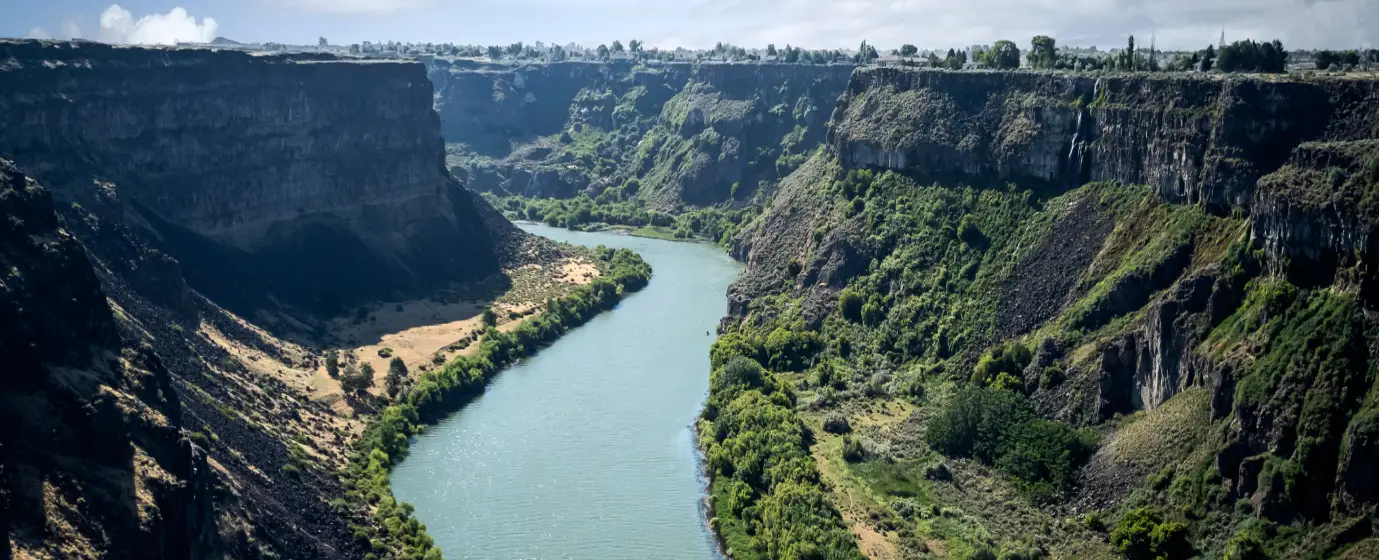
Eastern Oregon · Oregon
Living in Ontario: The Ultimate Relocation Guide (2026)
Maybe you've been scrolling home listings and can't believe what $270,000 buys in most of Oregon. Maybe someone at your company mentioned that the commute from Ontario to Boise is under an hour, and suddenly a city you'd never considered landed on your shortlist. Or maybe you've been priced out of the Treasure Valley entirely and someone suggested crossing the state line — that Ontario, Oregon sits right on the border and offers the same basin geography, the same high desert sky, and a housing market that still makes financial sense. The central tension of Ontario is this: it is one of the most affordable cities in Oregon, with direct access to a major metro, but it carries crime rates and economic challenges that any honest guide has to address before you pack a moving truck.
Ontario sits at Oregon's far eastern edge — literally the first city you encounter entering the state from Idaho on I-84. It occupies 5.2 square miles of the Snake River Plain at 2,149 feet elevation, flanked by the Snake River to the east and agricultural flatlands in every direction. The Treasure Valley region straddles the state line here, meaning Ontario functions less like an isolated rural town and more like the Oregon side of a binational metro area that includes Fruitland, Payette, and Nampa on the Idaho side. Daily life runs on Mountain Time, not Pacific — a detail that catches many Oregon transplants off guard — and Boise's shops, hospitals, and airport are genuinely within reach in about 55 minutes.
This guide is designed to help you make a clear-eyed decision about Ontario. It covers the neighborhoods worth understanding, the employers anchoring the local economy, the honest tradeoffs nobody mentions in the chamber of commerce brochure, and the specific ways Ontario life differs from what most Oregon transplants expect. Whether you're a corrections professional considering a transfer to Snake River Correctional Institution, a healthcare worker weighing a position at Saint Alphonsus, or simply someone who wants to own a home outright before age 40, the answer to whether Ontario works for you is in here.

Not every city works for every buyer. Ontario has a distinct profile — it rewards certain lifestyles and frustrates others. The table below cuts straight to the verdicts.
| Best For | Why |
|---|---|
| Corrections & Healthcare Workers | Snake River Correctional Institution and Saint Alphonsus are among the region's largest employers — stable, benefit-rich jobs that make Ontario's housing costs genuinely attainable |
| First-Time Buyers | Median list prices in the $340K–$365K range are among the lowest for any Oregon city with real employment anchors; entry-level homes exist well below that figure |
| Boise Commuters Priced Out of Idaho | Fruitland and Payette have been climbing fast; Ontario's Oregon side often delivers comparable proximity at lower price points |
| Remote Workers | Low cost of living with high desert outdoor access — Jordan Craters, the Snake River, and Owyhee Country are all within reach |
| Retirees on Fixed Income | No Oregon sales tax, low property taxes at roughly 0.88%, and affordable medical access through Saint Alphonsus makes the math work |
| Agricultural & Agribusiness Professionals | J.R. Simplot and Malheur County's agricultural economy make Ontario a logical landing point for anyone working in food processing or land management |
The geography shapes daily life in ways that surprise people who move here from western Oregon. This is high desert — dry, sunny, and windswept in a way that feels nothing like the Willamette Valley. Summers are genuinely hot, winters bring sharp cold snaps, and the Snake River corridor provides the only visible water in an otherwise agricultural landscape of onion fields and dairy operations. Downtown Ontario sits on SW 4th Avenue and the surrounding blocks, a compact commercial core that hosts a mix of local diners, government offices, and small retail — functional rather than fashionable, but showing real signs of reinvestment.
The community identity here is layered in a way that outsiders sometimes miss on a first drive-through. Ontario's population is approximately 45% Hispanic, with many families rooted in decades of agricultural work across Malheur County. About a third of residents speak a non-English language at home, and the city is home to the only Buddhist temple in Eastern Oregon — a legacy of the Japanese American community that has been present in this valley since the early twentieth century. That cultural depth doesn't always announce itself loudly, but it surfaces at the Four Rivers Cultural Center on SW 5th Avenue, which documents the region's Japanese, Basque, Native American, and Hispanic heritage in a way that is genuinely worth an afternoon.
The honest friction moment that catches newcomers off guard: Ontario runs on Mountain Time. If you're working remotely for a Portland or Seattle employer, you're two hours ahead of your colleagues, which compresses your workday in ways that take adjustment. Grocery access is reasonable — there's an Albertsons anchoring everyday shopping — but specialty food options are limited, and most residents make a Boise run for Costco or larger retailers at least monthly. The drive north on US-30 toward Nyssa or west toward Vale reveals quickly how rural the surrounding county truly is; Ontario is very much the urban center of a vast, sparsely populated region.
The trait that keeps people here longer than they planned is community density at a human scale. With roughly 12,000 residents, Ontario is big enough to have real institutions — a community college, a regional hospital, a correctional facility, a cultural center — but small enough that you genuinely recognize people at Beck Kiwanis Park on a Saturday morning. That combination, rare in most of Oregon, becomes more valuable the longer you live here.
Affordability that actually pencils out. The median list price hovering around $362,000 is not a typo. In an Oregon real estate market where median prices in the Willamette Valley routinely exceed $500,000, Ontario represents a fundamentally different financial proposition. A household earning the median income of approximately $46,300 can make homeownership work here in a way that simply isn't possible in most of the state. Property taxes at roughly 0.88% add a modest carrying cost, and Oregon's complete absence of a state sales tax means every dollar of purchasing power stretches further than it would across the border in Idaho.
Employment anchors with staying power. Snake River Correctional Institution is one of Oregon's largest correctional facilities, and it employs hundreds of Malheur County residents in jobs that carry state benefits and pension structures. Saint Alphonsus Health System provides healthcare employment ranging from nursing and radiology to administration. J.R. Simplot's food processing operations connect Ontario directly to the agricultural economy of the broader Treasure Valley. These aren't seasonal positions or remote-work-dependent roles — they are physical, place-based jobs that keep Ontario's economy grounded even when broader economic conditions fluctuate.
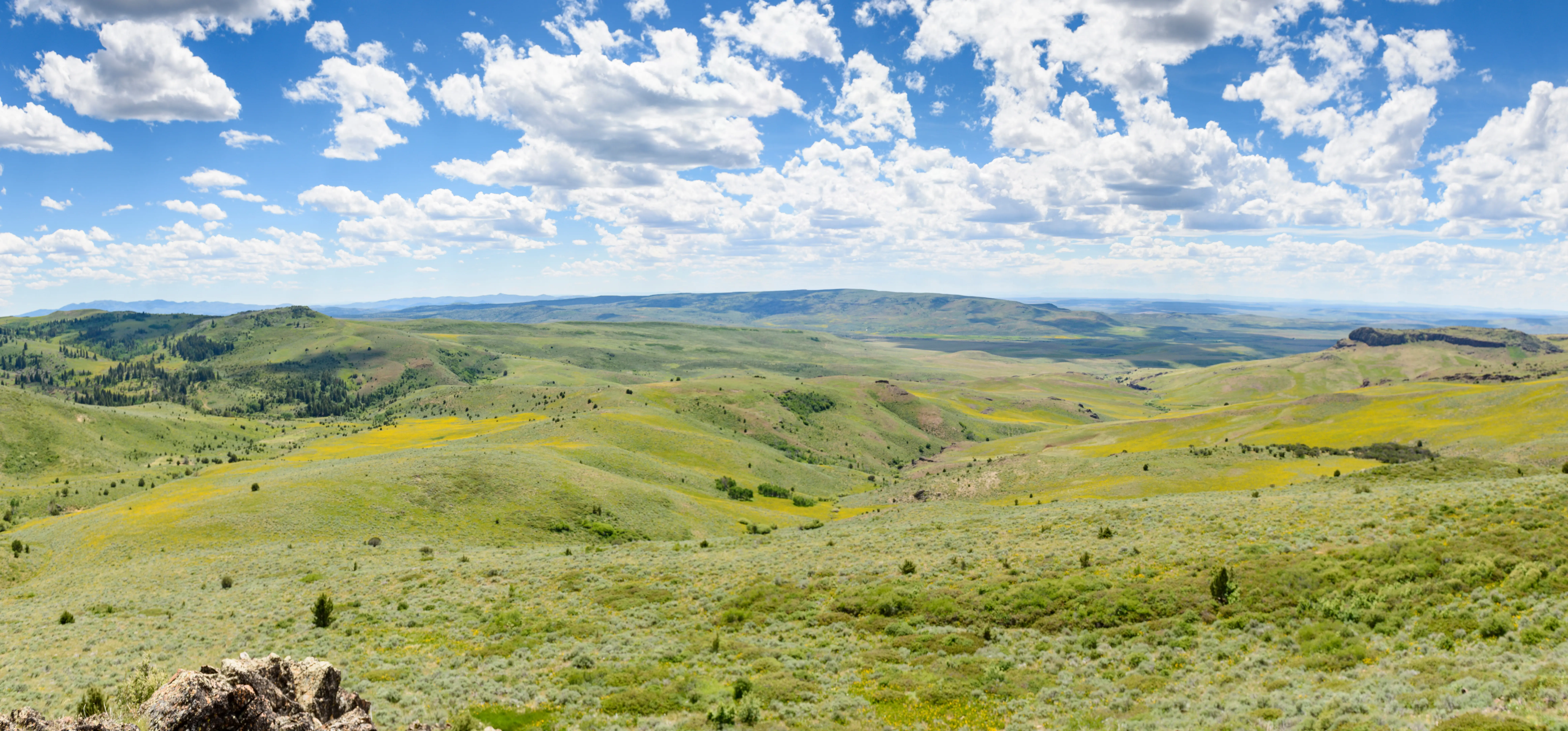
Outdoor access that exceeds what the town's size suggests. The Snake River runs along Ontario's eastern edge, and the Ontario State Recreation Site provides direct river access for fishing, wildlife watching, and casual afternoon use. Jordan Craters, a volcanic lava field roughly 80 miles to the west, offers one of the more unusual landscape experiences in the Pacific Northwest — free, rarely crowded, and genuinely spectacular. The Owyhee Canyonlands are within realistic day-trip range, putting canyon hiking and reservoir recreation on the menu for residents willing to drive. For hunters and anglers especially, Malheur County's public land access is extraordinary.
Treasure Valley Community College. TVCC on SW 4th Avenue is a genuinely underrated local asset. The college offers associate degrees and professional certifications in healthcare, business, technology, and the arts, meaning workforce training and continuing education are locally accessible without driving to Boise. For families with teenagers weighing post-secondary options, and for adults looking to retrain mid-career, the presence of a functioning community college changes the calculus meaningfully.
Looking to buy in Ontario? Estimate your payment.
Enter your numbers to see an estimated monthly mortgage payment.
Estimate only. Excludes HOA fees and mortgage insurance.
Crime rates are elevated, and property crime is the primary concern. Ontario's overall crime grade lands in the bottom quarter of U.S. cities by most measures, with a property crime rate that runs more than double the national average. Violent crime, at 8.4 incidents per 1,000 residents, is above the national baseline. This is not a reason to dismiss Ontario outright, but it is a reason to be deliberate about neighborhood selection — something covered in detail below — and to factor home security into your budget from day one. The elevated property crime rate is the single most common reason families who moved here with enthusiasm leave after two or three years.
Economic fragility in the broader county. The poverty rate in Ontario runs close to 21%, and unemployment among residents in the labor force sits around 8.8% — both figures significantly above state and national averages. The local economy is heavily dependent on a small number of institutional employers, meaning a facility closure or budget contraction at the correctional institution would reverberate through the city in ways that a more diversified economy would absorb more easily. Buyers who are financially secure and employed by one of those anchor institutions are largely insulated from this risk; buyers hoping that Ontario's affordability will attract broader economic development quickly may find the pace of change slower than expected.
Service gaps compared to larger Oregon cities. Ontario is the largest city in a very large, very rural county, which means it carries more regional services than its population size alone would suggest — but it still falls short of what residents accustomed to Portland or Eugene expect. Specialty retail, restaurant variety, entertainment options, and healthcare subspecialties all require a Boise trip. The fact that Boise is genuinely accessible in under an hour softens this considerably, but the gap remains real, particularly for households where multiple drivers isn't a given or where the I-84 commute becomes exhausting over time.
The Mountain Time adjustment is real. Moving from anywhere in western Oregon means resetting your clock, your social rhythms, and your television schedule. Oregon football games that tip off at 7pm Pacific start at 9pm Mountain. Your Portland friends think you live in a different time zone — because you do. For remote workers, the two-hour difference from the Pacific tech corridor requires intentional schedule management. Most residents adjust within a few months, but it's worth acknowledging before the move rather than discovering it at midnight on a Sunday.
Downtown Ontario is the commercial and institutional heart of the city, centered on SW 4th Avenue near the Ontario Train Depot. It's a compact, walkable core by small-city standards, housing city government offices, the Four Rivers Cultural Center, local restaurants, and a handful of community gathering spaces. Homes in and immediately adjacent to downtown tend to be older stock — craftsman-era and mid-century construction — with prices running toward the lower end of the city-wide range, often in the $200,000–$280,000 range for habitable homes, though condition varies widely. The tradeoff is proximity to commercial activity and the full spectrum of street-level urban life that comes with it.
Best for: Buyers who want walkability and civic proximity, and who are comfortable with an older housing stock that may need updating.
The Oregon Street Corridor runs through one of Ontario's more active commercial stretches, connecting residential blocks to the city's retail and service infrastructure. Housing here is primarily modest single-family and rental stock, with the density and mix you'd expect from a main-artery neighborhood. Prices tend to be competitive — often among the most accessible in the city — but the corridor's commercial character means traffic noise and foot traffic are part of the daily experience. Families who need affordability above all else and don't require a quiet residential setting tend to find this area functional and central.
Best for: First-time buyers or renters prioritizing price and central access over neighborhood quiet.
Cairo is a small unincorporated community area on Ontario's fringe, offering a more rural residential character than anything found closer to downtown. Properties here tend to sit on larger lots, with some agricultural land use in the mix, and the pace of daily life reflects the surrounding county landscape. Prices can be lower than city-average, but buyers should verify utilities, road maintenance, and service access, as the infrastructure in fringe areas of Malheur County varies. The appeal is space, privacy, and a disconnect from the city's denser street grid.
Best for: Buyers wanting more land and a rural feel while remaining within reasonable distance of Ontario's employers.
Mayberry is one of Ontario's more cohesive residential subdivisions, offering newer construction relative to the city's broader housing stock and a neighborhood street pattern that families tend to find comfortable. Homes here are generally larger than the city median, with more consistent condition and curb appeal than older in-fill blocks. Prices reflect that relative quality — expect to be closer to or above the city-wide median. This is one of the areas where families with school-age children tend to concentrate, drawn by the housing product and neighborhood feel.
Best for: Families seeking newer construction and a more defined neighborhood identity within Ontario's price range.
The Westside designation generally refers to neighborhoods west of the city core, further from the Snake River and I-84 interchange, and consequently somewhat removed from the traffic and commercial density of central Ontario. Housing here tends to be a mix of mid-century single-family and more recent construction, with prices across a range that reflects that variety. The Westside is generally considered one of the quieter residential zones in the city, and residents often cite reduced street-level activity as a meaningful quality-of-life factor. The catch is that walkable access to services requires a short drive.
Best for: Buyers prioritizing residential quiet and separation from Ontario's commercial core.
The Fairgrounds Area sits near the Malheur County Fairgrounds, which hosts the county fair and various community events that bring energy to this part of the city on a seasonal basis. Housing in this zone is predominantly established single-family, ranging widely in age and condition. Buyers who value proximity to community events, open fairgrounds space, and the parks nearby — including access to Lions Park — find this area appealing. Outside of event seasons, the area is quiet and residential in character.
Best for: Community-oriented buyers who enjoy the rhythm of local events and want easy access to Ontario's park infrastructure.
The Northwest quadrant of Ontario is primarily residential and tends to attract buyers seeking a balance of proximity to the city's core services and separation from the denser commercial strips. Housing stock varies, but this part of the city has seen some reinvestment as buyers have moved up from downtown-adjacent starter properties. Prices here occupy a middle range — typically below the Mayberry Subdivision but above the city's most affordable in-fill blocks. The Northwest tends to be one of the more family-consistent areas of the city by household composition.
Best for: Buyers who want a residential feel with reasonable city-wide access at a mid-range price point.
The Southwest area of Ontario encompasses residential blocks with relatively low density and a more suburban character than the city's core neighborhoods. Homes here tend to be well-suited to buyers who want straightforward residential living without the commercial adjacency of the Oregon Street Corridor or the activity of the Fairgrounds Area. Laxson Park sits within reach of this zone, providing green space access that residents value for daily use. Prices tend to track near the city-wide median.
Best for: Buyers who want uncomplicated residential living with park access and don't require a walkable urban environment.

Note on Arata and Waterford Estates: Both communities represent additional residential options in the Ontario area. Arata is a small rural community outside the city limits offering agricultural-adjacent living. Waterford Estates is among Ontario's newer subdivision developments, featuring more recent construction and larger lot sizes that appeal to buyers seeking updated housing product. Prices in Waterford Estates typically run at or above the city-wide median.
| City | Best For | Home Price | Commute to Boise | Vibe |
|---|---|---|---|---|
| Ontario, OR | Affordability + Oregon employment | ~$340K–$365K | ~55 min | Small city, agricultural, border identity |
| Fruitland, ID | Quieter bedroom community | Higher than Ontario | ~25 min | Suburban, Idaho-side quiet |
| Payette, ID | Small-town Idaho character | Mid-range | ~30 min | Agricultural, slower pace |
| Nyssa, OR | Maximum affordability, rural | Below $270K | ~65 min | Very small, farming community |
| Vale, OR | County seat access, rural | Below Ontario | ~75 min | Historic, isolated, very small |
| Weiser, ID | River access, small-town Idaho | Comparable to Payette | ~45 min | Quiet, Idaho rural lifestyle |
| Category | Detail |
|---|---|
| Population | ~12,000–12,200 (2026 estimate) |
| Median Home List Price | ~$340,000–$365,000 (active market, 2026) |
| Median Household Income | ~$46,308 |
| Property Tax Rate | ~0.88% |
| Commute to Boise | ~55 minutes via I-84 |
| School District | Ontario School District 8C |
| Violent Crime Rate | 8.4 per 1,000 residents |
| County | Malheur County |
| Time Zone | Mountain (UTC-7) — not Pacific |
| Major Employers | SRCI, Saint Alphonsus, J.R. Simplot, TVCC, Ontario SD |
The time zone surprise. Ontario, Oregon observes Mountain Time — the only part of Oregon that does. The state line here follows the Snake River, but the time zone boundary does not follow the state line. This means that Ontario residents share a clock with Boise and Denver, not Portland and Seattle. For people who move here from western Oregon, the adjustment period is real and surprisingly social — your family in Portland thinks you're always inexplicably unavailable in the evenings.
The Four Rivers Cultural Center tradition. The Four Rivers Cultural Center on SW 5th Avenue isn't just a museum — it functions as a community anchor for Ontario's Japanese American, Basque, Hispanic, and Native American communities. The Center hosts cultural events, educational programs, and the Japanese Garden, which reflects the history of Japanese Americans who were incarcerated in the region during World War II and many of whom chose to remain and build lives in the Treasure Valley after the war. Long-time residents treat it as an essential piece of Ontario's identity, and newcomers who engage with it tend to develop a much deeper sense of why this city exists where it does.
The Malheur County Fair. Held annually at the Malheur County Fairgrounds, the county fair is one of those events that reveals the agricultural heartbeat of the entire region. This isn't a boutique artisan market — it's livestock competitions, rodeo events, 4-H displays, and the particular social energy that comes from a community-wide gathering in a rural county. For families with children, it becomes a fixture of the summer calendar almost immediately after moving here.
What I Would Not Do. I would not buy a home on the Oregon Street Corridor or the denser blocks immediately around the downtown commercial core without a specific, deliberate reason to be there — and without pricing in security infrastructure from day one. The city's elevated property crime rate is not uniformly distributed, and the highest-density, highest-traffic corridors in any small city tend to concentrate that exposure. Buyers who want Ontario's affordability with a more residential experience are better served by Mayberry, the Northwest quadrant, or Waterford Estates, even if the price is modestly higher. The gap in price is almost always worth it.
Local Expert Takeaway: If you're weighing Ontario seriously, the decision usually comes down to which employer brought you here and which neighborhood you land in — those two variables determine most of your daily experience. Buyers anchored to Snake River Correctional Institution or Saint Alphonsus should target the Northwest quadrant, Mayberry Subdivision, or Waterford Estates for the most stable residential experience at the city's price point. Buyers doing a pure affordability play from Boise should run the numbers on what a $50,000 price advantage means over a 30-year hold — at 0.88% property tax and zero state sales tax, the Oregon side of the border carries meaningful ongoing financial advantages that compound over time.
✅ Ontario's housing affordability is real and current — active market prices in the $340,000–$365,000 range are among the most accessible for any Oregon city with genuine employment anchors, and the 0.88% property tax rate keeps carrying costs low.
⚠️ Property crime is the honest concern — Ontario's elevated property crime rate is the single most important factor in neighborhood selection. Choose deliberately, particularly if you're comparing the denser downtown-adjacent blocks against the newer subdivisions on the city's edges.
📍 Mountain Time is not a minor detail — Ontario is the only Oregon city on Mountain Time, which affects your work schedule, your social connectivity with the rest of Oregon, and every remote working arrangement you'll need to renegotiate after moving here.
Is Ontario, Oregon a good place to live?
Ontario can be an excellent place to live for the right buyer profile — particularly corrections and healthcare professionals, first-time homeowners, retirees on fixed incomes, and remote workers drawn to affordability and Eastern Oregon's outdoor access. The city's challenges around crime and economic fragility are real, but buyers who choose their neighborhood deliberately and are employed by one of Ontario's institutional anchors tend to build stable, satisfying lives here.
What is the crime rate in Ontario, Oregon?
Ontario's violent crime rate runs approximately 8.4 incidents per 1,000 residents, and the property crime rate is significantly above national averages — a genuine concern that should factor into both neighborhood selection and home security planning. Crime is not uniformly distributed across the city; newer subdivisions on the city's edges generally experience lower exposure than the denser commercial corridors near downtown.
How does Ontario compare to nearby cities like Fruitland or Nyssa?
Ontario sits between Fruitland and Nyssa on both price and amenity scale. Fruitland and Payette on the Idaho side have been appreciating faster and now often run higher than Ontario's comparable housing, while offering shorter Boise commutes. Nyssa to the west is more affordable but smaller, more isolated, and with fewer local services. Ontario offers the strongest combination of employment anchors, educational infrastructure through TVCC, healthcare access via Saint Alphonsus, and regional connectivity — at a price that still makes financial sense for median-income households.
Explore the full Ontario series: The Ultimate Ontario Relocation Guide · Is Ontario Safe? · Cost of Living in Ontario · Best Neighborhoods in Ontario · Ontario Schools & Family Life · Ontario Youth Sports · Ontario Parks & Recreation · Retiring in Ontario · 1031 Tax-Deferred Exchange in Ontario · Ontario First-Time Homebuyers Guide · Moving to Ontario from California
Tell us what you need help with and we'll connect you with local resources.

About the Author
Todd Davidson is the founder of Living in Oregon and Living in Washington, where he publishes in-depth city guides, neighborhood resources, and local market insights covering more than 180 communities across the Pacific Northwest. While his background is in home financing and real estate, he created these digital platforms to help families research and compare regions before making a move.