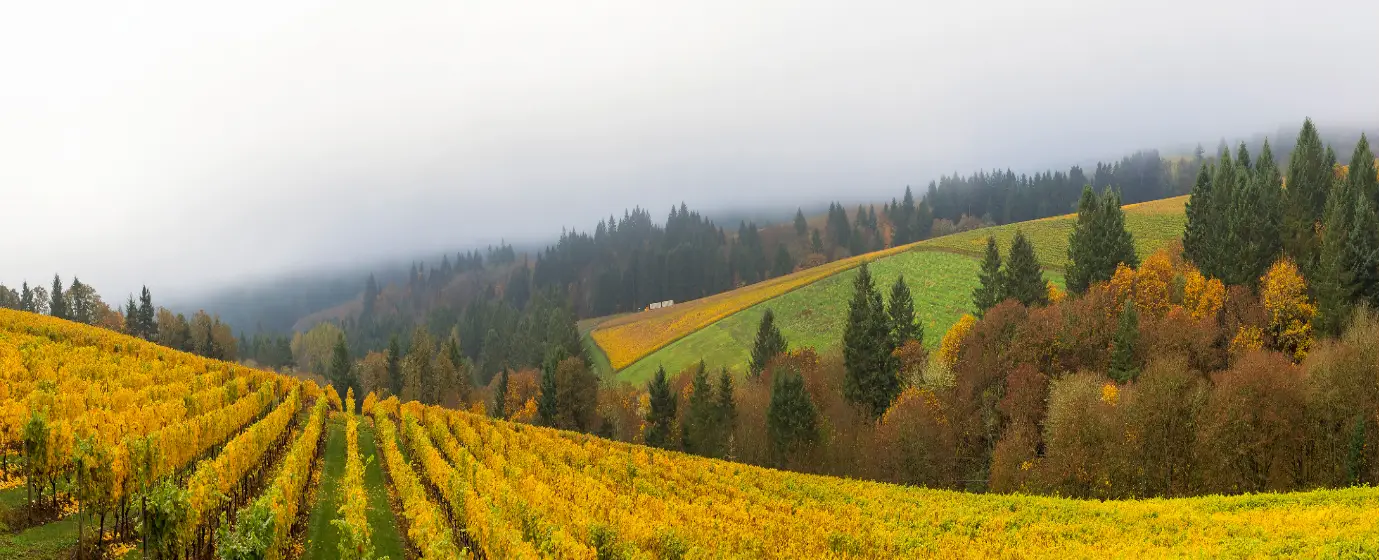
Willamette Valley · Oregon
Is Dundee Safe? Crime Rates, Safest Neighborhoods & Local Reality (2026)
Dundee's safety story isn't what most people expect when they first search it. A small wine-country town of just over 3,100 residents, it carries the kind of low-key, residential character that tends to produce calm crime numbers — and for the most part, the data bears that out. Violent crime here runs well below both Oregon and national averages, and the overall feel of day-to-day life reflects that. Property crime is the more relevant concern, and it's worth understanding where it concentrates and why.
The practical reality is shaped by Dundee's geography and economy. The northern corridor along Highway 99W draws more traffic, more commercial activity, and more incidental property crime — the kind of pattern you see in nearly any small town where a busy arterial road meets retail. That dynamic accounts for most of what the numbers flag. Elsewhere in town, particularly on the western residential side, the lived experience is genuinely quiet.
This guide walks through what the crime data actually means at street level, breaks down the differences between Dundee's neighborhoods, compares Dundee to nearby cities in the Willamette Valley, and gives you the practical knowledge that crime indexes and aggregate scores tend to leave out.
FBI-sourced estimates and local police data commonly place Dundee's violent crime rate around 2.3 per 1,000 residents — a figure that holds up across multiple data aggregators and puts Dundee in a meaningfully safer position than the Oregon state average and the national average of approximately 3.6 per 1,000. For context, NeighborhoodScout notes Dundee's overall crime rate sits lower than roughly 70% of U.S. cities. That's a credible benchmark for a small Oregon town with strong community ties and a high rate of owner-occupied housing.
Property crime is the more visible number, coming in around 18.7 per 1,000 residents based on commonly reported local police data. That figure earns a less flattering grade from crime analytics platforms, but the structural context matters here. Dundee's Highway 99W corridor functions as one of the primary wine tourism routes in the Willamette Valley, pulling in significant visitor traffic year-round. More visitors moving through commercial areas means a higher base rate of vehicle break-ins, package theft, and petty larceny — most of which clusters in specific commercial zones rather than spreading evenly across residential streets. When property crime data is read without that lens, it overstates risk for residents who live away from the highway.
SafeWise's 2026 Oregon Safest Cities report tracked year-over-year decreases in both violent and property crime for the Newberg-Dundee area, with property crime declining for two consecutive years. That trend reflects a longer downward arc: cityrating.com data drawing on FBI inputs projects the 2024 crime rate lower than 2019 levels. For buyers evaluating risk over a multi-year horizon, Dundee is moving in the right direction.
Violent crime in Dundee is, by most available estimates, genuinely low. The rate of approximately 2.3 per 1,000 translates to a statistical chance of victimization closer to 1 in 838 annually — a number that puts Dundee well into the "safer than average" category for both the state and the country. In practical daily life, residents consistently describe the town as peaceful, and serious incidents are uncommon enough to generate community-wide attention when they do occur. This is a small, tightly-knit place where neighbors know each other, and that social fabric provides a kind of informal safety net that aggregate statistics can't fully capture.
Property crime is concentrated overwhelmingly in the northern part of town, where commercial density along Highway 99W creates higher-traffic conditions. Local data suggests the north sees roughly 28 property crimes annually — the largest share in the city — while southeast Dundee sees approximately one. The dominant categories are vehicle break-ins and theft from unattended vehicles, particularly in parking areas near wine tasting rooms and restaurants. Locals tend to treat this the same way Portland residents handle parking near busy entertainment corridors: don't leave valuables visible, lock everything, and you largely sidestep the risk.
The Dundee Hills neighborhood occupies the elevated terrain west and southwest of downtown, where much of the city's world-famous vineyard land sits. This is Dundee's most affluent residential area, home to estate properties with panoramic views and long driveways that provide natural separation from street traffic. Crime data by quadrant suggests the west side of Dundee carries the lowest victimization risk in the city — roughly 1 in 49 overall, compared to 1 in 25 in southwestern commercial zones. The low density, high ownership rates, and general absence of pedestrian commercial traffic contribute to a profile that's as quiet as anything you'll find in the Willamette Valley.
Best for: Buyers seeking maximum residential privacy in a prestige address, with safety as a byproduct of density and property type.
Downtown sits along the Highway 99W spine and is the city's most active commercial corridor. The mix of wine tasting rooms, restaurants like Dundee Bistro, and boutique shops makes it a destination for visitors, which keeps foot traffic consistently higher than anywhere else in town. That activity is a draw — but it's also where most of Dundee's property crime concentrates. Vehicle break-ins in parking areas near tasting rooms are the primary incident type, not crimes against persons. Residents who walk to dinner regularly and leave cars secured typically don't experience this differently than any active small-town main street.
Best for: Buyers who want walkable access to Dundee's restaurant and wine scene and aren't deterred by taking standard urban precautions with parked vehicles.
Hillcrest sits on the eastern side of Dundee, a residential neighborhood that functions primarily as a bedroom community for households commuting toward Newberg or the Portland metro. It's quieter than downtown, with a lower concentration of commercial traffic, and tends to attract families and longer-term residents. The eastern placement puts it somewhat removed from the high-traffic 99W corridor, which historically correlates with lower property crime incidents in Dundee's geographic breakdown. It doesn't carry the prestige price of the Hills neighborhoods, which also means it tends to attract more established, settled residents with roots in the community.
Best for: Families and commuters who want established residential surroundings without the premium pricing of the hillside vineyard addresses.
Vineyard Estates is among the newer residential developments in Dundee, positioned on the western side of the city where local crime data consistently shows the lowest victimization rates. The neighborhood features modern construction, many homes with vineyard views, and a setting that's physically removed from Highway 99W's commercial buzz. The combination of newer builds, higher home values, and western location places it in what amounts to the safest residential pocket in town. Residents here tend to be owner-occupiers, and the neighborhood's relative newness means it hasn't accumulated the informal foot-traffic patterns that sometimes develop around older, denser residential areas.
Best for: Buyers prioritizing modern construction and residential quiet in Dundee's most statistically favorable safety zone.
No formally named "Riverside District" appears in Dundee's official neighborhood or city planning documentation. The city's geography along the Red Hills corridor doesn't include a named riverfront development area. If you've seen this name in a listing or on a map, verify directly with the listing agent — it may refer informally to a small cluster of homes near a creek corridor rather than an established neighborhood with defined character. Until confirmed, treat any neighborhood-specific claims about a "Riverside District" as needing independent verification.
Best for: Confirm the designation before making any assumptions about the area's character or safety profile.
| City | Violent Crime / 1K | Property Crime / 1K | Overall Safety Profile |
|---|---|---|---|
| Dundee | ~2.3 | ~18.7 | Safer than OR & national averages for violent crime; property crime driven by 99W corridor |
| Newberg | ~3.1 | ~22.4 | Larger city, higher absolute incidents; shared police department with Dundee |
| McMinnville | ~4.2 | ~34.6 | Yamhill County's largest city; higher property crime reflects greater commercial density |
| Dayton | ~1.8 | ~12.1 | Smaller population; fewer incidents overall; limited services |
| Lafayette | ~1.5 | ~10.3 | Very small town; extremely low incident counts; limited commercial activity |
| Carlton | ~1.9 | ~11.8 | Small wine-country town; similar quiet residential profile to Dundee's west side |
| Sherwood | ~1.6 | ~14.2 | Higher median income; Washington County; among safer Portland-area suburbs |
Dundee occupies a middle position in this comparison — safer than the region's larger commercial centers, roughly comparable to Carlton and Dayton in residential character, and meaningfully quieter than McMinnville's urban core. The shared Newberg-Dundee Police Department, with 35 sworn officers and Oregon accreditation status, gives Dundee professional law enforcement resources that a city of 3,100 residents on its own could never sustain independently.
Looking to buy in Dundee? Estimate your payment.
Enter your numbers to see an estimated monthly mortgage payment.
Estimate only. Excludes HOA fees and mortgage insurance.
The thing the crime apps miss about Dundee is the seasonal dimension. Wine tourism peaks from late spring through harvest season in October, and that surge in visitor traffic along Highway 99W meaningfully changes the feel of the downtown corridor. Parking lots near Argyle Winery and the tasting rooms on 9th and 10th Streets see more vehicle break-in attempts during high-season weekends than during the quieter winter months. Locals have long since adapted — they park facing toward the street when possible, they don't leave wine purchases visible on the back seat, and most don't think twice about it. Visitors who treat Dundee like a sleepy rural town and leave cameras or bags on dashboards occasionally learn a different lesson.
The other thing worth knowing is that Dundee's small size cuts both ways. The same community visibility that makes residential streets feel safe also means that disputes between neighbors, minor incidents near the elementary school, and anything that generates a call to the non-emergency line at (503) 538-8321 tends to circulate through community channels quickly. Nextdoor feeds in Dundee can read alarming to newcomers who aren't accustomed to small-town social transparency — a single car prowler sighting generates a thread that would never register on any crime index but makes it feel like something dramatic is happening. Context matters. What registers as high engagement in a small town is often just normal rural community communication.
One practical note for buyers evaluating specific streets: the north end of Dundee nearest the commercial highway concentration sees the highest incident counts — roughly 40 total crimes annually by some estimates, across a relatively small geographic area. If you're considering a home along or immediately adjacent to 99W north of downtown, budget for motion-sensor lighting and a ring camera as standard, not as a response to a specific threat. That's what well-informed local buyers already do.

Local Expert Takeaway: If safety is a primary factor in your Dundee decision, prioritize the western and southwestern residential areas — Vineyard Estates in particular — over anything directly fronting Highway 99W. The property crime gap between Dundee's east/north corridor and its western residential zones is real and measurable. A median home price of $630,000 buys you meaningfully different day-to-day security depending on which side of that corridor you land on — ask your agent specifically about the block, not just the neighborhood name.
✅ Violent crime is genuinely low — Dundee's rate of approximately 2.3 per 1,000 sits well below Oregon and national averages, and trending downward.
⚠️ Property crime concentrates on the 99W corridor — vehicle break-ins near commercial areas and tasting rooms account for the bulk of incidents; it's geography-specific, not city-wide.
📍 The western residential neighborhoods are the safest pockets — Vineyard Estates and the Dundee Hills area consistently show the lowest victimization rates in available geographic breakdowns.
Is Dundee a safe place to live?
Yes, by most credible measures Dundee is a safe small town. Violent crime rates run below both the Oregon and national averages, the overall trend is downward, and the Newberg-Dundee Police Department is one of roughly two dozen accredited law enforcement agencies in the state. Property crime is higher than some neighboring small towns but largely clusters in commercial zones along Highway 99W rather than in residential areas.
What type of crime is most common in Dundee?
Property crime — specifically vehicle break-ins and theft from unattended vehicles — is the dominant category. It concentrates in parking areas near wine tasting rooms and restaurants along the Highway 99W corridor, particularly during peak tourism season from late spring through harvest in October. Violent crime is rare and not geographically concentrated in the way property incidents are.
How does Dundee compare to nearby Newberg for safety?
Dundee generally comes out slightly safer than Newberg on a per-capita basis, though the two cities share a police department and are functionally integrated for law enforcement purposes. Newberg's larger size, greater commercial density, and higher total population mean more absolute incidents. Buyers choosing between the two for safety reasons are making a finer distinction than the data typically supports — the meaningful difference is between residential areas in either city versus commercial corridor addresses.
Explore the full Dundee series: The Ultimate Dundee Relocation Guide · Is Dundee Safe? · Cost of Living in Dundee · Best Neighborhoods in Dundee · Dundee Schools & Family Life · Dundee Youth Sports · Dundee Parks & Recreation · Retiring in Dundee · 1031 Tax-Deferred Exchange in Dundee · Dundee First-Time Homebuyers Guide · Moving to Dundee from California
Tell us what you need help with and we'll connect you with local resources.

About the Author
Todd Davidson is the founder of Living in Oregon and Living in Washington, where he publishes in-depth city guides, neighborhood resources, and local market insights covering more than 180 communities across the Pacific Northwest. While his background is in home financing and real estate, he created these digital platforms to help families research and compare regions before making a move.