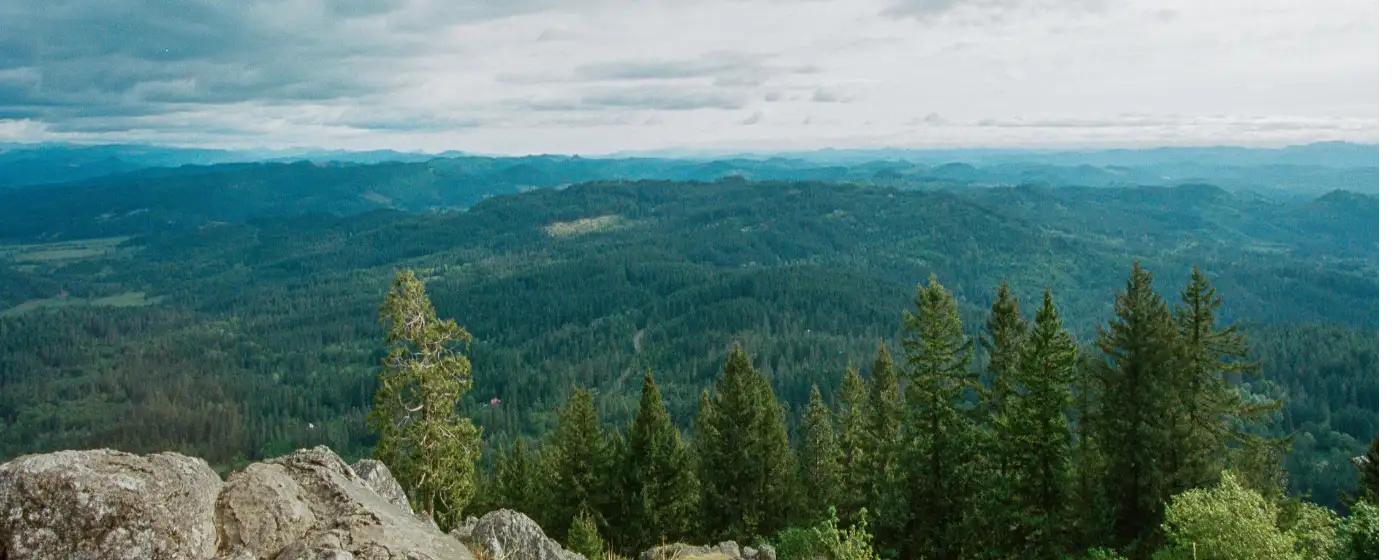
Willamette Valley · Oregon
Best Neighborhoods in Junction City: Where to Buy or Rent (2026)
Junction City is small enough that some buyers assume it doesn't really have distinct neighborhoods — that a house is a house, and the only variable is the price. That assumption will cost you. The difference between buying on the west side near newer construction and landing a 1940s rambler two blocks off Highway 99 is not just aesthetic. It translates to commute patterns, school proximity, noise exposure, and what your weekend looks like when you walk out the front door.
The most important geographic divide in Junction City runs roughly along the Highway 99W corridor. East of that line, you're closer to the older commercial fabric of town — the Safeway, the local diners, and the historical streetscape that gives the city its identity. West of it, you're in the newer subdivisions where Lennar has been actively building and where the streets still smell like fresh concrete. Neither side is objectively better, but they attract very different buyers, and mistaking one for the other is one of the most common errors people make when moving to Junction City.
This guide covers the eight most significant neighborhoods in Junction City, including who each one actually suits, what the trade-offs look like, and where renters are finding the best value in a market that's still meaningfully cheaper than Eugene — even as prices gradually close the gap.

| Neighborhood | Best For | Price Range | Vibe |
|---|---|---|---|
| Downtown / Old Town | Walkability seekers, first-time buyers | $350,000–$430,000 | Historic, walkable, community-forward |
| The Reserve | New construction buyers, families | $550,000–$650,000 | Modern suburban, HOA community |
| West Side Established | Families with kids, commuters | $400,000–$480,000 | Quiet residential, near schools |
| North Junction City | Large lot seekers, value buyers | $370,000–$450,000 | Rural edge, spacious, utilitarian |
| South Junction City | Commuters to Eugene, renters | $360,000–$440,000 | Entry-level, transitional, practical |
| Rural / Acreage | Estate buyers, farmers, retirees | $700,000–$1,100,000 | Open land, vineyard views, privacy |
| Scandia Village (55+) | Active adults 55+, downsizers | Manufactured / land-lease | Senior-focused, low-maintenance |
| Apartment / Rental Corridors | Renters, new arrivals | $728–$1,995/mo rent | Mixed density, functional access |
| Tivoli / Mobile Home Parks | Budget buyers, flexible households | $120,000–$200,000 | Affordable, community-oriented |
| Historic Core / Ivy Street | Business owners, investors | $380,000–$460,000 | Mixed-use adjacent, high foot traffic |
| Buyer Type | Best Neighborhood | Why |
|---|---|---|
| First-time buyer | Downtown / Old Town | Most affordable entry points; walkable to daily needs |
| Luxury buyer | Rural / Acreage | Estate homes, vineyard settings, 20–30+ acre parcels |
| Walkability seeker | Downtown / Old Town | Closest walking access to shops, restaurants, Safeway |
| Families with kids | West Side Established | Near schools, parks, quieter streets, established community |
| Commuters to Eugene | South Junction City | Fastest Highway 99W on-ramp access heading south |
| Large lot buyers | North Junction City | Larger parcels at lower per-square-foot cost than west side |
| Renters | Country Crossroads / Maple Springs | New construction rentals, best amenities, 2020–2022 built |
Downtown Junction City is where the city's Scandinavian heritage is most visible — in the architecture, in the seasonal decorations near the Scandinavian Festival Grounds, and in the older storefronts that line the corridor around Ivy Street. Homes here are predominantly ramblers and Craftsmans built between the 1920s and 1950s, with the price range sitting between $350,000 and $430,000 depending on condition and lot size. The honest trade-off is that "walkable to Main Street" also means walkable to Highway 99W traffic noise, and the older housing stock can carry deferred maintenance costs that don't show up in the list price.
Best for: First-time buyers who want character and walkability at the most affordable entry point in town.
The Reserve is Junction City's clearest example of new-construction suburban development, with Lennar-built homes clustered around 15th Avenue and West 14th Place featuring open-concept layouts, contemporary Craftsman exteriors, and finishes that would cost significantly more in Eugene. Prices run from roughly $550,000 to $650,000 — and sometimes beyond for larger floor plans — making this the most expensive non-acreage option in the city. The catch is that the neighborhood is still filling in: some blocks feel incomplete, amenity infrastructure is still maturing, and the HOA comes with dues that older neighborhoods don't carry.
Best for: Buyers prioritizing new construction finishes and long-term appreciation potential who can absorb the premium over existing home stock.
The established west side — roughly the residential blocks west of Highway 99W but east of The Reserve's newer footprint — is where Junction City's family-friendly reputation is most warranted. Streets here sit within reasonable distance of Laurel Elementary and other district schools, the lots are mature with established landscaping, and the price range of $400,000 to $480,000 represents the city's most balanced value proposition. The limitation is inventory: this area doesn't turn over frequently, and when homes come up, they tend to move faster than the citywide average of 67 days on market.
Best for: Families with school-age children who want established neighborhood character without paying The Reserve premium.
The north end of Junction City edges toward the rural transition zone, with larger lots, older homes, and a working-class pragmatism that feels distinct from the more polished west side. Prices here typically run $370,000 to $450,000, but the per-square-foot cost can be among the lowest in town if you're patient. The trade-off is honest: properties in this area may sit closer to agricultural operations, industrial-adjacent land uses, and the Eugene Livestock Auction, which means the occasional smell and early-morning sound profile that doesn't make it into the listing description.
Best for: Buyers who need more land for the money and don't mind a rougher-edged residential context.
South Junction City is the most pragmatic part of the city — largely residential, oriented toward the Highway 99W corridor heading south toward Eugene, and dominated by entry-level and mid-range homes in the $360,000 to $440,000 range. Commuters appreciate the fast highway access, and first-time buyers find the most flexible inventory here. The honest downside is that south Junction City has less neighborhood identity than other parts of town — it's functional rather than distinctive, and some blocks feel more transitional than settled.
Best for: Commuters to Eugene and first-time buyers who prioritize price and highway access over neighborhood character.
The farmland surrounding Junction City produces some of the most compelling real estate in the region for buyers who want land. Estate properties here range from $700,000 to well over $1 million, with some listings including 20 to 30-acre parcels with vineyard plantings — Pinot Gris and Pinot Noir are grown in this part of the Willamette Valley. The trade-off is complete car dependency, longer emergency response times, and the logistical reality of maintaining a large rural property without the suburban service infrastructure buyers from metro areas take for granted.
Best for: Buyers seeking estate-level land, agricultural use, or vineyard property within 20 minutes of Eugene.
Scandia Village at 1225 W 10th Ave is the most organized age-restricted community in Junction City, targeting residents 55 and older in a manufactured home park format with land-lease pricing. The homes offer around 1,440 square feet with three bedrooms and two baths — genuinely functional for retirement downsizing. The trade-off inherent to any land-lease community is that residents own the home but not the underlying land, which affects resale appreciation potential and financing options compared to fee-simple ownership.
Best for: Active adults 55+ looking for a low-maintenance, community-oriented lifestyle at a lower price point than traditional single-family homes.
Junction City has a visible manufactured and mobile home sector, with Tivoli Mobile Home Park offering newer two-bedroom, one-bath units with open-concept layouts. The mean value of mobile homes in the city runs around $184,000 — a genuinely different tier of homeownership that serves residents priced out of the traditional market. The catch with this housing type is well-documented: land-lease structures, park rules, and limited appreciation mean buyers should approach this as lifestyle purchase rather than investment vehicle.
Best for: Budget-conscious buyers and households seeking the lowest possible cost of entry into Junction City homeownership.

Looking to buy in Junction City? Estimate your payment.
Enter your numbers to see an estimated monthly mortgage payment.
Estimate only. Excludes HOA fees and mortgage insurance.
Treating Highway 99W as a neutral feature. The Ivy Street / Highway 99W corridor is the backbone of Junction City commerce, but it's also a state highway with continuous truck and commercial traffic. Buyers who find a $395,000 home one block off the main strip and mentally classify it as "near downtown" often discover in month two that the Friday evening traffic and the morning freight deliveries were not part of their mental picture. The rule of thumb: any home within two blocks of the 99W commercial stretch deserves extra scrutiny on noise and traffic exposure — drive it at 7 a.m. on a Tuesday before signing anything.
Assuming new construction is turnkey and cost-free. The Reserve draws buyers who want to avoid the maintenance concerns of older homes, which is a reasonable goal. But some buyers arrive at closing underestimating the true cost of a neighborhood that's still being built out — landscaping that isn't yet established, streets that still carry construction traffic, and an HOA that's still calibrating its rules and fees as the community fills in. The finished product will likely be excellent; the transitional period while the remaining 271 homes are built requires some tolerance for an incomplete picture.
Buying on the north side without smelling it on a warm day. This is the most location-specific caution in the city: properties in the northern section near the Eugene Livestock Auction and agricultural operations can carry odor and noise profiles that vary dramatically by season and wind direction. A home that shows beautifully in January may sit downwind of something unpleasant in August. This isn't a disqualifying factor for everyone — some buyers genuinely don't mind — but it should be a deliberate, informed decision rather than a surprise discovery.
Underestimating the Eugene commute variability. The 20-minute average from Junction City to Eugene is accurate under normal conditions, but Highway 99W has no practical alternative routing for most of that corridor. When there's an incident, a train crossing delay at the rail line near downtown, or heavy weather, the commute can stretch to 35 or 40 minutes with no real back-road option. Buyers who work downtown Eugene or on the University of Oregon campus should test the drive during actual commute hours — not just once on a Sunday afternoon.
| Area | Ideal For | Typical Rent Range | Trade-off |
|---|---|---|---|
| Country Crossroads (W 17th Pl) | Young professionals, newcomers | $1,620–$1,995/mo | Higher rent; best amenities in town |
| Maple Springs (W 10th Ave) | Couples, small families | $1,575–$1,640/mo | Limited unit types; all 2BR |
| Chapel Creek (Pear Loop) | Families needing space | Market rate townhomes | Edge-of-town location; car-dependent |
| Eric Park (Oak St) | Budget renters, singles | From $728/mo | Very limited inventory; older building |
| South Junction City rentals | Commuters, flexible households | $900–$1,400/mo | Older stock; scattered availability |
Junction City's rental market has benefited significantly from the 2020–2022 construction wave that produced Country Crossroads and Maple Springs, both of which brought professionally managed, amenity-equipped units to a market that had been dominated by older single-family rentals. Country Crossroads, with 148 units and a resident clubhouse, is the largest complex in the city by a wide margin and functions as the de facto anchor of the rental market. Renters who need flexibility while deciding whether to buy will find the most options concentrated on the west side — but availability turns over quickly, and the total supply is thin enough that prospective renters should reach out to property managers directly rather than waiting for listings to hit aggregator sites.
Local Expert Takeaway: The single most important geographic insight for buyers in Junction City is this: the city's best long-term value is concentrated on the established west side between Highway 99W and the newer suburban fringe — specifically the residential blocks near Day Memorial Park and City Park, where mature lots, school proximity, and community stability combine at price points ($400,000–$480,000) that are increasingly difficult to find anywhere else in the Eugene metro. If you're choosing between an older home in this corridor and a new-build in The Reserve, run the full cost comparison including HOA, landscaping, and the construction-phase disruption period before assuming new is always better.
What are the best neighborhoods in Junction City for families?
The established west side neighborhoods — particularly the residential blocks near Day Memorial Park and within walking distance of district schools — consistently draw families with school-age children. The area offers quieter streets, mature landscaping, and a price range around $400,000–$480,000 that sits well below comparable neighborhoods in Eugene. The Reserve is the newer alternative for families who want modern finishes, though at a higher price point and with an HOA.
Is Junction City a good place to buy a home in 2026?
Junction City offers one of the most accessible entry points into the Eugene metro market, with a citywide median sold price in the $411,000–$445,000 range at a time when comparable Eugene neighborhoods routinely run $100,000–$200,000 higher. The market has slowed from its 2022–2023 pace — homes now sell in roughly 67 days on average — which gives buyers more time to evaluate options without the pressure of 24-hour offer windows. For buyers who can tolerate a smaller city with fewer walkable amenities, the value case is strong.
How does Junction City compare to nearby cities for real estate?
Compared to Coburg immediately to the east, Junction City offers more housing inventory and a wider range of price points, though Coburg has a tighter, more boutique feel. Compared to Eugene, Junction City is meaningfully more affordable across every property type — the trade-off being a smaller commercial amenity base and complete car dependency for anything beyond daily errands. Harrisburg to the south is similarly priced but smaller still, with even fewer urban services. For buyers who want Willamette Valley lifestyle at a price point that doesn't require a second income to qualify, Junction City lands in a compelling position.
Explore the full Junction City series: The Ultimate Junction City Relocation Guide · Is Junction City Safe? · Cost of Living in Junction City · Best Neighborhoods in Junction City · Junction City Schools & Family Life · Junction City Youth Sports · Junction City Parks & Recreation · Retiring in Junction City · 1031 Tax-Deferred Exchange in Junction City · Junction City First-Time Homebuyers Guide · Moving to Junction City from California
Tell us what you need help with and we'll connect you with local resources.

About the Author
Todd Davidson is the founder of Living in Oregon and Living in Washington, where he publishes in-depth city guides, neighborhood resources, and local market insights covering more than 180 communities across the Pacific Northwest. While his background is in home financing and real estate, he created these digital platforms to help families research and compare regions before making a move.